


 Ver en contexto
 Enviar
 Compartir
 Detalles

 Descargar
 Similares
 Radiografía
 Presentación de diapositivas
Summer Interior II


 Ver más
Giclée / Impresión de arte
Impresiones giclée o en lienzo de calidad de museo con producción rápida y opciones de acabado flexibles. ( Comprar pintura hecha a mano Comprar imagen)




P118B $10

P118H $10

P118W $10

P438Z $10

P508JH $12

P508YH $12

P805H $10

P805Z $10

P919BZ $10

P919G $10

P919XJ $10

P959ZH $10

P968JZ $12

W106C $8

W218G $10

W218JH $8

W218Y $10

W307PJ $10

W316G $10

W316PJ $8

W316Y $10

W398PJ $8

W4111J $10

W500HY $15

W500JH $15

W692G $12

W849H $8

W940BG $15

W953PJ $8




Elija entre nuestros tamaños predefinidos que respetan las proporciones originales de la obra.

Puede introducir sus propias dimensiones para adaptarse a un marco o espacio específico. Si el tamaño seleccionado no coincide con las proporciones de la imagen original, recortaremos la obra de arte o extenderemos la imagen con un borde con efecto espejo o de color sólido. Se enviará una maqueta digital para su aprobación antes de que comience la producción.
Tenga en cuenta que la vista previa en pantalla no refleja el recorte o la extensión real. Solo la maqueta mostrará con precisión la composición final.
Aunque existen tamaños personalizados, recomendamos seleccionar una dimensión de la lista predefinida para preservar las proporciones originales.
Envío a todo el mundo () en 2 semanas en lugar de las 4/5 semanas estándar. (5 septiembre)

Envío exprés gratuito a todo el mundo

Lienzo de lino de alta calidad

Seguro de envío total

Garantía de reembolso de impuestos aduaneros

Garantía de fidelidad cromática exacta

Política de devolución de 60 días (solo por defectos)

Garantía de devolución del 100% del dinero

Descuento por cantidad
 La opción de vidrio solo está disponible en tamaños inferiores a 110 cm.

Summer Interior II
Giclée / Impresión de arte
Dimensiones de la reproducción
-


Precio total final
$ 62
Edward Hopper's "Summer Interior II": A Portrait of Quiet Disquiet
Edward Hopper’s “Summer Interior II” is more than just a depiction of a woman in a room; it’s a meticulously crafted meditation on solitude, observation, and the unspoken anxieties of modern life. Painted during his prolific period, this work exemplifies Hopper's signature style – characterized by stark realism, carefully controlled light, and a profound sense of detachment. The painting immediately draws the viewer into a scene brimming with subtle tension, inviting contemplation about the woman’s thoughts and her relationship to the space around her.
- Subject Matter: The central figure, a woman seated in a simple bedroom setting, embodies a classic Hopper theme – the isolated individual within an urban landscape.
- Composition: The arrangement of objects—the clock, the books, the chair—creates a sense of stillness and deliberate order, yet simultaneously suggests a lack of purpose or connection.
- Color Palette: Hopper’s masterful use of muted tones – predominantly whites, browns, and grays – contributes to the painting's melancholic atmosphere. The white dress of the woman adds a touch of formality and elegance, contrasting subtly with the room’s more utilitarian elements.
Technique and Style: Hopper’s Realism Revisited
Hopper was renowned for his precise rendering of detail, achieved through painstaking observation and a rigorous application of technique. “Summer Interior II” showcases this skill perfectly. Notice the subtle variations in light and shadow that define the contours of the furniture and the woman's form. His brushwork is largely smooth and controlled, avoiding any overtly expressive gestures. This restrained approach amplifies the painting’s emotional impact, allowing the viewer to project their own feelings onto the scene.
- Realism as a Vehicle for Emotion: Hopper didn’t simply paint what he saw; he used realism to explore deeper psychological themes.
- Light and Shadow: The strategic placement of light sources – likely from an unseen window – creates dramatic contrasts that heighten the sense of isolation and mystery.
- Geometric Precision: Hopper's use of geometric forms—the rectangular clock, the linear arrangement of objects—reinforces the painting’s formal structure and contributes to its overall sense of order and control.
Symbolism and Historical Context
"Summer Interior II" was created during a pivotal moment in American art history – the rise of Modernism and the increasing urbanization of society. Hopper's work reflects this era’s anxieties about alienation, anonymity, and the loss of traditional values. The clock, a recurring motif in his paintings, symbolizes the relentless passage of time and the pressure to conform. The books suggest intellectual pursuits, yet the woman’s posture suggests a detachment from them. This painting speaks to the broader themes explored by artists like Georgia O'Keeffe and Marsden Hartley, who sought to capture the essence of American identity in the early 20th century.
- The American Experience: Hopper’s paintings are often interpreted as reflections of the American experience – a nation grappling with rapid change and social upheaval.
- Modern Isolation: The woman's solitary presence embodies the sense of isolation that characterized modern urban life.
- Influence of Photography: Hopper was influenced by the rise of photography, particularly its ability to capture fleeting moments and create powerful images.
Emotional Impact and Artistic Legacy
“Summer Interior II” possesses a haunting beauty that continues to resonate with viewers today. It’s a painting that invites introspection, prompting us to consider our own relationships with space, time, and the people around us. Hopper's ability to evoke such profound emotions through seemingly simple scenes is a testament to his artistic genius. This work stands as a cornerstone of American realist art, influencing generations of artists who followed in his footsteps. A hand-painted reproduction offers an unparalleled opportunity to experience the full impact of this iconic masterpiece within your own home or studio.
Obras relacionadas


Biografía del artista
**vida temprana e influencias**
edward hopper, un destacado pintor y grabador realista estadounidense, nació el 22 de julio de 1882 en Upper Nyack, Nueva York. Su familia, de ascendencia mayoritariamente holandesa, proporcionó una crianza cómoda que le permitió perseguir sus inclinaciones artísticas desde temprana edad. - **inspiraciones:** La obra de Hopper fue influenciada por las escrituras de Ralph Waldo Emerson y los maestros impresionistas franceses Édouard Manet y Edgar Degas. - **formación inicial:** Comenzó estudios de arte con un curso por correspondencia en 1899, posteriormente transfiriéndose a la Escuela de Arte y Diseño de Nueva York.**estilo artístico y temas**
edward hopper's representaciones cuidadosas y con un diseño preciso reflejaban su visión personal de la vida moderna estadounidense. Su obra se puede caracterizar por: - **escenas urbanas y rurales:** Ambos entornos fueron retratados con una mezcla única de realismo y profundidad emocional. - **iluminación:** Un dominio de la luz, a menudo utilizada para evocar sentimientos de aislamiento o contemplación. - **figuras:** A menudo sin rostro o en segundo plano, enfatizando al entorno sobre las figuras.**obras notables y su significado**
- House by the Railroad (Museo de Arte Moderno, Nueva York, Estados Unidos), un ejemplo de la capacidad de Hopper para evocar una sensación de melancolía a través de una composición simple pero poderosa. - Reclining Nude (50 x 35 cm, Nuevo Realismo, acuarela), que muestra su versatilidad para capturar la forma humana.**legado e influencia**
- **influencia en artistas futuros:** El estilo único de Hopper ha influido a numerosos artistas, incluyendo Pierre Sanford Ross, conocido por sus escenas urbanas y rurales. - **popularidad perdurable:** Sus obras continúan cautivando al público con sus temas atemporales de soledad y la condición humana.**explora más en ArtsDot**
- [https://ArtsDot.com/@/edward-hopper](obras de Edward Hopper) - /es/art/show/art-8xyffg-es/compra arte inspirado por los maestros)- Profundiza en el mundo del arte con la extensa colección de ArtsDot.
- Descubre cómo el legado de Edward Hopper continúa inspirando a artistas y amantes del arte.
**referencias**
- [https://ArtsDot.com/@/edward-hopper](Wikipedia: Edward Hopper) - [https://en.wikipedia.org/wiki/edward_hopper](Wikipedia: Biografía de Edward Hopper)
Edward Hopper
1931 - 1967 , Estados Unidos de América
Datos clave
- Artistas Influenciados: ['Pierre Sanford Ross']
- Artistas Que Influyeron:
- Ralph Waldo Emerson
- Édouard Manet
- Edgar Degas
- Fecha De Muerte: 1967
- Fecha De Nacimiento: 22 de julio de 1882
- Lugar De Nacimiento: Upper Nyack, EE. UU.
- Movimiento Artístico: Realismo americano
- Nacionalidad: Estadounidense
- Nombre Completo: Edward Hopper
- Obras Notables:
- House by the Railroad
- Reclining Nude
- Nighthawks
- Gas
- Chop Suey
Artículos relacionados

Edward Hopper: Las 25 Obras Maestras que Definen la Soledad Moderna | ArtsDot
Descubre las 25 obras maestras de Edward Hopper, el pintor de la soledad moderna. Explora su realismo americano, luz y sombra, e icónicas escenas urbanas. Reproducciones de arte en ArtsDot.com para decorar tu hogar con estilo.

Realismo Estadounidense: 10 Obras Maestras que Cambiaron el Arte y la Decoración
Descubre 10 obras maestras del Realismo Estadounidense: Winslow Homer, Edward Hopper y más. Explora la historia, técnica y emoción de estos icónicos cuadros. Encuentra reproducciones de arte de museo en ArtsDot.com.

Realismo Contemporáneo: 10 Obras Maestras que Transformaron el Arte |
Descubre 10 obras maestras del Realismo Contemporáneo que revolucionaron el arte. Explora la historia, técnica y emociones de artistas como Lucian Freud y Gerhard Richter. Reproducciones de alta calidad en .

Realismo Americano: Comentario Social y Representación Artística en la Pintura del Siglo XX
Explora el Realismo Americano del siglo XX: un análisis profundo de sus artistas clave (Vertis Hayes, William Aiken Walker), técnicas y su poderoso comentario social. Descubre cómo este movimiento plasmó la identidad estadounidense.
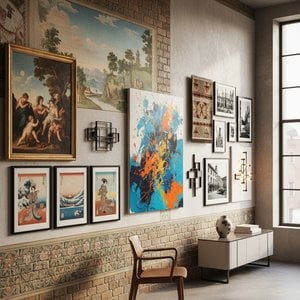
Transforming Spaces: A Comprehensive Exploration of Wall Decor Through Art History & Contemporary Practice
Explore the art of transforming spaces with our comprehensive guide to wall decor. From historical movements to contemporary trends, discover how to curate impactful interiors and commission bespoke artwork for a truly personalized aesthetic.



