


 Vista previa
 Compartir
 Compartir
 Ver detalles

 Descargar
 Ver similares
 Radiografía
 Presentación de diapositivas
Lighthouse and Building, Portland

 Leer más
Giclée / Impresión de arte
Impresiones giclée o en lienzo de calidad de museo con producción rápida y opciones de acabado flexibles. ( Encargar reproducción pintada a mano Comprar descarga)




P118B $10

P118H $10

P118W $10

P438Z $10

P508JH $12

P508YH $12

P805H $10

P805Z $10

P919BZ $10

P919G $10

P919XJ $10

P959ZH $10

P968JZ $12

W106C $8

W218G $10

W218JH $8

W218Y $10

W307PJ $10

W316G $10

W316PJ $8

W316Y $10

W398PJ $8

W4111J $10

W500HY $15

W500JH $15

W692G $12

W849H $8

W940BG $15

W953PJ $8




Elija entre nuestros tamaños predefinidos que respetan las proporciones originales de la obra.

Puede introducir sus propias dimensiones para adaptarse a un marco o espacio específico. Si el tamaño seleccionado no coincide con las proporciones de la imagen original, recortaremos la obra de arte o extenderemos la imagen con un borde con efecto espejo o de color sólido. Se enviará una maqueta digital para su aprobación antes de que comience la producción.
Tenga en cuenta que la vista previa en pantalla no refleja el recorte o la extensión real. Solo la maqueta mostrará con precisión la composición final.
Aunque existen tamaños personalizados, recomendamos seleccionar una dimensión de la lista predefinida para preservar las proporciones originales.
Envío a todo el mundo () en 2 semanas en lugar de las 4/5 semanas estándar. (18 agosto)

Envío exprés gratuito a todo el mundo

Lienzo de lino de alta calidad

Seguro de envío completo

Garantía de reembolso de aranceles aduaneros

Garantía de fidelidad cromática exacta

Política de devolución de 60 días (solo por defectos)

Garantía de devolución del 100% del dinero

Oferta por volumen
 La opción de vidrio solo está disponible en tamaños inferiores a 110 cm.

Lighthouse and Building, Portland
Giclée / Impresión de arte
Tamaño de la reproducción
-


Precio total
$ 62
Descripción de la pieza
Edward Hopper’s Luminous Solitude: Exploring “Lighthouse and Building”
Edward Hopper's "Lighthouse and Building," painted in 1927, isn’t merely a depiction of a coastal scene; it’s a masterful distillation of the anxieties and quiet contemplations characteristic of American Modernism. Completed during a period marked by rapid urbanization and shifting social mores, this watercolor captures a profound sense of isolation—a feeling Hopper consistently explored throughout his oeuvre—within a deceptively simple composition. The painting resides in the Museum of Fine Arts, Boston’s collection, where it continues to fascinate viewers with its subtle interplay of light and shadow and its evocative portrayal of human experience.- Subject Matter: At its core, “Lighthouse and Building” presents a lighthouse perched atop a rugged cliff overlooking the turbulent waters of Lake Superior. Adjacent to it stands a modest building—likely a residential dwelling—adding to the scene’s understated grandeur. The inclusion of two figures – presumably observing the vista – reinforces the theme of solitude and contemplation.
- Style & Technique: Hopper's signature style is instantly recognizable through his use of flattened perspective, muted color palettes dominated by blues and yellows, and a deliberate avoidance of dramatic chiaroscuro (strong contrasts between light and dark). Watercolor lends itself beautifully to capturing atmospheric conditions—the hazy mist clinging to the cliff face—enhancing the painting’s melancholic mood. Hopper meticulously rendered each element with painstaking detail, prioritizing accuracy over expressive gesture.
- Historical Context: The painting emerged from a broader artistic movement grappling with themes of alienation and disillusionment following World War I. Hopper's work reflects the anxieties of a society undergoing rapid transformation, mirroring the psychological landscape of individuals navigating uncertainty and searching for meaning amidst urban sprawl. It’s important to note that the lighthouse itself was constructed in response to maritime disasters—specifically, the Mataafa Storm of 1905—underscoring the painting's connection to concerns about safety and vulnerability.
- Symbolism: The lighthouse serves as a potent symbol of resilience and steadfastness against the forces of nature—a beacon of hope amidst darkness. Simultaneously, it represents isolation and detachment from human companionship. The building alongside it suggests domesticity but also hints at an unspoken separation from the outside world. Hopper’s masterful use of color contributes to this symbolic resonance, conveying a sense of quiet melancholy.
- Emotional Impact: “Lighthouse and Building” succeeds in eliciting a powerful emotional response—one of contemplative stillness and poignant beauty. The painting invites viewers to ponder questions of existence and connection, prompting reflection on the human condition. Hopper’s ability to convey profound emotion through seemingly unremarkable imagery is what cements its place as an enduring masterpiece of American art.
The MFA Boston Reproduction: Quality & Detail
Reproductions of “Lighthouse and Building” offered by MFA Boston Custom Prints utilize state-of-the-art printing technology to faithfully recreate Hopper’s original watercolor, ensuring exceptional color accuracy and textural nuance. Printed on archival paper—specifically Hahnemühle German Etching 304 —these reproductions guarantee longevity and preserve the painting's delicate luminosity for generations to come. The meticulous attention to detail—captured by skilled artisans—captures every subtle shade of blue and yellow, mirroring Hopper’s original artistic vision. Furthermore, MFA Boston Custom Prints provides a comprehensive selection of framing options allowing collectors to personalize their artwork display and elevate its aesthetic impact.Exploring Hopper's Legacy: Beyond “Lighthouse and Building”
Edward Hopper’s influence extends far beyond this iconic image. His exploration of urban solitude—evident in paintings like “Nighthawks” and “Monhegan Houses”—continues to resonate with artists and audiences alike. Consider Hopper’s masterful use of light as a tool for conveying emotion, mirroring the way he captured the essence of modern life. To delve deeper into Hopper's artistic journey, explore articles analyzing his stylistic innovations and thematic preoccupations—particularly his profound engagement with psychological realism. Discover more about Hopper’s work at MFA Boston Custom Prints!Obras relacionadas


Biografía del artista
**vida temprana e influencias**
edward hopper, un destacado pintor y grabador realista estadounidense, nació el 22 de julio de 1882 en Upper Nyack, Nueva York. Su familia, de ascendencia mayoritariamente holandesa, proporcionó una crianza cómoda que le permitió perseguir sus inclinaciones artísticas desde temprana edad. - **inspiraciones:** La obra de Hopper fue influenciada por las escrituras de Ralph Waldo Emerson y los maestros impresionistas franceses Édouard Manet y Edgar Degas. - **formación inicial:** Comenzó estudios de arte con un curso por correspondencia en 1899, posteriormente transfiriéndose a la Escuela de Arte y Diseño de Nueva York.**estilo artístico y temas**
edward hopper's representaciones cuidadosas y con un diseño preciso reflejaban su visión personal de la vida moderna estadounidense. Su obra se puede caracterizar por: - **escenas urbanas y rurales:** Ambos entornos fueron retratados con una mezcla única de realismo y profundidad emocional. - **iluminación:** Un dominio de la luz, a menudo utilizada para evocar sentimientos de aislamiento o contemplación. - **figuras:** A menudo sin rostro o en segundo plano, enfatizando al entorno sobre las figuras.**obras notables y su significado**
- House by the Railroad (Museo de Arte Moderno, Nueva York, Estados Unidos), un ejemplo de la capacidad de Hopper para evocar una sensación de melancolía a través de una composición simple pero poderosa. - Reclining Nude (50 x 35 cm, Nuevo Realismo, acuarela), que muestra su versatilidad para capturar la forma humana.**legado e influencia**
- **influencia en artistas futuros:** El estilo único de Hopper ha influido a numerosos artistas, incluyendo Pierre Sanford Ross, conocido por sus escenas urbanas y rurales. - **popularidad perdurable:** Sus obras continúan cautivando al público con sus temas atemporales de soledad y la condición humana.**explora más en ArtsDot**
- [https://ArtsDot.com/@/edward-hopper](obras de Edward Hopper) - /es/art/show/art-8xyffg-es/compra arte inspirado por los maestros)- Profundiza en el mundo del arte con la extensa colección de ArtsDot.
- Descubre cómo el legado de Edward Hopper continúa inspirando a artistas y amantes del arte.
**referencias**
- [https://ArtsDot.com/@/edward-hopper](Wikipedia: Edward Hopper) - [https://en.wikipedia.org/wiki/edward_hopper](Wikipedia: Biografía de Edward Hopper)
Edward Hopper
1931 - 1967 , Estados Unidos de América
Datos clave
- Artistas Influenciados: ['Pierre Sanford Ross']
- Artistas Que Influyeron:
- Ralph Waldo Emerson
- Édouard Manet
- Edgar Degas
- Fecha De Muerte: 1967
- Fecha De Nacimiento: 22 de julio de 1882
- Lugar De Nacimiento: Upper Nyack, EE. UU.
- Movimiento Artístico: Realismo americano
- Nacionalidad: Estadounidense
- Nombre Completo: Edward Hopper
- Obras Notables:
- House by the Railroad
- Reclining Nude
- Nighthawks
- Gas
- Chop Suey
Artículos relacionados

Edward Hopper: Las 25 Obras Maestras que Definen la Soledad Moderna | ArtsDot
Descubre las 25 obras maestras de Edward Hopper, el pintor de la soledad moderna. Explora su realismo americano, luz y sombra, e icónicas escenas urbanas. Reproducciones de arte en ArtsDot.com para decorar tu hogar con estilo.

Realismo Estadounidense: 10 Obras Maestras que Cambiaron el Arte y la Decoración
Descubre 10 obras maestras del Realismo Estadounidense: Winslow Homer, Edward Hopper y más. Explora la historia, técnica y emoción de estos icónicos cuadros. Encuentra reproducciones de arte de museo en ArtsDot.com.
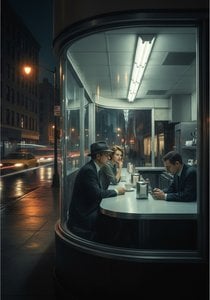
Edward Hopper: American Realism, Urban Isolation & the Poetics of Modern Loneliness
Explore the profound world of Edward Hopper's American realism. Discover the symbolism, themes & enduring legacy of this iconic artist – from 'Nighthawks' to his lesser-known masterpieces. Expert analysis and insights.

Los 10 Paisajes Más Icónicos de la Historia del Arte | ArtsDot
Descubre los 10 paisajes más emblemáticos de la historia del arte, desde Monet a Van Gogh. Explora su significado, técnica y belleza atemporal. Encuentra reproducciones de alta calidad e inspira tu hogar con ArtsDot.com.

Grant Wood & American Regionalism: Identity, Myth & the Rural Landscape
Explore the world of Grant Wood & American Regionalism with ArtsDot. Discover the symbolism behind 'American Gothic', recurring themes, and the movement's lasting impact on art history. High-quality reproductions available.



