


 Vista previa
 Compartir
 Compartir
 Ver detalles

 Descargar
 Ver similares
 Radiografía
 Presentación de diapositivas
Duraznos


 Leer más
Giclée / Impresión de arte
Impresiones giclée o en lienzo de calidad de museo con producción rápida y opciones de acabado flexibles. ( Encargar reproducción pintada a mano Comprar descarga)




P118B $10

P118H $10

P118W $10

P438Z $10

P508JH $12

P508YH $12

P805H $10

P805Z $10

P919BZ $10

P919G $10

P919XJ $10

P959ZH $10

P968JZ $12

W106C $8

W218G $10

W218JH $8

W218Y $10

W307PJ $10

W316G $10

W316PJ $8

W316Y $10

W398PJ $8

W4111J $10

W500HY $15

W500JH $15

W692G $12

W849H $8

W940BG $15

W953PJ $8




Elija entre nuestros tamaños predefinidos que respetan las proporciones originales de la obra.

Puede introducir sus propias dimensiones para adaptarse a un marco o espacio específico. Si el tamaño seleccionado no coincide con las proporciones de la imagen original, recortaremos la obra de arte o extenderemos la imagen con un borde con efecto espejo o de color sólido. Se enviará una maqueta digital para su aprobación antes de que comience la producción.
Tenga en cuenta que la vista previa en pantalla no refleja el recorte o la extensión real. Solo la maqueta mostrará con precisión la composición final.
Aunque existen tamaños personalizados, recomendamos seleccionar una dimensión de la lista predefinida para preservar las proporciones originales.
Envío a todo el mundo () en 2 semanas en lugar de las 4/5 semanas estándar. (13 agosto)

Envío exprés gratuito a todo el mundo

Lienzo de lino de alta calidad

Seguro de envío completo

Garantía de reembolso de aranceles aduaneros

Garantía de fidelidad cromática exacta

Política de devolución de 60 días (solo por defectos)

Garantía de devolución del 100% del dinero

Oferta por volumen
 La opción de vidrio solo está disponible en tamaños inferiores a 110 cm.

Duraznos
Giclée / Impresión de arte
Tamaño de la reproducción
-


Precio total
$ 62
Descripción de la pieza
Peaches: A Moment of Stillness in Impressionist Light
Édouard Manet’s “Peaches” – painted in 1882 – is more than just a depiction of fruit; it's a carefully constructed meditation on light, color, and the quiet beauty of everyday life. This oil-on-canvas work, housed within the National Gallery of Art in Washington D.C., offers a glimpse into Manet’s innovative approach to still life painting, a departure from the rigid academic traditions that dominated the art world at the time. The scene is deceptively simple: three peaches arranged on a rustic table against the backdrop of a serene blue sky. Yet, within this apparent simplicity lies a wealth of artistic intention and a profound understanding of how light interacts with form.
Manet’s style, deeply influenced by Old Masters like Diego Velázquez and Frans Hals, is immediately recognizable. He eschews the smooth, polished surfaces favored by earlier generations, opting instead for loose brushstrokes that capture the fleeting quality of light and shadow. Notice how he doesn't meticulously render each peach; rather, he uses broken color and subtle gradations to suggest their volume and texture. This technique, characteristic of Impressionism, prioritizes capturing an *impression* of reality over a precise representation. The background sky isn’t painted with blended tones but with distinct strokes, creating a sense of depth and atmospheric perspective – a key element in Velázquez's masterful compositions.
Manet: Bridging Tradition and Modernity
Born in Paris in 1832, Édouard Manet was a pivotal figure in the transition from Realism to Impressionism. Initially trained as a lawyer, he abandoned his family’s expectations to pursue his passion for art, studying under Thomas Couture before forging his own distinctive path. Manet's work challenged conventional artistic norms by depicting modern life – scenes of Parisian cafes, theaters, and street vendors – with an honesty and directness that was both revolutionary and controversial. He wasn’t afraid to portray the realities of urban existence, often focusing on marginalized figures and challenging societal expectations.
His influence extends far beyond his own paintings. Manet's innovative use of color, his rejection of academic conventions, and his willingness to depict contemporary subjects paved the way for artists like Claude Monet and Frédéric Bazille, who would later develop the core tenets of Impressionism. The deliberate suppression of transitional tones – those subtle shades that blur the edges between colors – is a hallmark of Manet’s style, contributing to the vibrant, almost luminous quality of “Peaches.” This approach reflects his fascination with capturing the ephemeral effects of light and atmosphere, a central concern for the Impressionist movement.
Still Life as a Canvas for Innovation
Manet was particularly renowned for his still life paintings. These works, often featuring commonplace objects like fruit, flowers, and tableware, served as a testing ground for his artistic innovations. “Peaches” exemplifies this perfectly. The arrangement is deliberately unadorned – no elaborate drapery or ornate settings distract from the subject matter itself. Instead, Manet focuses entirely on the peaches, using them to explore the interplay of light, color, and texture. The choice of fruit—peaches—adds a layer of symbolism; they represent abundance, fertility, and the fleeting beauty of summer.
Consider the subtle variations in tone across the peaches’ surfaces – the darker shadows, the highlights that catch the light, the delicate blush of color. These details are rendered with remarkable sensitivity, demonstrating Manet's keen observation skills and his ability to capture the nuances of natural phenomena. The painting also subtly references earlier still life traditions, particularly those of Frans Hals, who was known for his vibrant depictions of fruit bowls. However, Manet’s approach is distinctly modern – he prioritizes capturing an *impression* of the peaches rather than creating a meticulously detailed representation.
A Reproduction Worth Admiring
ArtsDot offers exquisite, hand-painted reproductions of “Peaches,” allowing you to bring this iconic artwork into your home or office. Our skilled artisans meticulously recreate Manet’s brushstrokes and color palette, ensuring that the reproduction captures the essence of the original painting with remarkable fidelity. Whether you're an art enthusiast, a collector, or simply seeking a beautiful addition to your décor, our “Peaches” reproduction is a timeless piece that celebrates the beauty of Impressionism and the genius of Édouard Manet. Explore more about this masterpiece on ArtsDot.com.
Obras relacionadas


Biografía del artista
vida temprana y carrera
Édouard Manet, un pintor modernista francés, nació el 23 de enero de 1832 en París. Desafiando sus raíces acomodadas y una trayectoria naval predeterminada, Manet emergió como un audaz pintor modernista francés cuyas lienzos capturaban la vitalidad de la vida del siglo XIX. Es ampliamente aclamado por su papel pionero en el impresionismo, guiando el arte hacia territorios inexplorados fuera del realismo.obras notables
Las primeras obras maestras de Manet, el almuerzo en el césped (Le déjeuner sur l'herbe) (1863) y Olympia (1865), fueron radicales, desafiando las normas artísticas y provocando indignación entre los tradicionalistas. Estas obras provocadoras merecieron el aplauso de sus compañeros visionarios, sembrando las semillas del impresionismo. * el almuerzo en el césped (Le déjeuner sur l'herbe) (1863) - una pintura que provocó controversia tanto entre críticos como la academia de bellas artes. * Olympia (1865) - una obra que causó gran revuelo debido a su representación de una mujer desnuda blanca acompañada por una criada negra.museos y colecciones
Las obras de Manet se pueden encontrar en varios museos de todo el mundo, incluyendo: * Musée d'Orsay (París, Francia) - hogar de una extensa colección de pinturas de Manet, incluyendo Olympia. * Museo de Bellas Artes (Boston, Estados Unidos) - presenta el retrato de Victorine Meurent, una obra notable en su obra.legado e influencia
El estilo innovador de Manet, caracterizado por pinceladas amplias y rápidas, iluminación de estudio y profundidad superficial, ha sido una gran influencia para los pintores futuros. Su legado se puede ver en las obras de numerosos artistas que han seguido sus pasos.- Impresionismo: su trabajo pionero en este estilo lo ha convertido en un nombre familiar entre los entusiastas del arte.
- Realismo: su rechazo de los enfoques realistas tradicionales allanó el camino para una nueva generación de artistas.
- Arte moderno: las contribuciones de Manet a la evolución del arte moderno son innegables, consolidando su lugar en los anales de la historia del arte.
lectura adicional y exploración
* Descubra más sobre la vida y obra de Édouard Manet en ArtsDot. * Explore la colección del Musée d'Orsay, que presenta una amplia gama de pinturas de Manet, incluyendo Olympia, en ArtsDot's página del museo.
Édouard Manet
1832 - 1883 , Francia
Datos clave
- Artistas Influenciados:
- Claude Monet
- Pierre-Auguste Renoir
- Edgar Degas
- Artistas Que Influyeron:
- Thomas Couture
- Gustave Courbet
- Diego Velázquez
- Fecha De Muerte: 1883
- Fecha De Nacimiento: 23 de enero de 1832
- Lugar De Nacimiento: París, Francia
- Movimiento Artístico: Impresionismo, Realismo
- Nacionalidad: Francés
- Nombre Completo: Édouard Manet
- Obras Notables:
- Le Déjeuner sur l'herbe
- Olympia
- Madame Manet
- Un joven pelando una pera
Artículos relacionados

Édouard Manet: Las 25 Obras Maestras del Impresionismo para Decorar tu Hogar con Arte
Descubre las 25 obras maestras de Édouard Manet, el rebelde del impresionismo. Explora su historia, técnica y significado en cada cuadro famoso. Reproducciones de arte de museo para decorar tu hogar con estilo. ¡Explora la colección completa en ArtsDot.com!

Las 10 Obras Maestras del Azul Pizarra: Arte, Historia y Decoración
Descubre las 10 pinturas más famosas dominadas por el azul pizarra. Explora la historia, técnica y belleza de Monet, Van Gogh y otros maestros. Encuentra reproducciones de arte exclusivas para decorar tu hogar en .

Paul Cézanne: Las 25 Obras Maestras que Definieron el Arte Moderno | ArtsDot
Descubre las 25 obras maestras de Paul Cézanne que revolucionaron el arte moderno. Explora su técnica, inspiración y significado en paisajes, bodegones y retratos. Reproducciones de alta calidad para decorar tu hogar con arte inolvidable. ¡Explora la colección completa en ArtsDot.com!
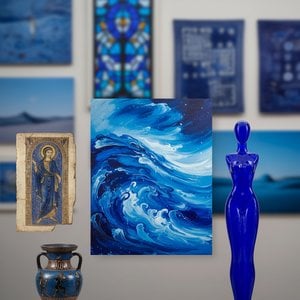
The Allure of Azure: Exploring the Symbolic & Aesthetic Depths of Blue in Art History
Explore the rich history of blue in art! Discover its symbolism, from ancient pigments to modern masterpieces by Kandinsky & Seurat. Uncover the psychological impact and cultural meanings behind this captivating hue.

Impresionismo: 10 Obras Maestras que Capturan la Luz y el Momento
Descubre 10 obras maestras del impresionismo de Monet, Renoir y Degas. Explora la luz, el color y las historias detrás de estos icónicos cuadros. Reproducciones de arte en ArtsDot.com para decorar tu hogar con estilo.



