


 Vista previa
 Compartir
 Compartir
 Ver detalles
 Guía
Guía

 Descargar
 Ver artículos similares
 Radiografía
 Presentación de diapositivas
 Estadísticas
Study


 Leer más
Reproducción al óleo hecha a mano
Óleo sobre lienzo pintado a mano en el tamaño y marco de su elección, realizado por encargo por nuestros artistas. ( Cambiar a formato impreso Ver versión en imagen digital)




P118B €10

P118H €10

P118W €10

P438Z €10

P508JH €12

P508YH €12

P805H €10

P805Z €10

P919BZ €10

P919G €10

P919XJ €10

P959ZH €10

P968JZ €12

W106C €8

W218G €10

W218JH €8

W218Y €10

W307PJ €10

W316G €10

W316PJ €8

W316Y €10

W398PJ €8

W4111J €10

W500HY €15

W500JH €15

W692G €12

W849H €8

W940BG €15

W953PJ €8




Elija entre nuestros tamaños predefinidos que respetan las proporciones originales de la obra.

Escriba el ancho y el alto que necesite para adaptarse a su marco o a su pared. Al ser una obra pintada a mano, para un tamaño con una forma distinta, el artista puede pintar un poco más alrededor de la imagen o recortar un poco; usted elige. Le enviaremos una maqueta digital para su aprobación antes de comenzar la pintura. La imagen que se muestra en esta página no refleja el resultado real; solo la maqueta lo hace.
Tras realizar el pedido, el equipo de ArtsDot.com enviará un correo electrónico al cliente para solicitar instrucciones y proporcionarle una vista previa del boceto.
Envío a todo el mundo () en 3-4 semanas en lugar de las 5 semanas estándar. (19 octubre). Sin comprometer la calidad.

Envío exprés gratuito a todo el mundo

Lienzo de lino de alta calidad

Seguro de envío completo

Garantía de reembolso de impuestos aduaneros

Garantía de fidelidad cromática exacta

Política de devolución de 100 días (solo por defectos)

Garantía de devolución del 100% del dinero

Oferta por volumen
 La opción de vidrio solo está disponible en tamaños inferiores a 110 cm.

Study
Técnica de reproducción
Tamaño de la reproducción
-


Precio total
€ 229
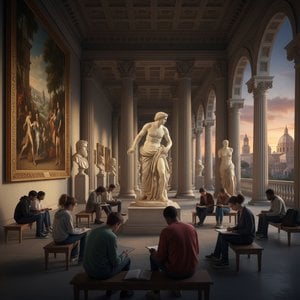
Donato Bramante’s Umbrella Vault: A Synthesis of Byzantine Grandeur and Renaissance Innovation
Donato Bramante’s “Umbrella Vault,” executed in 1493 for the Basilica di San Pietro in Montorio, Rome, stands as a pivotal moment in architectural history—a testament to Bramante's masterful assimilation of influences from both Byzantine tradition and burgeoning Renaissance ideals. Situated atop the basilica’s central nave, this monumental fresco represents more than just decorative embellishment; it embodies a profound conceptual shift toward spatial representation that would profoundly impact subsequent artistic endeavors.
The vault itself is conceived as an inverted dome, mirroring the structure of Hagia Sophia in Constantinople—a daring departure from prevailing Roman architectural conventions. Bramante’s intention wasn't merely to replicate Byzantine aesthetics; rather, he sought to elevate them to a new level of sophistication by applying Renaissance geometric principles. The vault’s curvature is meticulously calculated using mathematical formulas derived from Euclid and Apollonius, reflecting the humanist fascination with rational order and demonstrating Bramante’s commitment to reviving classical ideals.
- Geometric Precision: Bramante employed advanced geometry—Euclidean circles and parabolas—to achieve unparalleled accuracy in its construction.
- Symbolic Resonance: The inverted dome symbolizes the heavens, mirroring the Byzantine cathedral’s soaring interior space and reinforcing the basilica's spiritual significance.
- Color Palette: Employing muted hues of ochre, umber, and ivory—characteristic of Renaissance fresco painting—Bramante created a serene atmosphere that complements the vault’s grandeur.
The Basilica Context: A Dialogue Between Faith and Reason
San Pietro in Montorio was originally conceived as a mausoleum for Pope Julius II, commemorating his deceased son Cesare Borgia. However, Bramante swiftly transformed it into a cathedral—a bold decision that underscored the humanist conviction that art could serve both aesthetic pleasure and moral instruction. This architectural undertaking exemplifies the Renaissance’s ambition to reconcile Christian piety with classical erudition.
The basilica's location on Janiculan Hill—one of Rome’s seven hills—holds symbolic importance, reflecting the biblical narrative of Jesus’ ascension into heaven. Bramante deliberately positioned the vault above the nave to emphasize this spiritual dimension, creating a visual metaphor for divine transcendence.
Technique and Artistic Innovation
Bramante's fresco technique involved layering pigments onto wet plaster—a method perfected by Giotto and Brunelleschi—to achieve remarkable luminosity and depth. The artist skillfully utilized sfumato—a subtle blending of colors—to soften contours and create an illusion of atmospheric perspective, enhancing the vault’s visual impact.
Furthermore, Bramante's masterful use of foreshortening—the depiction of objects receding into space—demonstrates his mastery of Renaissance perspectival principles. This technique contributes to the vault’s sense of realism and reinforces its monumental scale, immersing viewers in a captivating illusion of depth.
Emotional Impact: A Vision of Heavenly Harmony
"Umbrella Vault" transcends mere architectural representation; it aspires to evoke contemplation and inspire awe. The vault's harmonious proportions—derived from classical geometry—communicate an idealized vision of beauty and order, reflecting the Renaissance humanist belief in human reason’s capacity to grasp divine truth.
The fresco’s subdued color palette fosters a tranquil mood, inviting viewers to immerse themselves in the basilica’s spiritual atmosphere. Ultimately, Bramante's masterpiece embodies the Renaissance spirit—a celebration of artistic innovation coupled with reverence for religious tradition—leaving an indelible mark on architectural history and continuing to captivate audiences centuries later.
Preguntas y respuestas
¿Hay una presentación de diapositivas para "Study" de Donato Bramante?
El diaporama de "Study" puede verse en la página Presentación de diapositivas de la obra.
¿En qué movimiento y en qué época se sitúa "Study" de Donato Bramante?
En "Study" de Donato Bramante, el movimiento Renaissance se encuentra con la era Renacimiento.
¿A qué etapa de la carrera de Donato Bramante pertenece "Study"?
"Study" representa el High Renaissance de Donato Bramante.
Obras relacionadas


![Projeto De Um Orfanato Militar [itália, Projeto: Fachada, Corte E Estudo De Detalhes] — Auguste Henri Victor Grandjean De Montigny, Neoclassicism](/media/artworks/images-thumb/2f/d4/2fd44529898111ac2b1b9866f47323b4.jpg)

Biografía del artista
El Arquitecto del Alto Renacimiento
Donato Bramante se erige como una de las figuras más transformadoras en la historia de la arquitectura occidental, un visionario que tendió un puente entre las tradiciones del gótico tardío y el amanecer luminoso del Alto Renacimiento. Nacido como Donato di Pascuccio d'Antonio en Fermignano, Italia, su viaje a través de los paisajes artísticos de Milán y Roma le permitió remodelar la esencia misma de los espacios sagrados y seculares. Si bien también fue pintor, su verdadero legado reside en su capacidad para traducir los ideales humanistas a la piedra, introduciendo un sentido de gracia matemática y armonía clásica que definiría toda una era del diseño europeo.
Sus inicios en Milán sirvieron como un terreno fértil para la experimentación, donde comenzó a alejarse de las estructuras rígidas y verticales del periodo gótico hacia un enfoque más equilibrado y rítmico. En obras como sus representaciones del Exterior de la Iglesia para Santa Maria delle Grazie, se puede observar el surgimiento de un diálogo profundo entre lo terrenal y lo divino. Bramante utilizó el lenguaje de la antigüedad —capiteles corintios, robustas columnas clásicas e intrincadas maravillas geométricas como los rosetones— para crear estructuras que se sentían tanto monumentales como íntimamente serenas. Su filosofía arquitectónica estaba profundamente arraigada en el redescubrimiento de la sabiduría griega y romana, empleando proporciones matemáticas precisas y la sección áurea para alcanzar una sensación de orden celestial.
Un Legado de Innovación e Ilusión
A medida que la influencia de Bramante se expandió hacia Roma, se convirtió en una figura central en el desarrollo del estilo del Alto Renacimiento. Su maestría no se limitó a la mera construcción; poseía una capacidad asombrosa para manipular el espacio y la percepción. Esto se manifiesta quizás con mayor brillantez en su trabajo en Santa Maria presso San Satiro, donde empleó la magia arquitectónica para disolver las fronteras entre la realidad y el arte, creando ilusiones que trascendían las limitaciones físicas. Su talento para la orquestación también es evidente en el Tempietto, una pequeña capilla exenta que sirve como obra maestra de la proporción y tributo simbólico al lugar del martirio de San Pedro.
Más allá de sus logros estructurales, la obra de Bramante a menudo encarnaba las aspiraciones espirituales de su época. Sus diseños para el Vaticano, incluyendo la impresionante Escalera de Bramante con su diseño de doble hélice, tenían la intención de elevar la residencia papal a un símbolo de autoridad divina. Incluso en sus pinturas menos conocidas, como Cristo en la Columna, existe una sensación palpable de la profundidad psicológica y la observación meticulosa que caracterizarían toda su obra. A través de su habilidad para fundir el pesado peso de la piedra con la ligereza del espíritu, Donato Bramante hizo más que construir monumentos; él forjó un lenguaje visual para el alma del Renacimiento.

Donato Bramante
1444 - 1514 , Italia
Datos clave
- Artistic Movement Or Style: Alto Renacimiento
- Artists Or Movements Influenced By This Artist: ['Miguel Ángel']
- Date Of Birth: 1444
- Date Of Death: 1514
- Full Name: Donato di Pascuccio d'Antonio
- Nationality: Italiano
- Notable Artworks:
- Tempietto
- Cristo en la columna
- Escalera de caracol
- Exterior de la iglesia
- Place Of Birth: Fermignano, Italia
Artículos relacionados

Los 10 Maestros del Neoclasicismo: Obras que Definieron una Era |
Descubre los 10 imprescindibles del Neoclasicismo con . Obras de David, Ingres y Canova que marcaron una era. Historia, técnica y significado de cada pieza. Encuentra reproducciones de arte de museo en
El Legado Perenne del Clasicismo: Principios Fundamentales, Evolución e Influencia en el Arte Occidental
Descubre la historia del arte clásico occidental: desde sus orígenes en Grecia y Roma hasta su influencia en el Renacimiento y las corrientes contemporáneas. Análisis experto, artistas clave y obras maestras imperdibles.

The Nuances of Graphite: Exploring Emotional Depth & Technical Mastery in Pencil Drawing
Explore the captivating world of graphite drawing! Discover its rich history, master essential techniques like chiaroscuro, and learn how artists evoke emotion through this timeless medium. Expert insights for art enthusiasts.

The Alchemy of Graphite: An Expert Guide to Mastering Detail and Depth in Pencil Sketching
Unlock the secrets of graphite sketching with our expert guide for art students. Learn to master pencil grades, create realistic depth, and capture intricate textures through professional techniques designed to elevate your observational drawing skills.

The Eloquent Line: Exploring the Artistic Significance of Sketches Across Movements and Media
Explore the profound artistic significance of sketches throughout history. From Renaissance masters to modern innovators like Van Gogh & Guston, discover how these foundational works reveal technique, emotion, and vision. Learn more at ArtsDot.


