


 Vista previa
 Compartir
 Compartir
 Ver detalles
 Guía
Guía

 Descargar
 Ver artículos similares
 Radiografía
 Presentación de diapositivas
 Estadísticas
Sketch
 Oil On Canvas
- WallArt
- Early Modern
 1948
1948 132.0 x 99.0 cm
 Galería de Arte Walker
 Leer más
La obra de arte que se muestra en esta página está protegida por las leyes de propiedad intelectual, lo que significa que no podemos crear ni vender legalmente una reproducción idéntica. Esta protección se hace cumplir en virtud de acuerdos internacionales como el Convenio de Berna y por las leyes nacionales, incluidas aquellas establecidas por el Ley de derechos de autor de los EE. UU. - Título 17.
Este método cumple plenamente con las normativas de derechos de autor, ya que no implica la copia ni la duplicación de la obra protegida. En su lugar, se trata de una reinterpretación creativa: una nueva pintura influenciada por la original, pero que no es idéntica a ella.
Giclée / Impresión de arte
Impresiones giclée o en lienzo de calidad de museo con producción rápida y opciones de acabado flexibles. ( Encargar reproducción pintada a mano Ver versión en imagen digital)




P118B €10

P118H €10

P118W €10

P438Z €10

P508JH €12

P508YH €12

P805H €10

P805Z €10

P919BZ €10

P919G €10

P919XJ €10

P959ZH €10

P968JZ €12

W106C €8

W218G €10

W218JH €8

W218Y €10

W307PJ €10

W316G €10

W316PJ €8

W316Y €10

W398PJ €8

W4111J €10

W500HY €15

W500JH €15

W692G €12

W849H €8

W940BG €15

W953PJ €8




Elija entre nuestros tamaños predefinidos que respetan las proporciones originales de la obra.

Puede introducir sus propias dimensiones para adaptarse a un marco o espacio específico. Si el tamaño seleccionado no coincide con las proporciones de la imagen original, recortaremos la obra de arte o extenderemos la imagen con un borde con efecto espejo o de color sólido. Se enviará una maqueta digital para su aprobación antes de que comience la producción.
Tenga en cuenta que la vista previa en pantalla no refleja el recorte o la extensión real. Solo la maqueta mostrará con precisión la composición final.
Aunque existen tamaños personalizados, recomendamos seleccionar una dimensión de la lista predefinida para preservar las proporciones originales.
Envío a todo el mundo () en 2 semanas en lugar de las 4/5 semanas estándar. (10 octubre)

Envío exprés gratuito a todo el mundo

Lienzo de lino de alta calidad

Seguro de envío completo

Garantía de reembolso de impuestos aduaneros

Garantía de fidelidad cromática exacta

Política de devolución de 100 días (solo por defectos)

Garantía de devolución del 100% del dinero

Oferta por volumen
 La opción de vidrio solo está disponible en tamaños inferiores a 110 cm.

Sketch
Giclée / Impresión de arte
Tamaño de la reproducción
-


Precio total
€ 53
The Genesis of a Vision: David Bomberg's 'Sketch'
David Bomberg’s “Sketch,” painted in 1948, isn’t merely a depiction of a scene; it’s an embodiment of the artist’s evolving vision during a pivotal period in British art. Born into a Polish-Jewish family in Birmingham and deeply influenced by the avant-garde movements swirling around London – Cubism, Futurism, and the radical ideas championed by Roger Fry – Bomberg sought to translate these complex influences into a distinctly personal language. This particular work, created shortly after his expulsion from the Slade School of Art for his perceived “audacity,” reflects both a rejection of academic constraints and an embrace of dynamic abstraction. The painting’s raw energy and fragmented forms speak volumes about the anxieties and transformations shaping the post-war artistic landscape.

A Symphony of Color and Geometry
Bomberg’s technique in “Sketch” is immediately arresting. He employs a bold, almost aggressively simplified palette dominated by vibrant reds, oranges, and yellows – colors that evoke both heat and intensity. These hues are layered and blended with remarkable skill, creating a sense of depth and movement despite the painting's predominantly geometric structure. The composition itself is fractured, composed of interlocking planes and angular shapes that seem to vibrate with energy. This deliberate fragmentation isn’t chaotic; rather, it mirrors the artist’s exploration of form and his desire to capture not just what he *saw*, but how he *felt* about what he saw. The use of thick impasto – applying paint in heavy layers – adds a tactile quality to the work, inviting the viewer to engage with its surface.
- Color Palette: Primarily reds, oranges, and yellows; punctuated by blues and greens.
- Technique: Bold impasto, layered application of paint, geometric abstraction.
- Composition: Fragmented planes and angular shapes creating a sense of dynamism.
Roots in the Whitechapel Boys and Beyond
Bomberg was part of the “Whitechapel Boys,” a group of young artists who challenged the established artistic conventions of early 20th-century London. This collective, including Mark Gertler and Stanley Spencer, were deeply influenced by the avant-garde movements emerging from Paris and Italy. His time at the Slade School of Art, under the tutelage of Henry Tonks, provided a crucial foundation, but Bomberg quickly surpassed his teacher’s more traditional approach. His work reflects this trajectory, incorporating elements of Cubism – particularly in its emphasis on multiple perspectives – alongside the dynamism of Futurism and the emotional intensity of Expressionism. Further research reveals that Bomberg's exploration of Jerusalem Church (as documented in a separate ArtsDot article) demonstrates his continued interest in capturing spiritual themes through abstract forms.
Decoding the Emotional Landscape
“Sketch” is more than just a visually striking composition; it's an exploration of emotional states. The intense colors and fragmented forms evoke feelings of both excitement and unease. Some art historians interpret the painting as a reflection of Bomberg’s personal struggles, particularly his experiences in the trenches during World War I. The dynamism of the composition suggests a restless spirit, while the underlying geometric structure hints at an attempt to impose order on chaos. Ultimately, “Sketch” invites viewers to contemplate the complexities of human experience and the power of art to capture the intangible.
Preguntas y respuestas
¿Quién es el artista detrás de "Sketch"?
"Sketch" se atribuye a David Bomberg.
¿A qué etapa de la carrera de David Bomberg pertenece "Sketch"?
"Sketch" pertenece al Early Modern de la trayectoria de David Bomberg. Esta clasificación vincula la obra con el desarrollo del artista.
¿En qué año se creó "Sketch"?
"Sketch" data de 1948. La fecha sitúa la obra dentro de la trayectoria de David Bomberg y de su época.
¿Cómo se combinan el contraste y la armonía en "Sketch"?
La composición cromática de "Sketch" de David Bomberg combina un contraste Serene con una armonía Unified Palette.
¿Hay una presentación de diapositivas para "Sketch" de David Bomberg?
El diaporama de "Sketch" puede verse en la página Presentación de diapositivas de la obra.
¿Cómo puedo descargar la imagen de "Sketch" de David Bomberg?
Hay una descarga disponible para "Sketch": la página de Descargar de la obra ofrece descarga de una imagen digital en alta resolución.
¿A qué edad creó David Bomberg "Sketch"?
David Bomberg realizó "Sketch" a la edad de 58. El artista nació en 1890 y la obra data de 1948.
Obras relacionadas


Biografía del artista
Primeros Años y Formación Artística
- Nacido: Birmingham, Reino Unido (5 de diciembre de 1890)
- Fallecido: Londres, Reino Unido (19 de agosto de 1957)
- Uno de los 'Whitechapel Boys' – un grupo de artistas del East End que surgieron a principios del siglo XX.
Nacido en Birmingham, hijo de inmigrantes judíos polacos, Abraham y Rebecca Bomberg. La familia se mudó a Whitechapel, Londres, en 1895.
Inicialmente estudió en la Escuela Técnica de Arte y Artesanía de la Ciudad y el Condado antes de formarse como litógrafo en Birmingham.
Estudió bajo Walter Sickert en la Escuela de Arte Westminster (1908-1910), donde se vio influenciado por el enfoque de Sickert en la forma y la vida urbana.
Gran exposición a Paul Cézanne a través de la exposición de 1910 de Roger Fry "Manet y los Postimpresionistas".
Asistió a la Escuela de Arte Slade (1911), ganando el Premio Tonks por su dibujo del compañero estudiante Isaac Rosenberg.
Años de Vanguardia: Cubismo, Futurismo y Controversia
- En la Slade, Bomberg formó parte de una generación notable que incluía a Mark Gertler, Stanley Spencer, C.R.W. Nevinson y Dora Carrington.
- Influenciado por las exposiciones de 1912 en Londres de los futuristas italianos y la segunda exposición postimpresionista de Fry (Picasso, Matisse, Fauvistas, Wyndham Lewis).
- Desarrolló un estilo distintivo que combinaba el Cubismo y el Futurismo – caracterizado por composiciones geométricas, paletas de colores limitadas, figuras angulares y estructuras en forma de cuadrícula.
- Su enfoque radical condujo a su expulsión de la Escuela de Arte Slade en 1913, considerado demasiado audaz para los métodos convencionales de la institución.
- Estuvo brevemente asociado con los Talleres Omega del Grupo de Bloomsbury y expuso con el Grupo Camden Town.
- Mostró afinidad con el movimiento Vorticista de Wyndham Lewis pero permaneció independiente, negándose a participar plenamente.
De la Guerra al Paisaje: Un Cambio en el Estilo
Las experiencias como soldado privado durante la Primera Guerra Mundial impactaron profundamente su visión artística, lo que llevó a un alejamiento de la abstracción.
La década de 1920 vio a Bomberg adoptar un estilo más figurativo, centrándose en retratos y paisajes dibujados directamente de la naturaleza.
Desarrolló una técnica cada vez más expresionista, marcada por el impasto texturizado y la intensidad emocional.
Extensos viajes por Oriente Medio (especialmente Palestina) y Europa influyeron significativamente en su obra posterior. Sus representaciones de Jerusalén son particularmente notables.
Últimos Años y Legado
- De 1945 a 1953, enseñó en Borough Polytechnic (ahora Universidad de Londres South Bank), influyendo en una generación de artistas que incluye a Frank Auerbach, Leon Kossoff, Philip Holmes, Cliff Holden, Edna Mann, Dorothy Mead, Gustav Metzger, Dennis Creffield, Cecil Bailey y Miles Richmond.
- Se casó con la pintora paisajista Lilian Holt.
- A pesar de los períodos de relativa oscuridad durante su vida, la obra de Bomberg ha ganado un reconocimiento cada vez mayor en las últimas décadas como una contribución significativa al arte moderno británico.
- La Casa David Bomberg se encuentra en la Universidad de Londres South Bank en su honor.
- Su legado reside en su síntesis única de los movimientos vanguardistas europeos y su posterior desarrollo de un estilo paisajístico poderoso y expresivo que capturó la esencia del lugar y la experiencia humana.

David Bomberg
1890 - 1957 , Reino Unido
Datos clave
- Artistas Influenciados:
- Frank Auerbach
- Leon Kossoff
- Artistas Que Influyeron:
- Paul Cézanne
- Walter Sickert
- Fecha De Fallecimiento: 19 de agosto de 1957
- Fecha De Nacimiento: 5 de diciembre de 1890
- Lugar De Nacimiento: Birmingham, Reino Unido
- Movimiento Artístico:
- Cubismo
- Futurismo
- Expresionismo
- Nacionalidad: Británico
- Nombre Completo: David Garshen Bomberg
- Obras Notables:
- Autorretrato (1937)
- Hermana del artista (1929)
- Jerusalén
Artículos relacionados

Las 10 Obras Maestras del Azul Pizarra: Arte, Historia y Decoración
Descubre las 10 pinturas más famosas dominadas por el azul pizarra. Explora la historia, técnica y belleza de Monet, Van Gogh y otros maestros. Encuentra reproducciones de arte exclusivas para decorar tu hogar en .

The Eloquent Line: Exploring the Artistic Significance of Sketches Across Movements and Media
Explore the profound artistic significance of sketches throughout history. From Renaissance masters to modern innovators like Van Gogh & Guston, discover how these foundational works reveal technique, emotion, and vision. Learn more at ArtsDot.
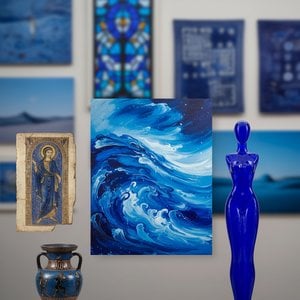
The Allure of Azure: Exploring the Symbolic & Aesthetic Depths of Blue in Art History
Explore the rich history of blue in art! Discover its symbolism, from ancient pigments to modern masterpieces by Kandinsky & Seurat. Uncover the psychological impact and cultural meanings behind this captivating hue.

Crimson Threads of Narrative: Exploring Symbolism & Representation in Artworks Featuring the Red Dress
Explore the rich symbolism of the red dress in art history! From ancient power displays to iconic portraits like Cézanne’s 'Madame Cezanne', discover the cultural and artistic significance behind this captivating color. Expert analysis & insights.

David Bomberg: Reassessing the Pioneering Spirit of Early British Abstraction
Explore the groundbreaking work of David Bomberg, a pivotal figure in British abstraction. Discover his artistic evolution, influences, and lasting legacy through insightful analysis & expert commentary.


