
- Inicio

- Impresión en lienzo
- David Bailly
- Self-Portrait

 Encargar reproducción Comprar imagen en alta resolución
 Enviar
 Compartir
 Detalles
 Añadir a favoritos

 Descargar
 Similares
 Radiografía
 Presentación de diapositivas
Self-Portrait
 Acrylic On Paper
- Other
- Baroque
 1625
1625 183.0 x 137.0 cm
 Rijksmuseum
 Ver más
Giclée / Impresión de arte
Impresión giclée o en lienzo de calidad de museo con producción rápida y opciones de acabado flexibles.




































Elija entre nuestros tamaños predefinidos que respetan las proporciones originales de la obra.

Puede introducir sus propias dimensiones para adaptarse a un marco o espacio específico. Si el tamaño seleccionado no coincide con las proporciones de la imagen original, recortaremos la obra de arte o extenderemos la imagen con un borde con efecto espejo o de color sólido. Se enviará una maqueta digital para su aprobación antes de que comience la producción.
Tenga en cuenta que la vista previa en pantalla no refleja el recorte o la extensión real. Solo la maqueta mostrará con precisión la composición final.
Aunque existen tamaños personalizados, recomendamos seleccionar una dimensión de la lista predefinida para preservar las proporciones originales.
Entrega mundial () en 2 semanas en lugar de las 4/5 semanas estándar. (10 julio)

Envío exprés gratuito a todo el mundo

Lienzo de lino de alta calidad

Seguro de envío total

Garantía de reembolso de impuestos aduaneros

Garantía de fidelidad de color

Política de devolución de 60 días (solo por defectos)

Garantía de devolución del 100% del dinero

Descuento por pedido múltiple
 La opción de vidrio solo está disponible en tamaños inferiores a 110 cm.

Self-Portrait
Giclée / Impresión de arte
Tamaño de la reproducción
-


Precio total final
-
Descripción de la obra
David Bailly’s “Self-Portrait” – A Window into Dutch Golden Age Soul
David Bailly's "Self-Portrait," painted in 1625, isn’t merely a likeness; it’s a carefully constructed meditation on identity, artistry, and the fleeting nature of existence—a quintessential example of the introspective spirit flourishing during the Netherlands’ Golden Age. This remarkable work, rendered in meticulous pen and ink on light brown paper, offers a rare glimpse into the mind of an artist deeply engaged with his craft and the world around him. The painting immediately draws the viewer in with Bailly's direct gaze, a subtle challenge and invitation to contemplate the scene before them.
The composition is deceptively simple yet profoundly layered. Bailly presents himself in a three-quarter pose, seated at a wooden table cluttered with the tools of his trade: brushes, scissors, and a rolled-up sheet of paper—each element whispering tales of creative process and intellectual pursuit. The stark contrast between the dark, densely hatched areas of his clothing and the lighter, more open spaces around him immediately establishes a sense of depth and texture. Bailly’s face is rendered with an astonishing level of detail; the delicate lines defining his curly hair, the prominent nose, and the expressive eyes all contribute to a portrait that feels remarkably alive. The inclusion of a white collar, a fashionable accessory of the period, adds a touch of formality while simultaneously highlighting the artist's self-awareness.
The Baroque Influence & Vanitas Symbolism
Bailly’s style firmly resides within the Baroque tradition, though tempered by his distinctly Dutch sensibility. The influence is evident in the dramatic lighting—a diffused quality that casts subtle shadows and highlights—and the intricate detailing of every element within the composition. However, unlike the grandiosity often associated with Baroque art, Bailly's work possesses a quiet intimacy. He masterfully employs hatching and cross-hatching to build up tonal values, creating a sense of volume and texture without resorting to heavy brushstrokes or vibrant colors. This technique is particularly evident in the depiction of his jacket, where the meticulous lines create a complex pattern that suggests both skill and patience.
Crucially, “Self-Portrait” incorporates elements of *vanitas*, a symbolic genre popular during the Baroque period. The inclusion of tools like scissors and the rolled-up paper serves as reminders of the ephemeral nature of artistic creation—a fleeting moment captured on paper. The table itself is laden with objects that speak to mortality: a partially consumed candle, suggesting the passage of time; and the very act of painting, an endeavor requiring sustained effort and ultimately leading to the artist’s own eventual demise. These subtle yet potent symbols invite contemplation on themes of life, death, and the transient beauty of the world.
A Window into a Dutch Master's Life
Beyond its artistic merits, “Self-Portrait” offers valuable insights into the life of David Bailly himself. Born in Leiden in 1584, Bailly’s early training involved apprenticeships with skilled craftsmen—a testament to the importance of practical experience in the Netherlands’ burgeoning art scene. His travels throughout Europe, particularly his sojourn in Rome, exposed him to the artistic innovations of the Renaissance and Baroque periods, which undoubtedly influenced his style. The painting can be seen as a reflection of this journey – a distillation of experiences and influences into a single, powerful image.
Bailly’s legacy extends beyond his portraits and still lifes. He was also a respected teacher, passing on his knowledge and techniques to subsequent generations of artists. “Self-Portrait” stands as a poignant reminder of the artist's dedication to both his craft and his students, solidifying his place as a pivotal figure in Dutch Golden Age art. It’s a work that continues to resonate with viewers today, offering a glimpse into the soul of an extraordinary man and the enduring power of artistic self-expression.
Further Exploration & Reproduction Details
For those seeking deeper understanding, resources like WikiArt (https://www.wikiart.org/en/david-bailly/self-portrait-1625) and Wikipedia (https://en.wikipedia.org/wiki/David_Bailly) offer extensive biographical information and critical analyses of Bailly’s work. The painting itself is a remarkable example of 17th-century artistry, showcasing the precision and skill of pen and ink techniques.
ArtsDot offers high-quality reproductions of “Self-Portrait,” meticulously crafted to capture the essence of Bailly's original masterpiece. These reproductions are ideal for interior design, art collecting, or simply as a beautiful reminder of this iconic work of Dutch Golden Age art. Consider commissioning a hand-painted reproduction – a truly unique and authentic addition to any collection.
Obras similares


Biografía del artista
David Bailly: Una Vida en el Arte de la Edad de Oro Neerlandesa
David Bailly (1584-1657) fue un pintor de la llamada Edad Dorada de la pintura holandesa, cuya obra refleja una profunda sensibilidad artística y filosófica. Aunque no ostentó fama internacional como algunos otros artistas contemporáneos, Bailly dejó una huella significativa en el panorama artístico neerlandés del siglo XVII, destacándose por su maestría en el retrato realista y sus conmovedoras pinturas *vanitas*.Primeros Años y Formación (1584-1608)
David Bailly nació en Leiden, Países Bajos, hijo de Peter Bailly, un inmigrante flamenco que ejercía la profesión de calígrafo y maestro de esgrima. Desde temprana edad recibió instrucción artística bajo la guía de su padre y del reconocido grabador Jacques de Gheyn, quien le inculcó una sólida habilidad en el dibujo – una formación esencial para cualquier pintor de la época. Posteriormente, Bailly perfeccionó sus conocimientos mediante aprendizajes con Adriaan Verburg, un pintor-cirujano destacado en Leiden, y Cornelius van der Voort, maestro de retratos en Ámsterdam, donde fue expuesto a diversas técnicas artísticas y temas que enriquecieron su visión artística. Estos maestros fueron figuras clave en el desarrollo del talento joven Bailly.El Grand Tour y Carrera Temprana (1608-1613)
En 1608, Bailly emprendió un viaje transformador conocido como ‘Grand Tour’, explorando Frankfurt, Núremberg, Augsburg, Hamburgo, Tirol y Venecia antes de establecerse en Roma. Este recorrido continental fue fundamental para su crecimiento artístico, permitiéndole entrar en contacto directo con las obras maestras del Renacimiento italiano y veneciano. Entre otros encargos importantes recibió el apoyo financiero del Duque de Brunswick, quien le encomendó la creación de una obra que reflejara la belleza clásica y la sabiduría filosófica de ese período histórico. Esta experiencia enriqueció su estilo artístico y amplió sus horizontes culturales.Desarrollo Artístico y Estilo (1613-1657)
Tras regresar a los Países Bajos en 1613, Bailly inició una prolífica producción artística que abarcó diversos temas: bodegones meticulosamente detallados que capturaban la esencia de la vida cotidiana holandesa y retratos excepcionales que buscaban transmitir la personalidad y el carácter de sus modelos con precisión y sensibilidad. Sin embargo, Bailly alcanzó verdadera notoriedad por sus pinturas *vanitas*, obras simbólicas cuyo objetivo era confrontar al espectador con la inevitabilidad de la muerte y la fugacidad del tiempo. Estas pinturas, adornadas con elementos como flores marchitas, velas apagadas y relojes quebrados, reflejan una profunda reflexión sobre el significado de la existencia humana y representan un testimonio único del espíritu intelectual de la época. Su estilo artístico se caracterizó por el realismo extremo y la atención al detalle, buscando reproducir fielmente las características físicas y psicológicas de sus sujetos con maestría técnica. Además, Bailly fue reconocido como profesor en la Universidad de Leiden, donde transmitió su conocimiento y experiencia a jóvenes artistas que iniciaban su carrera profesional.Influencias y Legado Histórico
La obra de David Bailly estuvo influenciada por los principios del Renacimiento italiano y las tradiciones pictóricas holandesas anteriores, especialmente el estilo realista desarrollado por maestros como Rembrandt van Rijn y Johannes Vermeer. Su compromiso con la representación fiel de la realidad y su capacidad para expresar emociones humanas profundas lo convierten en una figura destacada entre los artistas de la Edad Dorada neerlandesa. Aunque Bailly no alcanzó la fama mundial que otros contemporáneos disfrutaron, su legado artístico sigue siendo relevante hoy en día como ejemplo de excelencia técnica y sensibilidad estética – un testimonio del espíritu creativo de una época excepcional en la historia del arte occidental.
David Bailly
1584 - 1657 , Países Bajos
Datos clave
- Artistic Movement Or Style: Dutch Golden Age painting
- Artists Or Movements Influenced By This Artist:
- Adriaan Verburg
- Cornelius van der Voort
- Artists Who Influenced This Artist:
- Harmen Steenwijck
- Pieter Steenwijck
- Date Of Birth: 1584
- Date Of Death: 1657
- Full Name: David Bailly
- Nationality: Dutch
- Notable Artworks:
- Self-Portrait with Vanitas Symbols
- Portrait of Anthony de Wale
- Place Of Birth: Leiden, Netherlands
Artículos relacionados

Los 10 Maestros del Siglo de Oro Holandés: Arte, Historia y Decoración Exclusiva
Descubre los 10 imprescindibles del Siglo de Oro Holandés: Rembrandt, Vermeer y más. Explora la historia, técnica y belleza de estos lienzos clásicos. Encuentra reproducciones de arte exclusivas para decorar tu hogar en .
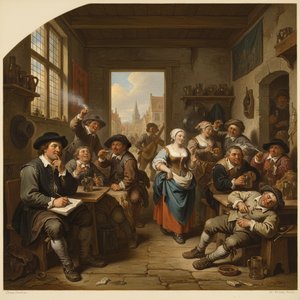
David Teniers the Younger: Genre Painting & Social Commentary in Baroque Flanders
Explore the captivating world of David Teniers the Younger, a leading Flemish Baroque painter. Discover his genre scenes, social commentary, and lasting influence on 17th-century art. Learn about his life, techniques & legacy.

Reflejos de una Época Dorada: La Pintura Barroca Holandesa y la Innovación Cultural
Descubra la riqueza y el detalle de la pintura barroca holandesa del Siglo de Oro. Explore las obras maestras de Rembrandt, Vermeer y otros artistas clave. Análisis experto e historia cultural.

Pintura de Género Holandesa: Un Reflejo Íntimo de la Vida Cotidiana y los Valores Sociales del Siglo de Oro
Descubra la riqueza de la pintura de género holandesa del Siglo de Oro. Explore las obras maestras de Vermeer y Brueghel, su simbolismo y el reflejo de la vida cotidiana en esta época dorada. ¡Conozca más!

Frans Hals I: Innovation, Intimacy & the Dutch Golden Age Portrait
Explore the revolutionary portraiture of Frans Hals I, a master of the Dutch Golden Age. Discover his innovative techniques, captivating character studies & lasting impact on art history. Learn more at ArtsDot.

