


 Vista previa
 Compartir
 Compartir
 Ver detalles
 Guía
Guía

 Descargar
 Ver artículos similares
 Radiografía
 Presentación de diapositivas
 Estadísticas
Forest Landscape
 Oil On Canvas
- WallArt
- Pseudo-Italianate landscapes
 1690
1690- Early Modern
 81.0 x 117.0 cm
 Museo del Hermitage
 Leer más
Reproducción al óleo hecha a mano
Óleo sobre lienzo pintado a mano en el tamaño y marco de su elección, realizado por encargo por nuestros artistas. ( Cambiar a formato impreso Ver versión en imagen digital)




P118B $10

P118H $10

P118W $10

P438Z $10

P508JH $12

P508YH $12

P805H $10

P805Z $10

P919BZ $10

P919G $10

P919XJ $10

P959ZH $10

P968JZ $12

W106C $8

W218G $10

W218JH $8

W218Y $10

W307PJ $10

W316G $10

W316PJ $8

W316Y $10

W398PJ $8

W4111J $10

W500HY $15

W500JH $15

W692G $12

W849H $8

W940BG $15

W953PJ $8




Elija entre nuestros tamaños predefinidos que respetan las proporciones originales de la obra.

Puede ingresar sus propias dimensiones para adaptarse a un marco o espacio específico. Si el tamaño seleccionado no coincide con las proporciones de la imagen original, recortaremos la obra o extenderemos la pintura con elementos adicionales pintados a mano. Se le enviará una maqueta digital para su aprobación antes de comenzar la producción.
Tenga en cuenta que la vista previa en pantalla no refleja el recorte o la extensión reales. Solo la maqueta mostrará con precisión la composición final.
Si bien existen tamaños personalizados, recomendamos seleccionar una dimensión de la lista predefinida para preservar las proporciones originales.
Tras realizar el pedido, el equipo de ArtsDot.com enviará un correo electrónico al cliente para solicitar instrucciones y proporcionarle una vista previa del boceto.
Envío a todo el mundo () en 3-4 semanas en lugar de las 5 semanas estándar. (21 septiembre). Sin comprometer la calidad.

Envío exprés gratuito a todo el mundo

Lienzo de lino de alta calidad

Seguro de envío completo

Garantía de reembolso de impuestos aduaneros

Garantía de fidelidad cromática exacta

Política de devolución de 100 días (solo por defectos)

Garantía de devolución del 100% del dinero

Oferta por volumen
 La opción de vidrio solo está disponible en tamaños inferiores a 110 cm.

Forest Landscape
Técnica de reproducción
Tamaño de la reproducción
-


Precio total
$ 263
A Symphony of Verdant Serenity
In the quiet depths of Cornelis Huysmans’s Forest Landscape, one finds more than just a depiction of nature; one encounters a profound meditation on peace. Painted around 1690, this masterpiece invites the viewer into a secluded woodland sanctuary where time seems to have surrendered to the rhythmic pulse of the earth. The composition is a lush tapestry of arboreal grandeur, where towering trees reach toward an unseen canopy, their branches interlaced to create a cathedral of foliage. Amidst this emerald expanse, life unfolds in its most gentle forms. Scattered throughout the glade, cattle graze with a heavy, contented grace, while sheep wander through the dappity light, their presence adding a layer of pastoral innocence to the scene. The atmosphere is one of absolute stillness, a captured moment of pastoral idyll that resonates with the soothing whispers of a world untouched by the chaos of urban existence.
The emotional resonance of this work lies in its ability to evoke a sense of profound nostalgia and tranquility. For the discerning collector or interior designer, this painting serves as an anchor of calm, offering a window into a primordial Eden. The way the light filters through the leaves—a technique Huysmans mastered through his study of both Mannerist precision and Baroque expression—creates a play of shadow and luminosity that breathes life into every blade of grass and every curve of a grazing animal's back. It is an evocative piece that does not merely decorate a room but transforms it, imbuing a space with the restorative power of the natural world.
The Mastery of Light and Transition
To understand the technical brilliance of this landscape, one must look to Huysmans’s unique position in art history. As a pivotal figure bridging the meticulous, detailed traditions of Mannerism and the more emotive, atmospheric ideals of the Dutch Baroque, Huysmans possessed a rare dual capability. He could render the intricate textures of bark and leaf with scientific accuracy, yet he also understood how to use light as an expressive tool to guide the eye through the composition. In this work, his brushwork achieves a seamless synthesis; there is a palpable weight to the animals and a tangible density to the forest, all unified by a sophisticated handling of color palettes that range from deep, earthy umbers to vibrant, sun-drenched greens.
This technical prowess was forged in the great artistic hubs of Europe. Having trained under Gaspar de Witte in Antwerp and likely honing his decorative sensibilities in the studio of Jacques d'Arthois in Brussels, Huysmans brought a cosmopolitan sophistication to his Flemish roots. His ability to balance the "pseudo-Italianate" grandeur—often featuring dramatic vistas and mountainous backdrops—with the intimate, localized charm of a Belgian woodland is what makes this particular piece so captivating. It is a masterclass in composition, where every element, from the wandering livestock to the shifting shadows, is placed with intentionality to create a harmonious and enduring visual experience.
A Timeless Legacy for the Modern Collector
For those seeking to curate an environment of elegance and intellectual depth, Forest Landscape offers an unparalleled opportunity. This painting is not merely a relic of the late 17th century; it is a living testament to the enduring human desire for connection with the wild and the serene. Its subject matter—the pastoral landscape—has remained a cornerstone of fine art because it speaks to a universal longing for harmony. As an investment in high-quality reproduction, this work brings the prestige of the Hermitage-level mastery into the private home or professional gallery.
Integrating such a piece into a modern interior allows for a striking dialogue between historical grandeur and contemporary design. Whether placed as a focal point in a minimalist study or used to add warmth to a classical salon, the painting’s rich textures and deep tonal range provide a sophisticated foundation. It invites conversation, inspires reflection, and serves as a permanent retreat into the timeless beauty of the Flemish masters.
Obras relacionadas


Biografía del artista
Cornelis Huysmans: Un Maestro Flamenco del Paisaje
- Nacido: Amberes, Bélgica (1648)
- Fallecido: 1727
Primeros Años y Formación
- Cornelis Huysmans fue bautizado el 2 de abril de 1648 en Amberes. Sus padres fueron Hendrik Huysmans y Catharina van der Meyden.
- La profesión de su padre se describe como maestro constructor o artesano en la casa de la moneda.
- Tras la temprana muerte de sus padres, fue enviado a estudiar con el pintor paisajista Gaspar de Witte.
- Posteriormente se trasladó a Bruselas para continuar sus estudios y pudo haber trabajado como asistente en el estudio de Jacques d'Arthois.
- Alrededor de 1675, colaboró con Adam Frans van der Meulen en Maastricht.
Carrera y Desarrollo Artístico
- En 1675, Huysmans se convirtió en maestro independiente del Gremio de San Lucas en Bruselas.
- Pasó tiempo en Londres desde aproximadamente 1686 hasta 1688, creando paisajes para miembros destacados de la sociedad.
- Alrededor de 1688, se estableció en Mechelen y contrajo matrimonio con Maria Anna Scheppers.
- En 1690, creó un importante retablo, "El Camino a Emaús", para la iglesia Onze-Lieve-Vrouw-over-de-Dijle en Mechelen.
- Regresó a Amberes en 1706 y fue admitido como maestro en el gremio local de San Lucas.
- Huysmans finalmente regresó a Mechelen, donde continuó trabajando hasta su muerte en 1727.
Estilo Artístico e Influencias
- Huysmans es conocido principalmente por sus pinturas de paisajes, aunque también creó obras religiosas e históricas.
- Su estilo se caracteriza por detalladas observaciones de la naturaleza, particularmente bosques y árboles.
- Fue significativamente influenciado por Jacques d'Arthois, evidente en las composiciones decorativas que representan los bordes del bosque con bancos arenosos.
- Huysmans incorporó una estética "pseudo-italiana", presentando montañas y vegetación reminiscente de Italia.
- Su uso de contrastes dramáticos de luz entre caminos y sombras de árboles creó un efecto visual impactante.
- A menudo empleaba líneas diagonales dentro de sus composiciones para crear profundidad y perspectiva.
Legado y Significado Histórico
- Cornelis Huysmans ocupó una posición destacada en la pintura paisajística flamenca durante finales del siglo XVII y principios del XVIII.
- Sus obras demuestran una transición de estilos anteriores, más detallados, hacia un enfoque más decorativo y atmosférico del arte del paisaje.
- Influyó a artistas más jóvenes, incluyendo a su hijo Pieter Balthasar Huysmans y a su hermano Jan Baptiste Huysmans.
- Las pinturas de Huysmans están representadas en numerosas colecciones de museos de todo el mundo, incluido el Louvre, el Museo Hermitage y varios museos en Bélgica y otros lugares.
- Su capacidad para capturar tanto el realismo de la naturaleza como una sensación de belleza idealizada contribuyó a su perdurable reputación como un importante pintor paisajístico flamenco.

Cornelis Huysmans
1648 - 1727 , Bélgica
Datos clave
- Artistas Influenciados: ['Pieter Balthasar Huysmans']
- Artistas Que Influyeron: ["Jacques d'Arthois"]
- Fecha De Fallecimiento: 1727
- Fecha De Nacimiento: 1648
- Lugar De Nacimiento: Amberes, Bélgica
- Movimiento Artístico: Paisaje pseudo-italiano
- Nacionalidad: Flamenco
- Nombre Completo: Cornelis Huysmans
Artículos relacionados

Jacob van Ruisdael: Master of Dutch Landscape & the Evocation of National Identity
Explore the life & work of Jacob van Ruisdael, the preeminent Dutch landscape painter. Discover his technical brilliance, symbolic depth, and lasting influence on art history. Learn about collecting Ruisdael's masterpieces.

Jan van Goyen: Master of Dutch Landscape & Atmospheric Perspective
Discover Jan van Goyen, the master of Dutch landscape painting. Explore his subtle technique, atmospheric realism & lasting influence on art history. Learn about this 17th-century pioneer at ArtsDot.
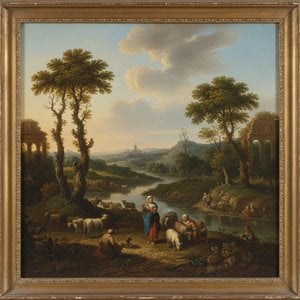
Nicolaes Berchem: Dutch Golden Age Pastoralism & the Evolution of Landscape Painting
Explore the captivating world of Nicolaes Berchem, a leading Dutch Golden Age painter. Discover his idyllic landscapes, masterful technique & lasting influence on art history. Learn more at ArtsDot.

Golden Light & Dutch Skies: Bringing the Magic of Dutch Golden Age Landscapes into Your Home
Transform your home with the breathtaking light of Dutch Golden Age landscapes. Discover how hand-painted oil reproductions of masterworks like Ruisdael and Vermeer bring timeless elegance, atmosphere, and soulful texture to modern interiors. Elevate your space with museum-quality art.
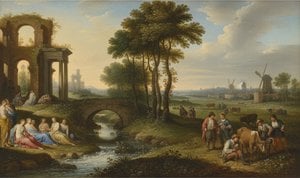
Cornelis van Poelenburch: Bridging Mannerism & the Dutch Baroque Landscape
Discover Cornelis van Poelenburch, a pivotal Dutch Baroque landscape painter bridging Mannerism & Italianate styles. Explore his life, key works, and lasting influence on 17th-century art with ArtsDot.