

 Ver en contexto
 Enviar
 Compartir
 Detalles
 Guía
Guía

 Descargar
 Similares
 Radiografía
 Presentación de diapositivas
 Preguntas y respuestas
 Estadísticas
Cienposiñones

- 88.0 x 130.0 cm


 Ver más
Giclée / Impresión de arte
Impresiones giclée o en lienzo de calidad de museo con producción rápida y opciones de acabado flexibles. ( Comprar pintura hecha a mano Cambiar a imagen digital)




P118B €10

P118H €10

P118W €10

P438Z €10

P508JH €12

P508YH €12

P805H €10

P805Z €10

P919BZ €10

P919G €10

P919XJ €10

P959ZH €10

P968JZ €12

W106C €8

W218G €10

W218JH €8

W218Y €10

W307PJ €10

W316G €10

W316PJ €8

W316Y €10

W398PJ €8

W4111J €10

W500HY €15

W500JH €15

W692G €12

W849H €8

W940BG €15

W953PJ €8




Elija entre nuestros tamaños predefinidos que respetan las proporciones originales de la obra.

Introduzca el ancho y el alto que necesite para adaptarse a su marco o pared. Una impresión solo puede recortarse, nunca hacerse más grande que la imagen original, por lo que un tamaño con una forma distinta perderá parte de la obra. Le enviaremos una maqueta digital para su aprobación antes de realizar cualquier impresión. La imagen que se muestra en esta página no refleja el recorte real; solo la maqueta lo hace.
Envío a todo el mundo () en 2 semanas en lugar de las 4/5 semanas estándar. (4 noviembre)

Envío exprés gratuito a todo el mundo

Lienzo de lino de alta calidad

Seguro de envío total

Garantía de reembolso de aranceles aduaneros

Garantía de fidelidad cromática exacta

Política de devolución de 100 días (solo por defectos)

Garantía de devolución del 100% del dinero

Descuento por cantidad
 La opción de vidrio solo está disponible en tamaños inferiores a 110 cm.

Cienposiñones
Giclée / Impresión de arte
Dimensiones de la reproducción
-


Precio total final
€ 56
A Symphony of Color: Claude Monet’s “Chrysanthemums”
Claude Monet's "Chrysanthemums," painted in 1897, isn’t merely a depiction of flowers; it’s an immersion into the very essence of Impressionism. This captivating work, measuring 88 x 130 cm and rendered in oil on canvas, captures a fleeting moment of vibrant beauty within Monet’s beloved garden at Giverny. More than just a botanical study, “Chrysanthemums” is a testament to Monet’s revolutionary approach to painting – his dedication to capturing the ephemeral effects of light and color rather than precise representation.
The scene unfolds with an abundance of chrysanthemums in full bloom, a riot of pinks, yellows, oranges, and whites cascading across the canvas. These aren’t static subjects; they’re imbued with movement, suggested by Monet’s signature broken brushstrokes – short, rapid dabs of paint that dance across the surface, creating an illusion of shimmering light and delicate texture. Notice how he doesn’t meticulously render each petal but instead uses color to convey its form and luminosity. A subtle hint of a bird adds a touch of life and spontaneity to the composition, further emphasizing the feeling of a vibrant, natural world.
The Impressionist Revolution
To truly appreciate “Chrysanthemums,” it’s essential to understand Monet’s place within the broader context of the Impressionist movement. Emerging in the 1870s, Impressionism rejected the academic traditions of the time – the emphasis on detailed realism and historical or mythological subjects – in favor of capturing immediate sensory experiences. Artists like Monet sought to paint “impressions” of light and color as they perceived them at a particular moment, often *en plein air* (outdoors). This approach was considered radical at the time, but it fundamentally shifted the course of art history.
Monet’s fascination with nature – particularly flowers – became central to his artistic practice. He meticulously observed how light transformed colors throughout the day and across seasons, translating these observations onto canvas. “Chrysanthemums” exemplifies this dedication, showcasing Monet’s ability to capture not just the appearance of the flowers but also their inherent luminosity and vitality. The painting’s loose brushwork and vibrant palette are hallmarks of Impressionism, creating a sense of immediacy and capturing the fleeting beauty of the moment.
Symbolism and Personal Meaning
Beyond its purely aesthetic qualities, “Chrysanthemums,” carries layers of symbolic meaning. In Japanese culture, chrysanthemums represent longevity, nobility, and even mourning – a poignant contrast to their vibrant colors in this painting. Monet’s deep appreciation for Japanese art and aesthetics is evident in the composition’s flattened perspective and simplified forms, reminiscent of traditional Japanese prints. It’s believed that he was particularly drawn to the way Japanese artists depicted flowers, often emphasizing their beauty rather than striving for photographic realism.
For Monet himself, the chrysanthemum likely held personal significance. As an avid gardener, he cultivated a vast array of flowers in his garden at Giverny, and these paintings served as both artistic explorations and records of his horticultural endeavors. “Chrysanthemums” is not simply a botanical study; it’s a celebration of beauty, light, and the transformative power of nature – a testament to Monet’s lifelong pursuit of capturing the essence of the world around him.
Bringing "Chrysanthemums" Home
ArtsDot.com offers exquisite, hand-painted reproductions of Claude Monet’s “Chrysanthemums,”, allowing you to bring this iconic masterpiece into your own home or office. Our skilled artisans meticulously recreate every detail of the original painting, capturing its vibrant colors and delicate brushstrokes with unparalleled accuracy. Whether you’re an art collector, a design enthusiast, or simply someone who appreciates beauty, our reproduction provides a stunning tribute to Monet’s genius.
Available in multiple sizes, including the original 88 x 130 cm dimensions, our “Chrysanthemums” reproduction is a perfect addition to any space. Experience the magic of Impressionism and own a piece of art history with ArtsDot.com. Explore this stunning reproduction today!
Photo Description: The image is a painting of a field filled with various flowers in different colors. The flowers are scattered throughout the scene, creating a vibrant and lively atmosphere. There are red, yellow, pink, white, and orange flowers all mixed together, making it a visually appealing composition. In addition to the flowers, there is also a bird visible in the painting, adding an element of life and movement to the scene. The overall effect is one of beauty and tranquility, as the viewer can appreciate the delicate details of each flower and the harmony created by their colors and shapes. Size: 88 x 130 cm Date: 1897 ARTIST INFORMATION: ================== Artist: Claude Monet Birth Year: 1840 Death Year: 1926 Birth City: Paris Birth Country: France Biography:A Life Immersed in Light: The World of Claude Monet
Oscar-Claude Monet, a name synonymous with Impressionism, wasn’t merely a painter of landscapes; he was a chronicler of fleeting moments, a poet of light and color. Born in Paris on November 14, 1840, his early life took an unexpected turn when his family relocated to Le Havre, Normandy, at the age of five. While initially destined for a commercial career by his father, young Claude’s innate artistic talent quickly surfaced, manifesting first in charcoal caricatures sold locally – a testament to both his skill and entrepreneurial spirit. However, it was his encounter with Eugène Boudin that proved pivotal. Boudin didn’t just teach Monet *how* to paint; he instilled within him the revolutionary idea of painting en plein air—directly from nature—a practice that would define his entire artistic journey.
Monet’s formal training began in Paris, briefly at the Académie Beaux-Arts, where he was initially rejected due to his unconventional style. Undeterred by this setback, Monet persisted in pursuing his passion for painting independently, honing his technique and experimenting with innovative approaches to color and composition.
His breakthrough came through collaborations with fellow Impressionists like Renoir and Sisley, who shared his vision of capturing the ephemeral qualities of light and atmosphere. Together, they established a studio in Argenteuil, where Monet tirelessly documented the changing seasons and landscapes of northern France, producing some twenty floral still lifes between 1878 and 1883.
These paintings garnered both critical acclaim and commercial success, establishing Monet as one of the foremost figures of Impressionism. His unwavering dedication to *plein air* painting—working outdoors under natural light—became a hallmark of his artistic practice, influencing generations of artists to come.
Preguntas y respuestas
¿De qué manera "Cienposiñones" de Claude Monet vincula el Impressionismo con el país de origen del artista?
"Cienposiñones" vincula el movimiento Impressionismo con Francia a través del lugar de nacimiento de su creador.
¿Qué técnica y estilo caracterizan a "Cienposiñones" de Claude Monet?
"Cienposiñones" de Claude Monet combina la técnica de Óleo sobre lienzo con el estilo Impressionismo. La técnica y el movimiento describen la ejecución y el estilo de la obra.
¿En qué tamaño se recomienda imprimir "Cienposiñones"?
Se recomienda una reproducción de Gran formato para "Cienposiñones" de Claude Monet. El tamaño puede ajustarse manteniendo las proporciones.
Obras relacionadas


Biografía del artista
Primeros Años y Influencias (1840-1860)
Nacido Oscar-Claude Monet el 14 de noviembre de 1840 en París, Francia, los primeros años de Claude Monet estuvieron marcados por una mudanza familiar a Le Havre, Normandía, cuando tenía solo cinco años. Su padre, un comerciante al por mayor, inicialmente tuvo la intención de que joven Claude siguiera una carrera en los negocios, pero el niño demostró un talento e interés innatos por dibujar desde muy temprana edad. Si bien su padre desaprobaba, su madre alentó sus inclinaciones artísticas.
Un momento decisivo llegó con el encuentro de Monet con Eugène Boudin, un pintor paisajista que le presentó los principios de la pintura en plein air – capturar escenas directamente del entorno natural. Esta experiencia moldeó fundamentalmente el enfoque artístico de Monet, enfatizando la observación y la espontaneidad sobre la precisión basada en estudio. También comenzó a hacer caricaturas para negocios locales, demostrando un espíritu emprendedor temprano junto con su talento artístico.
Formación Formal y Primeras Obras (1860-1874)
En 1859, Monet se mudó a París, sumergiéndose en el vibrante panorama artístico de la ciudad. Asistió brevemente a la Academia Suiza y estudió bajo Charles Gleyre, donde conoció a otros artistas como Auguste Renoir. Estos primeros años estuvieron caracterizados por la experimentación con diversos estilos, incluyendo el realismo y el retrato. Sus primeras obras, como paisajes y escenas marinas, reflejaban una habilidad en desarrollo pero carecían del estilo distintivo que definiría más tarde su obra.
La Guerra Franco-Prusiana (1870-1871) interrumpió su progreso artístico, obligándolo a buscar refugio en Londres. Durante este tiempo, estudió pintores paisajistas ingleses como J.M.W. Turner, cuyos efectos atmosféricos influyeron profundamente en su propio estilo en evolución.
El Nacimiento del Impresionismo y la "Impression, soleil levant" (1874-1883)
Monet, junto con otros artistas insatisfechos con el sistema conservador del Salón, comenzó a exhibir su obra de forma independiente. La exposición de 1874 organizada por estos artistas se considera un evento histórico en la historia del arte, dando origen al término "Impresionismo". La pintura de Monet “Impression, soleil levant” (Impresión, Amanecer), expuesta en esta muestra, proporcionó el nombre para el movimiento.
Este período vio a Monet desarrollar su estilo distintivo: pinceladas sueltas, colores vibrantes y un enfoque en capturar los momentos fugaces de luz y atmósfera. Pintaba con frecuencia en plein air, trabajando rápidamente para registrar sus impresiones inmediatas del paisaje.
Giverny y la Serie de las Lilas (1883-1926)
En 1883, Monet se estableció en Giverny, un pueblo al noroeste de París. Compró una casa con un jardín extenso, que transformó en un paraíso elaborado que incluía lirios acuáticos, sauces llorones y puentes japoneses – todos ellos convirtiéndose en temas recurrentes en su arte.
Las últimas décadas de la vida de Monet estuvieron dedicadas principalmente a pintar el estanque de lirios acuáticos de Giverny. Esto resultó en la monumental serie Lirios Acuáticos (Nymphéas), una vasta colección de pinturas que representan los reflejos del estanque y las cambiantes condiciones de luz. Estas obras, caracterizadas por su gran escala e inmersividad, se consideran entre sus mayores logros.
Desarrollo Artístico y Técnicas
Pintura al Aire Libre: El compromiso de Monet con la pintura al aire libre fue central para su desarrollo artístico. Esto le permitió observar directamente y capturar los efectos de la luz y la atmósfera. Color Fragmentado: Empleó una técnica llamada "color fragmentado", aplicando pequeños trazos de colores puros e inmezclados uno junto al otro, permitiendo que el ojo del espectador los mezcle ópticamente. Pintura por Series: La exploración de Monet de la pintura por series – representando el mismo tema bajo diferentes luces y condiciones climáticas – fue revolucionaria, demostrando el poder transformador de la luz y el tiempo.Logros Importantes y Reconocimiento
- Fundador del Impresionismo
- Creación de la icónica serie Lirios Acuáticos
- Revolucionando la pintura paisajista a través de las técnicas en plein air
- Alcanzando un éxito comercial considerable durante su vida, algo raro para los artistas vanguardistas.
Significado Histórico
El impacto de Claude Monet en la historia del arte es innegable. No solo lideró el movimiento impresionista, sino que también allanó el camino para la exploración de la subjetividad y la abstracción por parte del arte moderno. Su enfoque en capturar momentos fugaces y la experiencia subjetiva de ver influyó profundamente en las generaciones posteriores de artistas. Su obra continúa inspirando asombro y admiración, consolidando su lugar como una de las figuras más importantes del arte occidental.
Monet murió el 5 de diciembre de 1926, dejando un legado que sigue dando forma a nuestra comprensión de la luz, el color y la belleza del mundo natural. Museos como el Musée d'Orsay y el Musée Marmottan Monet en París albergan importantes colecciones de su obra, asegurando su presencia perdurable en el mundo del arte.

Claude Monet
1840 - 1926 , Francia
Datos clave
- Artistas Que Influyeron:
- Eugène Boudin
- J.M.W. Turner
- Estilo Artístico: Impresionismo
- Fecha De Muerte: 5 de diciembre de 1926
- Fecha De Nacimiento: 14 de noviembre de 1840
- Lugar De Nacimiento: París, Francia
- Nacionalidad: Francés
- Nombre Completo: Claude Monet
- Obras Notables:
- Impresión, amanecer
- Serie Nenúfares
- Paja
- Catedral de Rouen
Artículos relacionados

Capturando la luz: Las 25 obras maestras más icónicas de Claude Monet
Explora las 25 obras maestras de Claude Monet y el impresionismo. ¡Descubre toda la colección en ArtsDot.com!

Impresionismo: 10 Obras Maestras que Capturan la Luz y el Momento
Descubre 10 obras maestras del impresionismo de Monet, Renoir y Degas. Explora la luz, el color y las historias detrás de estos icónicos cuadros. Reproducciones de arte en ArtsDot.com para decorar tu hogar con estilo.

Maestría y Forma: Las 25 Mejores Obras de Paul Cézanne
Explora las 25 obras maestras de Paul Cézanne y su legado postimpresionista. ¡Descubre toda la colección en ArtsDot.com!

Los 10 Maestros del Paisaje Impresionista: Obras que Cambiaron la Historia del Arte
Descubre los 10 lienzos impresionistas que revolucionaron el arte. Monet, Renoir y más… Explora la historia, técnica y belleza de cada obra maestra. Encuentra reproducciones de alta calidad para tu hogar en ArtsDot.com.
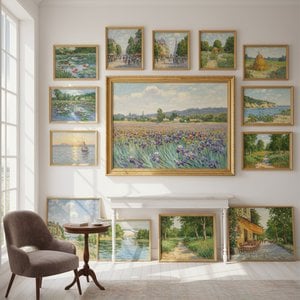
Los 10 Maestros del Paisaje Impresionista: Obras que Cambiaron la Historia del Arte
Descubre los 10 lienzos impresionistas que revolucionaron el arte. Explora la historia de Monet, Van Gogh y Renoir, sus técnicas y colores vibrantes. Encuentra reproducciones de alta calidad para decorar tu hogar en ArtsDot.com


