


 Enviar
 Compartir
 Detalles

 Descargar
 Similares
 Presentación de diapositivas
Pandora


 Ver más
Reproducción al óleo hecha a mano
Óleo sobre lienzo pintado a mano en el tamaño y marco de su elección, realizado por encargo por nuestros artistas. ( Comprar impresión Comprar imagen)




































Elija entre nuestros tamaños predefinidos que respetan las proporciones originales de la obra.

Puede ingresar sus propias dimensiones para adaptarse a un marco o espacio específico. Si el tamaño seleccionado no coincide con las proporciones de la imagen original, recortaremos la obra o extenderemos la pintura con elementos adicionales pintados a mano. Se le enviará una maqueta digital para su aprobación antes de comenzar la producción.
Tenga en cuenta que la vista previa en pantalla no refleja el recorte o la extensión reales. Solo la maqueta mostrará con precisión la composición final.
Si bien existen tamaños personalizados, recomendamos seleccionar una dimensión de la lista predefinida para preservar las proporciones originales.
Tras realizar el pedido, el equipo de ArtsDot.com enviará un correo electrónico al cliente para solicitar instrucciones y proporcionarle una vista previa del boceto.
Envío a todo el mundo () en 3-4 semanas en lugar de las 5 semanas estándar. (7 septiembre). Sin comprometer la calidad.

Envío exprés gratuito a todo el mundo

Lienzo de lino de alta calidad

Seguro de envío total

Garantía de reembolso de impuestos aduaneros

Garantía de fidelidad cromática exacta

Política de devolución de 100 días (solo por defectos)

Garantía de devolución del 100% del dinero

Descuento por cantidad
 La opción de vidrio solo está disponible en tamaños inferiores a 110 cm.

Pandora
Técnica de reproducción
Dimensiones de la reproducción
-


Precio total final
$ 263
The Enigmatic Beauty of Pandora
Chauncey Bradley Ives’s “Pandora,” sculpted in Rome around 1863, is more than just a marble figure; it's a poignant meditation on human nature and the inescapable presence of both beauty and sorrow. This captivating work, currently residing within the Chrysler Museum of Art in Boston, immediately draws the viewer into its serene yet subtly unsettling world. The sculpture depicts Pandora, the Greek goddess often associated with curiosity and the bearer of misfortune, not as a monstrous figure of chaos, but rather as a woman caught in a moment of quiet contemplation – her eyes closed, a gentle curve to her lips suggesting a held breath, and her hands poised as if offering or receiving something unseen. The pose itself is remarkably graceful, imbued with an almost ethereal quality that belies the weighty subject matter.
Ives’s style firmly anchors “Pandora” within the Neo-Classical tradition, echoing the refined aesthetics of ancient Greek sculpture while simultaneously imbuing it with a distinctly Romantic sensibility. The smooth, polished marble surface reflects light beautifully, creating an illusion of depth and volume that emphasizes the figure's form. Notice the meticulous attention to anatomical detail – the delicate curve of her neck, the subtle musculature beneath her draped garments – yet these are rendered with a sense of idealized beauty, characteristic of the era. Ives’s mastery lies in his ability to seamlessly blend realism with an almost dreamlike quality, resulting in a sculpture that is both strikingly lifelike and profoundly evocative.
A Mythological Tapestry
The story behind “Pandora” is inextricably linked to the ancient Greek myth it portrays. As recounted by Hesiod in his *Works and Days*, Pandora was created by Hephaestus, the god of blacksmiths, as a gift for Zeus – a beautiful woman designed to tempt humanity with her allure. However, Zeus, angered by Prometheus’s theft of fire, decided to punish humankind by gifting them Pandora, along with a jar (often mistakenly referred to as a “box”) filled with all the evils of the world: disease, famine, war, and sorrow. Pandora, in her innocence, opened the jar, unleashing these misfortunes upon humanity – though, crucially, she also retained Hope within its depths, offering a glimmer of solace amidst the darkness.
Ives’s sculpture captures this pivotal moment with remarkable sensitivity. The closed eyes suggest a profound awareness of the consequences of her actions, while the gesture of her hands hints at both the offering and the receiving – perhaps representing humanity's acceptance of its fate or, more optimistically, the enduring presence of Hope. The drapery, flowing gracefully around her form, adds to the sense of mystery and invites interpretation. Is she regretting her actions? Is she resigned to them? Or is she simply contemplating the nature of existence itself?
Symbolism and Emotional Resonance
Beyond the literal depiction of Pandora, the sculpture is rich in symbolic meaning. The marble itself – a material associated with purity, immortality, and divine beauty – elevates the figure to an almost sacred status. The pose, reminiscent of classical depictions of mourning goddesses, speaks to themes of loss, regret, and acceptance. Yet, Ives avoids portraying Pandora as a purely tragic figure; her expression is remarkably serene, suggesting a quiet dignity in the face of adversity.
Furthermore, the sculpture’s emotional impact stems from its ambiguity. It doesn't offer easy answers or simplistic moral judgments. Instead, it compels viewers to confront their own understanding of human nature, fate, and the enduring presence of both joy and sorrow within the human experience. The subtle tension between beauty and misfortune creates a powerful and lasting impression, inviting repeated contemplation and personal interpretation.
A Timeless Masterpiece
“Pandora” by Chauncey Bradley Ives stands as a testament to the artist’s skill and his profound engagement with classical mythology. Its enduring appeal lies not only in its technical brilliance but also in its ability to resonate deeply with viewers across generations. Reproductions of this exquisite sculpture offer a remarkable opportunity to bring this timeless masterpiece into any setting, adding an element of grace, mystery, and philosophical depth to the space. Whether displayed in a private collection or a public museum, “Pandora” continues to captivate and inspire, reminding us of the complexities of human existence and the enduring power of hope amidst adversity.
Obras relacionadas


Biografía del artista
Early Life and Background
Chauncey Bradley Ives (1810 – 1894) remains an enigmatic figure in American art history, largely due to the paucity of biographical documentation. Precise details concerning his upbringing, family life, and formative years are scarce—a frustrating obstacle for researchers attempting to reconstruct a complete picture of his artistic genesis. However, what is known suggests that Ives possessed a remarkable aptitude for visual arts from a young age, propelling him toward a path profoundly shaped by both circumstance and innate talent. Born in Hamden, Connecticut, he descended from a family predisposed to tuberculosis—a condition that tragically impacted several members of his lineage. At the tender age of sixteen, Ives embarked on an apprenticeship with Rodolphus Northrop, a skilled woodcarver based in New Haven, marking the beginning of his formal artistic training. This early mentorship instilled in him foundational techniques and fostered a lifelong fascination with sculptural craftsmanship. Furthermore, anecdotal evidence indicates that Ives may have received instruction from Hezekiah Augur, another accomplished sculptor hailing from New Haven—a connection that underscores the vibrant artistic milieu of 19th-century Connecticut.Artistic Career: Landscape Painting
Ives’s artistic trajectory unfolded primarily through landscape painting, a genre deeply rooted in Romantic ideals and reflecting the burgeoning fascination with the American wilderness during his era. Unlike many of his contemporaries who favored portraiture—a more socially acceptable pursuit at the time—Ives consistently prioritized capturing the grandeur and serenity of natural vistas. His canvases are characterized by meticulous observation and an unwavering commitment to conveying atmospheric conditions—misty mornings, sunlit hillsides, and expansive valleys—with remarkable accuracy. Ives’s stylistic approach aligns closely with the precepts of Luminism, a movement championed by artists like Asher Durand and Frederic Church, who sought to depict landscapes bathed in soft, diffused light—a technique that effectively minimized harsh shadows and maximized tonal subtlety. His masterful use of color palettes—often dominated by muted greens, blues, and browns—further enhanced the immersive quality of his paintings, transporting viewers into idealized representations of American wilderness.Artistic Career: Portrait Sculpture
Beyond landscape painting, Ives distinguished himself as a prolific sculptor specializing in portrait busts and allegorical figures crafted primarily from marble. His sculptural output spanned several decades, producing works that captured the likenesses of prominent individuals—politicians, businessmen, and cultural luminaries—as well as imaginative depictions inspired by mythology and literature. Ives’s sculptural style embodies the tenets of Neo-Classicism—a movement that drew inspiration from ancient Greek and Roman art forms—emphasizing idealized proportions, restrained ornamentation, and a solemn aesthetic. Like Hiram Powers and Harriet Hosmer, Ives embraced the neoclassical idiom, reflecting the broader artistic currents circulating throughout Europe during his formative years. His portraits are notable for their meticulous attention to detail—capturing subtle nuances of facial expression and capturing the essence of his subjects’ personalities—demonstrating Ives's exceptional technical skill. Notable sculptures include Roger Sherman statue at Connecticut State Capitol and Undine Statue, which is featured on ArtsDot.Influences and Artistic Development
Ives’s artistic development was profoundly shaped by several influential figures and movements—most notably Hiram Powers and Harriet Hosmer, who established a collaborative studio in Boston during the mid-1830s. These artists championed the neoclassical aesthetic, advocating for sculptural excellence and promoting the dissemination of classical ideals within American society. Ives's formative years were marked by exposure to the artistic traditions of Florence, Italy—a pilgrimage undertaken in 1844 with financial assistance from wealthy patrons—where he immersed himself in the epicenter of Neo-Classical art. This immersive experience solidified his commitment to mastering sculptural techniques and fueled his creative imagination—inspiring him to explore mythological narratives and allegorical themes that resonated deeply with Victorian sensibilities. Ives’s artistic vision was further refined by observing the works of Auguste Rodin, whose expressive sculptures challenged conventional notions of beauty and championed psychological realism—a stylistic departure from Ives's predominantly idealized approach.Legacy and Historical Significance
Despite the absence of comprehensive biographical information, Ives’s legacy endures through his artwork—particularly Undine Statue—which remains one of the icons of the American Neo-classical movement. His sculptures are housed in numerous museums across the United States—including ArtsDot—testament to their enduring artistic merit and cultural significance. Ives's contribution to American sculpture is recognized as a pivotal moment in shaping the nation’s visual culture during the 19th century—establishing a precedent for portraying human subjects with dignity and conveying profound emotional depth. His work continues to inspire artists today, demonstrating the timeless relevance of classical ideals and the transformative power of artistic exploration. Ives's enduring influence can be seen in subsequent generations of sculptors who embraced Neo-Classical principles—solidifying his position as one of America’s foremost sculptors of his time.
Chauncey Bradley Ives
1810 - 1894 , Estados Unidos
Datos clave
- Artistic Movement Or Style: Neo clásico
- Date Of Birth: 1810
- Date Of Death: 1894
- Full Name: Chauncey Bradley Ives
- Nationality: American
- Notable Artworks:
- Undine Rising from the Waters
- San Souci
- Place Of Birth: Hamden, Estados Unidos
Artículos relacionados
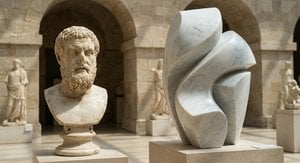
The Enduring Allure of Marble in Art History: From Classical Sculpture to Modern Abstraction
Explore the captivating history of marble sculpture from ancient Greece to modern art. Discover renowned artists like Canova & Michelangelo, carving techniques, and investment insights at ArtsDot.

Esculturas de Bronce Legendarias: 10 Obras Maestras que Transformaron el Arte | ArtsDot
Descubre las 10 esculturas de bronce más legendarias que revolucionaron el arte. Explora la historia de Rodin, Degas y otros maestros del bronce. Encuentra reproducciones de alta calidad e inspiración para tu hogar en ArtsDot.com.

The Enduring Form: Exploring Themes & Techniques in Sculpture Across Historical Periods
Explore the rich history of sculpture from ancient masterpieces to contemporary innovations. Discover key techniques, influential artists & investment potential for discerning art collectors.

The Enduring Legacy of Marble: A Comprehensive Exploration of Technique, Symbolism & Artistic Expression
Explore the rich history of marble sculpture from antiquity to the Renaissance! Discover key techniques, influential artists & enduring themes in classical art. Expert insights for collectors and enthusiasts at ArtsDot.

The Enduring Form: Sculpture Across History, Technique & Emotional Resonance
Explore the rich history of sculpture with ArtsDot. Discover key techniques, influential artists & investment potential for discerning collectors. Expert insights into valuing and collecting timeless masterpieces.