

 Ver en contexto
 Enviar
 Compartir
 Detalles
 Guía
Guía

 Descargar
 Similares
 Radiografía
 Presentación de diapositivas
 Q&A
Q&A Estadísticas
St Andrew


 Ver más
Giclée / Impresión de arte
Impresiones giclée o en lienzo de calidad de museo con producción rápida y opciones de acabado flexibles. ( Comprar pintura hecha a mano Cambiar a imagen digital)




P118B €10

P118H €10

P118W €10

P438Z €10

P508JH €12

P508YH €12

P805H €10

P805Z €10

P919BZ €10

P919G €10

P919XJ €10

P959ZH €10

P968JZ €12

W106C €8

W218G €10

W218JH €8

W218Y €10

W307PJ €10

W316G €10

W316PJ €8

W316Y €10

W398PJ €8

W4111J €10

W500HY €15

W500JH €15

W692G €12

W849H €8

W940BG €15

W953PJ €8




Elija entre nuestros tamaños predefinidos que respetan las proporciones originales de la obra.

Introduzca el ancho y el alto que necesite para adaptarse a su marco o pared. Una impresión solo puede recortarse, nunca hacerse más grande que la imagen original, por lo que un tamaño con una forma distinta perderá parte de la obra. Le enviaremos una maqueta digital para su aprobación antes de realizar cualquier impresión. La imagen que se muestra en esta página no refleja el recorte real; solo la maqueta lo hace.
Envío a todo el mundo () en 2 semanas en lugar de las 4/5 semanas estándar. (2 noviembre)

Envío exprés gratuito a todo el mundo

Lienzo de lino de alta calidad

Seguro de envío total

Garantía de reembolso de aranceles aduaneros

Garantía de fidelidad cromática exacta

Política de devolución de 100 días (solo por defectos)

Garantía de devolución del 100% del dinero

Descuento por cantidad
 La opción de vidrio solo está disponible en tamaños inferiores a 110 cm.

St Andrew
Giclée / Impresión de arte
Dimensiones de la reproducción
-


Precio total final
€ 55
The Weight of Faith: Camillo Rusconi’s St Andrew
Camillo Rusconi's "St Andrew," completed in 1708-9 and residing within the magnificent Archbasilica of Saint John Lateran in Rome, is more than just a marble sculpture; it’s a profound meditation on martyrdom, faith, and the transition between the dynamism of the Baroque and the restrained elegance of Neoclassicism. Rusconi, a pivotal figure bridging these artistic movements, masterfully captures the apostle's final struggle – a potent image that speaks to enduring spiritual resilience. The sculpture isn’t merely a depiction of Andrew; it’s an embodiment of his unwavering devotion in the face of imminent death, radiating a palpable sense of both agony and profound serenity.
Rusconi inherited a rich artistic legacy, trained initially by Giuseppe Rusnati in Milan before finding his footing within Ercole Ferrata's workshop in Rome. This lineage instilled in him a deep understanding of both the expressive fervor of the late Baroque – particularly influenced by Bernini’s dramatic use of form and gesture – and the burgeoning emphasis on clarity and order championed by Carlo Maratta. “St Andrew” exemplifies this delicate balance; it retains the powerful physicality characteristic of Baroque sculpture while subtly incorporating elements that foreshadow the emerging Neoclassical style, notably in its carefully controlled composition and refined detailing.
A Study in Marble and Movement
The sculpture itself is a breathtaking achievement in marble carving. Rusconi’s skill lies not just in his technical mastery – evident in the incredibly detailed drapery, the meticulously rendered musculature of Andrew's body, and the luminous quality of the stone – but also in his ability to imbue the figure with life. Andrew is depicted in a dynamic pose, leaning forward as if bracing himself against an unseen force, his arm outstretched towards the heavy cross he struggles to bear. The folds of his garment ripple and flow around him, creating a sense of movement that contrasts sharply with the stillness of the marble.
Rusconi’s use of *contrapposto* – a technique where the figure's weight is shifted onto one leg – creates an inherent tension within the sculpture. This subtle imbalance contributes to the feeling of struggle and vulnerability, while simultaneously conveying Andrew’s strength and determination. The lighting, carefully considered during the original installation, would have further accentuated these effects, casting dramatic shadows that emphasized the contours of his body and the weight of the cross.
Symbolism and Spiritual Weight
Beyond its technical brilliance, “St Andrew” is rich in symbolic meaning. The cross, a central motif throughout Christian art, represents sacrifice, redemption, and the triumph over death. Andrew’s struggle to hold it aloft speaks to the arduous nature of faith – the constant effort required to maintain one's commitment even in the face of adversity. The apostle’s facial expression is particularly poignant; his brow furrowed in concentration, his eyes fixed on the cross, conveys a sense of intense inner turmoil mingled with unwavering resolve.
The setting within the niche – flanked by imposing columns adorned with intricate carvings – further enhances the sculpture's significance. This architectural context elevates Andrew to a position of honor and reverence, solidifying his role as a martyr and a symbol of Christian faith. The overall composition evokes a sense of solemnity and contemplation, inviting viewers to reflect on the themes of sacrifice, perseverance, and the enduring power of spiritual conviction.
A Legacy in Stone
“St Andrew” by Camillo Rusconi stands as a testament to the artist’s remarkable talent and his pivotal role in bridging the gap between Baroque and Neoclassical sculpture. It's a work that continues to resonate with viewers today, offering a powerful visual representation of faith, struggle, and the enduring legacy of one of Christianity’s most revered apostles. Reproductions of this iconic piece capture not only its aesthetic beauty but also the profound emotional depth that defines Rusconi’s masterpiece.
Preguntas y respuestas
¿Qué tamaño de impresión de "St Andrew" de Camillo Rusconi se adapta mejor a la habitación recomendada?
Para un/a Living Room, el tamaño de impresión recomendado para "St Andrew" de Camillo Rusconi es Medium.
¿Qué emoción transmite "St Andrew" de Camillo Rusconi?
"St Andrew" de Camillo Rusconi transmite un tono emocional Reflective.
¿Qué paleta de colores utiliza "St Andrew"?
"St Andrew" de Camillo Rusconi utiliza una paleta de colores Earthy. Esta gama de tonos define el carácter cromático general de la obra.
Obras relacionadas

![Leyenda De San Francisco - [23] - San Francisco Lamentado Por Santa Clara — Giotto Di Bondone, Gótico](/media/artworks/images-thumb/17/1c/171c284c41dc3ef8bca83e51c1e1e531.jpg)


Biografía del artista
Camillo Rusconi: Vida y Legado
Primeros Años y Formación
Camillo Rusconi (Milán, Italia, 1658 – 1728) fue un destacado escultor italiano del período barroco tardío en Roma. Su viaje artístico comenzó con formación en su ciudad natal de Milán bajo Giuseppe Rusnati, quien a su vez tenía conexiones con el taller de Ercole Ferrata en Roma. Esta temprana exposición sentó las bases para el éxito y el desarrollo estilístico posteriores de Rusconi.
Traslado a Roma y Carrera Temprana
Para 1685-1686, Rusconi se trasladó a Roma y entró al estudio de Ercole Ferrata. Desafortunadamente, Ferrata falleció poco después de la llegada de Rusconi, pero antes de hacerlo, transmitió valiosos conocimientos y experiencia. Rusconi rápidamente se estableció como un talentoso escultor, obteniendo encargos para estatuas alegóricas de yeso que representaban las cuatro virtudes – Prudencia, Justicia, Templanza y Fortaleza – para la Capilla Ludovisi en la iglesia de Sant'Ignazio. También colaboró con Le Gros en la escultura de ángeles para el tímpano del altar de San Ignacio en la Iglesia del Gesù.
Estilo Artístico e Influencias
El estilo de Rusconi se caracteriza por una mezcla única de dinamismo barroco y contención neoclásica. Estuvo profundamente influenciado por maestros anteriores como Algardi y Bernini, adoptando elementos de sus formas expresivas y su grandiosidad. Sin embargo, la influencia más significativa en su obra provino del pintor Carlo Maratta, cuya énfasis en la composición ordenada y la presentación clara de las figuras dio forma al enfoque de Rusconi para la escultura.
Logros Importantes
- Los Apóstoles en San Juan Laterano: Quizás el logro más celebrado de Rusconi es la serie de cuatro estatuas de apóstoles a tamaño real (Mateo, Santiago el Mayor, Andrés y Juan) creadas entre 1708 y 1718 para las nichos de la Basílica Archbasilica de San Juan Laterano. Este proyecto fue una importante empresa en Roma en ese momento, con Rusconi obteniendo más encargos que sus compañeros escultores Le Gros y Pierre-Etienne Monnot.
- Tumba del Papa Gregorio XIII: Completada entre 1715 y 1723 para la Basílica de San Pedro, esta tumba es un testimonio de la habilidad de Rusconi para crear escultura funeraria monumental.
- Otras Obras Notables: Rusconi también contribuyó con decoración arquitectónica a San Silvestro en Capite, San Salvatore in Lauro y la Chiesa Nuova (Santa Maria in Vallicella). Creó la tumba de Bartolomeo Corsino en San Giovanni in Laterano y el monumento al Príncipe Alessandro Sobieski en Santa Maria della Concezione.
Significado Histórico
Camillo Rusconi jugó un papel crucial en la transición del barroco al estilo neoclásico en la escultura romana. Su obra, particularmente los Apóstoles en San Juan Laterano, demostró una preferencia creciente por la contención y claridad clásica, estableciendo una tendencia que influiría en las generaciones posteriores de artistas. Se le describió como “Carlo Maratta en mármol”, destacando su capacidad para traducir la estética refinada del pintor a la forma escultórica.
Legado e Alumnos
El legado de Rusconi se extiende más allá de sus propias creaciones artísticas. Entrenó a varios escultores exitosos, incluidos Pietro Bracci, Giovanni Battista Maini y Filippo della Valle, asegurando la continuación de sus principios estilísticos. En 1727, fue honrado con el título de Príncipe (Príncipe) de la Academia di San Luca, un testimonio de su posición dentro de la comunidad artística romana.

Camillo Rusconi
1658 - 1728 , Italia
Datos clave
- Artistic Movement Or Style: Barroco tardío y Neoclasicismo
- Artists Or Movements Influenced By This Artist:
- Pietro Bracci
- Giovanni Battista Maini
- Filippo della Valle
- Artists Who Influenced This Artist:
- Giuseppe Rusnati
- Ercole Ferrata
- Alessandro Algardi
- Gian Lorenzo Bernini
- Carlo Maratta
- Date Of Birth: 1658
- Date Of Death: 1728
- Full Name: Camillo Rusconi
- Nationality: Italian
- Notable Artworks:
- Apostoles en San Juan Laterano
- Tomb de Gregorio XIII
- San Silvestro en Capite
- Place Of Birth: Milán, Italia
Artículos relacionados

Esculturas de Bronce Legendarias: 10 Obras Maestras que Transformaron el Arte | ArtsDot
Descubre las 10 esculturas de bronce más legendarias que revolucionaron el arte. Explora la historia de Rodin, Degas y otros maestros del bronce. Encuentra reproducciones de alta calidad e inspiración para tu hogar en ArtsDot.com.

The Enduring Form: Exploring Themes & Techniques in Sculpture Across Historical Periods
Explore the rich history of sculpture from ancient masterpieces to contemporary innovations. Discover key techniques, influential artists & investment potential for discerning art collectors.

Más allá de la forma: Un análisis técnico y estético sobre la evolución de la escultura
Descubre la evolución técnica y estética de la escultura, desde el bronce hasta el modernismo. Explora la maestría de la forma ahora.
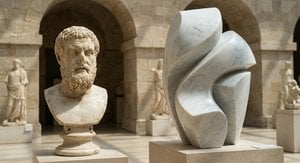
The Enduring Allure of Marble in Art History: From Classical Sculpture to Modern Abstraction
Explore the captivating history of marble sculpture from ancient Greece to modern art. Discover renowned artists like Canova & Michelangelo, carving techniques, and investment insights at ArtsDot.

El Alma del Mármol: Historia, Técnica y el Arte de Dar Vida a la Piedra
Descubre la técnica y el alma de la escultura en mármol con rigor histórico. Explora este viaje de la piedra a la vida ahora.
