


 Ver en contexto
 Enviar
 Compartir
 Detalles

 Descargar
 Similares
 Radiografía
 Presentación de diapositivas
The Bard
 Oil On Canvas
- WallArt
- Neoclassical Portraiture
 1778
1778- 19th Century
 22.0 x 29.0 cm
 Tate Britain
 Ver más
Reproducción al óleo hecha a mano
Óleo sobre lienzo pintado a mano en el tamaño y marco de su elección, realizado por encargo por nuestros artistas. ( Comprar impresión Comprar imagen)




P118B $10

P118H $10

P118W $10

P438Z $10

P508JH $12

P508YH $12

P805H $10

P805Z $10

P919BZ $10

P919G $10

P919XJ $10

P959ZH $10

P968JZ $12

W106C $8

W218G $10

W218JH $8

W218Y $10

W307PJ $10

W316G $10

W316PJ $8

W316Y $10

W398PJ $8

W4111J $10

W500HY $15

W500JH $15

W692G $12

W849H $8

W940BG $15

W953PJ $8




Elija entre nuestros tamaños predefinidos que respetan las proporciones originales de la obra.

Puede ingresar sus propias dimensiones para adaptarse a un marco o espacio específico. Si el tamaño seleccionado no coincide con las proporciones de la imagen original, recortaremos la obra o extenderemos la pintura con elementos adicionales pintados a mano. Se le enviará una maqueta digital para su aprobación antes de comenzar la producción.
Tenga en cuenta que la vista previa en pantalla no refleja el recorte o la extensión reales. Solo la maqueta mostrará con precisión la composición final.
Si bien existen tamaños personalizados, recomendamos seleccionar una dimensión de la lista predefinida para preservar las proporciones originales.
Tras realizar el pedido, el equipo de ArtsDot.com enviará un correo electrónico al cliente para solicitar instrucciones y proporcionarle una vista previa del boceto.
Envío a todo el mundo () en 3-4 semanas en lugar de las 5 semanas estándar. (2 septiembre). Sin comprometer la calidad.

Envío exprés gratuito a todo el mundo

Lienzo de lino de alta calidad

Seguro de envío total

Garantía de reembolso de impuestos aduaneros

Garantía de fidelidad cromática exacta

Política de devolución de 60 días (solo por defectos)

Garantía de devolución del 100% del dinero

Descuento por cantidad
 La opción de vidrio solo está disponible en tamaños inferiores a 110 cm.

The Bard
Técnica de reproducción
Dimensiones de la reproducción
-


Precio total final
$ 263
Thomas Gray’s “The Bard”: A Portrait of Melancholy and Enlightenment
Benjamin West's "The Bard," painted in 1778, is more than just a portrait; it’s a carefully constructed meditation on the role of the poet, the weight of classical learning, and perhaps, a subtle reflection of the burgeoning revolutionary spirit taking hold across the Atlantic. Measuring a modest 22 x 29 cm, this oak panel painting currently resides within the hallowed halls of Tate Britain in London, yet its impact resonates far beyond the confines of that institution. The subject, identified as Thomas Gray – a name synonymous with contemplative verse and the iconic “Elegy Written in Country Retirement” – is presented with an almost unnerving stillness. He’s depicted in the act of playing his harp, not with exuberant joy, but with a focused intensity that suggests deep thought and perhaps, a touch of melancholy.
- The Figure of the Bard: The image immediately evokes the archetype of the bard – a figure steeped in tradition, tasked with preserving knowledge and offering solace through song. West’s choice to portray Gray not as a flamboyant entertainer but as a solitary musician elevates the subject beyond mere celebrity, suggesting instead a profound connection to the past and a contemplative engagement with its wisdom.
- Neoclassical Composition: Executed in the Neoclassical style, prevalent during this period, “The Bard” adheres to strict compositional rules. The pyramidal arrangement of the figure, the carefully rendered drapery, and the use of cool, muted tones – predominantly blues and browns – are hallmarks of this movement’s emphasis on order, reason, and classical ideals.
Benjamin West: Bridging Worlds
The painting's creation within the context of Benjamin West’s career is particularly significant. Born in 1738 in Springfield, Pennsylvania, West was a true pioneer, forging connections between the burgeoning American artistic scene and the established traditions of Europe. His unconventional upbringing – reportedly learning rudimentary techniques from Native Americans before formal training – instilled a spirit of innovation that would define his work. West’s ambition led him to study extensively in London, absorbing the influences of both Neoclassicism and the emerging Romanticism. This dual influence is powerfully evident in “The Bard,” demonstrating West's ability to synthesize diverse artistic currents into a uniquely personal style.
Symbolism and Emotional Resonance
Beyond its formal qualities, "The Bard" is rich with symbolic meaning. The harp itself represents the power of music to evoke emotion and transport the listener to another realm. Gray’s upward gaze suggests a yearning for something beyond the earthly – perhaps a connection to the divine, or simply an acknowledgement of the vastness of human experience. The somber lighting and the subject's introspective pose contribute to a palpable sense of melancholy, reflecting Gray’s own poetic themes of loss and reflection. The painting invites viewers to contemplate not just the beauty of music but also the profound questions of life, death, and the enduring power of art.
A Hand-Painted Reproduction – A Timeless Masterpiece
ArtsDot offers a meticulously crafted hand-painted reproduction of Benjamin West’s “The Bard,” capturing every nuance of detail and emotional depth. Each reproduction is created by skilled artisans, ensuring an unparalleled level of quality and authenticity. This isn't merely a print; it’s a faithful recreation of a seminal work of art, perfect for adorning walls in homes, offices, or galleries. Bring the contemplative beauty of “The Bard” into your space and experience the legacy of Benjamin West firsthand.
Obras relacionadas


Biografía del artista
Benjamin West: Un Pionero del Arte Americano
- Nacido: 10 de octubre de 1738, Springfield, Estados Unidos de América
- Fallecido: 11 de marzo de 1820
Primeros Años y Desarrollo Artístico
- Benjamin West nació en una familia modesta en Springfield, Pensilvania. Su padre regentaba una posada, y la familia posteriormente se mudó a Newtown Square.
- West demostró un talento artístico notable desde temprana edad, aparentemente aprendiendo técnicas de pintura rudimentarias de los nativos americanos.
- Recibió una educación formal limitada pero persiguió su pasión artística de forma independiente.
- Su carrera inicial se centró en el retrato en Pensilvania.
- Un momento crucial llegó con el estímulo para pintar "La Muerte de Sócrates", que difirió significativamente del grabado original y marcó un punto de inflexión en su carrera.
- En 1760, viajó a Italia, estudiando directamente las obras de maestros como Tiziano y Rafael, y encontrándose con artistas neoclásicos como Anton Rafael Mengs, Gavin Hamilton y Angelica Kauffman.
Carrera en Londres y la Royal Academy
- West se mudó a Londres en 1763 y rápidamente se convirtió en una figura destacada dentro de la escena artística británica.
- Fue elegido miembro de la Royal Academy y posteriormente sirvió como su presidente desde 1792 hasta su muerte en 1820.
- Sus pinturas históricas, como "La Partida de Regulus", obtuvieron un considerable reconocimiento, lo que le valió el apodo de “el Rafael americano”.
- Defendió un estilo que incorporaba la ropa contemporánea en escenas históricas, notablemente evidente en "La Muerte del General Wolfe", que desafió las convenciones artísticas tradicionales y provocó debates.
Estilo Artístico y Obras Principales
- El estilo de West evolucionó desde influencias neoclásicas tempranas para incorporar elementos del Romanticismo más adelante en su carrera.
- Obras notables incluyen:
- La Muerte del General Wolfe (1770) – Una obra innovadora que mezclaba la narrativa histórica con el vestuario contemporáneo.
- Tetis Trayendo la Armadura a Aquiles – Demuestra dominio de los temas clásicos y la composición.
- Las Tres Hermanas – Exhibe su capacidad para retratar sujetos alegóricos.
- El Asombro de Astyanax – Una representación dramática de una escena mitológica.
- La Cueva del Despair – Ejemplifica su estilo romántico en evolución.
- Su obra se caracteriza por su ambición, composición detallada y exploración de temas históricos y mitológicos.
Legado y Significado Histórico
- Benjamin West dejó un impacto duradero en el arte americano, pionero del género de la pintura histórica e influyendo en generaciones de artistas.
- Jugó un papel crucial en la configuración de la identidad de la expresión artística estadounidense.
- Su presidencia de la Royal Academy contribuyó significativamente al desarrollo del arte británico.
- El legado de West se extiende más allá de sus obras individuales; fomentó un entorno que alentó y apoyó a los artistas estadounidenses emergentes que estudiaban en el extranjero, incluyendo Allston, Copley y Morse.
- Su enfoque innovador de la pintura histórica allanó el camino para futuros movimientos artísticos y continúa inspirando a artistas contemporáneos y entusiastas del arte.

Benjamin West
1738 - 1820 , Estados Unidos de América
Datos clave
- Artistas Influenciados:
- Edward W. J. Savage
- Copley
- Allston
- Morse
- Artistas Que Influyeron:
- Tiziano
- Rafael
- Fecha De Fallecimiento: 11 de marzo de 1820
- Fecha De Nacimiento: 10 de octubre de 1738
- Lugar De Nacimiento: Springfield, EE. UU.
- Movimiento Artístico: Neoclasicismo, pintura histórica
- Nacionalidad: Estadounidense
- Nombre Completo: Benjamin West
- Obras Notables:
- La muerte del General Wolfe
- Tetis trayendo la armadura
- Las tres hermanas
- El pánico de Astyanax
- La cueva del Despair
Artículos relacionados

Giclée Prints: Archival Quality & Aesthetic Nuances for the Discerning Collector
Explore the world of giclée prints with ArtsDot. Learn about archival quality, aesthetic nuances & investment potential. Expert guidance for discerning art collectors seeking museum-quality reproductions and lasting value.

Benjamin West: Transatlantic Ambition & Shaping American Art
Explore the life & legacy of Benjamin West, pioneering American artist and Royal Academy president. Discover his Neoclassical masterpieces, transatlantic influence, and lasting impact on art history. Learn more at ArtsDot.

The Enduring Legacy of Fine Art Prints: Technique, History & Aesthetic Impact
Explore the rich history & techniques of fine art prints. Discover investment potential, assess authenticity, and learn how to preserve your collection with expert guidance. Trusted insights for discerning collectors.

Echoes of Time: Exploring the Enduring Appeal & Historical Context of Vintage Art Prints
Explore the captivating world of vintage art prints! Discover their history, collecting tips & enduring appeal. Expert insights on chromolithography and building a legacy collection with ArtsDot.
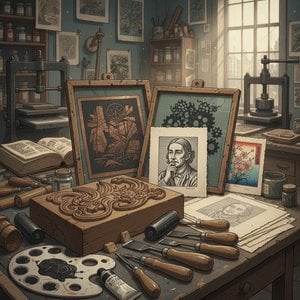
The Enduring Legacy of Printmaking: Techniques, Themes & Artistic Innovation Across Centuries
Explore the rich history of printmaking with ArtsDot. Discover techniques from intaglio to lithography, learn about collecting valuable prints & find museum-quality reproductions. Expert insights for art enthusiasts and collectors.



