


 Vista previa
 Compartir
 Compartir
 Ver detalles

 Descargar
 Ver similares
 Radiografía
 Presentación de diapositivas
Self-portrait


 Leer más
Giclée / Impresión de arte
Impresiones giclée o en lienzo de calidad de museo con producción rápida y opciones de acabado flexibles. ( Cambiar a pintura hecha a mano Cambiar a imagen)




P118B $10

P118H $10

P118W $10

P438Z $10

P508JH $12

P508YH $12

P805H $10

P805Z $10

P919BZ $10

P919G $10

P919XJ $10

P959ZH $10

P968JZ $12

W106C $8

W218G $10

W218JH $8

W218Y $10

W307PJ $10

W316G $10

W316PJ $8

W316Y $10

W398PJ $8

W4111J $10

W500HY $15

W500JH $15

W692G $12

W849H $8

W940BG $15

W953PJ $8




Elija entre nuestros tamaños predefinidos que respetan las proporciones originales de la obra.

Puede introducir sus propias dimensiones para adaptarse a un marco o espacio específico. Si el tamaño seleccionado no coincide con las proporciones de la imagen original, recortaremos la obra de arte o extenderemos la imagen con un borde con efecto espejo o de color sólido. Se enviará una maqueta digital para su aprobación antes de que comience la producción.
Tenga en cuenta que la vista previa en pantalla no refleja el recorte o la extensión real. Solo la maqueta mostrará con precisión la composición final.
Aunque existen tamaños personalizados, recomendamos seleccionar una dimensión de la lista predefinida para preservar las proporciones originales.
Envío a todo el mundo () en 2 semanas en lugar de las 4/5 semanas estándar. (8 agosto)

Envío exprés gratuito a todo el mundo

Lienzo de lino de alta calidad

Seguro de envío completo

Garantía de reembolso de aranceles aduaneros

Garantía de fidelidad cromática exacta

Política de devolución de 60 días (solo por defectos)

Garantía de devolución del 100% del dinero

Oferta por volumen
 La opción de vidrio solo está disponible en tamaños inferiores a 110 cm.

Self-portrait
Giclée / Impresión de arte
Tamaño de la reproducción
-


Precio total
$ 62
Descripción de la pieza
A Portrait of Leisure and Status: Bartholomeus van der Helst’s Self-Portrait
Bartholomeus van der Helst's 1655 self-portrait, a remarkably intimate depiction of the artist himself, transcends the typical genre of portraiture. More than simply a likeness, it’s a carefully constructed statement about wealth, social standing, and the burgeoning ideals of the Dutch Golden Age. Painted during a period of immense prosperity for Amsterdam – fueled by its thriving trade networks and maritime power – van der Helst masterfully captures not just his physical appearance but also the aura of success that defined the era's elite. The painting immediately draws the eye with its rich palette, dominated by deep browns, reds, and golds, colors synonymous with luxury and authority within the merchant class. The artist’s pose is deliberately relaxed yet commanding; leaning casually against a stone baluster in what appears to be a wooded park, he exudes an air of cultivated ease – a gentleman enjoying his leisure time, far removed from the demands of daily life. This carefully chosen setting, with its suggestion of expansive land ownership beyond the confines of the city, subtly reinforces his social aspirations and ties him to the ideals of aristocratic status that were increasingly sought after by ambitious burghers.The Mastery of Dutch Portraiture: Technique and Style
Van der Helst’s skill as a portraitist is immediately evident in the meticulous detail with which he renders every element of the scene. The texture of his velvet jacket, the intricate folds of his clothing, and even the delicate veins in his hands are rendered with astonishing precision – a hallmark of Dutch artistic training at the time. His technique leans heavily on chiaroscuro, utilizing dramatic contrasts between light and shadow to sculpt the figure and create a sense of depth and volume. This masterful manipulation of light not only highlights van der Helst’s features but also imbues the portrait with an almost theatrical quality. The background landscape, painted with loose brushstrokes, provides a harmonious counterpoint to the artist's sharply defined form, suggesting both natural beauty and carefully curated composition. Notably, the painting reflects the influence of Anthony van Dyck, whose elegant portraits were immensely popular throughout Europe, demonstrating van der Helst’s commitment to capturing not just appearance but also personality and character – a crucial element in establishing a successful portrait.Symbolism and Social Commentary
Beyond its technical brilliance, the self-portrait is laden with symbolic meaning. The inclusion of a hunting dog, a common motif in Dutch art during this period, speaks to the aristocratic pursuits favored by the wealthy elite. Hunting was not merely a sport; it represented status, discipline, and control over nature – qualities highly valued within the social hierarchy. The open collar, adorned with elaborate cords and tassels, further emphasizes van der Helst’s wealth and fashionable sensibilities. The subtle gesture of pointing towards the dog reinforces his position as a man of leisure and influence. Even the choice of setting—a park-like landscape—suggests an escape from the pressures of urban life and a connection to the land – a powerful symbol of prosperity and social mobility. Van der Helst, through this carefully orchestrated composition, subtly critiques the aspirations of his patrons while simultaneously presenting himself as a worthy subject for their portraits.A Window into the Dutch Golden Age
Bartholomeus van der Helst’s self-portrait offers a captivating glimpse into the heart of 17th-century Amsterdam – a city at the height of its power and influence. It reflects not only the artistic achievements of the era but also the complex social dynamics that shaped it. The painting serves as a testament to the rise of the merchant class, their ambition for social advancement, and their patronage of the arts. Studying this work allows us to appreciate the intricate interplay between wealth, status, and artistic expression during a period often characterized by both unprecedented prosperity and underlying social tensions. It’s a poignant reminder that even within the realm of portraiture, artists could subtly engage with the broader currents of their time, offering insightful commentary on the values and aspirations of their society.Reproductions and Artistic Legacy
Today, reproductions of van der Helst's self-portrait remain highly sought after by collectors and interior designers alike. The painting’s elegant composition, rich colors, and evocative symbolism continue to resonate with audiences across centuries. When selecting a reproduction, consider the quality of materials used – a hand-painted replica will capture the nuances of the original far more effectively than a digital print. The enduring appeal of this self-portrait lies in its ability to transport us back to Amsterdam’s Golden Age, offering a rare and intimate portrait of an artist who skillfully captured both his own identity and the spirit of his time.Obras relacionadas


Biografía del artista
Vida Temprana y Carrera
- Bartholomeus van der Helst nació en Ámsterdam, Países Bajos, en 1613.
- Comenzó su carrera como pintor a una edad temprana.
- Se cree que estuvo influenciado por las obras de otros pintores holandeses destacados, incluyendo Ferdinand Bol.
- Sus primeros trabajos mostraban un fuerte enfoque en el detalle y el realismo, lo cual se convirtió en una característica distintiva de su estilo.
Pintura de Retratos y Estilo
- Los retratos de Van der Helst se caracterizan por su elegancia y refinamiento.
- Era conocido por su habilidad para capturar la esencia de sus sujetos, a menudo representándolos con ropa y escenarios elaborados.
- Sus retratos eran muy solicitados por la élite adinerada de Ámsterdam.
- Frecuentemente representaba retratos grupales, mostrando múltiples figuras dentro de una sola composición.
Obras Principales y Logros
- Retratos de la Élite de Ámsterdam: Estos se encuentran en el Rijksmuseum de Ámsterdam.
- El Banquete en el Gremio de Arqueros en Celebración del Tratado de Münster (1648): Esta es considerada una de sus obras más celebradas, mostrando un gran retrato grupal con detalle y dinamismo notables. Ejemplifica su habilidad para capturar un sentido de ocasión y jerarquía social.
- Se convirtió en uno de los pintores de retratos líderes de Ámsterdam a mediados de la década de 1640, superando a Rembrandt en popularidad por un tiempo.
Influencias y Legado
- La influencia de Van der Helst puede verse en el trabajo de otros pintores holandeses, incluyendo Ludolf Bakhuizen, quien lo asistió en varias ocasiones.
- Su legado es evidente en los muchos retratos que pintó, ahora alojados en museos como el Rijksmuseum y ArtsDot.com.
- Contribuyó significativamente al desarrollo del retrato durante la Edad de Oro holandesa, estableciendo un estilo caracterizado por elegancia, detalle y un enfoque en capturar el carácter individual dentro de entornos grupales.
Vida Posterior y Muerte
- Van der Helst se casó con Anna du Pire en 1636. Tuvieron seis hijos, dos de los cuales sobrevivieron a la edad adulta.
- Alquiler una casa en el Walenpleintje en Ámsterdam alrededor de 1647 debido a la necesidad de un taller más grande.
- Su hijo, Lodewijk (1642-después de 1683), siguió los pasos de su padre como pintor.
- Bartholomeus van der Helst murió en Ámsterdam el 16 de diciembre de 1670.

Bartolomé van der Helst
1613 - 1670 , Países Bajos
Datos clave
- Artistas Influenciados: ['Ludolf Bakhuizen']
- Artistas Que Influyeron:
- Ferdinand Bol
- Nicolaes Eliasz. Pickenoy
- Fecha De Fallecimiento: 1670
- Fecha De Nacimiento: 1613
- Lugar De Nacimiento: Haarlem, Países Bajos
- Movimiento Artístico: Barroco, Retratos
- Nacionalidad: Neerlandés
- Nombre Completo: Bartholomeus van der Helst
- Obras Notables:
- Retratos de la élite de Ámsterdam
- Banquete del gremio de arqueros
- Retrato de Andries Bicker
Artículos relacionados

Los 10 Maestros del Siglo de Oro Holandés: Arte, Historia y Decoración Exclusiva
Descubre los 10 imprescindibles del Siglo de Oro Holandés: Rembrandt, Vermeer y más. Explora la historia, técnica y belleza de estos lienzos clásicos. Encuentra reproducciones de arte exclusivas para decorar tu hogar en .

Rembrandt van Rijn: A Life Illuminated – Innovation, Emotion, and the Dutch Golden Age
Explore the life & art of Rembrandt van Rijn, a Dutch Golden Age master. Discover his innovative techniques, iconic paintings like 'The Night Watch', and enduring legacy. Expert insights for collectors & enthusiasts.

Frans Hals I: Innovation, Intimacy & the Dutch Golden Age Portrait
Explore the revolutionary portraiture of Frans Hals I, a master of the Dutch Golden Age. Discover his innovative techniques, captivating character studies & lasting impact on art history. Learn more at ArtsDot.

Willem van de Velde the Elder: Master of Maritime Painting & Chronicler of the Dutch Golden Age
Discover the captivating maritime paintings of Willem van de Velde the Elder, a master chronicler of the Dutch Golden Age. Explore his unparalleled realism and lasting influence on naval art history.
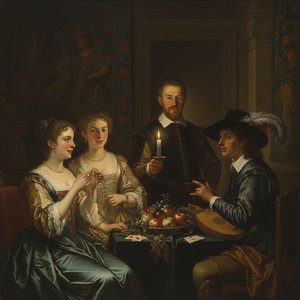
Gerard van Honthorst: Illuminating the Dutch Golden Age with Caravaggism & Courtly Grace
Explore the captivating world of Gerard van Honthorst, a Dutch Golden Age master renowned for his dramatic chiaroscuro & courtly portraits. Discover his life, art, and lasting influence on Baroque painting.



