


 Vista previa
 Compartir
 Compartir
 Ver detalles
 Guía
Guía

 Descargar
 Ver artículos similares
 Radiografía
 Presentación de diapositivas
 Estadísticas
untitled (4590)

 Leer más
La obra de arte que se muestra en esta página está protegida por las leyes de propiedad intelectual, lo que significa que no podemos crear ni vender legalmente una reproducción idéntica. Esta protección se hace cumplir en virtud de acuerdos internacionales como el Convenio de Berna y por las leyes nacionales, incluidas aquellas establecidas por el Ley de derechos de autor de los EE. UU. - Título 17.
Este método cumple plenamente con las normativas de derechos de autor, ya que no implica la copia ni la duplicación de la obra protegida. En su lugar, se trata de una reinterpretación creativa: una nueva pintura influenciada por la original, pero que no es idéntica a ella.
Giclée / Impresión de arte
Impresiones giclée o en lienzo de calidad de museo con producción rápida y opciones de acabado flexibles. ( Encargar reproducción pintada a mano Ver versión en imagen digital)




P118B €10

P118H €10

P118W €10

P438Z €10

P508JH €12

P508YH €12

P805H €10

P805Z €10

P919BZ €10

P919G €10

P919XJ €10

P959ZH €10

P968JZ €12

W106C €8

W218G €10

W218JH €8

W218Y €10

W307PJ €10

W316G €10

W316PJ €8

W316Y €10

W398PJ €8

W4111J €10

W500HY €15

W500JH €15

W692G €12

W849H €8

W940BG €15

W953PJ €8




Elija entre nuestros tamaños predefinidos que respetan las proporciones originales de la obra.

Puede introducir sus propias dimensiones para adaptarse a un marco o espacio específico. Si el tamaño seleccionado no coincide con las proporciones de la imagen original, recortaremos la obra de arte o extenderemos la imagen con un borde con efecto espejo o de color sólido. Se enviará una maqueta digital para su aprobación antes de que comience la producción.
Tenga en cuenta que la vista previa en pantalla no refleja el recorte o la extensión real. Solo la maqueta mostrará con precisión la composición final.
Aunque existen tamaños personalizados, recomendamos seleccionar una dimensión de la lista predefinida para preservar las proporciones originales.
Envío a todo el mundo () en 2 semanas en lugar de las 4/5 semanas estándar. (7 octubre)

Envío exprés gratuito a todo el mundo

Lienzo de lino de alta calidad

Seguro de envío completo

Garantía de reembolso de impuestos aduaneros

Garantía de fidelidad cromática exacta

Política de devolución de 100 días (solo por defectos)

Garantía de devolución del 100% del dinero

Oferta por volumen
 La opción de vidrio solo está disponible en tamaños inferiores a 110 cm.

untitled (4590)
Giclée / Impresión de arte
Tamaño de la reproducción
-


Precio total
€ 53
The Echoes of Industry: Deconstructing Pop with Warhol’s “Untitled (4590)”
Andy Warhol's "Untitled (4590)," a vibrant silkscreen depicting a seemingly mundane automobile, is far more than just a depiction of a car. It’s a meticulously constructed meditation on American consumerism, celebrity culture, and the very nature of art itself. Created in 1965 during his peak as a Pop Art icon, this piece encapsulates the era's fascination with mass production, advertising imagery, and the blurring lines between high art and low culture. The painting’s genesis lies within Warhol’s deliberate exploration of repetition – a technique he honed through iconic works like “Campbell’s Soup Cans” – transforming familiar objects into symbols of both ubiquity and profound artistic commentary. The choice of a car, an emblem of mobility and the American dream, immediately establishes a dialogue with the viewer about status, desire, and the relentless pursuit of progress.A Symphony of Color and Technique
Warhol’s signature technique—silkscreen printing—is central to the work's impact. He meticulously transferred photographic images onto silk screens, then used opaque stencils to block out areas, allowing ink to pass through in precise patterns. This process resulted in a remarkably clean, almost machine-like execution, mirroring the industrial processes that defined much of American manufacturing during this period. The bold, flat colors – a striking red hood against a yellow wheel and a predominantly black vehicle – are deliberately unmodulated, creating a sense of immediacy and visual impact. The use of multiple layers of color, achieved through careful registration, adds depth and complexity to the seemingly simple composition. Notice how the subtle variations in hue suggest reflections and shadows, imbuing the static image with a surprising degree of dynamism. The meticulous attention to detail, despite the overall flatness of the style, speaks volumes about Warhol’s dedication to his craft.The Language of Celebrity and Spectacle
“Untitled (4590)” exists within the context of Warhol's "Superstar" era – a period marked by collaborations with celebrities, socialites, and figures from the fringes of American society. These individuals weren’t simply subjects for Warhol’s art; they were actively involved in its creation, appearing in his films, contributing to his studio environment (The Factory), and becoming integral parts of his artistic vision. The inclusion of two figures within the scene – a man on the left and another on the right – subtly references this dynamic. They are not presented as distinct individuals but rather as interchangeable elements within Warhol’s carefully constructed tableau. This mirrors the way Warhol viewed celebrity, reducing iconic personalities to repeatable images, akin to mass-produced products. The painting can be interpreted as an exploration of fame, notoriety, and the fleeting nature of attention in a society obsessed with spectacle.Symbolism Beyond the Surface
While superficially resembling a commonplace automobile, “Untitled (4590)” is laden with symbolic meaning. The car itself represents American aspirations – freedom, mobility, and success. However, Warhol deliberately strips away any romantic notions associated with automobiles, presenting it in a stark, almost clinical manner. The surrounding objects—a chair, a clock, a cup, a spoon, scissors—further complicate the image’s interpretation. These everyday items, rendered in flat, unadorned colors, suggest a world devoid of personal expression or emotional depth. They are merely props within Warhol's carefully orchestrated composition, highlighting the artificiality and superficiality of consumer culture. The painting ultimately invites us to question what we value and how we define our identities within a society saturated with images and commodities.A Timeless Reflection on Modern Life
“Untitled (4590)” remains remarkably relevant today, continuing to resonate with audiences grappling with issues of celebrity, mass media, and the commodification of experience. Its bold colors, simplified forms, and unsettling juxtaposition of familiar objects create a powerful visual statement that transcends its historical context. It’s a piece that demands repeated viewing, revealing new layers of meaning with each encounter. Whether viewed as a commentary on American culture or simply as a striking example of Pop Art's innovative techniques, Warhol’s “Untitled (4590)” stands as a testament to the artist’s enduring influence and his ability to capture the spirit of a transformative era.Preguntas y respuestas
¿Cómo se combinan el contraste y la armonía en "untitled (4590)"?
La composición cromática de "untitled (4590)" de Andy Warhol combina un contraste Statement con una armonía Balanced Harmony.
¿Dónde puedo comprar una reproducción pintada a mano de "untitled (4590)" de Andy Warhol?
"untitled (4590)" está disponible como una reproducción al óleo pintada a mano sobre lienzo de lino. El pedido puede realizarse en esta página, con una variedad de tamaños a elegir.
¿Cómo equilibra la luz y la sombra "untitled (4590)"?
"untitled (4590)" de Andy Warhol presenta un nivel de brillo de bright, con una luminancia de Bright Balance.
¿Qué uso y espacio se recomiendan para "untitled (4590)" de Andy Warhol?
Se sugiere "untitled (4590)" para Statement, y el espacio recomendado es un Living Room.
¿Quién es el artista detrás de "untitled (4590)"?
"untitled (4590)" se atribuye a Andy Warhol.
¿Está "untitled (4590)" disponible como una impresión de bellas artes?
"untitled (4590)" está disponible como una impresión de bellas artes sobre lienzo de algodón o papel de lienzo de archivo. Los pedidos se realizan en esta página, en el tamaño de su elección.
¿De qué está hecho "untitled (4590)" y en qué estilo se encuentra?
"untitled (4590)" de Andy Warhol combina la técnica de Acrylic On Canvas con el estilo Pop Art. La técnica y el movimiento describen la elaboración y el estilo de la obra.
Obras relacionadas


Biografía del artista
Andy Warhol: Una Vida en el Arte Pop
Primeros Años y Educación
- Nacido: 6 de agosto de 1928, en Pittsburgh, Pensilvania.
- La vida temprana de Warhol estuvo marcada por una enfermedad infantil – corea de Sídenham (Danza de San Vitoreo) – que provocó períodos prolongados de confinamiento y fomentó su interés por el arte.
- Estudió diseño pictórico en la Carnegie Institute of Technology (ahora Universidad Carnegie Mellon), graduándose en 1949.
- Tras graduarse, se mudó a la ciudad de Nueva York para seguir una carrera como ilustrador comercial.
Arte Comercial y Carrera Temprana
- Inicialmente, Warhol trabajó en ilustraciones para revistas y publicidad, logrando éxito con sus dibujos lineales distintivos para publicaciones de moda.
- Desarrolló una comprensión profunda de la producción en masa y la comunicación visual a través de su trabajo comercial, lo que influiría fuertemente en su estilo artístico más adelante.
- Sus primeras obras se centraron a menudo en objetos cotidianos y bienes de consumo, anticipando los temas que exploraría en el Arte Pop.
El Auge del Arte Pop
- En la década de 1960, Warhol se convirtió en una figura destacada del movimiento Arte Pop, desafiando las nociones tradicionales del arte.
- El Arte Pop abrazaba la cultura popular – publicidad, cómics y objetos producidos en masa – como sujetos legítimos para la expresión artística.
- Obras clave de este período incluyen: Campbell’s Soup Cans (1962) y Marilyn Diptych (1962).
- La técnica de Warhol de serigrafía le permitió la producción masiva de imágenes, reflejando la cultura del consumidor que representaba.
La Fábrica y Producción Artística
- Warhol estableció “The Factory”, un espacio de estudio que se convirtió en un centro para artistas, músicos, cineastas y socialités.
- La Fábrica no fue solo un lugar de trabajo sino también una escena: fomentó la colaboración y la experimentación entre diversas disciplinas artísticas.
- Warhol abrazó el concepto del arte como negocio, difuminando las líneas entre la alta cultura y el comercialismo.
- Exploró temas de celebridad, muerte y desastre en su obra, a menudo utilizando la repetición y colores audaces para crear efectos visuales impactantes.
Obras Maestras y Estilo Artístico
- Obras notables: Che Guevara, Nan Kempner, Mona Lisa, Flowers, Portada del álbum Velvet Underground & Nico.
- El estilo de Warhol se caracteriza por el uso de la serigrafía, colores audaces y repetición.
- A menudo apropiaba imágenes de la cultura popular, transformándolas en obras de arte icónicas.
- Sus retratos de celebridades – Marilyn Monroe, Elvis Presley, Elizabeth Taylor – capturaron la fascinación por la fama y la imagen en la sociedad estadounidense.
Legado e Importancia Histórica
- La obra de Andy Warhol tuvo un profundo impacto en el mundo del arte, desafiando las definiciones tradicionales del arte y allanando el camino para nuevos movimientos artísticos.
- También fue una figura cultural significativa: abiertamente gay antes del Movimiento por la Liberación Gay.
- Su exploración del consumismo, la cultura de la celebridad y los medios masivos sigue resonando en el público actual.
- La influencia de Warhol se puede ver en el arte contemporáneo, la moda, la música y el cine.
- Sus obras se exhiben en importantes museos de todo el mundo, incluido el Museo Andy Warhol en Pittsburgh.

Andy Warhol
1928 - 1987 , Estados Unidos de América
Datos clave
- Fecha De Muerte: 1987
- Fecha De Nacimiento: 6 de agosto de 1928
- Lugar De Nacimiento: Pittsburgh, EE.UU.
- Movimiento Artístico: Pop Art
- Nacionalidad: Estadounidense
- Nombre Completo: Andy Warhol
- Obras Notables:
- Campbell’s Soup Cans
- Marilyn Diptych
- Che Guevara
- Flowers
- Velvet Underground & Nico
Artículos relacionados

Andy Warhol: Las 25 Obras Maestras que Definieron el Arte Pop | ArtsDot
Descubre las 25 obras maestras de Andy Warhol, ícono del arte pop. Explora la historia detrás de Marilyn Monroe, Campbell's Soup Cans y más. Reproducciones de alta calidad para tu hogar en ArtsDot.com. ¡Inspírate con el arte moderno!

Andy Warhol: Deconstructing Pop Culture & Redefining Artistic Expression
Explore the revolutionary art of Andy Warhol & the Pop Art movement. Discover his iconic techniques, cultural impact, and investment potential. A guide for discerning collectors.

Desafiando las Convenciones: Orígenes, Evolución y Legado Duradero del Pop Art
Descubra la fascinante historia del Pop Art: orígenes, artistas clave como Warhol y Lichtenstein, técnicas innovadoras y su impacto duradero en el arte y la cultura. Guía experta para coleccionistas.

Los 10 Maestros del Pop Art: Obras Icónicas para Decorar con Estilo
Descubre los 10 iconos del Pop Art: Warhol, Lichtenstein y más. Explora la historia, técnica y significado de estas obras maestras que revolucionaron el arte moderno. Encuentra reproducciones exclusivas en .
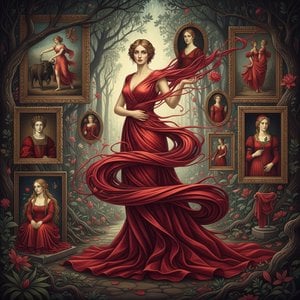
Crimson Threads of Narrative: Exploring Symbolism & Representation in Artworks Featuring the Red Dress
Explore the rich symbolism of the red dress in art history! From ancient power displays to iconic portraits like Cézanne’s 'Madame Cezanne', discover the cultural and artistic significance behind this captivating color. Expert analysis & insights.


