

- 17.0 x 34.0 cm


La imagen se ajusta a sus preferencias: , .
Descripción del objeto
Explore André Derain’s ‘Still Life’! A vibrant Fauvist masterpiece featuring olives & pepper in a loose, expressive style. Discover its bold colors & unique composition – a captivating art investment.
 Ver más
Biografía del artista
Descubre a André Derain (1880-1954), cofundador del Fauvismo, famoso por sus audaces colores y composiciones expresivas. ¡Explora sus obras maestras!
Reproducción al óleo hecha a mano
Óleo sobre lienzo pintado a mano en el tamaño y marco de su elección, realizado por encargo por nuestros artistas. ( Cambiar a impresiones Cambiar a imagen digital)
Más información sobre esta pintura
 Ver en contexto
 Enviar
 Compartir
 Detalles
 Guía
Guía

 Descargar
 Similares
 Radiografía
 Presentación de diapositivas
 Preguntas y respuestas
 Estadísticas
Pida su pintura en cuatro sencillos pasos
Tómese su tiempo. Puede cambiar cualquier respuesta; el precio en su carrito de compra se actualizará según cada elección.
1 Paso uno de cuatro
¿Qué tamaño desea?
Estos tamaños mantienen las proporciones de la pintura original. El dibujo muestra su elección en una pared, sobre un sofá de dos metros.
O introduce tus propias medidas
Elija entre nuestros tamaños predefinidos que respetan las proporciones originales de la obra.

Indique el ancho y el alto que necesite para adaptarse a su marco o pared. Al tratarse de una obra pintada a mano, si requiere un tamaño con una proporción distinta, el artista puede pintar un poco más alrededor de la imagen o recortarla ligeramente; usted elige. Le enviaremos una maqueta digital para su aprobación antes de comenzar la pintura. La imagen que se muestra en esta página no refleja el resultado real; solo la maqueta lo hace.
2 Paso dos de cuatro
¿Cómo desea recibirlo: enrollado, estirado o enmarcado?
Los precios que aparecen a continuación corresponden al tamaño seleccionado en el primer paso.
Elige el acabado de los bordes del lienzo
Elige tu marco

Blanco €1

Bordes difuminados €1

Continuación de imagen €1

P118B €10

P118H €10

P118W €10

P438Z €10

P508JH €12

P508YH €12

P805H €10

P805Z €10

P919BZ €10

P919G €10

P919XJ €10

P959ZH €10

P968JZ €12

W106C €8

W218G €10

W218JH €8

W218Y €10

W307PJ €10

W316G €10

W316PJ €8

W316Y €10

W398PJ €8

W4111J €10

W500HY €15

W500JH €15

W692G €12

W849H €8

W940BG €15

W953PJ €8

H24-GOLD €30

H24-SILVER €30

H36-GOLD €45

H36-SILVER €45
Con marco
Moldura: . Dimensiones totales con marco: .
3 Paso tres de cuatro
¿Desea realizar algún cambio en la pintura?
La mayoría de las personas responden que no. Debido a que cada pintura se realiza a mano, nuestro artista también puede adaptarla para usted.
Tras realizar el pedido, el equipo de ArtsDot.com enviará un correo electrónico al cliente para solicitar instrucciones y proporcionar una vista previa del boceto
4 Paso cuatro de cuatro
Algunas opciones de acabado
Todos ellos son opcionales. Las respuestas ya seleccionadas no tienen ningún coste adicional.
¿Quién lo pinta?
Envío a todo el mundo () en 3-4 semanas en lugar de las 5 semanas estándar. (4 noviembre). Sin comprometer la calidad.
¿Una placa de identificación, como en un museo?
Detalles de la placa de bronce grabada
This elegant plaque features the artist's name and the title of the artwork, finely engraved for a timeless presentation.
It is made from bronze with a refined, elegant finish. The text is precisely laser-engraved for a sharp and permanent result. Measuring 9x2 cm, the plaque is compact yet easy to read. It's built to be durable and scratch-resistant, offering a professional, museum-quality look. Mounting is simple thanks to the included adhesive backing.
Detalles de la placa de acrílico transparente
The plaque includes essential engraved details such as the artist's name, the title of the artwork, the date it was created, the type of media used-like oil on canvas or watercolor-a brief description of the piece, and a QR code that links to the complete artwork information.
It is crafted from clear acrylic, offering a sleek, modern appearance. The text is UV-engraved in black to ensure strong visual contrast. With a size of 10x15 cm, it ensures optimal readability. It comes equipped with two metal hooks for secure wall mounting. The plaque is designed to be weather-resistant, making it suitable for various environments, and it includes interactive features that work seamlessly with smartphone scanning.
Detalles de la placa de acrílico negro
This elegant plaque includes engraved information such as the artist's name, the title of the artwork, the date it was created, the type of media used (like oil on canvas or watercolor), a short description of the artwork, and a QR code for quick access to more information.
The plaque itself is made from refined black acrylic with a premium finish. The text is laser-engraved in white for high contrast and readability. Its size is 10x15 cm, designed to be easy to read. It comes with two metal hooks for professional mounting. The design is sleek and fits any interior style. It is also weather-resistant and durable, with built-in digital integration for mobile compatibility.
¿Un barniz protector?
¿Para cuándo lo necesita?
✓ Revisar y pedir
Su pintura, tal como la solicitó

Still Life
Técnica de reproducción
Dimensiones de la reproducción
-

Selección de artistas premium
Mayor nivel de detalle, delicadeza y tiempo de producción adicional
-

Enmarcado de reproducción
-
-
Para obras de arte o reproducciones que midan más de 105 cm (aproximadamente 41 pulgadas) en cualquiera de sus lados, el marco se enviará como un kit desmontado. Este método garantiza una entrega segura y evita daños durante el transporte.
Se requiere montaje profesional: este no es un producto para hacer usted mismo (DIY).
El kit debe ser ensamblado y el lienzo tensado por un enmarcador profesional con experiencia, utilizando cola para madera (no incluida), una tenaza para tensar lienzos y sargentos para mantener los bastidores alineados mientras la cola se seca. Un montaje incorrecto o una tensión desigual del lienzo pueden dañar la obra de arte de forma permanente y no están cubiertos por nuestra garantía.
 Para obras de arte o reproducciones que midan más de 105 cm (aproximadamente 41 pulgadas) en cualquiera de sus lados, el marco se enviará como un kit desmontado. Este método garantiza una entrega segura y evita daños durante el transporte.
Se incluyen todos los listones de madera maciza, cortados con precisión según las medidas.
Se ensambla con los tornillos incluidos, además de cola para madera para las uniones de las esquinas, la cual no se incluye y debe ser proporcionada por su enmarcador.
Se requieren herramientas profesionales que no están incluidas: un alicate para tensar lienzos (tensor) y abrazaderas para mantener los bastidores alineados mientras se seca el pegamento.
Importante:
Las uniones de las esquinas requieren cola para madera, los listones deben sujetarse con prensas hasta que la cola esté completamente seca, y para tensar el lienzo en el bastidor ensamblado se requiere una pinza para tensar lienzos. Ninguno de estos elementos está incluido en el kit. Por favor, contacte con un profesional del enmarcado con experiencia antes de realizar un pedido de este tamaño.

Cartela
-
-

Barniz protector
Barniz brillante (realza los colores y protege contra la luz y la humedad)
-

Personalizar mi obra
Ejemplos de lo que se puede personalizar: sustituir el rostro por una foto del cliente; añadir una mascota (por ejemplo, cambiar un gato por un perro); incluir un mensaje oculto en el fondo; cambiar el paisaje o los elementos del fondo.
-

Envío urgente
Envío a todo el mundo () en 3 o 4 semanas, en lugar de las 5 semanas habituales. (4 noviembre). Sin comprometer la calidad.
-
Envío urgente
Envío internacional () en 5 semanas. (11 noviembre).
Incluido
Precio total final
€ 234
La opción de vidrio solo está disponible en tamaños inferiores a 110 cm.
Incluido en cada pedido
- Envío exprés gratuito a todo el mundo
- Lienzo de lino de alta calidad
- Seguro de envío total
- Garantía de reembolso de aranceles aduaneros
- Garantía de fidelidad cromática exacta
- Política de devolución de 100 días (solo por defectos)
- Garantía de devolución del 100% del dinero
- Descuento por cantidad


André Derain’s Still Life: A Fragment of Abundance
André Derain's "Still Life," painted between 1921 and 1922, isn’t merely a depiction of fruit and vegetables; it’s a carefully constructed meditation on the transient beauty of everyday objects and the quiet dignity of domesticity. This work, now residing within the Art Gallery of New South Wales' collection, offers a fascinating glimpse into the artist’s evolving style – a deliberate shift away from the vibrant, almost aggressively colorful Fauvism that defined his earlier career and towards a more restrained, classically-influenced aesthetic.
The scene itself is deceptively simple: a bowl overflowing with olives and a solitary green pepper rest upon a pristine white plate. Yet, within this apparent stillness lies a remarkable dynamism. Derain’s brushstrokes are not smooth or polished; instead, they possess a palpable energy, building up layers of paint to create a textured surface that seems to shimmer in the light. The composition is dominated by the oval form of the plate, acting as a central anchor and drawing the eye inward. Notice how he utilizes broken lines and fragmented forms – echoes of Cubism but tempered with a sensitivity to color and shape reminiscent of his earlier Fauvist period.
The Echoes of Tradition and Modernity
To fully appreciate “Still Life,” it’s crucial to understand Derain's artistic journey. Following the explosive success of Fauvism, he embarked on a period of intense self-reflection, seeking inspiration in the art of the Renaissance masters – particularly Jan van Eyck and Hieronymus Bosch. This exploration led him to a renewed interest in order, harmony, and detachment, qualities he sought to embody in his later works. The muted palette—a blend of greys, browns, and subtle greens—reflects this shift away from the bold, unrestrained colors of his Fauvist phase.
However, Derain never abandoned his inherent expressive tendencies entirely. The painting retains a certain emotional resonance, a quiet intensity conveyed through the deliberate manipulation of color and texture. The olive’s dark hue, contrasted against the bright green pepper, creates a subtle tension, hinting at both abundance and decay – a poignant reminder of the fleeting nature of beauty. This duality is characteristic of Derain's work throughout his career: a constant negotiation between tradition and innovation, restraint and expression.
Symbolism and the Language of Still Life
Like many still life paintings of its era, “Still Life” carries layers of symbolic meaning. The arrangement of objects – the bowl, the plate, the fruit – can be interpreted as a visual representation of nourishment, abundance, and the cycle of seasons. The presence of olives, often associated with peace and prosperity, further reinforces this theme. Moreover, the painting’s composition subtly alludes to the tradition of *vanitas* paintings, which traditionally included objects representing mortality and the transience of earthly pleasures. The simple arrangement, devoid of overt religious iconography, suggests a more secular reflection on these themes – a quiet contemplation of life's ephemeral nature.
A Masterpiece in Reproduction
André Derain’s “Still Life” is a testament to the enduring power of seemingly simple subjects. Its evocative brushwork, subtle color palette, and layered symbolism continue to captivate viewers today. When considering a high-quality reproduction, it's important to select one that accurately captures the painting’s textural richness and nuanced tonal variations. The interplay of light and shadow, so skillfully rendered by Derain, is particularly crucial – ensuring that the reproduction conveys the same sense of depth and atmosphere as the original.
Whether displayed in a formal gallery setting or incorporated into a personal interior design scheme, “Still Life” offers a timeless reminder of beauty’s fleeting nature and the enduring appeal of everyday objects. It is a work that invites contemplation, sparking a dialogue between the viewer and the artist's profound understanding of light, color, and the human condition.
Preguntas y respuestas
¿Qué tamaño debería elegir para imprimir "Still Life" en mi habitación?
La combinación recomendada para "Still Life" de André Derain: una impresión de Medium en un/a Living Room.
¿Los colores de "Still Life" son intensos o suaves?
"Still Life" de André Derain presenta una intensidad de color Monochromatic.
¿Cómo se relaciona el tema de "Still Life" con la temática habitual de André Derain?
Los temas recurrentes de André Derain incluyen post-impressionist echoes, coastal impressionism", london's vibrant palette, experimentation & color, breaking formal norms, early modernist shift, exploring urban life; "Still Life" se centra en still life painting, fauvist colors, olive & pepper, geometric forms, abstract composition, early 20th century, bold color palette.
Obras relacionadas


André Derain
1880 - 1954, Francia
Biografía del artista
Primeros Años y Formación
- Nacimiento y Familia: André Derain nació el 10 de junio de 1880 en Chatou, Yvelines, Île-de-France, justo fuera de París.
- Estudio Independiente: Contrariamente a algunas cuentas, Derain comenzó a pintar independientemente en 1895, antes de conocer a Vlaminck o Matisse. Ocasionalmente iba al campo con Father Jacomin y sus hijos.
- Educación Formal: En 1898, estudió ingeniería en la Académie Camillo, donde conoció a Matisse y posteriormente asistió a clases de pintura bajo Eugène Carrière.
- Abandono de la Ingeniería: Tras el servicio militar (1901-1904), Derain fue persuadido por Matisse para abandonar su carrera de ingeniería y dedicarse a la pintura. Luego asistió a la Académie Julian.
Fauvismo y Desarrollo Artístico Temprano
- Colaboración con Matisse: Derain colaboró estrechamente con Henri Matisse, particularmente durante el verano de 1905 en Collioure, lo que resultó en obras como "Montañas en Collioure".
- Salón d'Automne (1905): Su exposición en el Salon d'Automne marcó un momento crucial, llevando al crítico Louis Vauxcelles a acuñar el término "Fauves" ("bestias salvajes") debido a su audaz y poco convencional uso del color.
- Pinturas de Londres: En 1906, Derain fue enviado a Londres por Ambroise Vollard, produciendo una serie de pinturas que representaban la ciudad de una manera nueva y sorprendente, centrándose en el Támesis y el Tower Bridge. Estas obras se consideran entre sus más significativas.
- Influencias y Estilo: El trabajo Fauvista temprano se caracteriza por colores intensos y no naturalistas y pinceladas expresivas. Derain fue influenciado por artistas como Van Gogh y Cézanne.
Evolución del Estilo y Obras Posteriores
- Transición hacia el Clasicismo: Después de 1907, el estilo de Derain comenzó a evolucionar, alejándose de la paleta puramente fauvista hacia tonos más apagados y una mayor énfasis en la forma. Este período (1911-1914) a veces se conoce como su "fase gótica".
- Influencia del Cubismo y los Maestros Antiguos: El trabajo de Derain durante este tiempo reflejó su estudio de los Maestros Antiguos, incorporando elementos del Cubismo y un renovado interés en las formas clásicas.
- Diseño de Ballet: En 1919, diseñó el ballet "La Boutique Fantasque" para Diaghilev, demostrando su versatilidad como artista.
- Obras Notables: Las obras clave de este período incluyen "Arlequín y Pierrot", "El Retorno de Ulises" (un gran mural) y varios paisajes y bodegones que muestran su estilo en evolución.
Legado y Significado Histórico
- Co-fundador del Fauvismo: Derain es reconocido como una figura clave en el desarrollo del Fauvismo, junto con Matisse, contribuyendo significativamente al movimiento artístico moderno de principios del siglo XX.
- Visión Única de Londres: Su serie de pinturas que representan Londres ofreció una perspectiva fresca y distintiva de la ciudad, apartándose de las representaciones artísticas anteriores.
- Reconocimiento en el Período de Posguerra: Después de la Primera Guerra Mundial, Derain ganó un nuevo reconocimiento por sus contribuciones a un clasicismo renovado en el arte.
- Años Posteriores y Controversia: A pesar de ganar el Premio Carnegie en 1928, Derain enfrentó controversias durante la Segunda Guerra Mundial debido a su presencia en Alemania y posteriormente fue marginado por algunos de sus antiguos seguidores.
- Muerte y Recuerdos: André Derain murió el 8 de septiembre de 1954. Su trabajo continúa siendo celebrado por sus colores audaces, composiciones expresivas y significativa contribución a la historia del arte moderno.


Artículos relacionados
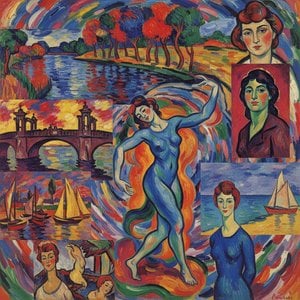
Fauvismo Expresionista: 10 Obras Maestras que Transformaron el Arte | ArtsDot
Descubre las 10 obras maestras del fauvismo que revolucionaron el arte. Explora la pasión, el color y la expresión de Matisse, Derain y más. Reproducciones de alta calidad en ArtsDot.com.

André Derain: Fauvism's Bold Visionary & the Evolution of Modern Color
Explore the revolutionary art of André Derain, co-founder of Fauvism. Discover his bold use of color, evolution from radical expressionism to classicism, and lasting influence on modern art history. Learn more at ArtsDot.

Silent Narratives: Exploring the Enduring Appeal of Still Life Painting Across Centuries
Explore the rich history of still life painting with ArtsDot. Discover Dutch Masters, decode vanitas symbolism & learn about collecting timeless art. Expert insights and museum-quality reproductions.