


 Ver en contexto
 Enviar
 Compartir
 Detalles

 Descargar
 Similares
 Radiografía
 Presentación de diapositivas
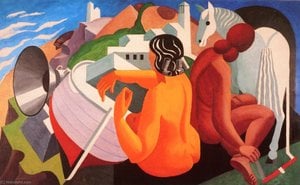
Exodus


 Ver más
Reproducción al óleo hecha a mano
Óleo sobre lienzo pintado a mano en el tamaño y marco de su elección, realizado por encargo por nuestros artistas. ( Comprar impresión Comprar imagen)




































Elija entre nuestros tamaños predefinidos que respetan las proporciones originales de la obra.

Puede ingresar sus propias dimensiones para adaptarse a un marco o espacio específico. Si el tamaño seleccionado no coincide con las proporciones de la imagen original, recortaremos la obra o extenderemos la pintura con elementos adicionales pintados a mano. Se le enviará una maqueta digital para su aprobación antes de comenzar la producción.
Tenga en cuenta que la vista previa en pantalla no refleja el recorte o la extensión reales. Solo la maqueta mostrará con precisión la composición final.
Si bien existen tamaños personalizados, recomendamos seleccionar una dimensión de la lista predefinida para preservar las proporciones originales.
Tras realizar el pedido, el equipo de ArtsDot.com enviará un correo electrónico al cliente para solicitar instrucciones y proporcionarle una vista previa del boceto.
Envío a todo el mundo () en 3-4 semanas en lugar de las 5 semanas estándar. (6 septiembre). Sin comprometer la calidad.

Envío exprés gratuito a todo el mundo

Lienzo de lino de alta calidad

Seguro de envío total

Garantía de reembolso de impuestos aduaneros

Garantía de fidelidad cromática exacta

Política de devolución de 100 días (solo por defectos)

Garantía de devolución del 100% del dinero

Descuento por cantidad
 La opción de vidrio solo está disponible en tamaños inferiores a 110 cm.

Exodus
Técnica de reproducción
Dimensiones de la reproducción
-


Precio total final
$ 263
Obras relacionadas




Biografía del artista
early life and training
Amedeo Bocchi, born August 24, 1883, in Parma, Italy, was a painter whose artistic journey began amidst the formative influences of his father’s profession as a wall decoration artist. From a young age, he exhibited an innate fascination for visual arts—a passion that would propel him toward significant achievements in the realm of Italian painting. At twelve years old, Bocchi enrolled at the Royal Institute of Fine Arts of Parma under the tutelage of Cecrope Barilli—a pivotal decision that established the bedrock of his future artistic endeavors. Barilli’s guidance instilled in Bocchi a profound understanding of classical aesthetics and techniques, shaping his stylistic sensibilities for decades to come.artistic career and personal life
In 1901, at eighteen, Bocchi graduated from the institute with honors—a testament to his dedication and talent. Recognizing Barilli’s unwavering belief in his potential, he embarked on a transformative expedition to Rome, where he pursued formal training at the Scuola del Nudo on Via Ripetta—a cornerstone of Italian artistic education during that era. This move cemented Bocchi's connection with the vibrant Roman art scene and propelled him into active participation within its intellectual currents. Notably, in 1908, he married Rita Boraschi, forging a familial bond that would endure until her untimely passing in 1909—a poignant experience that profoundly impacted his artistic output. Bocchi’s daughter Bianca was born in 1908 and remained a constant presence in his life and paintings until her tragic death in 1934.artistic style and influences
Bocchi's oeuvre is characterized by its remarkable eclecticism—a reflection of the diverse artistic movements that permeated Italy during his lifetime. While eschewing strict adherence to any singular stylistic dogma, his work absorbed elements from neoclassicism, mannerism, and modern art—demonstrating a masterful ability to synthesize disparate influences into a cohesive visual language. His distinctive style is particularly evident in paintings like “Fog in the Mountains,” where he captures the ethereal beauty of the Italian landscape with meticulous detail and expressive brushstrokes. Furthermore, Bocchi’s artistic vision was profoundly shaped by masters such as Gustave Klimt and Giovanni Costa—artists whose stylistic innovations served as inspiration for his own explorations of form and color.notable works and exhibitions
Bocchi's contributions to Italian art are underscored by appearances in prestigious galleries and museums throughout the nation—a tangible acknowledgment of his enduring legacy. His masterpiece, “Untitled (7268),” exemplifies Cubist principles with bold geometric shapes and vibrant hues—a daring stylistic choice that solidified his reputation as a pioneer of experimental artistic expression. Bocchi’s paintings are showcased in private collections across Italy—testaments to their aesthetic appeal and historical significance. He gained recognition for his frescoes decorating the Council Chamber of Parma's Cassa di Risparmio, reflecting the grandeur of the era and showcasing his mastery of fresco technique. His participation in the Venice Biennale and Rome Biennale cemented his position as a prominent figure within the Italian artistic landscape—a testament to his unwavering commitment to artistic innovation.legacy
Amedeo Bocchi passed away December 16, 1976—leaving behind an impressive body of work that continues to inspire artists and art enthusiasts alike. His dedication to honing his craft is palpable in every brushstroke—a characteristic that transcends time and resonates with audiences today. Bocchi’s artistic legacy resides not only in the beauty of his paintings but also in their embodiment of Italian cultural heritage—a testament to his enduring contribution to the history of art.
Amedeo Bocchi
1883 - 1976 , Italia
Datos clave
- Artistic Movement Or Style: Neoclassical/mannerist
- Artists Who Influenced This Artist: Cecrope Barilli
- Date Of Birth: August 24, 1883
- Date Of Death: December 16, 1976
- Full Name: Amedeo Bocchi
- Nationality: Italian
- Notable Artworks:
- Fog in the Mountains
- Portrait of Bianca Bocchi
- Place Of Birth: Parma, Italy