


 Vista previa
 Compartir
 Compartir
 Ver detalles
 Guía
Guía

 Descargar
 Ver artículos similares
 Radiografía
 Presentación de diapositivas
 Estadísticas
Haikko Jetty in the Moonlight

 Leer más
Giclée / Impresión de arte
Impresiones giclée o en lienzo de calidad de museo con producción rápida y opciones de acabado flexibles. ( Encargar reproducción pintada a mano Ver versión en imagen digital)




P118B $10

P118H $10

P118W $10

P438Z $10

P508JH $12

P508YH $12

P805H $10

P805Z $10

P919BZ $10

P919G $10

P919XJ $10

P959ZH $10

P968JZ $12

W106C $8

W218G $10

W218JH $8

W218Y $10

W307PJ $10

W316G $10

W316PJ $8

W316Y $10

W398PJ $8

W4111J $10

W500HY $15

W500JH $15

W692G $12

W849H $8

W940BG $15

W953PJ $8




Elija entre nuestros tamaños predefinidos que respetan las proporciones originales de la obra.

Puede introducir sus propias dimensiones para adaptarse a un marco o espacio específico. Si el tamaño seleccionado no coincide con las proporciones de la imagen original, recortaremos la obra de arte o extenderemos la imagen con un borde con efecto espejo o de color sólido. Se enviará una maqueta digital para su aprobación antes de que comience la producción.
Tenga en cuenta que la vista previa en pantalla no refleja el recorte o la extensión real. Solo la maqueta mostrará con precisión la composición final.
Aunque existen tamaños personalizados, recomendamos seleccionar una dimensión de la lista predefinida para preservar las proporciones originales.
Envío a todo el mundo () en 2 semanas en lugar de las 4/5 semanas estándar. (24 septiembre)

Envío exprés gratuito a todo el mundo

Lienzo de lino de alta calidad

Seguro de envío completo

Garantía de reembolso de impuestos aduaneros

Garantía de fidelidad cromática exacta

Política de devolución de 100 días (solo por defectos)

Garantía de devolución del 100% del dinero

Oferta por volumen
 La opción de vidrio solo está disponible en tamaños inferiores a 110 cm.

Haikko Jetty in the Moonlight
Giclée / Impresión de arte
Tamaño de la reproducción
-


Precio total
$ 62
A Nocturne of Finnish Tranquility: Haikko Jetty in the Moonlight by Albert Edelfelt
The painting “Haikko Jetty in the Moonlight,” executed by Albert Edelfelt in 1894, embodies a quintessential vision of late nineteenth-century Finnish realism—a genre characterized by meticulous observation and an earnest desire to capture the spirit of its subject matter. More than just a depiction of a seaside harbor at dusk, it’s a profound meditation on familial connection, rural beauty, and the melancholic charm inherent in fleeting moments of serenity. The scene unfolds over Haikko Bay, a location that held particular significance for Edelfelt's family; they had purchased a villa there in 1880, establishing it as their cherished summer retreat until his untimely demise in 1905. This personal investment undoubtedly fueled Edelfelt’s artistic fervor and resulted in numerous canvases celebrating the region’s breathtaking vistas—a testament to his unwavering devotion to Finland. As Katri Reitz notes, “In Jetty in the Moonlight (1882), Albert Edelfelt (1854–1905) depicted an idyllic scene over a bay at night.” Edelfelt's masterful technique is immediately apparent upon examination. Employing oil on cardboard—a common medium for plein air painting during his era—he achieved remarkable luminosity through careful layering and blending. Visible brushstrokes contribute to the texture of the water, conveying its coolness and movement with palpable immediacy. The artist skillfully rendered reflections from the full moon, casting an ethereal glow over the jetty and illuminating the boats moored along its shoreline. This impressionistic approach prioritizes capturing the sensory experience—the visual beauty—above precise anatomical detail. Symbolically, “Haikko Jetty in the Moonlight” speaks to themes of domestic harmony and nostalgia for simpler times. The solitary wooden boat resting on the shore serves as a poignant reminder of human presence within the vast expanse of nature. Its mirrored reflection underscores the importance of introspection and contemplation amidst the grandeur of the landscape. Furthermore, the jetty itself represents a connection between past and present—a tangible link to Edelfelt’s formative years spent in Haikko and his enduring appreciation for Finnish heritage. The painting's palette leans heavily into cool blues and greens, mirroring the tranquil atmosphere of a summer night. The subdued tonal range enhances the emotional impact, evoking feelings of peace, solitude, and wistful remembrance. While Edelfelt’s signature remains unobtrusive in the lower right corner—a detail that lends an air of authenticity to the artwork—the painting's enduring appeal lies not merely in its technical prowess but also in its ability to transport viewers back to a bygone era and resonate with their deepest sensibilities. It stands as a timeless masterpiece, capturing the essence of Finnish identity and offering a glimpse into the soul of one of Finland’s most celebrated artists.Obras relacionadas


Biografía del artista
Primeros años y educación
Albert Gustaf Aristides Edelfelt, un renombrado pintor finlandés, nació el 21 de julio de 1854 en Porvoo, Finlandia. Sus padres, Carl Albert Edelfelt y Alexandra Edelfelt (de soltera Brandt), eran suecos-finlandeses. La vida temprana de Edelfelt se caracterizó por una pasión innata por el arte, lo que le llevó a cursar estudios formales en la escuela de dibujo de la Sociedad Finlandesa de Arte en 1869.Trayectoria artística
El viaje artístico de Edelfelt lo llevó a varias instituciones destacadas:- Academia de Bellas Artes de Amberes (1873-74), donde perfeccionó sus habilidades en pintura histórica.
- École Nationale des Beaux-Arts en París (1874-78), bajo la tutela de Jean-Léon Gérôme, refinando aún más su oficio.
- Una breve estancia en San Petersburgo (1881-82) lo expuso a diversas influencias artísticas.
Desarrollo y logros notables
El gran avance de Edelfelt llegó con una medalla de oro en la Exposición Universal de París de 1889. Sus obras notables incluyen:- Retrato de Louis Pasteur, que le valió la Legión de Honor en 1886.
- Joven mujer en su boudoir, mostrando su dominio para capturar la esencia de la feminidad.
- Bajo los abedules, una representación conmovedora de paisajes finlandeses.
Influencias y significado histórico
Como uno de los primeros artistas finlandeses en alcanzar fama internacional, Edelfelt contribuyó significativamente al movimiento artístico realista en Finlandia. Su influencia se extendió a pintores finlandeses más jóvenes, como Akseli Gallen-Kallela y Gunnar Berndtson, a quienes ayudó en sus avances en París. Edelfelt adoptó el realismo francés pero lo iluminó con el brillo de la luz nórdica. Se considera el pintor más grande de Finlandia durante la segunda mitad del siglo XIX y la primera mitad del XX, y uno de los contribuyentes más destacados a la Edad de Oro del Arte Finlandés.Legado y reconocimiento
Las obras de Edelfelt se exhiben en varios museos, incluido el Ateneumin Taidemuseo en Helsinki. Su legado fue conmemorado con una moneda conmemorativa de 100 euros dedicada a Albert Edelfelt en 2004, celebrando su 150 aniversario natal.- Explore las obras de Albert Edelfelt en ArtsDot
- Descubra la colección del Ateneumin Taidemuseo en ArtsDot

Albert Edelfelt
1854 - 1905 , Finlandia
Datos clave
- Artistas Influenciados:
- Akseli Gallen-Kallela
- Gunnar Berndtson
- Artistas Que Influyeron:
- Jean-Léon Gérôme
- Adolf von Becker
- Fecha De Muerte: 18 de agosto de 1905
- Fecha De Nacimiento: 21 de julio de 1854
- Lugar De Nacimiento: Porvoo, Finlandia
- Movimiento Artístico: Realismo
- Nacionalidad: Finlandés
- Nombre Completo: Albert Gustaf Aristides Edelfelt
- Obras Notables:
- Retrato de Louis Pasteur
- Joven mujer en su boudoir
- Bajo los abedules
Artículos relacionados

Paul Cézanne: Las 25 Obras Maestras que Definieron el Arte Moderno | ArtsDot
Descubre las 25 obras maestras de Paul Cézanne que revolucionaron el arte moderno. Explora su técnica, inspiración y significado en paisajes, bodegones y retratos. Reproducciones de alta calidad para decorar tu hogar con arte inolvidable. ¡Explora la colección completa en ArtsDot.com!

Impresionismo: 10 Obras Maestras que Capturan la Luz y el Momento
Descubre 10 obras maestras del impresionismo de Monet, Renoir y Degas. Explora la luz, el color y las historias detrás de estos icónicos cuadros. Reproducciones de arte en ArtsDot.com para decorar tu hogar con estilo.

Albert Charles Lebourg: A Study in Atmospheric Impressionism & Rural France
Explore the serene landscapes of Albert Charles Lebourg, a master of the Rouen School Impressionists. Discover his atmospheric paintings of the Seine and enduring legacy in 19th-century French art.

Akseli Gallen-Kallela: Shaping Finnish Identity Through National Romanticism & Symbolism
Explore the captivating world of Akseli Gallen-Kallela, Finland's iconic National Romantic painter. Discover his symbolic landscapes, Kalevala illustrations & lasting impact on Finnish identity. Expert analysis & high-quality reproductions at ArtsDot.
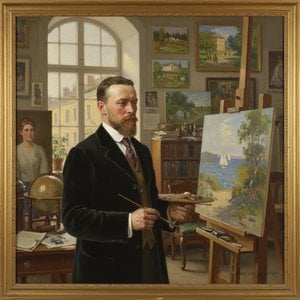
Albert Edelfelt: A Pioneer of Finnish Realism & International Impressionist Circles
Explore the life & work of Albert Edelfelt, a pioneering Finnish Realist painter who bridged Impressionism & national identity. Discover his masterpieces and lasting influence on art history.


