

 Αποστολή
 Κοινοποίηση
 Λεπτομέρειες
 Οδηγός

 Λήψη
Λήψη
 Παρόμοια αντικείμενα συλλογής
 Παρουσίαση
 Ερωτήσεις & Απαντήσεις
 Στατιστικά
Ferryman


 Περισσότερα
Λάβετε ένα αρχείο έτοιμο για εκτύπωση, με ποιότητα πολύ ανώτερη από την προεπισκόπηση στον ιστότοπο. Κάθε ψηφιακή εικόνα που διαθέτουμε προέρχεται από ένα αρχείο υψηλής ανάλυσης στη βάση δεδομένων μας —συνήθως με πλάτος 5.000 έως 15.000 pixel— ώστε να μπορείτε να εκτυπώσετε σε μεγάλο μέγεθος, να κάνετε στενές κοψιμές ή να αναπαράγετε τις λεπτομέρειες με απόλυτη εμπιστοσύνη.
Κανένα αρχείο δεν φεύγει από το στούντιο μας χωρίς να υποστεί επεξεργασία. Ένας ειδικός ψηφιακών εικόνων ελέγχει τα χρώματα σε σύγκριση με το πρωτότυπο έργο και τα διορθώνει αν χρειαστεί, στη συνέχεια βελτιώνει την καθαρότητα και τις λεπτομέρειες με επαγγελματικά εργαλεία αφαίρεσης ατέλειων — παραμένοντας πάντα πιστός στις πινελιές και το ύφος του καλλιτέχνη. Το αποτέλεσμα είναι μια εικόνα που μοιάζει με το ίδιο το αριστούργημα και όχι με ένα σκανάρισμα με φίλτρα.
Εγκρίνετε πριν την ολοκλήρωση: ο ειδικός μας σας στέλνει την εικόνα μέσω e-mail εντός 72 ωρών για επανεξέταση. Δεν είστε ικανοποιημένοι; Ζητήστε βελτιώσεις ή διορθώσεις, ή ζητήστε επιστροφή χρημάτων εάν η ποιότητα δεν ανταποκρίνεται στις προσδοκίες σας.
Αυτή είναι η ποιότητα στην οποία εμπιστεύονται οι εκδότες, τα design studios, οι γκαλερί και τα εκτυπωτήρια.
Ψηφιακή εικόνα
Κατεβάστε ένα αρχείο υψηλής ανάλυσης για προσωπική χρήση, εκτύπωση και δημιουργικά έργα. ( Μετάβαση σε Εκτυπώσεις Αγορά χειροποίητου πίνακα)
Περιλαμβάνεται σε κάθε παραγγελία ψηφιακής εικόνας
Επαγγελματική Ψηφιακή Παράδοση με Εγγύηση
Όταν επιλέγετε το ArtsDot.com, δεν αποκτάτε απλώς μια εικόνα – λαμβάνετε ένα επαγγελματικά αναβαθμισμένο ψηφιακό έργο τέχνης, δημιουργημένο με ακρίβεια και με εγγύηση ικανοποίησης. Δείτε όλα όσα περιλαμβάνονται στην παραγγελία σας, αυτόματα:

Άμεση αποστολή μέσω email
Το ψηφιακό σας αρχείο εικόνας υψηλής ανάλυσης θα σας σταλεί μέσω email εντός 72 ωρών από την παραγγελία σας — έτοιμο για άμεση χρήση.

Ψηφιακό Αρχείο με Τεχνητή Νοημοσύνη
Το έργο σας βελτιστοποιείται επαγγελματικά με τη χρήση προηγμένων εργαλείων Τεχνητής Νοημοσύνης και χειροκίνητης επεξεργασίας, εξασφαλίζοντας μέγιστη λεπτομέρεια, ευκρίνεια και ακρίβεια χρωμάτων.

Δωρεάν επανεκδόσεις مدى ζωής
Απώλησες ή διαγράψατε κατά λάθος το αρχείο σας; Μην ανησυχείτε — θα σας το ξαναστείλομε οποιαδήποτε στιγμή, δωρεάν.

Χωρίς Τελωνειακούς Φόρους - Ποτέ
Απολαύστε αμέσως τα έργα τέχνης σας χωρίς δασμούς, φόρους ή έξοδα αποστολής - οι ψηφιακές λήψεις είναι πάντα αφορεশিপτεία.

Εγγύηση Ακριβούς Χρωματισμού
Εξασφαλίζουμε ότι η ψηφιακή σας εικόνα αποτυπώνει τα αυθεντικά χρώματα όσο το δυνατόν πιστότερα, χρησιμοποιώντας επαγγελματικά εργαλεία και διαχείριση χρωμάτων.

Εγγύηση Ικανοποίησης 100 Ημερών
Εάν δεν είστε ικανοποιημένοι με την ψηφιακή σας εικόνα, θα την τροποποιήσουμε ή θα σας επιστρέψουμε το 100% εντός 100 ημερών — χωρίς κανένα ερώτημα.

100% Εγγύηση Επιστροφής Χρήματος
Δεν είστε ικανοποιημένοι; Λάβετε πλήρη επιστροφή των χρημάτων σας εντός 100 ημερών από τη λήψη του ψηφιακού σας αρχείου — χωρίς κανένα ερώτημα.

Εκπτώσεις σε μεγάλες παραγγελίες
Αγοράστε 3 εικόνες, κάντε εξοικονόμηση 10% - Αγοράστε 5, κάντε εξοικονόμηση 15% - Αγοράστε 10+, κάντε εξοικονόμηση 20%. Ιδανικό για δημιουργικά έργα, γκαλερί και agencies.
A Visionary Encounter with Form
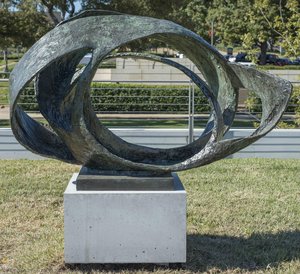
In the vast, open expanse of a verdant landscape, where the whispers of nature meet the silent strength of human ingenuity, stands Ferryman. This striking work by the renowned British sculptor Tony Cragg invites the viewer into a profound dialogue between the organic and the industrial. At first glance, the sculpture presents a captivating paradox: a large-scale, metallic rabbit perched with unexpected grace upon a rugged concrete base. The figure, though clearly recognizable in its soft, familiar silhouette, is transformed by its medium, rendered in a way that suggests both the lightness of a living creature and the enduring weight of modern art. It is a piece that commands attention, not through aggression, or noise, but through a quiet, monumental presence that anchors the surrounding field.
The artistry of Cragg lies in his ability to manipulate material to evoke complex emotional responses. In Ferryman, the metallic surface catches the shifting light of the sky, creating a dynamic interplay of shadows and highlights that breathes life into the sculpture's form. The contrast between the smooth, engineered precision of the metal and the raw, unyielding texture of the concrete pedestal creates a tension that is central to the work's allure. This juxtaposition serves as a metaphor for the contemporary condition—the intersection of our biological origins and our increasingly technological existence. For the collector or interior designer, this piece offers a sophisticated focal point, bringing a sense of sculptural depth and intellectual curiosity to any curated space.
The Alchemy of Material and Memory
To understand Ferryman, one must look toward the historical trajectory of Tony Cragg himself. Emerging from the vibrant assemblage movement, Cragg has spent decades redefining how we perceive fragments and forms. This work, dating from 1997, reflects a period of mastery where the artist moved beyond the mere accumulation of discarded objects toward a more fluid, integrated approach to three-dimensional space. The sculpture does not merely sit upon the earth; it seems to emerge from it, bridging the gap between the man-made and the natural world. The presence of distant buildings and the subtle inclusion of human observers in the landscape further emphasize this connection, placing the artwork within a living, breathing ecosystem.
The symbolism within the piece is as layered as the artist's technique. The rabbit, often a symbol of fertility, rebirth, and sudden movement, is here frozen in a moment of stillness, acting as a silent sentinel over the landscape. This stillness invites a meditative state in the viewer, encouraging a slow, rhythmic observation of the surrounding environment. For those seeking to incorporate high-quality reproductions into their homes or galleries, Ferryman represents more than just a decorative object; it is an invitation to contemplate the permanence of art amidst the transience of life. It is a masterpiece of balance, offering a sophisticated aesthetic that resonates with anyone who finds beauty in the harmony of contrasting elements.
Ερωτήσεις και Απαντήσεις
Είναι το "Ferryman" διαθέσιμο ως εκτύπωση fine art;
Μπορείτε να παραγγείλετε ένα εκτύπωμα του έργου "Ferryman" του Tony Cragg απευθείας από τη σελίδα Καλλιτεχνικό Έντυπο: ένα εκτύπωμα fine art σε βαμβακερό καμβά ή σε αρχειοθετητικό χαρτί καμβά.
Ποια είναι η προτεινόμενη χρήση μιας εκτύπωσης του "Ferryman";
Μια αναπαραγωγή του έργου "Ferryman" του Tony Cragg προτείνεται για Focal, καθώς η πρόταση αυτή πηγάζει από το θέμα, τη διάθεση και τα χρώματα του ίδιου.
Μπορώ να δω το έργο "Ferryman" του Tony Cragg στον δικό μου τοίχο πριν από την αγορά;
Δείτε το έργο "Ferryman" του Tony Cragg στον δικό σας τοίχο μέσω της σελίδας Προεπισκόπηση σε AR, χρησιμοποιώντας την τεχνολογία augmented reality σε μια συμβατή συσκευή.
Σχετικά Έργα Τέχνης




Βιογραφικό Καλλιτέχνη
The Architect of Fragmented Forms
Sir Anthony Cragg, a titan of British contemporary sculpture, possesses the rare ability to breathe life into the inanimate. Born in Liverpool in 1949, Cragg’s artistic consciousness was shaped by an early mastery of painting, yet it was his profound fascination with the three-dimensional realm that would eventually redefine the boundaries of modern sculpture. His journey through the Gloucestershire College of Arts and Technology and Wimbledon School of Art provided a rigorous foundation, but it was his move to Germany in 1977 that acted as a true catalyst, thrusting him into an international dialogue with the avant-garde and expanding his sculptural vocabulary beyond the limits of traditional medium.
In the early stages of his career, Cragg emerged as a pioneer of the assemblage movement, finding profound beauty in the discarded and the mundane. He possessed a singular vision for transforming everyday detritus—stacked chairs, weathered tables, and forgotten boxes—into complex, rhythmic reliefs. Through works such as “Stack” (1975), he demonstrated an uncanny ability to manipulate spatial arrangement and color, turning fragments of plastic and wood into vibrant geometric abstractions. This period was defined by a philosophical rejection of representational imagery; instead, Cragg sought to distill visual language into its purest essence, forcing the viewer to confront the raw energy of form and texture without the distraction of recognizable subjects.
Evolution of Material and Motion
As his career progressed through the mid-1970s and into the 1980s, Cragg’s ambitions grew from the intimate scale of wall-mounted reliefs to the monumental presence of large-scale installations. He began to bridge the gap between architecture and sculpture, creating works that engaged aggressively with the spaces they inhabited. His mastery over diverse materials—ranging from the industrial coldness of fiberglass to the timeless weight of bronze—allowed him to explore a spectrum of textures and densities. In pieces like “Red Indian” (1982–3), one can observe his meticulous method of arranging individual fragments to generate larger, more complex images that simultaneously evoke organic, natural growth and rigid, geometric precision.
The brilliance of Cragg’s development lies in his ability to navigate the tension between the artificial and the biological. His later series, such as 'Early Forms' and 'Rational Beings', showcase a sculptor deeply invested in the concept of emergence—the way complex structures arise from simple components. His sculptures often appear to be in a state of flux, caught in a moment of transformation or unfolding. This sense of kinetic energy, even within static bronze or resin, creates a psychological depth that challenges our perceptions of stability and permanence.
Legacy and Artistic Significance
The historical significance of Sir Anthony Cragg cannot be overstated; he has fundamentally altered the trajectory of contemporary sculpture by dismantling the distinction between found objects and fine art. His work serves as a bridge between the sculptural traditions of the past and the fragmented, multi-material reality of the present. By treating the fragment not as a broken piece, but as a building block for new realities, he has provided a visual language for an era defined by complexity and interconnectedness.
Today, Cragg remains a vital force in the global art scene, his influence felt in the way contemporary artists approach materiality and spatial intervention. His achievements are marked by:
- Innovation in Assemblage: Redefining the use of discarded materials to create high-art aesthetics.
- Material Versatility: The seamless integration of fiberglass, bronze, and plastic into a cohesive sculptural language.
- Spatial Dialogue: A profound ability to transform architectural environments through monumental installations.
- Philosophical Depth: Exploring the intersection of geometric abstraction and organic, biological forms.

Tony Cragg
1949 -
Σύντομη Βιογραφία
- Full Name: Tony Cragg
- Nationality: British
- Date Of Birth: 1949
- Place Of Birth: Liverpool, UK
- Notable Artworks:
- Axehead
- Opening Spiral
- Dining Motions
- Artistic Movement Or Style: Assemblage art
- Artists Who Influenced This Artist:
- Robert Irwin
- Donald Judd