


 Προεπισκόπηση
 Αποστολή
 Κοινοποίηση
 Λεπτομέρειες
 Οδηγός

 Λήψη
Λήψη
 Παρόμοια αντικείμενα συλλογής
 Ακτινογραφία
 Παρουσίαση
 Στατιστικά
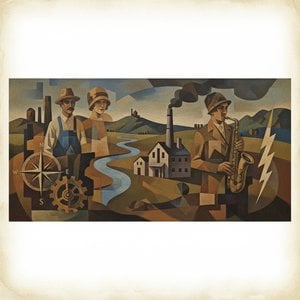
Two Eagle Dancers


 Περισσότερα λεπτομέρεια
Το έργο τέχνης που εμφανίζεται σε αυτή τη σελίδα προστατεύεται από τους νόμους περί πνευματικών δικαιωμάτων, γεγονός που σημαίνει ότι δεν μπορούμε νομικά να δημιουργήσουμε ή να πουλήσουμε μια ταυτόσημη αναπαραγωγή του. Αυτή η προστασία επιβάλλεται βάσει διεθνών συμφωνιών, όπως η Σύμβαση της Βέρνης καθώς και από τους εθνικούς νόμους, συμπεριλαμβανομένων αυτών που ορίζονται από το Νομοθεσία περί πνευματικών δικαιωμάτων των ΗΠΑ - Τίτλος 17. Όλα τα δικαιώματα κατοχυρωμένα. Απαγορεύεται η αναπαραγωγή χωρίς άδεια.
Αυτή η μέθοδος συμμορφώνεται πλήρως με τους κανονισμούς περί πνευματικών δικαιωμάτων, καθώς δεν περιλαμβάνει την αντιγραφή ή την αναπαραγωγή του προστατευόμενου έργου. Αντίθετα, πρόκειται για μια δημιουργική ερμηνεία — ένα νέο έργο που επηρεάζεται από το πρωτότυπο, χωρίς όμως να είναι πανομοιότυπο με αυτό.
Giclée / Εκτυπώσεις Τέχνης
Εκτύπωση giclée ή σε καμβά ποιότητας μουσείου με γρήγορη παραγωγή και ευέλικτες επιλογές φινιρίσματος. ( Αγορά χειροποίητου πίνακα Μετάβαση σε Ψηφιακή Εικόνα)




P118B €10

P118H €10

P118W €10

P438Z €10

P508JH €12

P508YH €12

P805H €10

P805Z €10

P919BZ €10

P919G €10

P919XJ €10

P959ZH €10

P968JZ €12

W106C €8

W218G €10

W218JH €8

W218Y €10

W307PJ €10

W316G €10

W316PJ €8

W316Y €10

W398PJ €8

W4111J €10

W500HY €15

W500JH €15

W692G €12

W849H €8

W940BG €15

W953PJ €8




Επιλέξτε από τις προκαθορισμένες διαστάσεις μας που διατηρούν τις αρχικές αναλογίες του έργου τέχνης.

Πληκτρολογήστε το πλάτος και το ύψος που επιθυμείτε, ώστε να ταιριάζουν στο κάδሮ ή στον τοίχο σας. Μια εκτύπωση μπορεί μόνο να κοπεί και ποτέ να μην γίνει μεγαλύτερη από την εικόνα, επομένως ένα μέγεθος με διαφορετικό σχήμα συνεπάγεται απώλεια ενός μέρους της εικόνας. Σας στέλνουμε ένα ψηφιακό mockup για έγκριση πριν εκτυπώσουμε οτιδήποτε. Η εικόνα που εμφανίζεται σε αυτή τη σελίδα δεν δείχνει την πραγματική κοπή — μόνο το mockup την παρουσιάζει.
Παγκόσμια Αποστολή () σε 2 εβδομάδες αντί για τις συνήθεις 4/5 εβδομάδες. (18 Οκτώβριος)

Δωρεάν γρήγορη διεθνής αποστολή

Κάμβας από Λινό Υψηλής Ποιότητας

Πλήρης ασφάλιση μεταφοράς

Εγγύηση επιστροφής δασμών και φόρων εισαγωγής

Εγγύηση Απόλυτης Ομοιότητας Χρωμάτων

Πολιτική Επιστροφής 100 Ημερών (Μόνο σε περίπτωση ελαττωμάτων)

Εγγύηση επιστροφής 100% των χρημάτων

Έκπτωση για πολλαπλές παραγγελίες
 Η επιλογή με γυαλί είναι διαθέσιμη μόνο για μεγέθη κάτω από 110 εκ.

Two Eagle Dancers
Giclée / Εκτυπώσεις Τέχνης
Διαστάσεις Αναπαραγωγής
-


Συνολικό Κόστος
€ 54
Ερωτήσεις & Απαντήσεις
Πού θα μπορούσε να τοποθετηθεί μια αναπαραγωγή του "Two Eagle Dancers" του Stephen Mopope;
Το σχήμα Panoramic του έργου "Two Eagle Dancers" του Stephen Mopope προτείνεται για έναν/μια Restaurant. Το σχήμα και ο χώρος καθοδηγούν μαζί την τοποθέτηση μιας αναπαραγωγής.
Ποια τεχνική χρησιμοποιήθηκε για το "Two Eagle Dancers" του Stephen Mopope;
Το τεχνικό μέσο του έργου "Two Eagle Dancers" του Stephen Mopope είναι το Painting. Οι αναπαραγωγές στοχεύουν στην απόδοση της εμφάνισης αυτής της τεχνικής.
Μπορώ να δω προεπισκόπηση του "Two Eagle Dancers" του Stephen Mopope πριν την παραγγελία;
Η σελίδα Προεπισκόπηση του έργου "Two Eagle Dancers" σας επιτρέπει να δείτε μια προεπισκόπηση του έργου πριν την παραγγελία.
Παρόμοια Έργα Τέχνης


Βιογραφικό Καλλιτέχνη
**early life and training**
stephen mopope, also known as qued koi, was a kiowa painter, dancer, and native american flute player from oklahoma. born on august 27, 1898, near the redstone baptist mission on the kiowa reservation in indian territory, mopope's artistic journey began at a young age. * **family influence:** taught by his relatives to paint on hides in the traditional manner. * **formal education:** attended st. patrick's indian mission school in anadarko, oklahoma, and later studied at the university of oklahoma's school of art.**artistic contributions and style**
mopope was the most prolific member of the group known as the kiowa six. his work is characterized by: * **vibrant colors:** reflecting his heritage and the landscapes of oklahoma. * **dynamic themes:** often depicting scenes from native american life, ceremonies, and the beauty of nature.- two eagle dancers (smithsonian's national postal museum, washington, united states), a mural showcasing mopope's skill in capturing the essence of kiowa culture.
- apache ben (national cowboy & western heritage museum, oklahoma city, united states), a watercolor piece highlighting his versatility and range.
**legacy and impact**
* **prolific artist:** mopope's extensive body of work has made him a pivotal figure in native american art history. * **influence on future generations:** his unique style and technique have inspired many artists, ensuring his legacy endures. **view more works by stephen mopope at [https://ArtsDot.com/@/stephen-mopope](https://ArtsDot.com/@/stephen-mopope)**- explore the skagen painters movement and its influence on native american art.
- discover more about antoine wiertz, a belgian painter and sculptor, at [https://ArtsDot.com/@@/a@d3apat-discover-the-musee-wiertz-museum-brussels](https://ArtsDot.com/@@/a@d3apat-discover-the-musee-wiertz-museum-brussels)
**conclusion**
stephen mopope's life and work are a testament to the richness of native american culture and art. through his paintings, he has left an indelible mark on the world of fine art, ensuring his legacy as one of the most prolific kiowa painters of his generation. **learn more about art history and movements at [https://ArtsDot.com](https://ArtsDot.com)**
Stephen Mopope
1898 - 1974 , United States of America
Στοιχεία καλλιτέχνη
- Full Name: Maurits Cornelis Escher
- Nationality: Dutch
- Date Of Birth: 1898
- Date Of Death: 1974
- Place Of Birth: Redstone, United States of America
- Notable Artworks:
- Hand with Reflecting Sphere
- Drawing Hands
- Relativity
- Waterfall
- Ascending and Descending
- Artistic Movement Or Style: Graphic art, Printmaking
- Artists Who Influenced This Artist:
- George Arnold Escher
- Frank Reaugh
- Artists Or Movements Influenced By This Artist:
- Rene Magritte
- Martin Gardner
Σχετικά άρθρα
James Otto Lewis: Navigating American Modernism Through Regional Identity & Stylistic Innovation
Explore the captivating portraits of James Otto Lewis, a pivotal figure bridging 19th-century realism & American Modernism. Discover his groundbreaking work documenting Native American culture and regional identity.

Henry Farny: Romantic Visions of the American West & Indigenous Life
Explore the evocative paintings of Henry Farny, renowned for his romantic realism & depictions of Native American life in the 19th-century West. Discover his legacy and key artworks at ArtsDot.

American Regionalism: A Crucible of Identity – Exploring Themes of Place, Labor & Social Commentary
Explore American Regionalism's powerful depiction of the American heartland during the Great Depression. Discover Grant Wood, Thomas Hart Benton & more. Expert analysis & high-quality art reproductions at ArtsDot.

Αμερικανικός Ρεαλισμός: 10 Αριστουργήματα που Άλλαξαν την Τέχνη | ArtsDot.gr
Ανακαλύψτε τα 10 αριστουργήματα του Αμερικανικού Ρεαλισμού! Edward Hopper, Norman Rockwell & άλλοι ζωγράφοι. Ιστορίες τέχνης, τεχνικές και έμπνευση για διακόσμηση σπιτιού. Βρείτε αναπαραγωγές υψηλής ποιότητας στο ArtsDot.com

Grant Wood & American Regionalism: Identity, Myth & the Rural Landscape
Explore the world of Grant Wood & American Regionalism with ArtsDot. Discover the symbolism behind 'American Gothic', recurring themes, and the movement's lasting impact on art history. High-quality reproductions available.