


 Προεπισκόπηση
 Αποστολή
 Κοινοποίηση
 Λεπτομέρειες
 Οδηγός

 Λήψη
Λήψη
 Παρόμοια αντικείμενα συλλογής
 Ακτινογραφία
 Παρουσίαση
 Στατιστικά
Self portrait


 Περισσότερα λεπτομέρεια
Χειροποίητη Αναπαραγωγή σε Έλαιο
Χειροποίητη ελαιογραφία σε καμβά στο δικό σας μέγεθος και πλαίσιο, κατά παραγγελία από τους καλλιτέχνες μας. ( Μετάβαση σε Εκτυπώσεις Μετάβαση σε Ψηφιακή Εικόνα)




































Επιλέξτε από τις προκαθορισμένες διαστάσεις μας που διατηρούν τις αρχικές αναλογίες του έργου τέχνης.

Μπορείτε να ορίσετε δικές σας διαστάσεις ώστε το έργο να ταιριάζει σε ένα συγκεκριμένο πλαίσιο ή χώρο. Εάν το επιλεγμένο μέγεθος δεν συμπίπτει με τις αναλογίες της αρχικής εικόνας, θα περικοψούμε το έργο ή θα επεκτείνουμε τη ζωγραφιά με πρόσθετα χειρόγραφα στοιχεία. Ένα ψηφιακό προσχέδιο θα σας αποσταλεί για έγκριση πριν την έναρξη της παραγωγής.
Παρακαλούμε σημειώστε ότι η προεπισκόπηση στην οθόνη δεν αντικατοπτρίζει την πραγματική περικοπή ή επέκταση. Μόνο το προσχέδιο θα δείξει με ακρίβεια την τελική σύνθεση.
Παρόλο που είναι διαθέσιμα προσαρμοσμένα μεγέθη, συνιστούμε να επιλέξετε μια διάσταση από τη λίστα των προκαθορισμένων μεγεθών για τη διατήρηση των αρχικών αναλογιών.
Μετά την παραγγελία, η ομάδα του ArtsDot.com θα στείλει email στον πελάτη με οδηγίες και θα παρέχει μια προεπισκόπηση προσχεδίου
Παγκόσμια Αποστολή () σε 3-4 εβδομάδες αντί για τις συνήθεις 5 εβδομάδες. (21 Σεπτέμβριος). Χωρίς συμβιβασμούς στην ποιότητα.

Δωρεάν γρήγορη διεθνής αποστολή

Κάμβας από Λινό Υψηλής Ποιότητας

Πλήρης ασφάλιση μεταφοράς

Εγγύηση επιστροφής δασμών και φόρων εισαγωγής

Εγγύηση Απόλυτης Ομοιότητας Χρωμάτων

Πολιτική Επιστροφής 100 Ημερών (Μόνο σε περίπτωση ελαττωμάτων)

Εγγύηση επιστροφής 100% των χρημάτων

Έκπτωση για πολλαπλές παραγγελίες
 Η επιλογή με γυαλί είναι διαθέσιμη μόνο για μεγέθη κάτω από 110 εκ.

Self portrait
Τεχνική Αναπαραγωγής
Διαστάσεις Αναπαραγωγής
-


Συνολικό Κόστος
$ 263
Παρόμοια Έργα Τέχνης


Βιογραφικό Καλλιτέχνη
A Visionary Between Worlds: The Life and Legacy of Raymond Francis McIntyre
The story of Raymond Francis McIntyre is one of quiet brilliance and the profound tension between a sheltered upbringing and the vibrant, often turbulent, currents of European modernism. Born in Christchurch, New Zealand, in 1879, McIntyre’s early years were shaped by a delicate balance of physical fragility and immense creative potential. Though his health often necessitated a life of introspection, he found solace in the rich textures of music and literature, becoming an accomplished cellist and a frequent companion to the intellectual circles of his youth. This early period of isolation did not stifle him; rather, it cultivated a deep, observant eye—a quality that would later define his ability to capture the subtle nuances of light and human emotion.
His formal journey into the world of fine art began at the Canterbury School of Art, where he studied under the watchful eyes of Herdman Smith and Alfred Walsh. These early mentors provided him with a rigorous foundation in draughtsmanship, yet McIntyre’s spirit was too expansive for the provincial boundaries of New Zealand alone. After a brief hiatus from formal training, he returned to his studies with renewed vigor in 1906, eventually making the life-altering decision to relocate to London in 1909. This move marked his transition from a local talent to a participant in the global dialogue of early twentieth-century art. Settling into a studio on Cheyne Walk, he immersed himself in the heart of the British art scene, seeking out the masters who could help him bridge the gap between traditional technique and the emerging modern aesthetic.
The Convergence of Tradition and Modernity
In London, McIntyre found himself at a crossroads of influential styles. Enrolling at the Westminster Technical Institute, he studied under the legendary William Nicholson and Walter Sickert, figures who were instrumental in shaping the trajectory of British painting. It was during this period that his fascination with the Pre-Raphaelite movement began to coalesce with a keen awareness of contemporary European trends. He possessed a unique ability to synthesize the meticulous, almost reverent detail of the Pre-Raphaelites with the loose, atmospheric qualities of Impressionism and the experimental spirit of Art Nouveau.
His work often reflected a "Whistlerian" temperament—a term used by his contemporaries to describe his subtle, tonal approach and his ability to imbue a canvas with a sense of poetic stillness. While some local critics in New Zealand initially dismissed him as a mere decorator or an overly experimental Impressionist, the international stage offered a different verdict. McIntyre’s paintings were characterized by:
- Luminous Color Palettes: An acute sensitivity to how light interacts with surfaces, particularly in his landscapes and still lifes.
- Understated Elegance: A mastery of portraiture that captured the psychological depth of his subjects without resorting to melodrama.
- Structural Precision: A foundation of strong draughtsmanship that allowed him to experiment with modern textures while maintaining classical integrity.
A Lasting Impression on the Artistic Canon
Despite his self-effacing nature and a tendency toward privacy, McIntyre’s presence in the art world was undeniably significant. He exhibited extensively at prestigious venues such as the Goupil Gallery, the New English Art Club, and the Thames Valley Art Club. His inclusion in the Royal Academy served as a testament to his technical prowess and his standing among the elite of British painters. Even as he navigated the complexities of being an expatriate artist, his work remained deeply connected to the evolving zeitgeist of the early 1900s, blending elements of Japanese aesthetics with the burgeoning movements of European modernism.
Though his life was tragically short, ending in 1933, the impact of Raymond Francis McIntyre continues to resonate. He remains a pivotal figure for those studying the flow of artistic influence from the colonies to the metropole. His oeuvre stands as a beautiful, complex bridge between the romanticism of the nineteenth century and the bold experimentation of the twentieth. Today, his works are cherished not only for their aesthetic beauty but as historical windows into a period of profound transition, reminding us of an artist who, despite his quietude, spoke volumes through every brushstroke.

raymond francis mcintyre
1879 - 1933 , New Zealand
Στοιχεία καλλιτέχνη
- Artistic Movement Or Style: Pre-Raphaelite influence; European modernism
- Artists Or Movements Influenced By This Artist:
- Goupil Gallery
- New English Art Club
- Royal Academy
- Artists Who Influenced This Artist:
- Herdman Smith
- Alfred Walsh
- William Nicholson
- Walter Sickert
- Date Of Death: September 24, 1933
- Full Name: Raymond Francis McIntyre
- Nationality: New Zealander
- Notable Artworks: ['Self portrait']
- Place Of Birth: Christchurch, New Zealand
Σχετικά άρθρα

Τα 10 Κορυφαία Έργα που Όρισαν τον Εκφρασισμό στη Ζωγραφική | ArtsDot.gr
Ανακαλύψτε τα 10 κορυφαία έργα του Εκφρασισμού! Munch, Van Gogh & άλλοι πρωτοπόροι. Ιστορίες, τεχνικές και έντονα χρώματα που καθόρισαν την μοντέρνα τέχνη. Βρείτε αναπαραγωγές υψηλής ποιότητας στο ArtsDot.com.

Impressionistic Realism's Finest: 10 Masterpieces for Your Home | ArtsDot
Journey through Impressionistic Realism with 10 iconic masterpieces by Monet, Renoir & Van Gogh. Explore art history, techniques & find museum-quality reproductions for your home at ArtsDot.com. Discover all masterpieces online!

The Echo of Self: Reflectivity as a Core Theme in Art History & Contemporary Practice
Explore the rich history of self-representation in art, from Renaissance masters to modern innovators. Discover how artists use portraiture to reveal identity, emotion & the depths of the human psyche. Expert insights for collectors.

Reflecting the Self: A History of Portraiture & Psychological Insight
Explore the fascinating history of self-portraiture from Renaissance masters like Dürer & Rembrandt to modern interpretations. Discover the psychological insights and artistic techniques behind these iconic works. Expert analysis for art enthusiasts.
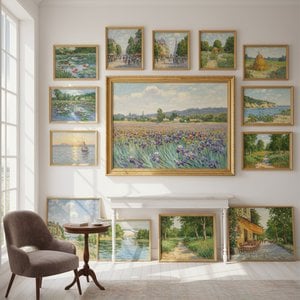
Οι 10 Κορυφαίοι Καμβάδες που Όρισαν τον Ιμπρεσιονισμό: Ένα Ταξίδι στην Φύση και την Τέχνη
Ανακαλύψτε τους 10 κορυφαίους πίνακες ιμπρεσιονισμού που καθόρισαν το τοπίο στην τέχνη! Μονέ, Ρενουάρ & άλλοι ζωγράφοι. Βρείτε αναπαραγωγές υψηλής ποιότητας για να εμπνεύσετε τον χώρο σας. Εξερευνήστε τη συλλογή στο ArtsDot.com