

 Προεπισκόπηση σε πραγματική κλίμακα
 Αποστολή
 Κοινοποίηση
 Λεπτομέρειες
 Οδηγός

 Λήψη
Λήψη
 Παρόμοια αντικείμενα συλλογής
 Ακτινογραφία
 Παρουσίαση
 Ερωτήσεις & Απαντήσεις
 Στατιστικά
Number 23, 1951

- 148.0 x 119.0 cm


 Περισσότερα
Giclée / Εκτυπώσεις Τέχνης
Εκτύπωση giclée ή σε καμβά ποιότητας μουσείου με γρήγορη παραγωγή και ευέλικτες επιλογές φινιρίσματος. ( Αγορά χειροποίητου πίνακα Μετάβαση σε Ψηφιακή Αποτέλεσμα)




P118B €10

P118H €10

P118W €10

P438Z €10

P508JH €12

P508YH €12

P805H €10

P805Z €10

P919BZ €10

P919G €10

P919XJ €10

P959ZH €10

P968JZ €12

W106C €8

W218G €10

W218JH €8

W218Y €10

W307PJ €10

W316G €10

W316PJ €8

W316Y €10

W398PJ €8

W4111J €10

W500HY €15

W500JH €15

W692G €12

W849H €8

W940BG €15

W953PJ €8




Επιλέξτε από τις προκαθορισμένες διαστάσεις μας που διατηρούν τις αρχικές αναλογίες του έργου τέχνης.

Εισάγετε το πλάτος και το ύψος που επιθυμείτε, ώστε να ταιριάζουν στο κάδሮ ή στον τοίχο σας. Μια εκτύπωση μπορεί μόνο να υποστεί κοψίμό και ποτέ να μην γίνει μεγαλύτερη από την αρχική εικόνα, επομένως η επιλογή μεγέθους με διαφορετικό σχήμα συνεπάγεται απώλεια ενός μέρους της εικόνας. Σας στέλνουμε ένα ψηφιακό mockup για έγκριση πριν προχωρήσουμε σε οποιαδήποτε εκτύπωση. Η εικόνα που εμφανίζεται σε αυτή τη σελίδα δεν δείχνει την πραγματική κοπή — μόνο το mockup την παρουσιάζει.
Παγκόσμια Αποστολή () σε 2 εβδομάδες αντί για τις συνήθεις 4/5 εβδομάδες. (12 Νοέμβριος)

Δωρεάν γρήγορη διεθνής αποστολή

Κάμβας από Λινό Υψηλής Ποιότητας

Πλήρης ασφάλιση μεταφοράς

Εγγύηση επιστροφής δασμών και φόρων εισαγωγής

Εγγύηση Απόλυτης Ομοιότητας Χρωμάτων

Πολιτική Επιστροφής 100 Ημερών (Μόνο σε περίπτωση ελαττωμάτων)

Εγγύηση επιστροφής 100% των χρημάτων

Προσφορά για πολλαπλές παραγγελίες
 Η επιλογή με γυαλί είναι διαθέσιμη μόνο για μεγέθη κάτω από 110 εκ.

Number 23, 1951
Giclée / Εκτυπώσεις Τέχνης
Διαστάσεις Αναπαραγωγής
-


Τελική Τιμή
€ 56
The Raw Nerve: Paul Jackson Pollock’s Black Pouring
Paul Jackson Pollock's "Number 23, 1951" isn’t merely a painting; it’s an immersion. Created during a pivotal period of his artistic evolution – the “black pourings” – this work represents a deliberate retreat from the vibrant, all-over drips that initially defined his fame and a profound exploration into the subconscious. It's a piece that vibrates with a potent energy, a visual manifestation of anxiety, introspection, and a burgeoning interest in surrealist imagery and psychological depth. The stark monochrome palette immediately commands attention, stripping away any pretense of representational art and forcing the viewer to confront the raw materiality of paint itself.
- The Technique: Pollock’s method here is strikingly precise yet utterly chaotic. He thinned enamel paint – a material he experimented with extensively – to an almost liquid consistency, then employed a large basting syringe to fling and squirt it onto the unprimed canvas. This wasn't a spontaneous act of abandon; rather, it was a carefully orchestrated process, resulting in swirling patterns that seem to both coalesce and disintegrate before your eyes. The slow drying time allowed for an unexpected merging of colors and textures, creating a layered effect reminiscent of geological strata or even the shifting sands of memory.
- The Figures: Embedded within this turbulent field are enigmatic figures – faces, breasts, hands—fragments that emerge from the swirling chaos with a disconcerting immediacy. These aren’t easily deciphered; they're not portraits in the traditional sense but rather symbolic representations of anxieties and desires lurking beneath the surface. Their fragmented nature mirrors the fractured state of the psyche, suggesting a struggle to articulate inner turmoil.
A Surrealist Awakening: Influences and Intent
Pollock’s exploration of black paint wasn't born in isolation. The period coincided with a renewed interest in surrealism, fueled by his exposure to the works of artists like Joan Miró and Max Ernst. He was captivated by the idea of tapping into the unconscious mind, believing that painting could be a vehicle for accessing hidden emotions and symbolic imagery. “Number 23” is therefore a direct response to this influence, a deliberate attempt to bypass rational thought and delve into the realm of dreams and intuition. The absence of a clear narrative or subject matter further reinforces this surrealist impulse, inviting viewers to project their own interpretations onto the canvas.
Historical Context:The painting was created in 1951, a time of significant global upheaval – the Korean War raged on, and anxieties about the Cold War were escalating. Pollock’s work reflects this atmosphere of uncertainty and tension, capturing a sense of unease and psychological strain.
Decoding the Symbols: Faces and the Unconscious
The recurring presence of faces within “Number 23” is particularly intriguing. These aren't idealized or flattering representations; they are distorted, fragmented, and often obscured by layers of paint. Some scholars interpret them as self-portraits—a visual manifestation of Pollock’s own anxieties and insecurities. Others see them as archetypal figures representing primal instincts and unconscious desires. The ambiguity is deliberate, encouraging viewers to engage in a dialogue with the painting and construct their own meaning.
- The Breast/Hand Motif: The prominent presence of what appears to be a breast or hand—a recurring motif in Pollock’s black pourings—has been interpreted as symbols of vulnerability, creation, and perhaps even mortality.
- Fragmented Forms: The overall fragmentation of the figures suggests a sense of psychological disintegration, reflecting the anxieties of the post-war era.
A Legacy in Monochrome: Reproduction and Appreciation
"Number 23, 1951" stands as a testament to Pollock’s groundbreaking approach to painting—a radical departure from traditional techniques and a profound exploration of the human psyche. ArtsDot offers high-quality reproductions that capture the essence of this iconic work, allowing you to bring its raw energy and enigmatic symbolism into your own space. Consider it not just a decoration, but an invitation to contemplate the complexities of the human experience.
Ερωτήσεις και Απαντήσεις
Πώς συνδέονται τα χρώματα του έργου "Number 23, 1951" του Τζάκσον Πόλοκ με το συναίσθημά του;
Στο "Number 23, 1951", οι αποχρώσεις του Earthy συνοδεύουν μια αίσθηση που είναι Melancholic.
Τι συναίσθημα αποπνέει το "Number 23, 1951" του Τζάκσον Πόλοκ;
Το συναισθηματικό ύφος που καταγράφεται για το "Number 23, 1951" του Τζάκσον Πόλοκ είναι Melancholic. Περιγράφει με συνοπτικό τρόπο το συναίσθημα που εκφράζει το έργο.
Μπορώ να χρησιμοποιήσω την augmented reality για να δω το "Number 23, 1951" του Τζάκσον Πόλοκ στο δικό μου δωμάτιο;
Το έργο "Number 23, 1951" διαθέτει προεπισκόπηση με τεχνητή πραγματικότητα: η σελίδα Προεπισκόπηση σε AR σας επιτρέπει να το δείτε στον δικό σας χώρο μέσω μιας συμβατής συσκευής.
Σχετικά Έργα Τέχνης


Σχετικά άρθρα

Francis Bacon: Τα 25 Κορυφαία Έργα Τέχνης για Διακόσμηση με Στυλ | ArtsDot.gr
Ανακαλύψτε τα 25 κορυφαία έργα τέχνης του Francis Bacon! Εξερευνήστε τη σκοτεινή, εκφραστική δύναμη των πινάκων του. Υψηλής ποιότητας αναπαραγωγές & ιδέες διακόσμησης στο ArtsDot.com.
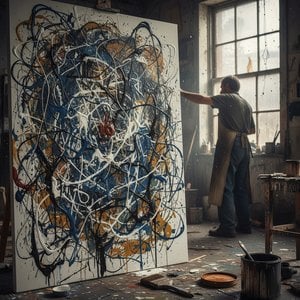
Paul Jackson Pollock: A Radical Departure – Exploring Abstract Expressionism's Pioneering Figure and His Enduring Legacy
Explore the revolutionary art of Jackson Pollock & Abstract Expressionism. Discover his iconic drip paintings, lasting impact, and considerations for collecting this pivotal American artist. Expert insights at ArtsDot.

Beyond Shapes: 10 Iconic Abstract Masterpieces That Redefine Art
Journey through history with 10 iconic abstract masterpieces. From bold expressionism to geometric elegance, discover the stories behind these timeless works. Find museum-quality art reproductions and curated decor inspiration. Explore the full collection online at ArtsDot.com.

Beyond Reality: Exploring Symbolism's Influence on Modern Art & Psychological Expression
Explore the captivating world of Symbolism! Discover key artists, psychological themes & its lasting impact on modern art. Expert insights for collectors and enthusiasts at ArtsDot.

Top 10 Έργα που καθόρισαν τον Αφηρημένο Εκφρασισμό | ArtsDot.gr
Ανακαλύψτε τα 10 εμβληματικά έργα που καθόρισαν τον Αφηρημένο Εκφρασισμό! Jackson Pollock, Mark Rothko & άλλοι. Ιστορίες, τεχνικές και έμπνευση για τη διακόσμηση του σπιτιού σας με πίνακες υψηλής ποιότητας. Εξερευνήστε την πλήρη συλλογή στο ArtsDot.com


