
Suprematism · 1916
Non-objective Composition (Όλγα Ροζάνοβα, 1916)
Non-objective Composition is a work by Όλγα Ροζάνοβα (1886–1918). It dates from 1916. It belongs to the Suprematism movement. It is made in Collage.
- 1916
- Collage

 Προεπισκόπηση σε πραγματική κλίμακα

 Εκτύπωση
 Αποστολή
 Κοινοποίηση
 Οδηγός


 Λήψη
 Παρόμοια αντικείμενα συλλογής
 Ακτινογραφία
 Παρουσίαση
 Ερωτήσεις & Απαντήσεις

 Στατιστικά
Non-objective Composition in a nutshell
- Title
- Non-objective Composition
- Artist
- Όλγα Ροζάνοβα (1886–1918)
- Artist born in
- Μελένκι, Ρωσία
- Date
- 1916
- Medium
- Collage
- Movement
- Suprematism
- Period
- Modern
- Subject
- yellow rectangle, red rectangle, blue rectangle, purple shape, black lines, white lines
What's going on in Non-objective Composition
Identification of Non-objective Composition
The gaze meets Non-objective Composition, a work that exists as a collage on paper. Created by the artist Olga Rozanova, this piece emerges from the year 1916. It presents a world where the physical boundaries of the medium begin to shift, inviting a sense of wonder at how simple materials can suggest such complex, rhythmic movement.
In this specific arrangement, Olga Rozanova moves away from the recognizable world. The paper holds layers of shapes that seem to float and intersect, creating a tension between the flat surface and a perceived depth. It is a moment of pure abstraction, where the artist's hand is felt through the careful placement of geometric forms and the interplay of color.
Visual Elements and Compositional Structure
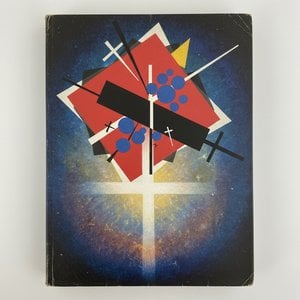
A large yellow rectangle anchors the center of the space, acting as a steady focal point amidst a shifting field of geometry. Around this central weight, smaller rectangles in red, blue, and purple drift through the composition. These shapes do not sit still; they suggest a rhythmic movement, as if caught in a moment of sudden, silent transit. The arrangement creates a complex structure, a pattern of intersecting energies that defines the very essence of Suprematist thought.
Diagonal lines in black and white cut through the arrangement, slicing across the colored forms to add a sense of dynamism. These sharp intersections disrupt the stillness, creating a tension between the solid blocks of color and the fleeting paths of the lines. The composition relies on simple, non-representational shapes, including arcs and rectangles, to build its internal logic. This interplay of elementary forms builds a sense of depth and perspective, blurring the line between a flat surface and a three-dimensional space.
Technique and Material Application
The work exists as a collage on paper, a choice that immediately disrupts the traditional expectations of a flat canvas. Through this method, the artist engages in a textural play between translucency and opacity, allowing light and layers to interact in unexpected ways. One moment, a shape appears solid and heavy; the next, it seems to drift with a ghostly, see-through quality. This tension creates a sense of depth that defies the physical limitations of the paper itself.
As the eye moves across the surface, the boundaries between a two-dimensional illusion and a three-dimensional surface begin to blur. The arrangement of elements is not dictated by a recognizable scene, but is instead organized by the visual weight and the specific relationship of color. Shapes seem to float or collide, held in place by an invisible equilibrium of hue and form. This structural logic relies entirely on how the colors pull against one another, creating a rhythmic movement that feels both spontaneous and carefully measured.
Artistic Context and Movement
The canvas breathes within the radical atmosphere of Suprematism, a movement that seeks to strip away the distractions of the material world. Here, the artist moves beyond the recognizable, trading the familiar shapes of life for a language of pure feeling. This work emerges from a period of intense experimentation in the early 20th century, where the boundaries of what a painting can represent are being pushed to their absolute limits. It exists at a threshold, acting as a precursor to the painterly abstractions that will define much of the coming century.
The composition pulses with a tension between sharp angles and bold colors. These geometric elements do not merely sit upon the surface; they interact to create a sense of rhythm and movement. By utilizing simple, non-representational shapes like arcs and rectangles, the work participates in a larger search for a "zero point" of painting. This pursuit of spiritual geometry aims to connect the viewer directly to an inner experience, bypassing rational thought through the sheer power of color and form.
Historical Significance and Influence
This work acts as a vital bridge, pointing toward the profound abstractions that would later define the era. By incorporating simple, non-representational shapes like arcs and rectangles, the piece offers a glimpse into the evolution of the Russian avant-garde. It helps shift the movement toward the aesthetic stance of Suprematism, moving away from the recognizable world and toward a new visual language. The way these elementary, overlapping forms interact suggests a departure from traditional representation, signaling a shift in how space and color might function on a surface.
The influence of these geometric arrangements reaches into the very core of early 20th-century abstraction. The incorporation of such simple shapes serves as an inspiration for the turn toward non-objective abstraction seen in 1915. This piece functions as a precursor to later painterly abstractions, marking a moment where the boundaries between two-dimensional illusion and a non-representational surface begin to blur. It captures a transition where the focus moves from the object itself to the pure relationship between color and form.
Non-objective Composition, up close

A digital expert checks the colors against the original painting and retouches the file, faithful to the artist's brushwork.
Get the high-res imageThings people wonder about Non-objective Composition
Ποια είναι η κυρίαρχη απόχρωση του "Non-objective Composition" του Όλγα Ροζάνοβα;
Μια Golden Yellow Range απόχρωση κυριαρχεί στο έργο "Non-objective Composition" του Όλγα Ροζάνοβα.
Τα χρώματα του έργου "Non-objective Composition" του Όλγα Ροζάνοβα είναι έντονα ή θαμπά;
Το χρώμα του έργου "Non-objective Composition" παρουσιάζει κορεσμό Clear Color Presence και ένταση Vivid.
Πώς είναι δομημένη η χρωματική σύνθεση του "Non-objective Composition" του Όλγα Ροζάνοβα;
Στο "Non-objective Composition", μια Statement αντίθεση συνδυάζεται με μια Discordant Palette αρμονία.
Πώς μπορώ να προβλέψω το "Non-objective Composition" του Όλγα Ροζάνοβα σε μορφή διαφάνειας;
Το έργο "Non-objective Composition" του Όλγα Ροζάνοβα μπορεί να προβληθεί σε μορφή διαφάνειας στη σελίδα Παρουσίαση διαφάνειων του έργου.
Μπορώ να χρησιμοποιήσω την augmented reality για να δω το "Non-objective Composition" του Όλγα Ροζάνοβα στο δικό μου δωμάτιο;
Η σελίδα Προεπισκόπηση σε AR για το έργο "Non-objective Composition" του Όλγα Ροζάνοβα χρησιμοποιεί την τεχνολογία augmented reality για να σας δείξει το έργο στον δικό σας χώρο, μέσω μιας συμβατής συσκευής.
Με τι υλικά είναι φτιαγμένο το "Non-objective Composition" και σε ποιο στυλ;
Το έργο "Non-objective Composition" του Όλγα Ροζάνοβα συνδυάζει την τεχνική του Collage με το στυλ της Suprematism. Η τεχνική και το καλλιτεχνικό κίνημα περιγράφουν τον τρόπο δημιουργίας και το ύφος του έργου.
Πώς εντάσσεται το "Non-objective Composition" στα θέματα και το στυλ του/της Όλγα Ροζάνοβα;
Στο συνολικό έργο του/της Όλγα Ροζάνοβα, το "Non-objective Composition" εντάσσεται στο στυλ του/της Suprematism, συνδέοντας τα θέματα του/της cubo-futurism and futurism, suprematism and pure abstraction, russian avant-garde movement, shift to non-objective art, precursor to color painting.
Ποιος καλλιτέχνης και ποιο στυλ βρίσκονται πίσω από το "Non-objective Composition";
Πίσω από το "Non-objective Composition" βρίσκονται ο/η Όλγα Ροζάνοβα και η καλλιτεχνική κίνηση Suprematism.
Ποια θέση καταλαμβάνει το "Non-objective Composition" του Όλγα Ροζάνοβα στην ιστορία της τέχνης;
Το ιστορικό-καλλιτεχνικό κράτος του έργου "Non-objective Composition" του Όλγα Ροζάνοβα είναι το/η Suprematism, από την περίοδο του/της Modern.
Meet Όλγα Ροζάνοβα

1886–1918, Ρωσία
Όλγα Ροζάνοβα
Μια Ζωή Φωτεινή: Το Προδρομικό Όραμα της Όλγα Ροζάνοβα Η Όλγα Βλαδιμίροβνα Ροζάνοβα, ένα όνομα που αντηχεί όλο και περισσότερο στα χρονικά της τέχνης του 20ού αιώνα, ήταν μια Ρωσίδα πρωτοπόρος της πρωτοπορίας που η σύντομη, αλλά εκπληκτικά γόνιμη καριέρα της, παρά την τραγική της διάρκειας, άφησε ανεξίτηλο σημάδι στην ιστορία της τέχνης. Γεννημένη το 1886 στο Μελένκι της Ρωσίας, σε μια οικογένεια με ισχυρές πολιτικές και θρησκευτικές παραδόσεις – ο πατέρας της ήταν περιφερειακός αστυνόμος και ο παππούς της Ορθόδοξος ιερέας – η Ροζάνοβα στράφηκε στην αναδυόμενη σύγχρονη τέχνη, εγκαταλείποντας τις συμβατικές διαδρομές. Μετά την αποφοίτησή της από το Γυμνάσιο των Κοριτσιών του Βλαντιμίρ το 1904, βυθίστηκε στην καλλιτεχνική εκπαίδευση, πρώτα στο Σχολείο Τέχνης Μπολσάκοφ υπό τον Νικολάι Ουλιάνωφ και τον γλύπτη Αντρέι Ματβέεφ, στη συνέχεια παρακολουθώντας μαθήματα στην Σχολή Εφαρμοσμένων Τεχνών Στρογκάνοφ και τελειοποιώντας τις δεξιότητές της στο ιδιωτικό ατελιέ του Κωνσταντίν Γκιουν. Αυτά τα χρόνια θεμελίωσαν μια ανήσυχη εξερεύνηση που θα την έκανε να πλοηγηθεί και να συνεισφέρει σε μερικές από τις πιο ριζοσπαστικές καλλιτεχνικές κινήσεις της εποχής της.
Complete collection Get to know Όλγα Ροζάνοβα The Όλγα Ροζάνοβα works everyone loves
More by Όλγα Ροζάνοβα you might love
 Female Portrait1907
 Portrait of a girl1911
 Jack of Diamonds1915
 Portrait1913
More to read about Non-objective Composition
 When works of art like Kazimir Malevich's Suprematist Painting, Black Rectangle, Blue Triangle show no reference to the concrete world, it is usuallyDiscover the meaning behind non-objective art and how Malevich's geometric shapes create a sense of purity and spiritual weight in your home
 Structural Sentiment: Decoding the Emotional Language of Geometric AbstractionMaster the emotional language of geometric abstraction through shape and color theory. Explore the masters and elevate your collection toda…
 Beyond Representation: Exploring the Radical Geometry of Suprematism & Its Spiritual FoundationsExplore the revolutionary world of Suprematism with our expert guide. Discover Kazimir Malevich's groundbreaking art, its spiritual foundat…