

 Προεπισκόπηση σε πραγματική κλίμακα

 Αποστολή
 Κοινοποίηση
 Λεπτομέρειες
 Οδηγός


 Λήψη
 Παρόμοια αντικείμενα συλλογής
 Ακτινογραφία
 Παρουσίαση
 Ερωτήσεις & Απαντήσεις
 Στατιστικά
Oiseau


 Περισσότερα
Το έργο τέχνης που εμφανίζεται σε αυτή τη σελίδα προστατεύεται από τους νόμους περί πνευματικών δικαιωμάτων, γεγονός που σημαίνει ότι δεν μπορούμε νομικά να δημιουργήσουμε ή να πουλήσουμε μια ταυτόσημη αναπαραγωγή του. Αυτή η προστασία επιβάλλεται βάσει διεθνών συμφωνιών, όπως η Σύμβαση της Βέρνης καθώς και από τους εθνικούς νόμους, συμπεριλαμβανομένων αυτών που ορίζονται από το Νομοθεσία περί πνευματικών δικαιωμάτων των ΗΠΑ - Τίτλος 17. Όλα τα δικαιώματα κατοχυρωμένα. Απαγορεύεται η αναπαραγωγή χωρίς άδεια.
Αυτή η μέθοδος συμμορφώνεται πλήρως με τους κανονισμούς περί πνευματικών δικαιωμάτων, καθώς δεν περιλαμβάνει την αντιγραφή ή την αναπαραγωγή του προστατευόμενου έργου. Αντίθετα, πρόκειται για μια δημιουργική ερμηνεία — ένα νέο έργο που επηρεάζεται από το πρωτότυπο, χωρίς όμως να είναι πανομοιότυπο με αυτό.
Giclée / Εκτυπώσεις Τέχνης
Εκτύπωση giclée ή σε καμβά ποιότητας μουσείου με γρήγορη παραγωγή και ευέλικτες επιλογές φινιρίσματος. ( Αγορά χειροποίητου πίνακα Μετάβαση σε Ψηφιακή Αποτέλεσμα)




P118B €10

P118H €10

P118W €10

P438Z €10

P508JH €12

P508YH €12

P805H €10

P805Z €10

P919BZ €10

P919G €10

P919XJ €10

P959ZH €10

P968JZ €12

W106C €8

W218G €10

W218JH €8

W218Y €10

W307PJ €10

W316G €10

W316PJ €8

W316Y €10

W398PJ €8

W4111J €10

W500HY €15

W500JH €15

W692G €12

W849H €8

W940BG €15

W953PJ €8




Επιλέξτε από τις προκαθορισμένες διαστάσεις μας που διατηρούν τις αρχικές αναλογίες του έργου τέχνης.

Εισάγετε το πλάτος και το ύψος που επιθυμείτε, ώστε να ταιριάζουν στο κάδሮ ή στον τοίχο σας. Μια εκτύπωση μπορεί μόνο να υποστεί κοψίμό και ποτέ να μην γίνει μεγαλύτερη από την αρχική εικόνα, επομένως η επιλογή μεγέθους με διαφορετικό σχήμα συνεπάγεται απώλεια ενός μέρους της εικόνας. Σας στέλνουμε ένα ψηφιακό mockup για έγκριση πριν προχωρήσουμε σε οποιαδήποτε εκτύπωση. Η εικόνα που εμφανίζεται σε αυτή τη σελίδα δεν δείχνει την πραγματική κοπή — μόνο το mockup την παρουσιάζει.
Παγκόσμια Αποστολή () σε 2 εβδομάδες αντί για τις συνήθεις 4/5 εβδομάδες. (17 Νοέμβριος)

Δωρεάν γρήγορη διεθνής αποστολή

Κάμβας από Λινό Υψηλής Ποιότητας

Πλήρης ασφάλιση μεταφοράς

Εγγύηση επιστροφής δασμών και φόρων εισαγωγής

Εγγύηση Απόλυτης Ομοιότητας Χρωμάτων

Πολιτική Επιστροφής 100 Ημερών (Μόνο σε περίπτωση ελαττωμάτων)

Εγγύηση επιστροφής 100% των χρημάτων

Προσφορά για πολλαπλές παραγγελίες
 Η επιλογή με γυαλί είναι διαθέσιμη μόνο για μεγέθη κάτω από 110 εκ.

Oiseau
Giclée / Εκτυπώσεις Τέχνης
Διαστάσεις Αναπαραγωγής
-


Τελική Τιμή
€ 56
The Enigmatic Bird: A Study in Surrealist Symbolism by Max Ernst
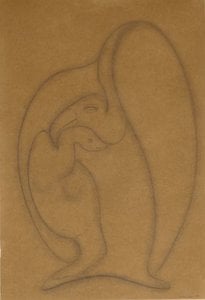
Max Ernst’s “Oiseau (Bird)” – often referred to as “L'Oiseau Mère” or "The Mother Bird" – is not merely a depiction of avian form; it’s an immersion into the subconscious, a distilled fragment of the artist’s intensely personal and profoundly unsettling vision. Painted in 1951, during a period of considerable artistic evolution for Ernst, this work exemplifies his masterful manipulation of technique—particularly his innovative use of *grattage* – to create textures that vibrate with hidden meaning. The painting immediately draws the eye with its stark contrast: a pale beige, almost parchment-like background punctuated by the assertive red outline of the bird itself. This deliberate simplicity belies a complex layering of symbolism and psychological exploration.
Ernst’s approach to composition is strikingly unconventional. The bird, rendered in bold, uneven lines, occupies a central position within the frame, yet its incompleteness—the gaping “hole” where its belly should be—is profoundly unsettling. This deliberate absence isn't simply a technical oversight; it speaks volumes about themes of vulnerability, loss, and perhaps even the fragmented nature of selfhood – ideas that were central to Ernst’s broader artistic concerns during this period. The bird’s head, a simplified circle with a single blue eye, possesses an almost childlike quality, further amplifying its sense of innocence juxtaposed against the unsettling void within its form.
The Alchemy of Technique: Grattage and Texture
To fully appreciate “Oiseau,” one must understand Ernst’s groundbreaking technique of *grattage*. Developed in 1925, this method involved applying paint to a canvas and then vigorously scraping it away with a palette knife or other tool. This process created a textured surface—a map of the underlying materials—that was then layered with subsequent paint applications. In “Oiseau,” the *grattage* technique is particularly evident in the mottled background, which resembles aged paper or fabric – a deliberate choice that evokes a sense of history and decay. The rough edges of the bird’s outline further contribute to this tactile effect, inviting the viewer to engage with the painting on a sensory level.
The use of red as the dominant color is also significant. Red, in Ernst's work, often represents passion, danger, and even death – potent symbols that resonate throughout his oeuvre. Here, it serves to highlight the bird’s vulnerability and its precarious existence within the stark landscape. The limited palette—primarily beige, red, and blue—reinforces this sense of austerity and emotional restraint.
Roots in Surrealism and Beyond
“Oiseau” firmly situates itself within the broader context of Surrealist art, a movement that sought to unlock the creative potential of the unconscious mind. Ernst was a key figure in the development of Surrealism, alongside artists like Salvador Dalí and René Magritte. His work frequently explored themes of dreams, mythology, and psychological trauma – subjects often considered taboo during the early 20th century. The bird itself is laden with symbolic weight; birds have long been associated with freedom, spirituality, and transformation in art and literature.
Interestingly, Ernst’s fascination with birds extended beyond mere aesthetic interest. He developed an alter ego, “Loplop, the Bird Superior,” a recurring figure in his writings and artwork, embodying qualities of wisdom, cunning, and even danger. This personal mythology informs our understanding of "Oiseau," suggesting that the bird is not simply a representation of nature but also a projection of Ernst’s own complex psyche.
A Timeless Resonance: Interpretation and Legacy
“Oiseau” remains a powerfully evocative work, inviting multiple interpretations. It can be seen as a meditation on loss and incompleteness, a poignant reflection on the fragility of life, or even a symbolic representation of the artist’s own struggles with identity and self-doubt. Regardless of one's interpretation, the painting’s enduring appeal lies in its ability to tap into fundamental human emotions—a sense of vulnerability, longing, and perhaps even a touch of melancholy. It stands as a testament to Ernst’s genius – his capacity to transform simple materials into profound expressions of the inner world.
Ερωτήσεις και Απαντήσεις
Ποια είναι η κυρίαρχη απόχρωση του "Oiseau" του Μαξ Ερνστ;
Μια Ochre to Sepia απόχρωση κυριαρχεί στο έργο "Oiseau" του Μαξ Ερνστ.
Πώς συνδέει το "Oiseau" του Μαξ Ερνστ το Surrealism με τη χώρα καταγωγής του καλλιτέχνη;
Το έργο του ή της Surrealism "Oiseau" δημιουργήθηκε από καλλιτέχνη που γεννήθηκε στην/στο Γερμανία.
Πού μπορώ να βρω στατιστικά στοιχεία για το "Oiseau" του Μαξ Ερνστ;
Η σελίδα Στατιστικά επισκέψεων για το έργο "Oiseau" του Μαξ Ερνστ παρουσιάζει στατιστικά στοιχεία επισκέψεων: μηνιαίες επισκέψεις του συγκεκριμένου έργου, σύγκριση με τα πιο δημοφιλή έργα του καλλιτέχνη και την προέλευση των επισκεπτών.
Σχετικά Έργα Τέχνης


Σχετικά άρθρα

Οι 10 Κορυφαίοι Ιμπρεσιονιστές Πίνακες που Άλλαξαν την Τέχνη | ArtsDot.gr
Ανακαλύψτε τους 10 κορυφαίους πίνακες ιμπρεσιονισμού από Μονέ, Ρενουάρ & Ντεγκά. Ιστορίες τέχνης, τεχνικές και χρώματα που άλλαξαν την εποχή! Υψηλής ποιότητας αναπαραγωγές στην ArtsDot.gr. Εξερευνήστε τη συλλογή online.

The Enduring Legacy of Oil on Canvas: Technique, History & Aesthetic Impact
Explore the rich history & techniques of oil painting – from Renaissance masters to Impressionism. Discover pigments, layering methods, and why this timeless medium endures. Expert insights for artists & art enthusiasts.

Max Ernst: Τα 25 Εμβληματικότερα Έργα του Σουρεαλιστή Καλλιτέχνη | ArtsDot.gr
Ανακαλύψτε τα 25 εμβληματικότερα έργα του Max Ernst, πρωτοπόρου του σουρεαλισμού. Εξερευνήστε την ιστορία, τις τεχνικές και το όραμα πίσω από πίνακες που άλλαξαν την τέχνη. Υψηλής ποιότητας αναπαραγωγές & διακόσμηση στο ArtsDot.com.

The Eloquent Brushstroke: A Historical & Technical Exploration of Texture, Intent & Expression in Painting
Explore the rich history & techniques of impasto painting – from Renaissance masters to Van Gogh's expressive strokes. Discover how artists use texture to convey emotion and create lasting impact. Learn more!

Amédée Masclef: Navigating Symbolism & Sentiment in Late 19th-Century French Landscape Painting
Explore the evocative landscapes of Amédée Masclef, a key figure bridging Barbizon realism & Symbolist sentiment. Discover his exquisite botanical watercolors and artistic legacy with ArtsDot.


