

 Προεπισκόπηση σε πραγματική κλίμακα
 Αποστολή
 Κοινοποίηση
 Λεπτομέρειες
 Οδηγός

 Λήψη
Λήψη
 Παρόμοια αντικείμενα συλλογής
 Ακτινογραφία
 Παρουσίαση
 Ερωτήσεις & Απαντήσεις
 Στατιστικά
Self Portrait with a Bucket Hat


 Περισσότερα
Giclée / Εκτυπώσεις Τέχνης
Εκτύπωση giclée ή σε καμβά ποιότητας μουσείου με γρήγορη παραγωγή και ευέλικτες επιλογές φινιρίσματος. ( Αγορά χειροποίητου πίνακα Μετάβαση σε Ψηφιακή Αποτέλεσμα)




P118B €10

P118H €10

P118W €10

P438Z €10

P508JH €12

P508YH €12

P805H €10

P805Z €10

P919BZ €10

P919G €10

P919XJ €10

P959ZH €10

P968JZ €12

W106C €8

W218G €10

W218JH €8

W218Y €10

W307PJ €10

W316G €10

W316PJ €8

W316Y €10

W398PJ €8

W4111J €10

W500HY €15

W500JH €15

W692G €12

W849H €8

W940BG €15

W953PJ €8




Επιλέξτε από τις προκαθορισμένες διαστάσεις μας που διατηρούν τις αρχικές αναλογίες του έργου τέχνης.

Εισάγετε το πλάτος και το ύψος που επιθυμείτε, ώστε να ταιριάζουν στο κάδሮ ή στον τοίχο σας. Μια εκτύπωση μπορεί μόνο να υποστεί κοψίμό και ποτέ να μην γίνει μεγαλύτερη από την αρχική εικόνα, επομένως η επιλογή μεγέθους με διαφορετικό σχήμα συνεπάγεται απώλεια ενός μέρους της εικόνας. Σας στέλνουμε ένα ψηφιακό mockup για έγκριση πριν προχωρήσουμε σε οποιαδήποτε εκτύπωση. Η εικόνα που εμφανίζεται σε αυτή τη σελίδα δεν δείχνει την πραγματική κοπή — μόνο το mockup την παρουσιάζει.
Παγκόσμια Αποστολή () σε 2 εβδομάδες αντί για τις συνήθεις 4/5 εβδομάδες. (4 Νοέμβριος)

Δωρεάν γρήγορη διεθνής αποστολή

Κάμβας από Λινό Υψηλής Ποιότητας

Πλήρης ασφάλιση μεταφοράς

Εγγύηση επιστροφής δασμών και φόρων εισαγωγής

Εγγύηση Απόλυτης Ομοιότητας Χρωμάτων

Πολιτική Επιστροφής 100 Ημερών (Μόνο σε περίπτωση ελαττωμάτων)

Εγγύηση επιστροφής 100% των χρημάτων

Προσφορά για πολλαπλές παραγγελίες
 Η επιλογή με γυαλί είναι διαθέσιμη μόνο για μεγέθη κάτω από 110 εκ.

Self Portrait with a Bucket Hat
Giclée / Εκτυπώσεις Τέχνης
Διαστάσεις Αναπαραγωγής
-


Τελική Τιμή
€ 56
A Fractured Mirror: The Psychological Depth of Max Beckmann
In the hauntingly beautiful 1921 drypoint etching, Self Portrait with a Bucket Hat, Max Beckmann invites us into a visual meditation on the instability of the human soul. This is not merely a portrait of an artist at a specific moment in time; it is a profound exploration of identity captured through the lens of German Expressionism. As we gaze upon the figure, we are met with more than just a man in formal attire and a distinctive hat; we encounter a layered consciousness. Beckmann masterfully utilizes multiple ghostly reflections—faint, spectral images of his own face—that drift behind the primary subject. These overlapping silhouettes create an unsettling sense of duality, suggesting that the self is not a singular, solid entity, but rather a fragmented collection of memories, traumas, and shifting perceptions.
The emotional weight of the piece is inextricably linked to the historical turbulence of Beckmann’s era. Having served as a medical orderly during the First World War, the artist emerged with a vision irrevocably altered by the horrors of conflict. This profound engagement with existential questioning finds its way into every etched line. The mood is one of deep contemplation, tinged with a palpable melancholy that resonates with anyone who has ever grappled with the complexities of existence. For the collector or the lover of fine art, this work offers a window into the post-war psyche, making it a powerful centerpiece for any collection focused on the psychological depth of modern masters.
The Mastery of Line and Texture
Technically, the etching is a triumph of precision and expressive energy. Utilizing a zinc plate and handmade paper, Beckmann employs the drypoint technique to achieve a remarkable textural complexity. There is no reliance on soft washes or blended gradients here; instead, the artist relies on the deliberate manipulation of thick, expressive linework to define form. These vigorous lines delineate the contours of his facial features and the heavy fabric of his clothing with an almost tactile realism, yet they simultaneously create deep, velvety shadows that lend the composition a dramatic, chiaroscroll effect.
The interplay between light and shadow is particularly striking. Light appears to descend from above, catching the ridges of the etched lines to create subtle highlights that pull the subject forward from the darkness. This technique creates a sense of three-dimensionality despite the somewhat flattened perspective characteristic of the medium. For interior designers seeking to add intellectual and visual gravity to a space, the monochromatic intensity of this piece provides a sophisticated anchor. The stark contrast between the deep blacks and the cream tones of the paper allows the artwork to command attention without overwhelming its surroundings, offering a timeless elegance that complements both contemporary and classical decor.
A Timeless Symbolism for the Modern Collector
Beyond its technical brilliance, Self Portrait with a Bucket Hat serves as a symbolic bridge between the traditional portraiture of the past and the fractured reality of the modern age. The recurring reflections act as metaphors for the elusive nature of truth and the multifaceted layers of human experience. It is an artwork that demands slow looking—a piece that rewards the viewer with new discoveries upon every encounter. Whether one is drawn to its historical significance within the German Expressionist movement or its ability to evoke a sense of introspective mystery, Beckmann’s work remains an essential study in the art of seeing.
Owning a high-quality reproduction of this masterpiece allows for the infusion of profound emotional resonance into a home or gallery. It is an invitation to contemplate the beauty found within fragmentation and the strength found within vulnerability. As a piece of decor, it brings with it a sense of history, intellect, and an enduring, quiet power that continues to captivate the modern eye.
Ερωτήσεις και Απαντήσεις
Σε ποιο στάδιο της καριέρας του Μάξιμος Μπέκμαν αντιστοιχεί η ημερομηνία 1921 του έργου "Self Portrait with a Bucket Hat";
Η ημερομηνία του 1921 τοποθετεί το "Self Portrait with a Bucket Hat" στην Early Period της καλλιτεχνικής εξέλιξης του Μάξιμος Μπέκμαν.
Ποια είναι η συνολική ατμόσφαιρα του "Self Portrait with a Bucket Hat" του Μάξιμος Μπέκμαν;
Το έργο "Self Portrait with a Bucket Hat" του Μάξιμος Μπέκμαν περιγράφεται ως Dramatic ως προς τη διάθεσή του. Αυτή η ταξινόμηση μπορεί να βοηθήσει στον συνδυασμό του έργου με ένα κατάλληλο περιβάλλον.
Ποιος καλλιτέχνης και ποιο στυλ βρίσκονται πίσω από το "Self Portrait with a Bucket Hat";
Πίσω από το "Self Portrait with a Bucket Hat" βρίσκονται ο/η Μάξιμος Μπέκμαν και η καλλιτεχνική κίνηση German Expressionism.
Σχετικά Έργα Τέχνης


Βιογραφικό Καλλιτέχνη
Early Life and Artistic Development
Max Carl Friedrich Beckmann, born February 12, 1884, in Leipzig, Saxony, embarked on his artistic journey with a grounding in academically correct depictions—a stylistic choice that would soon yield to a radically transformed vision. Influenced by the solemn imagery of medieval stained glass, Beckmann’s formative years were marked by exposure to artists like Cézanne and Vincent van Gogh, whose explorations of form and color foreshadowed the expressive breakthroughs to come. Serving as a medical orderly during World War I profoundly impacted his worldview, instilling within him a deep awareness of human suffering and trauma—a preoccupation that would permeate his subsequent artistic endeavors.Artistic Style and Influences
Beckmann’s distinctive style emerged from a confluence of influences spanning across centuries. He drew inspiration from the monumental canvases of Rembrandt and Rubens, absorbing their masterful use of chiaroscuro and anatomical precision. However, Beckmann's true artistic identity solidified through engagement with Northern European artists of the late Middle Ages and early Renaissance—Bosch, Bruegel, and Matthias Grünewald—whose unsettling visions of humanity and apocalypse served as crucial catalysts for his own stylistic evolution. These masters championed a dramatic juxtaposition of light and dark, mirroring Beckmann’s desire to convey psychological depth and existential anxieties.Notable Works and Exhibitions
Beckmann's oeuvre encompasses a remarkable range of mediums and themes—painting, drawing, printmaking, and sculpture—each reflecting his unwavering commitment to artistic experimentation. Among his most celebrated creations is “The Bark,” acquired by the National Gallery in Berlin, a haunting depiction of human vulnerability against the backdrop of an unforgiving landscape. Similarly, "Self-Portrait in Tuxedo," purchased in 1928, offers a poignant glimpse into Beckmann’s inner life—a self-conscious meditation on identity and artistic ambition. His work graced prominent exhibition halls across Germany and Switzerland during the 1920s and 30s, establishing him as a leading voice within the Expressionist movement.Later Life and Exile
The ascent of Adolf Hitler irrevocably altered Beckmann’s trajectory—resulting in his dismissal from the Frankfurt Art School and the confiscation of over 500 of his artworks. Forced into exile in Amsterdam for ten years, he wrestled with bureaucratic obstacles attempting to secure a visa for the United States. Despite facing considerable hardship, Beckmann persevered in his artistic pursuits, continuing to produce evocative paintings that captured the spirit of his time.Legacy
Beckmann’s influence extended beyond his immediate contemporaries—inspiring generations of artists who embraced his uncompromising aesthetic and thematic concerns. He taught at Washington University in St. Louis and the Brooklyn Museum, nurturing young talent and fostering a dialogue about artistic innovation. His first retrospective in the United States took place in 1948 at the City Art Museum, Saint Louis, cementing his reputation as one of Germany’s foremost modernist painters. Today, Max-Slevogt Galerie proudly showcases a comprehensive collection of Beckmann's masterpieces—a testament to his enduring artistic legacy.
Μάξιμος Μπέκμαν
1884 - 1950 , Γερμανία
Γρήγορα στοιχεία
- Artistic Movement Or Style: Εκφρατισμός
- Artists Or Movements Influenced By This Artist: ['Γουργκό']
- Artists Who Influenced This Artist:
- Ρεμбранτς
- Βοσχ
- Date Of Birth: Φεβρουάριος 12, 1884
- Date Of Death: Δεκέμβριος 27, 1950
- Full Name: Max Carl Friedrich Beckmann
- Nationality: Γερμανός
- Notable Artworks:
- Το Μπισό
- Η Καντελάρα
- Place Of Birth: Λειψία, Γερμανία
- Useful Links:
- {'content': 'Ένα έργο του Μάξιμου Έρνστ που ανήκει στην πρώιμη δουλειά του Δαδισμού και του σουρεαλισμού, με παράδοξη σύνθεση και χρήση έντονων χρωμάτων για να προκαλέσει σκέψεις σχετικά με την ανθρώπινη σχέση και την απουσία λογικής.', 'title': 'Το Μπισό', 'url': '/en/art/max-ernst--8EWLHL-el/', 'url_image': '/media/artworks/images/thumbnails/36/bc/36bc68bb0f1d43c3b35a158056ba56a9.jpg'}
- {'content': "Εξερευνήστε τον σουρεαλιστικό πίνακα του Μάξ Έρνστ «Ευρώπη μετά τη βροχή ΙΙ», ένα έργο τέχνης που συνδυάζει έντονα χρώματα και μια μαγευτική τοπογραφία της περιόδου του Β' Παγκοσμίου Πολέμου.", 'title': 'Ευρώπη μετά τη βροχή ΙΙ', 'url': '/en/art/max-ernst--8XYK6C-el/', 'url_image': '/media/artworks/images/thumbnails/bc/86/bc8620bc00674d4eaeedfa50c1fc7661.jpg'}
Σχετικά άρθρα

Οι 10 Κορυφαίοι Δάσκαλοι της Χαρακτικής που Άλλαξαν την Τέχνη για Πάντα | ArtsDot
Ανακαλύψτε τα 10 αριστουργήματα της χαρακτικής που καθόρισαν την τέχνη! Rembrandt, Goya & Dürer: ιστορίες τεχνικής και έμπνευσης. Βρείτε αναπαραγωγές υψηλής ποιότητας για τον χώρο σας στο ArtsDot.com

Max Beckmann: Navigating Trauma & Modernity Through a Distorted Lens
Explore the powerful world of Max Beckmann's art – a journey through trauma, modernity & distortion. Discover his key works, influences, and lasting legacy with expert analysis.
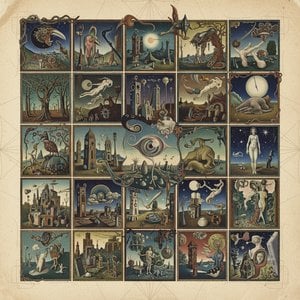
Max Ernst: Τα 25 Εμβληματικότερα Έργα του Σουρεαλιστή Καλλιτέχνη | ArtsDot.gr
Ανακαλύψτε τα 25 εμβληματικότερα έργα του Max Ernst, πρωτοπόρου του σουρεαλισμού. Εξερευνήστε την ιστορία, τις τεχνικές και το όραμα πίσω από πίνακες που άλλαξαν την τέχνη. Υψηλής ποιότητας αναπαραγωγές & διακόσμηση στο ArtsDot.com.

Γερμανικός Εξπρεσιονισμός: 10 Αριστουργήματα που Άλλαξαν την Τέχνη | ArtsDot.gr
Ανακαλύψτε τα 10 αριστουργήματα του Γερμανικού Εξπρεσιονισμού! Munch, Kirchner & άλλοι καλλιτέχνες που καθόρισαν μια εποχή. Ιστορίες τέχνης, έντονα χρώματα και συναισθηματική δύναμη. Βρείτε πίνακες εξπρεσιονισμού υψηλής ποιότητας στο ArtsDot.gr

Etching: A Historical Survey of Technique, Aesthetic Qualities & Enduring Artistic Significance
Explore the rich history of etching, from its origins to Rembrandt's masterful innovations. Discover the technique, aesthetic qualities & enduring legacy of this captivating art form. Expert insights for collectors and enthusiasts.


