

 Προεπισκόπηση σε πραγματική κλίμακα
 Αποστολή
 Κοινοποίηση
 Λεπτομέρειες
 Οδηγός

 Λήψη
Λήψη
 Παρόμοια αντικείμενα συλλογής
 Ακτινογραφία
 Παρουσίαση
 Ερωτήσεις & Απαντήσεις
 Στατιστικά
Blue clown

- 83.0 x 60.0 cm


 Περισσότερα
Λάβετε ένα αρχείο έτοιμο για εκτύπωση, με ποιότητα πολύ ανώτερη από την προεπισκόπηση στον ιστότοπο. Κάθε ψηφιακή εικόνα που διαθέτουμε προέρχεται από ένα αρχείο υψηλής ανάλυσης στη βάση δεδομένων μας —συνήθως με πλάτος 5.000 έως 15.000 pixel— ώστε να μπορείτε να εκτυπώσετε σε μεγάλο μέγεθος, να κάνετε στενές κοψιμές ή να αναπαράγετε τις λεπτομέρειες με απόλυτη εμπιστοσύνη.
Κανένα αρχείο δεν φεύγει από το στούντιο μας χωρίς να υποστεί επεξεργασία. Ένας ειδικός ψηφιακών εικόνων ελέγχει τα χρώματα σε σύγκριση με το πρωτότυπο έργο και τα διορθώνει αν χρειαστεί, στη συνέχεια βελτιώνει την καθαρότητα και τις λεπτομέρειες με επαγγελματικά εργαλεία αφαίρεσης ατέλειων — παραμένοντας πάντα πιστός στις πινελιές και το ύφος του καλλιτέχνη. Το αποτέλεσμα είναι μια εικόνα που μοιάζει με το ίδιο το αριστούργημα και όχι με ένα σκανάρισμα με φίλτρα.
Εγκρίνετε πριν την ολοκλήρωση: ο ειδικός μας σας στέλνει την εικόνα μέσω e-mail εντός 72 ωρών για επανεξέταση. Δεν είστε ικανοποιημένοι; Ζητήστε βελτιώσεις ή διορθώσεις, ή ζητήστε επιστροφή χρημάτων εάν η ποιότητα δεν ανταποκρίνεται στις προσδοκίες σας.
Αυτή είναι η ποιότητα στην οποία εμπιστεύονται οι εκδότες, τα design studios, οι γκαλερί και τα εκτυπωτήρια.
Ψηφιακή εικόνα
Κατεβάστε ένα αρχείο υψηλής ανάλυσης για προσωπική χρήση, εκτύπωση και δημιουργικά έργα. ( Μετάβαση σε Εκτυπώσεις Αγορά χειροποίητου πίνακα)
Περιλαμβάνεται σε κάθε παραγγελία ψηφιακής εικόνας
Επαγγελματική Ψηφιακή Παράδοση με Εγγύηση
Όταν επιλέγετε το ArtsDot.com, δεν αποκτάτε απλώς μια εικόνα – λαμβάνετε ένα επαγγελματικά αναβαθμισμένο ψηφιακό έργο τέχνης, δημιουργημένο με ακρίβεια και με εγγύηση ικανοποίησης. Δείτε όλα όσα περιλαμβάνονται στην παραγγελία σας, αυτόματα:

Άμεση αποστολή μέσω email
Το ψηφιακό σας αρχείο εικόνας υψηλής ανάλυσης θα σας σταλεί μέσω email εντός 72 ωρών από την παραγγελία σας — έτοιμο για άμεση χρήση.

Ψηφιακό Αρχείο με Τεχνητή Νοημοσύνη
Το έργο σας βελτιστοποιείται επαγγελματικά με τη χρήση προηγμένων εργαλείων Τεχνητής Νοημοσύνης και χειροκίνητης επεξεργασίας, εξασφαλίζοντας μέγιστη λεπτομέρεια, ευκρίνεια και ακρίβεια χρωμάτων.

Δωρεάν επανεκδόσεις مدى ζωής
Απώλησες ή διαγράψατε κατά λάθος το αρχείο σας; Μην ανησυχείτε — θα σας το ξαναστείλομε οποιαδήποτε στιγμή, δωρεάν.

Χωρίς Τελωνειακούς Φόρους - Ποτέ
Απολαύστε αμέσως τα έργα τέχνης σας χωρίς δασμούς, φόρους ή έξοδα αποστολής - οι ψηφιακές λήψεις είναι πάντα αφορεশিপτεία.

Εγγύηση Ακριβούς Χρωματισμού
Εξασφαλίζουμε ότι η ψηφιακή σας εικόνα αποτυπώνει τα αυθεντικά χρώματα όσο το δυνατόν πιστότερα, χρησιμοποιώντας επαγγελματικά εργαλεία και διαχείριση χρωμάτων.

Εγγύηση Ικανοποίησης 100 Ημερών
Εάν δεν είστε ικανοποιημένοι με την ψηφιακή σας εικόνα, θα την τροποποιήσουμε ή θα σας επιστρέψουμε το 100% εντός 100 ημερών — χωρίς κανένα ερώτημα.

100% Εγγύηση Επιστροφής Χρήματος
Δεν είστε ικανοποιημένοι; Λάβετε πλήρη επιστροφή των χρημάτων σας εντός 100 ημερών από τη λήψη του ψηφιακού σας αρχείου — χωρίς κανένα ερώτημα.

Εκπτώσεις σε μεγάλες παραγγελίες
Αγοράστε 3 εικόνες, κάντε εξοικονόμηση 10% - Αγοράστε 5, κάντε εξοικονόμηση 15% - Αγοράστε 10+, κάντε εξοικονόμηση 20%. Ιδανικό για δημιουργικά έργα, γκαλερί και agencies.
A Dreamscape of Color and Nostalgia
In the twilight of his long and illustrious career, Marc Chagall gifted the world with "Blue Clown," a masterpiece completed in 1984 that serves as a profound window into the artist's subconscious. This work is not merely a depiction of a circus scene; it is a symphony of memory, where the boundaries between reality and dream dissolve into a kaleidoscope of vibrant pigments. As one gazes upon the canvas, the eye is immediately drawn to the ethereal blue tones that anchor the composition, evoking a sense of nocturnal mystery and quiet introspection. Chagall, a poet of the brush, utilizes the Naïve Art style to bypass the rigid constraints of academic realism, opting instead for a flattened perspective and bold, expressive outlines that resonate with the spontaneous joy of childhood.
The composition unfolds like a fragmented memory from a traveling carnival. Within this whimsical space, figures appear suspended in a state of perpetual motion—clowns perched on stools, acrobats navigating ladders, and characters caught in mid-fall. There is a deliberate lack of traditional gravity here; instead, the movement is driven by emotional weight. The presence of various onlookers and even a stray sports ball adds a layer of lived-in texture to the scene, suggesting that this circus is not just a performance, but a microcosm of life itself. For the collector or interior designer, this piece offers a dynamic energy that can transform a room, providing a focal point that invites continuous re-examination and discovery.
The Resonance of History and Symbolism
To understand "Blue Clown," one must look back to the cobblestone streets of Vitebsk, Belarus, where Chagall’s artistic soul was forged. The painting breathes with the spirit of his formative years, echoing the vibrant, multicultural atmosphere of the Jewish marketplaces he once traversed. The use of primary blues and brilliant yellows acts as a visual shorthand for the cultural collision of traditions—a celebration of life amidst the shadows of history. Even as Chagall lived through the immense upheavals of the 20th century, including the profound darkness of World War II, his art remained an act of defiant humanism. In "Blue Clown," the circus becomes a metaphor for resilience; despite the chaos and the potential for falling, there is a persistent, colorful beauty in the performance of existence.
Every element within the frame carries a symbolic weight that transcends its literal form. The clown, often a figure of both laughter and sorrow, represents the duality of the human condition—the mask we wear to face the world versus the vulnerability beneath. The floating figures and tilted landscapes suggest a realm where the spirit is free from the burdens of the physical world. For those seeking to adorn a space with art that possesses depth, this reproduction offers more than just aesthetic appeal; it provides an emotional anchor. It is a piece that speaks of the enduring power of imagination and the ability to find magic in the most unexpected places, making it an exquisite choice for any curated collection or sophisticated interior design project.
Ερωτήσεις και Απαντήσεις
Πόσο έντονη είναι η παλέτα χρωμάτων του "Blue clown";
Τα χρώματα του έργου "Blue clown" του Μαρκ Σαγκάλ έχουν κορεσμό Muted. Ο κορεσμός περιγράφει το πόσο έντονα ή απαλά είναι τα χρώματα.
Σε ποιο στάδιο της καριέρας του/της Μαρκ Σαγκάλ ανήκει το "Blue clown", με δεδομένη την ημερομηνία δημιουργίας του/της;
Με την ημερομηνία (1984), το έργο "Blue clown" ανήκει στην περίοδο Mature Period του Μαρκ Σαγκάλ.
Το έργο "Blue clown" του Μαρκ Σαγκάλ είναι πίνακας, σχέδιο ή γραφικό;
Το έργο "Blue clown" του Μαρκ Σαγκάλ ταξινομείται ως WallArt. Η κατηγορία αυτή περιγράφει το είδος του πρωτοτύπου έργου τέχνης.
Σχετικά Έργα Τέχνης


Βιογραφικό Καλλιτέχνη
Early Life, Family and Training
Marc Chagall enters the world on July 7, 1887, in Vitebsk, Russian Empire, born Moishe Segal. He is the first of nine children in a modest Jewish family. Life is defined by the rhythms of labor and small-scale commerce. His father, Khatskel Segal, works as a herring pickler at a warehouse, while his mother, Feïga-Ita Tchernina, manages a small grocery store. These early years are rooted in the specific textures of a provincial town, where the boundaries of his world are shaped by the needs of a large household and the traditions of his community.
Education begins within the walls of the heder, a traditional Jewish elementary school. Here, the focus remains on religious instruction and the foundational texts of his upbringing. By age thirteen, the scope of his learning shifts toward the secular. He enters Vitebsk’s official middle school to pursue a Russian education, a move that marks a departure from the strictly religious sphere of his childhood. This dual existence—between the sacred traditions of the heder and the secular requirements of the state school—creates a tension that defines his early development.
Artistic impulse finds its first formal outlet in Vitebsk. Chagall receives his initial training at a local art school operated by Iouri Pen. It is here that the raw instinct for visual expression begins to coalesce into a disciplined practice. He moves from the structured lessons of the classroom toward a more profound engagement with the act of seeing, setting the stage for a life spent translating memory into form.
The Formative Years in St. Petersburg
The transition from the provincial quiet of Vitebsk to the imperial scale of Saint-Petersburg is marked by struggle. Between 1907 and 1909, the capital offers little in the way of comfort. Poverty is a constant companion; there are moments of hunger so severe that physical collapse becomes a reality. To survive, he takes to the streets, earning a meager living by drawing shop signs. These commercial tasks provide the necessary rubles to sustain a presence in the city while he navigates the complexities of being a Jewish student in a vast, shifting empire.
The academic pursuit is relentless. He enrolls in several academies, seeking a formal structure for his burgeoning visual language. The atmosphere of the capital is heavy with the influence of the avant-garde, a tension that pulls him away from classical training. He finds himself in the studio of Léon Bakst, a designer for the Ballets Russes, where the theatricality of set design begins to seep into his perception of space and form. This period is a collision of necessity and ambition, a time of sketching for survival while simultaneously absorbing the radical shifts occurring in the Russian art scene.
The Paris Years and Avant-Garde Influence
Paris arrives in 1910 or 1911, a sudden shift from the provincial constraints of the Russian Empire. The city offers a sensory shock. He finds light, color, and liberty in the streets of Montparnasse. This is no longer the world of the herring merchant or the traditional heder school; it is a landscape of radical possibility. He settles in La Ruche, the famous artist's residence, where the air is thick with the presence of the new avant-garde. He shares this space with Amedeo Modigliani and Fernand Léger, figures who are redefining the boundaries of modern expression. The influence of the era is inescapable, yet he remains an outlier, absorbing the discoveries of Fauvism and Cubism without surrendering his own internal logic.
The work produced during this period begins to reflect a departure from literal representation. He moves toward a style that prioritizes emotional and poetic associations over the strict rules of pictorial logic. The colors brighten, fueled by the exposure to the Parisian scene. He navigates the tension between the formal training of his past and the experimental freedom of the present. This period of intense creative friction continues until the political upheavals of the war pull him back toward the East. It is not until 1923 that he returns to Paris with his family, re-establishing his presence in the city that first unlocked his visual language.
- The Betrothed and Eiffel Tower (1913)
- Hommage à Apollinaire (1912-1913)
The Russian Years and Revolution
The revolution pulls Chagall back to Vitebsk. He does not merely observe the upheaval; he attempts to shape its cultural landscape. He takes on the mantle of Vitebsk Commissioner of Fine Arts and assumes the directorship of a local Fine Arts School. His vision is one of community and education, yet the political climate shifts beneath his feet. The rise of Suprematism creates a fracture. Figures like Malevitch and Lissitzky push for a radical, non-objective abstraction that clashes with Chagall’s more lyrical, figurative approach. The tension is unsustainable. He is forced out of his positions, his dream of a localized artistic renaissance colliding with the rigid demands of the new regime.
By 1920, the focus shifts to Moscow. He works on the decoration of the Jewish theatre, a project that captures the intersection of his personal identity and the public stage. His lines are confident, his colors strong and pale, even as the world around him fractures. He navigates a period of intense creative output and profound material struggle, moving between the memory of the shtetl and the demands of a changing state. The era is defined by this friction: the attempt to build a cultural home while the very foundations of his world are being rewritten.
- Over the Town (1914–1918)
- Apparition (about 1917-18)
Life in the United States
The outbreak of World War II forces a sudden shift in geography. In 1941, Chagall and his family seek refuge in the United States, fleeing the instability of occupied France. He settles in and around New York City, a period of residence that lasts until 1948. The city provides a backdrop of profound emotional upheaval. Amidst the anxieties of the war years, his brush captures the tension of a world in flux. The work reflects the uncertainty of the era, translating personal and global unrest into a visual language of suffering and hope.
During these seven years, the artist finds a way to engage with large-scale institutional projects. He undertakes major commissions for the United Nations headquarters, translating his poetic vision into the architectural fabric of a global institution. This period in America marks a significant chapter of experimentation and survival, bridging his European roots with a new, intense reality. He remains a man between worlds, his heart still pulling him toward France even as he navigates the complexities of his American exile.
- White Crucifixion (1938)
Technique and Artistic Style
Logic yields to emotion. Chagall rejects the rigid rules of pictorial logic, choosing instead to compose images through poetic association. His canvases operate on the mechanics of a dream. Figures float through the air, defying gravity, while colors pulse with a non-naturalistic intensity. This approach allows him to capture the essence of feeling rather than the literal appearance of the world. He moves beyond mere imitation, using a bold palette to translate memory into a visual language.
His aesthetic is a collision of influences. He absorbs the fragmented structures of Cubism and the intense color of Fauvism, yet he filters these avant-garde movements through a deeply personal lens. The result is a style that bridges Expressionism and abstraction. He weaves together the sacred and the mundane, populating his scenes with symbolic and surreal imagery. Jewish folktales and the quiet, lived-in details of shtetl life become the building blocks of a private mythology. The familiar becomes fantastic.
The imagery often centers on recurring motifs: flying lovers, fiddlers, and massive bouquets. These elements are not mere decorations but symbols of a spiritual and emotional landscape. In works like The Lovers (1929), the sense of weightlessness and the use of intense color create a space where the physical laws of the world no longer apply. His work remains a constant negotiation between the tangible reality of his upbringing and the boundless possibilities of the imagination.
- I and the Village (1911)
- The Green Violinist (1924)
- White Crucifixion (1938)
Patrons, Workshop and Commissions
The mid-1920s find Chagall in Paris, navigating the influential circles of the art market. He enters the orbit of Ambroise Vollard, a dealer whose influence shapes the trajectory of many avant-garde artists. Vollard commissions a series of engravings from Chagall, tasking him with illustrating the works of Nikolay Gogol, specifically Dead Souls. This period marks a shift toward the precision of printmaking, moving away from the fluid spontaneity of his earlier canvases.
In 1931, the focus shifts toward the Middle East. The Mayor of Tel Aviv extends an invitation to Chagall to travel to Palestine. The objective is ambitious: the founding of a Jewish Art Museum. This period deepens his engagement with religious and cultural symbolism, a theme that would persist through his later, large-scale architectural works. His ability to translate personal and communal memory into physical space becomes a defining aspect of his professional output.
As his reputation grows, the scale of his work expands from the intimate page to the monumental. He moves into the realm of light and architecture, designing stained-glass windows for the Cathedral of Metz and the United Nations building in New York. These works demand a mastery of how color interacts with sunlight. In 1964, he reaches a peak of public recognition with a commission for the ceiling of the Paris Opera, a massive undertaking that brings his dreamlike imagery into one of Europe's most significant cultural venues.
Where to See the Works Today
The legacy of his vision remains anchored in several key institutions across the globe. In Nice, France, the Musée National Marc Chagall houses an extensive collection of his works, preserving the core of his creative output. This museum offers a concentrated look at the imagery that defined his long career. Meanwhile, the State Russian Museum in Saint-Petersburg, Russia, maintains a significant presence of his art, holding pieces that connect back to his early years and his time in the Russian Empire.
The reach of his work extends across the Atlantic to the United States. The Museum of Modern Art in New York City holds works that reflect his complex relationship with the city during his years of exile. In the American Midwest, the Art Institute of Chicago features his art, ensuring his presence in major international collections. These locations provide the primary physical touchpoints for those seeking to encounter his specific use of color and form.
- I and the Village (1911)
- The Wedding (1944)
- White Crucifixion (1938)
- The Lovers (1929)
- The Circus (1964)
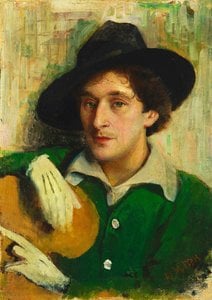
Μαρκ Σαγκάλ
1887 - 1985 , Λευκορωσία
Σύντομη Βιογραφία
- Artistic Movement Or Style: Εκφραστισμός, Κουβισμός, Φαυβισμός, Σουρεαλισμός
- Artists Or Movements Influenced By This Artist: ['Σουρεαλιστές']
- Artists Who Influenced This Artist: ['Léon Bakst']
- Date Of Birth: 1887
- Date Of Death: 1985
- Full Name: Moishe Shagal
- Nationality: Ρωσο-Γαλλική
- Notable Artworks:
- Εγώ και το Χωριό
- Τα Χρώματα της Γιορτής
- Ο Γάμος
- Λευρή Σταύρωση
- Πάνω από τη Βιτεμπσκ
- Place Of Birth: Λιοζνά, Λευκορωσία