


 Προεπισκόπηση
 Αποστολή
 Κοινοποίηση
 Λεπτομέρειες
 Οδηγός

 Λήψη
Λήψη
 Παρόμοια αντικείμενα συλλογής
 Ακτινογραφία
 Παρουσίαση
 Στατιστικά
Untitled (D2XACE)
 Traditional Indian Painting
 1725
1725 57.0 x 79.0 cm
 Περισσότερα λεπτομέρεια
Χειροποίητη Αναπαραγωγή σε Έλαιο
Χειροποίητη ελαιογραφία σε καμβά στο δικό σας μέγεθος και πλαίσιο, κατά παραγγελία από τους καλλιτέχνες μας. ( Μετάβαση σε Εκτυπώσεις Μετάβαση σε Ψηφιακή Εικόνα)




P118B €10

P118H €10

P118W €10

P438Z €10

P508JH €12

P508YH €12

P805H €10

P805Z €10

P919BZ €10

P919G €10

P919XJ €10

P959ZH €10

P968JZ €12

W106C €8

W218G €10

W218JH €8

W218Y €10

W307PJ €10

W316G €10

W316PJ €8

W316Y €10

W398PJ €8

W4111J €10

W500HY €15

W500JH €15

W692G €12

W849H €8

W940BG €15

W953PJ €8




Επιλέξτε από τις προκαθορισμένες διαστάσεις μας που διατηρούν τις αρχικές αναλογίες του έργου τέχνης.

Μπορείτε να ορίσετε δικές σας διαστάσεις ώστε το έργο να ταιριάζει σε ένα συγκεκριμένο πλαίσιο ή χώρο. Εάν το επιλεγμένο μέγεθος δεν συμπίπτει με τις αναλογίες της αρχικής εικόνας, θα περικοψούμε το έργο ή θα επεκτείνουμε τη ζωγραφιά με πρόσθετα χειρόγραφα στοιχεία. Ένα ψηφιακό προσχέδιο θα σας αποσταλεί για έγκριση πριν την έναρξη της παραγωγής.
Παρακαλούμε σημειώστε ότι η προεπισκόπηση στην οθόνη δεν αντικατοπτρίζει την πραγματική περικοπή ή επέκταση. Μόνο το προσχέδιο θα δείξει με ακρίβεια την τελική σύνθεση.
Παρόλο που είναι διαθέσιμα προσαρμοσμένα μεγέθη, συνιστούμε να επιλέξετε μια διάσταση από τη λίστα των προκαθορισμένων μεγεθών για τη διατήρηση των αρχικών αναλογιών.
Μετά την παραγγελία, η ομάδα του ArtsDot.com θα στείλει email στον πελάτη με οδηγίες και θα παρέχει μια προεπισκόπηση προσχεδίου
Παγκόσμια Αποστολή () σε 3-4 εβδομάδες αντί για τις συνήθεις 5 εβδομάδες. (10 Οκτώβριος). Χωρίς συμβιβασμούς στην ποιότητα.

Δωρεάν γρήγορη διεθνής αποστολή

Κάμβας από Λινό Υψηλής Ποιότητας

Πλήρης ασφάλιση μεταφοράς

Εγγύηση επιστροφής δασμών και φόρων εισαγωγής

Εγγύηση Απόλυτης Ομοιότητας Χρωμάτων

Πολιτική Επιστροφής 100 Ημερών (Μόνο σε περίπτωση ελαττωμάτων)

Εγγύηση επιστροφής 100% των χρημάτων

Έκπτωση για πολλαπλές παραγγελίες
 Η επιλογή με γυαλί είναι διαθέσιμη μόνο για μεγέθη κάτω από 110 εκ.

Untitled (D2XACE)
Τεχνική Αναπαραγωγής
Διαστάσεις Αναπαραγωγής
-


Συνολικό Κόστος
€ 226
A Moment of Divine Intervention: ‘Manaku Releases the Demon Spies’
This captivating miniature painting, *Untitled (D2XACE)*, transports us to a pivotal scene from the epic Hindu tale of the Ramayana – specifically, the siege of Lanka. Created in 1725 by Manaku, a master artist from the Guler school of Pahari painting, this work isn’t merely an illustration; it's a meticulously crafted narrative frozen in time. Measuring 57 x 79 cm, the composition bursts with detail, depicting the moment Manaku releases the demon spies Shuka and Sarana, dispatched by Ravana to infiltrate Rama’s army. The foreground is dominated by a throng of demons, their forms varying in definition – a stylistic choice that emphasizes the sheer scale of Ravana's forces while focusing our attention on key figures within the scene. A formidable stone wall, complete with towers and gateways, anchors the composition, creating a sense of enclosure and impending conflict. Above, a balcony scene adds another layer to the narrative, hinting at courtly observation or divine intervention.The Art of Pahari Miniature Painting
Manaku’s style is deeply rooted in the Pahari tradition – a school renowned for its delicate brushwork, vibrant yet nuanced color palettes, and intimate scale. Influenced by the declining Mughal Empire, Manaku skillfully blends Persian artistic conventions with indigenous Indian aesthetics. Notice the flattened perspective, characteristic of miniature painting; depth is achieved not through realistic spatial recession but through careful layering and overlapping forms. The artist employs precise lines to define details, while geometric shapes – squares, rectangles, and rounded figures – structure the composition. The technique itself is a testament to patience and skill, involving the application of thin washes of pigment (likely egg tempera) onto a prepared surface, building up form and luminosity gradually. The earthy tones punctuated by reds and golds create a warm, inviting atmosphere despite the scene’s inherent drama.Symbolism & Historical Context
Beyond its aesthetic beauty, *Untitled (D2XACE)* is rich in symbolism. The depiction of demons and divine figures embodies the eternal struggle between good and evil – a central theme in Hindu mythology. Manaku's work provides valuable insight into the cultural and religious beliefs of 18th-century India. He lived during a period of political fragmentation, yet artistic innovation flourished within the independent hill states like Guler. Manaku’s rediscovery, largely thanks to scholars like B.N. Goswamy, highlights the importance of recognizing artists previously overshadowed by more famous contemporaries – in this case, his younger brother Nainsukh. This painting is not just a work of art; it's a historical document reflecting a specific time and place, offering a glimpse into the artistic landscape of Pahari painting.Emotional Resonance & Collecting Considerations
The emotional tone of *Untitled (D2XACE)* is one of epic conflict tempered by spiritual significance. While depicting a moment of strategic release – the demons are being sent back to report on Rama’s forces – there's an underlying sense of anticipation and impending battle. The painting evokes a feeling of immersion within this ancient narrative, inviting contemplation on themes of duty, deception, and divine will. For collectors and interior designers, a high-quality reproduction of this work offers a unique opportunity to introduce a touch of refined elegance and cultural richness into any space. Its intricate details and harmonious color palette make it a versatile piece that complements both traditional and contemporary settings.Ερωτήσεις & Απαντήσεις
Ποιος πουλάει χειροποίητα αντίγραφα του "Untitled (D2XACE)" του Manaku;
Αντιγραφή με χειρόχειρη τεχνική του έργου "Untitled (D2XACE)" του Manaku είναι διαθέσιμες στο αυτή η ιστοσελίδα: μια με ζωγραφισμένη με λάδι αναπαραγωγή σε καμβά λινου, μέσω παραγγελίας από το αυτή η σελίδα.
Τι κοινό έχει το "Untitled (D2XACE)" με το υπόλοιπο έργο του/της Manaku;
Το "Untitled (D2XACE)" μοιράζεται με τα υπόλοιπα έργα του Manaku το στυλ της καλλιτεχνικής σχολής Traditional Indian Painting και τα επαναλαμβανόμενα θέματα: traditional indian aesthetics, hindu epic storytelling, mythological conflict & order, guler school miniature art, narrative illustration focus, religious iconography rich, detailed courtly patronage, manaku's signature style.
Σε ποια χρονιά δημιουργήθηκε το "Untitled (D2XACE)" του Manaku;
Το έργο "Untitled (D2XACE)" χρονολογείται από το 1725. Η ημερομηνία το τοποθετεί μέσα στην καριέρα του/της Manaku και την εποχή του/της.
Ποιος είναι ο καλλιτέχνης πίσω από το "Untitled (D2XACE)";
Το έργο "Untitled (D2XACE)" αποδίδεται στον/στην Manaku.
Προς ποια απόχρωση τείνει το "Untitled (D2XACE)";
Η κυρίαρχη απόχρωση του έργου "Untitled (D2XACE)" του Manaku είναι το Ochre to Sepia. Η απόχρωση αποτελεί τον θεμελιώδη τόνο της παλέτας.
Χρησιμοποιεί το "Untitled (D2XACE)" του Manaku έντονες αντιθέσεις ή απαλές αρμονίες;
Η χρωματική ανάλυση του έργου "Untitled (D2XACE)" του Manaku καταγράφει μια Gentle αντίθεση και μια Strong Color Unity αρμονία.
Πόσο έντονη είναι η αντίθεση στο έργο "Untitled (D2XACE)" του Manaku;
Το επίπεδο αντίθεσης του έργου "Untitled (D2XACE)" του Manaku είναι Gentle.
Παρόμοια Έργα Τέχνης


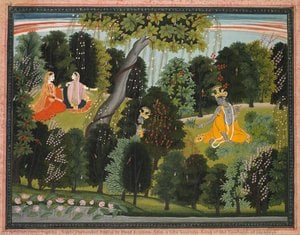


Βιογραφικό Καλλιτέχνη
Manaku: A Rediscovered Master of Pahari Painting
Life and Obscurity
- Born around 1700 in Guler, a small hill state in present-day Himachal Pradesh, India.
- Died in 1760. His life remains largely shrouded in obscurity, overshadowed by the fame of his younger brother, Nainsukh.
- Rediscovery: For centuries, Manaku’s contributions were almost entirely forgotten until art historians like B.N. Goswamy brought his work to light and recognized his significant role in Pahari painting.
Artistic Style and Influences
- Pahari Painting: Manaku is now celebrated as a key exponent of the Pahari style, characterized by its delicate brushwork, vibrant colors, and focus on themes from Hindu mythology and courtly life.
- Mughal Influence: The art of Guler, and thus Manaku’s work, was significantly influenced by the waning Mughal Empire. Artists migrating from the Mughal courts brought with them techniques and aesthetics that blended with local traditions.
- His father, Seu, a prominent artist himself, served as an early mentor, instilling in him foundational skills and artistic principles.
Major Works and Themes
- Rama Releases the Demon Spies: (folio from the Siege of Lanka series) – A powerful depiction of a pivotal moment from the Ramayana, showcasing Manaku’s skill in narrative storytelling.
- South Wind Cools in the Himalayas: (folio from the Second Guler Gita Govinda series) – Demonstrates his mastery in portraying scenes from the Gita Govinda, a celebrated work of Sanskrit poetry focused on the love between Krishna and Radha.
- Hiranyakashipu Commands His Demon Warriors: (preparatory drawing from the ‘Small Bhagavata Purana’ series) – Exemplifies his ability to convey complex narratives with dynamic composition and expressive figures.
- His works often feature themes of devotion, heroism, love, and the eternal struggle between good and evil.
Artistic Development & Achievements
- Only four extant works bear Manaku’s signature, making each piece exceptionally valuable and insightful into his artistic practice.
- Unique Vision: While influenced by Mughal aesthetics, Manaku developed a distinct style characterized by a refined sense of color, delicate detailing, and an ability to capture emotional depth in his figures.
- He contributed significantly to the development of Pahari painting, establishing a foundation for future generations of artists in the region.
Historical Significance & Legacy
- Manaku’s rediscovery has enriched our understanding of 18th-century Indian art and the vibrant artistic traditions of the Pahari region.
- Family Atelier: He was part of a prolific family of artists – the Seu-Manaku-Nainsukh lineage – that played a crucial role in shaping the course of Pahari painting for over 150 years.
- His work continues to inspire art enthusiasts and scholars, offering a glimpse into a rich cultural heritage and the artistic brilliance of a previously overlooked master.

Manaku
1760 , India
Στοιχεία καλλιτέχνη
- Name: Manaku
- Movement: Pahari Painting
- Birth_Date: c. 1700
- Death_Date: 1760
- Influenced: Nainsukh
- Birth_Place: Guler, India
- Nationality: Indian
- Date Of Death: 1760
- Influenced_By: Mughal painting (through Seu)
- Notable_Works:
- Rama releases the demon spies Shuka and Sarana
- South Wind cools in the Himalayas
- Hiranyakashipu commands his demon warriors to threaten and injure Prahlada
- Place Of Birth: Guler, India
Σχετικά άρθρα

Echoes of Olympus: Mythological Narratives in Western Art Through the Ages
Explore the captivating history of mythological narratives in Western art! From ancient Greece to modern masterpieces, discover iconic artworks & symbolism. Expert analysis and high-quality reproductions at ArtsDot.

Raja Ravi Varma: Bridging Tradition & Modernity in 19th-Century Indian Art
Explore the life & art of Raja Ravi Varma, a pioneer who fused European techniques with Indian iconography. Discover his iconic paintings, lasting legacy, and influence on modern Indian art at ArtsDot.
Marianne North: Τα 25 Κορυφαία Έργα της Βικτωριανής Περιηγήτριας & Εξαιρετικά Αντίγραφα Τέχνης | ArtsDot.gr
Ανακαλύψτε τα 25 κορυφαία έργα της Marianne North, της βικτωριανής περιηγήτριας & βοτανικής εικονογράφου. Εξερευνήστε πίνακες με εξωτικά τοπία και λουλούδια υψηλής ποιότητας. Βρείτε την τέλεια αναπαραγωγή για τον χώρο σας στο ArtsDot.com!

Panoramic Visions of Empire: The Daniells’ Artistic Collaboration & Legacy
Explore the captivating 'Oriental Scenery' by Thomas & William Daniell. Discover their pioneering aquatint prints of India, imperial context, artistic collaboration, and lasting legacy. A deep dive for history lovers.

Thomas Daniell: Navigating Light, Landscape & Cultural Exchange in Early 19th-Century India
Explore the captivating landscapes of Thomas Daniell, a pioneering artist who documented India's beauty in the 19th century. Discover his 'Oriental Scenery,' aquatint technique & lasting legacy. Hand-painted reproductions available at ArtsDot.