


 Προεπισκόπηση
 Αποστολή
 Κοινοποίηση
 Λεπτομέρειες
 Οδηγός

 Λήψη
Λήψη
 Παρόμοια αντικείμενα συλλογής
 Ακτινογραφία
 Παρουσίαση
 Στατιστικά
Glass Tears


 Περισσότερα λεπτομέρεια
Το έργο τέχνης που εμφανίζεται σε αυτή τη σελίδα προστατεύεται από τους νόμους περί πνευματικών δικαιωμάτων, γεγονός που σημαίνει ότι δεν μπορούμε νομικά να δημιουργήσουμε ή να πουλήσουμε μια ταυτόσημη αναπαραγωγή του. Αυτή η προστασία επιβάλλεται βάσει διεθνών συμφωνιών, όπως η Σύμβαση της Βέρνης καθώς και από τους εθνικούς νόμους, συμπεριλαμβανομένων αυτών που ορίζονται από το Νομοθεσία περί πνευματικών δικαιωμάτων των ΗΠΑ - Τίτλος 17. Όλα τα δικαιώματα κατοχυρωμένα. Απαγορεύεται η αναπαραγωγή χωρίς άδεια.
Ως μια σεβαστή και νόμιμη εναλλακτική, προσφέρουμε προσαρμοσμένα, χειροποίητα έργα τέχνης εμπνευσμένα από το πρωτότυπο. Οι έμπειροι και επαγγελματίες καλλιτέχνες μας μελετούν προσεκτικά το στυλ, τη διάθεση και την καλλιτεχνική ουσία του πρωτοτύπου, ώστε να δημιουργήσουν ένα νέο, μοναδικό έργο που προκαλεί την ίδια αίσθηση — παραμένοντας όμως μια πρωτότυπη δημιουργία από μόνη της.
Αυτή η μέθοδος συμμορφώνεται πλήρως με τους κανονισμούς περί πνευματικών δικαιωμάτων, καθώς δεν περιλαμβάνει την αντιγραφή ή την αναπαραγωγή του προστατευόμενου έργου. Αντίθετα, πρόκειται για μια δημιουργική ερμηνεία — ένα νέο έργο που επηρεάζεται από το πρωτότυπο, χωρίς όμως να είναι πανομοιότυπο με αυτό.
Χειροποίητη Αναπαραγωγή σε Έλαιο
Χειροποίητη ελαιογραφία σε καμβά στο δικό σας μέγεθος και πλαίσιο, κατά παραγγελία από τους καλλιτέχνες μας. ( Μετάβαση σε Εκτυπώσεις Μετάβαση σε Ψηφιακή Εικόνα)




P118B €10

P118H €10

P118W €10

P438Z €10

P508JH €12

P508YH €12

P805H €10

P805Z €10

P919BZ €10

P919G €10

P919XJ €10

P959ZH €10

P968JZ €12

W106C €8

W218G €10

W218JH €8

W218Y €10

W307PJ €10

W316G €10

W316PJ €8

W316Y €10

W398PJ €8

W4111J €10

W500HY €15

W500JH €15

W692G €12

W849H €8

W940BG €15

W953PJ €8




Επιλέξτε από τις προκαθορισμένες διαστάσεις μας που διατηρούν τις αρχικές αναλογίες του έργου τέχνης.

Πληκτρολογήστε το πλάτος και το ύψος που επιθυμείτε, ώστε να ταιριάζουν στο κάδሮ ή στον τοίχο σας. Ε เนื่องจาก πρόκειται για χειροποίητη ζωγραφική, σε περίπτωση διαστάσεων με διαφορετικό σχήμα, ο καλλιτέχνης μπορεί να ζωγραφίσει λίγο παραπάνω γύρω από το έργο ή να αφαιρέσει ένα μέρος — η επιλογή είναι δική σας. Σας στέλνουμε ένα ψηφιακό mockup για έγκριση πριν ξεκινήσει η δημιουργία του έργου. Η εικόνα που εμφανίζεται σε αυτή τη σελίδα δεν δείχνει το τελικό αποτέλεσμα — μόνο το mockup το αναδεικνύει.
Μετά την παραγγελία, η ομάδα του ArtsDot.com θα στείλει email στον πελάτη με οδηγίες και θα παρέχει μια προεπισκόπηση προσχεδίου
Παγκόσμια Αποστολή () σε 3-4 εβδομάδες αντί για τις συνήθεις 5 εβδομάδες. (23 Οκτώβριος). Χωρίς συμβιβασμούς στην ποιότητα.

Δωρεάν γρήγορη διεθνής αποστολή

Κάμβας από Λινό Υψηλής Ποιότητας

Πλήρης ασφάλιση μεταφοράς

Εγγύηση επιστροφής δασμών και φόρων εισαγωγής

Εγγύηση Απόλυτης Ομοιότητας Χρωμάτων

Πολιτική Επιστροφής 100 Ημερών (Μόνο σε περίπτωση ελαττωμάτων)

Εγγύηση επιστροφής 100% των χρημάτων

Έκπτωση για πολλαπλές παραγγελίες
 Η επιλογή με γυαλί είναι διαθέσιμη μόνο για μεγέθη κάτω από 110 εκ.

Glass Tears
Τεχνική Αναπαραγωγής
Διαστάσεις Αναπαραγωγής
-


Συνολικό Κόστος
€ 231
A Frozen Moment of Melancholy: Man Ray’s “Glass Tears”
Man Ray's "Glass Tears," created between 1930 and 1932, isn’t merely a photograph; it’s a distilled emotion captured in stark black and white. The image, a close-up of a woman’s face, immediately draws the viewer into a world of profound sadness and quiet contemplation. It's a deceptively simple composition—a single eye, framed by long, dark lashes adorned with glistening droplets of water – yet within that simplicity lies a complex narrative about grief, performance, and the very nature of representation.
The photograph’s genesis is rooted in the turbulent period following Man Ray's painful separation from his lover, Lee Miller. Following their breakup, Ray embarked on a deliberate act of emotional excavation, creating a series of images intended to both confront and exorcise his feelings. “Glass Tears” emerged during this time, serving as one poignant expression of that inner turmoil. The model, a fashion mannequin, becomes an embodiment of vulnerability—a silent witness to the artist’s heartbreak. Ray's choice to utilize a mannequin rather than a live subject speaks volumes about his desire to control and manipulate the image, transforming a manufactured object into a vehicle for raw emotion.
The Language of Photograms: Technique and Innovation
Man Ray was a pioneer in photographic techniques, and “Glass Tears” exemplifies his innovative approach. The photograph itself is a photogram – an image created directly onto photographic paper without the use of a camera. This process involved placing glass beads on the woman’s face and then exposing the sheet to light through a negative. The resulting effect is remarkably tactile; the beads create a shimmering, almost crystalline texture that mimics the appearance of tears. The stark contrast between the dark lashes and the bright highlights of the eye further emphasizes the image's dramatic intensity.
Ray’s mastery lies in his ability to imbue this seemingly straightforward technique with layers of meaning. He wasn’t simply documenting a face; he was constructing an emotional landscape, manipulating light and texture to evoke a specific mood. The deliberate blurring around the edges contributes to the photograph's dreamlike quality, suggesting that the image exists outside of conventional reality.
Symbolism and Emotional Resonance
The symbolism within “Glass Tears” is both subtle and deeply affecting. The tears themselves are the most obvious symbol – a universal representation of sorrow, loss, and vulnerability. However, Ray’s choice to depict them as glass beads adds another layer of complexity. Glass, often associated with fragility and preciousness, suggests that these tears are not merely expressions of sadness but also represent something valuable—perhaps memories or emotions that cannot be easily replaced.
The woman's gaze – upward and slightly averted – invites the viewer to share in her unspoken grief. It’s a look of quiet contemplation, suggesting an internal struggle with overwhelming emotion. The photograph taps into a primal human response to sadness, creating a powerful connection between the viewer and the subject.
A Legacy of Surrealist Vision
“Glass Tears” is a quintessential example of Man Ray's contribution to the Surrealist movement. While he resisted strict categorization, his work consistently explored themes of dreamlike imagery, psychological states, and the subconscious mind. The photograph’s unsettling beauty and emotional depth align perfectly with the Surrealists’ fascination with challenging conventional perceptions of reality. It stands as a testament to Ray's ability to transform everyday objects—a mannequin, glass beads—into potent symbols of human experience.
Reproductions of “Glass Tears” offer a remarkable opportunity to bring this evocative image into your home or office. The meticulous detail and dramatic lighting of the original are faithfully captured in high-quality reproductions, allowing you to appreciate the artistry and emotional power of this iconic photograph for years to come.
Ερωτήσεις & Απαντήσεις
Το έργο "Glass Tears" διαθέτει προεπισκόπηση σε augmented reality;
Το έργο "Glass Tears" διαθέτει προεπισκόπηση με τεχνητή πραγματικότητα: η σελίδα Προεπισκόπηση AR του έργου σας επιτρέπει να το δείτε στον δικό σας χώρο μέσω μιας συμβατής συσκευής.
Πώς συνδέονται τα χρώματα του έργου "Glass Tears" του Μαν Ρέι με το συναίσθημά του;
Το έργο "Glass Tears" του Μαν Ρέι συνδυάζει μια παλέτα με αποχρώσεις Neutrals και έναν τόνο Melancholic.
Μπορώ να εξετάσω το "Glass Tears" με περισσότερες λεπτομέρειες;
Η προβολή X-Ray του έργου "Glass Tears" του Μαν Ρέι βρίσκεται στη σελίδα Ακτινογραφία του έργου: μια διαδραστική εξέταση της εικόνας μέσα από έντεκα οπτικά επίπεδα.


Βιογραφικό Καλλιτέχνη
A Life Illuminated by Shadows
Emmanuel Radnitzky, a name forever intertwined with the enigmatic “Man Ray,” was born in Philadelphia in 1890 into a family of Russian Jewish immigrants. His early life, steeped in the vibrant energy of New York City, proved to be a crucible for his artistic development—a melting pot of European avant-garde influences and the raw, burgeoning spirit of American modernity. From a young age, Ray demonstrated an innate fascination with visual expression, initially drawn to architecture and engineering before ultimately dedicating himself wholeheartedly to the world of art. This early exposure to diverse disciplines – from drafting blueprints to studying Renaissance masterpieces – instilled in him a unique perspective, one that would later inform his groundbreaking approach to photography and painting. The family’s move to Brooklyn provided access to burgeoning artistic circles, exposing Ray to the revolutionary ideas circulating within the city's galleries and studios.Dada, Surrealism, and the Birth of a New Vision
Man Ray’s artistic trajectory took an extraordinary turn in 1915 with his encounter with Marcel Duchamp in New York. This meeting ignited a shared passion for dismantling conventional notions of art—a rebellious spirit that propelled him directly into the heart of the Dada movement. Dada, born from the disillusionment following World War I, was a radical anti-art protest, rejecting established values and embracing chance, absurdity, and irony. Ray quickly became a key figure within this volatile group, participating in its theatrical performances and contributing to its provocative publications. He embraced Duchamp’s exploration of “ready-mades”—ordinary manufactured objects elevated to the status of art—demonstrating a willingness to challenge the very definition of what constituted artistic creation. This period was marked by experimentation with unconventional materials and techniques, reflecting Dada's core philosophy of rejecting traditional constraints. Ray’s involvement in the Société Anonyme, a pioneering museum dedicated to modern art, further solidified his position within the avant-garde scene.The Alchemy of Light: Rayographs and Photographic Innovation
It was during this time that Man Ray stumbled upon what would become his most enduring contribution to the world of photography: the rayograph. Driven by a desire to move beyond the limitations of traditional cameras, he began experimenting with placing objects directly onto light-sensitive paper and exposing them to light—a process that yielded ethereal, ghostly images unlike anything previously seen. These “rayographs,” as he termed them, weren’t mere reproductions; they were entirely new forms of visual expression, capturing a sense of mystery and abstraction through the manipulation of light and shadow. Ray's innovative approach bypassed the camera lens altogether, stripping away the illusion of objectivity and revealing the inherent subjectivity of the photographic process. He didn’t aim to represent reality faithfully but rather to evoke feelings and sensations—a testament to his artistic vision. His early rayographs, published in 1922, were met with immediate acclaim, establishing him as a pioneer in the field of experimental photography.Portraits of the Psyche: Surrealism and Beyond
Man Ray’s artistic explorations didn't end with rayographs; he continued to push the boundaries of his craft throughout his career. His involvement with the Surrealist movement, led by André Breton, further expanded his creative horizons. Surrealism sought to unlock the power of the unconscious mind, exploring dreams, fantasies, and irrationality. Ray embraced this approach, creating hauntingly beautiful portraits that captured a sense of psychological depth and ambiguity. He employed techniques such as solarization—a process that reverses the tones of a photograph—to create dramatic effects and heighten the surreal quality of his images. His portraits of Lee Miller, a fellow artist and muse, are particularly renowned for their arresting compositions and evocative atmosphere. Beyond photography, Ray also ventured into filmmaking, producing experimental films like *Le Retour à la Raison* (1923) that defied conventional narrative structures and explored themes of memory, desire, and the subconscious.A Lasting Legacy
Man Ray’s influence extends far beyond his own lifetime. His innovative techniques—rayography, solarization, and his approach to portraiture—continue to inspire photographers today. He remains a pivotal figure in the history of Surrealism, shaping its visual language and influencing countless artists across various disciplines. His experimental films paved the way for future generations of avant-garde filmmakers, demonstrating the power of unconventional storytelling techniques. Even his fashion photography – characterized by its striking compositions and psychological depth – has had a lasting impact on the industry. Man Ray’s unwavering commitment to artistic freedom and his relentless pursuit of the impossible cemented his place as a true pioneer—an artist who forever altered our perception of art, reality, and the possibilities of visual expression. His legacy is not simply one of technical innovation but also of a profound spirit of creative exploration.
Μαν Ρέι
1890 - 1976 , Ηνωμένες Πολιτείες της Αμερικής
Στοιχεία καλλιτέχνη
- Artistic Movement Or Style: Δαδεϊσμός, Σουρεαλισμός
- Artists Or Movements Influenced By This Artist: ['Σουρεαλισμός']
- Artists Who Influenced This Artist: ['Marcel Duchamp']
- Date Of Birth: 27 Αυγ 1890
- Date Of Death: 18 Νοε 1976
- Full Name: Emmanuel Radnitzky
- Nationality: Αμερικανός
- Notable Artworks:
- Rayographs
- Επιστροφή στη Λογική
- Η Ασημένια Νεφέλη
- Place Of Birth: Φιλαδέλφεια, ΗΠΑ
Σχετικά άρθρα

Pictorialism: A Search for Artistic Photography's Soul – Aesthetics, Techniques & Legacy
Explore the captivating world of Pictorialism – a pivotal movement that transformed photography into fine art. Discover key artists like Stieglitz & Käsebier, techniques, and collecting tips from experts.

Monochrome Visions: Exploring the Aesthetic & Historical Significance of Black & White Photography
Explore the rich history & artistic power of black and white photography. From early techniques to iconic masters like Ansel Adams, discover why monochrome continues to captivate art lovers today. Expert insights for collectors.

Beyond the Lens: Photography's Enduring Influence on Modern & Contemporary Art
Explore photography's pivotal role in shaping modern & contemporary art. Discover key movements, influential artists like Stieglitz, and expert collecting advice from ArtsDot.
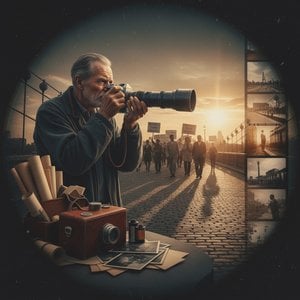
Witnessing History Through Lens & Light: Documentary Photography's Enduring Legacy
Explore the powerful history of documentary photography – from its origins to contemporary masters like Gordon Parks & W. Eugene Smith. Discover how this art form shapes our understanding of society and witness pivotal moments in time.

Οι 10 πιο διάσημοι πίνακες με κυρίαρχο το μαύρο χρώμα | ArtsDot.gr
Ανακαλύψτε τους 10 πιο διάσημους πίνακες με κυρίαρχο το μαύρο χρώμα! Από Rembrandt και Goya, εξερευνήστε την ιστορία, τις τεχνικές & τα συναισθήματα που κρύβουν αυτά τα αριστουργήματα. Βρείτε αναπαραγωγές υψηλής ποιότητας στο ArtsDot.com.
