


Η εικόνα ακολουθεί τις επιλογές σας: , .
Περιγραφή Συλλεκτικού Αντικειμένου
Explore Juan Gris’ ‘Breakfast,’ a striking Cubist still life in grayscale. Discover fragmented forms & geometric abstraction of everyday objects – a unique 1914 masterpiece.
Βιογραφικό Καλλιτέχνη
Ο Χουάν Γκρίς (1887-1927) ήταν ένας ισπανός ζωγράφος και γλύπτης, πρωτοπόρος του κυβισμού. Δημιούργησε έργα με γεωμετρικά σχήματα & έντονες χρωματικές παλέτες, επηρεάζοντας την τέχνη του 20ου αιώνα.
 Περισσότερα
Χειροποίητη Αναπαραγωγή σε Έλαιο
Χειροποίητη ελαιογραφία σε καμβά στο δικό σας μέγεθος και πλαίσιο, κατά παραγγελία από τους καλλιτέχνες μας. ( Μετάβαση σε Εκτυπώσεις Μετάβαση σε Ψηφιακή Αποτέλεσμα)
Περισσότερα για αυτό το έργο
 Προεπισκόπηση σε πραγματική κλίμακα
 Αποστολή
 Κοινοποίηση
 Λεπτομέρειες
 Οδηγός

 Λήψη
Λήψη
 Παρόμοια αντικείμενα συλλογής
 Ακτινογραφία
 Παρουσίαση
 Ερωτήσεις & Απαντήσεις
 Στατιστικά
Κάντε την παραγγελία του πίνακα σας σε τέσσερα απλά βήματα
Πάρτε τον χρόνο σας. Μπορείτε να αλλάξετε οποιαδήποτε απάντηση· η τιμή στο καλάθι παραγγελίας σας ενημερώνεται ανάλογα με κάθε επιλογή.
1 Το πρώτο από τα τέσσερα βήματα
Ποιο μέγεθος θα επιλέξετε;
Αυτές οι διαστάσεις διατηρούν τις αναλογίες του πρωτότυπου έργου. Η απεικόνιση δείχνει την επιλογή σας σε έναν τοίχο, πάνω από έναν καναπέ δύο μέτρων.
Ή εισάγετε δικές διαστάσεις
Επιλέξτε από τις προκαθορισμένες διαστάσεις μας που διατηρούν τις αρχικές αναλογίες του έργου τέχνης.

Πληκτρολογήστε το πλάτος και το ύψος που επιθυμείτε, ώστε να ταιριάζουν στο κάδሮ ή στον τοίχο σας. Ε เนื่องจาก πρόκειται για χειροποίητη ζωγραφική, σε περίπτωση διαστάσεων με διαφορετικό σχήμα, ο καλλιτέχνης μπορεί να ζωγραφίσει λίγο παραπάνω γύρω από το έργο ή να αφαιρέσει ένα μέρος — η επιλογή είναι δική σας. Σας στέλνουμε ένα ψηφιακό mockup για έγκριση πριν ξεκινήσει η δημιουργία του έργου. Η εικόνα που εμφανίζεται σε αυτή τη σελίδα δεν δείχνει το τελικό αποτέλεσμα — μόνο το mockup το αναδεικνύει.
2 Δεύτερο από τέσσερα βήματα
Πώς θα θέλατε να προετοιμαστεί: σε ρολό, σε ξύλινο καρέ ή με κάσα;
Οι τιμές παρακάτω αφορούν το μέγεθος που επιλέξατε στο πρώτο βήμα.
Επιλέξτε τις πλευρές του τεντωμένου καμβά
Επιλέξτε το πλαίσιο σας

Λευκό €1

Αντιστροφή με θολό φινίρισμα €1

Εκτεταμένη περιφέρεια €1

P118B €10

P118H €10

P118W €10

P438Z €10

P508JH €12

P508YH €12

P805H €10

P805Z €10

P919BZ €10

P919G €10

P919XJ €10

P959ZH €10

P968JZ €12

W106C €8

W218G €10

W218JH €8

W218Y €10

W307PJ €10

W316G €10

W316PJ €8

W316Y €10

W398PJ €8

W4111J €10

W500HY €15

W500JH €15

W692G €12

W849H €8

W940BG €15

W953PJ €8

H24-GOLD €30

H24-SILVER €30

H36-GOLD €45

H36-SILVER €45
Με πλαίσιο
Πλαισίωμα: . Συνολικές διαστάσεις με το πλαίσιο: .
3 Το τρίτο από τα τέσσερα βήματα
Θα θέλατε να αλλάξετε κάτι στο έργο;
Οι περισσότεροι απαντούν αρνητικά. Επειδή κάθε πίνακας δημιουργείται με το χέρι, ο καλλιτέχνάς μας μπορεί επίσης να τον προσαρμόσει σύμφωνα με τις επιθυμίες σας.
Μετά την παραγγελία, η ομάδα του ArtsDot.com θα στείλει email στον πελάτη για οδηγίες και θα παρέχει μια προεπισκόπηση (mockup)
4 Το τέταρτο από τα τέσσερα βήματα
Μερικές επιλογές τελικής επεξεργασίας
Όλα είναι προαιρετικά. Οι απαντήσεις που έχουν ήδη επιλεγεί δεν έχουν επιπλέον κόστος.
Ποιος το δημιούργησε;
Παγκόσμια Αποστολή () σε 3-4 εβδομάδες αντί για τις συνήθεις 5 εβδομάδες. (3 Νοέμβριος). Χωρίς συμβιβασμούς στην ποιότητα.
Μια πινακίδα με πληροφορίες, όπως σε ένα μουσείο;
Λεπτομέρειες Χάραξης σε Πλακέτα Χαλκού
This elegant plaque features the artist's name and the title of the artwork, finely engraved for a timeless presentation.
It is made from bronze with a refined, elegant finish. The text is precisely laser-engraved for a sharp and permanent result. Measuring 9x2 cm, the plaque is compact yet easy to read. It's built to be durable and scratch-resistant, offering a professional, museum-quality look. Mounting is simple thanks to the included adhesive backing.
Λεπτομέρειες Διαφανούς Ακρυλικής Πλακίδας
The plaque includes essential engraved details such as the artist's name, the title of the artwork, the date it was created, the type of media used-like oil on canvas or watercolor-a brief description of the piece, and a QR code that links to the complete artwork information.
It is crafted from clear acrylic, offering a sleek, modern appearance. The text is UV-engraved in black to ensure strong visual contrast. With a size of 10x15 cm, it ensures optimal readability. It comes equipped with two metal hooks for secure wall mounting. The plaque is designed to be weather-resistant, making it suitable for various environments, and it includes interactive features that work seamlessly with smartphone scanning.
Λεπτομέρειες Πλακίδας Ακρυλικού Μαύρου Χρώματος
This elegant plaque includes engraved information such as the artist's name, the title of the artwork, the date it was created, the type of media used (like oil on canvas or watercolor), a short description of the artwork, and a QR code for quick access to more information.
The plaque itself is made from refined black acrylic with a premium finish. The text is laser-engraved in white for high contrast and readability. Its size is 10x15 cm, designed to be easy to read. It comes with two metal hooks for professional mounting. The design is sleek and fits any interior style. It is also weather-resistant and durable, with built-in digital integration for mobile compatibility.
Προστατευτικό βερνίκι;
Πότε θα το χρειαστείτε;
✓ Έλεγχος και παραγγελία
Το έργο σας, ακριβώς όπως το παραγγείλατε

breakfast
Μέσο Αναπαραγωγής
Διαστάσεις Αναπαραγωγής
-

Κορυφαίος Καλλιτέχνης
Περισσότερη λεπτομέρεια, φινέτσα και επιπλέον χρόνος παραγωγής
-

Πλαίσιο Αναπαραγωγής
-
-
Για έργα τέχνης ή αναπαραγωγές με πλευρά υπερβαίνουσα των 105 εκ. (περίπου 41 ίντσες), το πλαίσιο θα αποσταλεί αποσυναρμολογημένο, σε μορφή κιτ. Η μέθοδος αυτή διασφαλίζει την ασφαλή παράδοση και προλαμβάνει τυχόν ζημιές κατά τη μεταφορά.
Απαιτείται επαγγελματικός συναρμολογητής - δεν πρόκειται για προϊόν αυτοσυναρμολογίας (DIY).
Το κιτ πρέπει να συναρμολογηθεί και ο καμβάς να τεντωθεί από έμπειρο επαγγελματία πλαίσιο (framer), με τη χρήση κόλλας ξύλου (δεν περιλαμβάνεται), πένσας για ένταση καμβά και σφιγκτήρων, ώστε να διατηρηθεί η ορθογωνιότητα των δοκών κατά τη διάρκεια της ξędρανσης. Η λανθασμένη συναρμολόγηση ή η ανισόρροπη ένταση του καμβά μπορεί να προκαλέσει μόνιμη ζημιά στο έργο και δεν καλύπτεται από την εγγύησή μας.
 Για έργα τέχνης ή αναπαραγωγές με πλευρά υπερβαίνουσα των 105 εκ. (περίπου 41 ίντσες), το πλαίσιο θα αποσταλεί αποσυναρμολογημένο, σε μορφή κιτ. Η μέθοδος αυτή διασφαλίζει την ασφαλή παράδοση και προλαμβάνει τυχόν ζημιές κατά τη μεταφορά.
Περιλαμβάνονται όλες οι μπάρες από μασίφ ξύλο, κομμένες με ακρίβεια στις διαστάσεις τους.
Συναρμολογείται με τις παρεχόμενες βίδες, καθώς και με κόλλα ξύλου για τις γωνιακές ενώσεις, η οποία δεν περιλαμβάνεται και θα πρέπει να προμηθευτεί από τον τεχνίτη σας.
Απαιτούνται επαγγελματικά εργαλεία που δεν περιλαμβάνονται: μια πένσα για σφίξιμο καμβά (τενωτήρας) και σφιγκτήρες για τη διατήρηση της ορθογωνιότητας των καρέ κατά τη διάρκεια της απορρόφησης της κόλλας.
Σημαντικό:
Οι γωνιακές ενώσεις απαιτούν κόλλα ξύλου, οι σπορ πρέπει να συγκρατούνται με σφιγκτήρες μέχρι να στεγνώσει πλήρως η κόλλα, και για την ένταση του καμβά στο συναρμολογημένο πλαίσιο απαιτείται μια πένσα για ένταση καμβά. Κανένα από αυτά δεν περιλαμβάνεται στο σετ. Παρακαλούμε συμβουλευτείτε έναν έμπειρο επαγγελματία κάδραρχο πριν παραγγείλετε αυτό το μέγεθος.

Πληροφορίες έργου
-
-

Βερνίκι Προστασίας
Γυαλιστερό Βερνίκι (ενισχύει τα χρώματα, προστατεύει από το φως και την υγρασία)
-

Προσαρμογή του έργου μου
Παραδείγματα αλλαγών που είναι δυνατές: Αντικατάσταση προσώπου με φωτογραφία του πελάτη· Προσθήκη κατοικίδιου (π.χ., αντικατάσταση γάτας με σκύλο)· Ενσωμάτωση κρυφού μηνύματος στο φόντο· Αλλαγή τοπίου ή στοιχείων στο φόντο.
-

Επείγουσα παραγγελία
Παγκόσμια Αποστολή () σε 3-4 εβδομάδες αντί για τις συνήθεις 5 εβδομάδες. (3 Νοέμβριος). Χωρίς συμβιβασμούς στην ποιότητα.
-
Αποστολή Express
Παγκόσμια Αποστολή () σε 5 εβδομάδες. (10 Νοέμβριος).
Συμπεριλαμβάνεται
Τελική Τιμή
€ 235
Η επιλογή με γυαλί είναι διαθέσιμη μόνο για μεγέθη κάτω από 110 εκ.
Συμπεριλαμβάνεται σε κάθε παραγγελία
- Δωρεάν γρήγορη διεθνής αποστολή
- Κάμβας από Λινό Υψηλής Ποιότητας
- Πλήρης ασφάλιση μεταφοράς
- Εγγύηση επιστροφής δασμών και φόρων εισαγωγής
- Εγγύηση Απόλυτης Ομοιότητας Χρωμάτων
- Πολιτική Επιστροφής 100 Ημερών (Μόνο σε περίπτωση ελαττωμάτων)
- Εγγύηση επιστροφής 100% των χρημάτων
- Προσφορά για πολλαπλές παραγγελίες


Σχετικά Έργα Τέχνης


Χουάν Γκρισ
1887 - 1927, Ισπανία
Βιογραφικό Καλλιτέχνη
A Spanish Visionary of Cubism: The Life and Art of Juan Gris
Born José Victoriano González-Pérez in Madrid in 1887, the artist who would become known as Juan Gris embarked on a journey that profoundly shaped the course of early 20th-century art. His initial path wasn’t immediately aligned with the canvas and brush; he pursued engineering at the prestigious School of Arts and Sciences, revealing an analytical mind – a trait that would later deeply inform his artistic approach. Even during these formative years, a creative spark flickered, evidenced by his contributions to local periodicals through drawings, hinting at a burgeoning visual talent waiting to be unleashed. It was in 1905 that he adopted the pseudonym Juan Gris, a name resonating with newfound identity and purpose as he began formal painting studies under José Moreno Carbonero – a pivotal shift that set him firmly on a trajectory toward artistic innovation.Parisian Awakening and the Embrace of Cubism
The year 1906 marked a transformative relocation to Paris, a city then brimming with an unparalleled artistic energy. Gris immersed himself completely in this vibrant milieu, forging enduring friendships with luminaries such as Henri Matisse, Georges Braque, and Fernand Léger. Initially, he engaged in satirical illustration for publications like *L'Assiette au Beurre*, diligently honing his observational skills and cultivating a keen sense of visual wit – a skill that would prove invaluable in his later work. However, the magnetic pull of Pablo Picasso proved particularly influential, shaping his artistic sensibilities and pushing him toward experimentation with radical new forms. Around 1910, Gris began to dedicate himself wholeheartedly to painting, deliberately moving away from caricature and embracing the burgeoning language of Cubism – a movement that demanded a complete reimagining of representation. This wasn’t mere imitation; it was a deliberate quest to distill the essence of form and space, seeking a new visual order—a fundamental shift in how he perceived and depicted reality.The Geometry of Perception: Style and Key Works
Juan Gris's artistic output is characterized by an extraordinary clarity and intellectual rigor. He didn’t simply deconstruct objects; he meticulously reconstructed them, emphasizing geometric forms and a carefully considered palette. This approach led to what became known as his “crystal period,” exemplified in masterpieces such as *Still Life Before an Open Window* (1912) and *Place Ravignan* (1915). These works showcase a remarkable interplay of planes and angles, creating a sense of depth and solidity while simultaneously challenging conventional notions of perspective. He moved beyond the purely analytical phase, developing a more organized and synthetic approach, prioritizing order and precision. His exploration of color was equally deliberate, often employing harmonious palettes that complemented his geometric structures. Notable examples include *Guitar in front of the sea* (1925), a testament to his simplified forms and unwavering adherence to cubist principles, and *Homage à Pablo Picasso* (1912), which signaled his growing recognition within the avant-garde art world – a bold declaration of artistic independence.The Pioneering Use of Collage
A defining characteristic of Gris’s mature style was his innovative use of *papier collé*, or collage—a technique he embraced wholeheartedly after 1913. He didn't merely incorporate pre-existing images; instead, he meticulously selected real-world materials – newspaper clippings, fabric scraps, and other everyday objects – and integrated them directly into his paintings. This wasn’t simply a decorative element; it was a fundamental shift in the relationship between painting and reality, blurring the boundaries between the two and adding layers of texture, meaning, and social commentary to his work. The inclusion of these fragments—representing the fragmented nature of modern experience—became a hallmark of his style, reflecting both his intellectual curiosity and his engagement with the world around him.Legacy and Lasting Influence
Juan Gris’s contribution to Cubism extends far beyond mere stylistic innovation; he brought an unparalleled level of intellectual depth and structural clarity to the movement. He moved past the analytical phase, towards a more organized and synthetic approach, emphasizing order and precision. His work profoundly influenced the Purist style championed by Amédée Ozenfant and Charles Edouard Jeanneret (Le Corbusier), advocating for a return to classical principles of form and composition. Gris’s emphasis on geometric forms, harmonious color palettes, and the integration of everyday objects into his art established him as a pivotal figure in 20th-century art. His legacy continues to inspire artists today, demonstrating the enduring power of Cubism and the visionary genius of Juan Gris – a Spanish master who reshaped our understanding of perception and representation, leaving an indelible mark on the history of modern art.

Σχετικά άρθρα
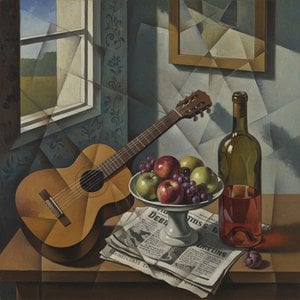
Deconstructing Reality: A Comprehensive Exploration of Cubist Still Life
Explore the revolutionary world of Cubist Still Life with ArtsDot. Discover Picasso & Braque's groundbreaking techniques, its philosophical roots, and lasting impact on modern art. Expert insights for collectors.
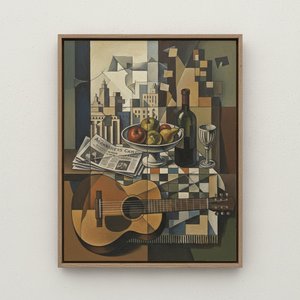
Juan Gris: Cubist Deconstruction & Synthesis – A Comprehensive Exploration
Explore the revolutionary art of Juan Gris – a master of Cubism. Discover his unique approach to deconstruction, vibrant Synthetic Cubist works, and lasting influence on modern art. Expert analysis for collectors.

Deconstructing Reality: Cubism's Revolutionary Impact on 20th-Century Art
Explore the revolutionary world of Cubism with ArtsDot. Discover Picasso & Braque's groundbreaking techniques, its philosophical roots, and lasting impact on modern art. Expert insights for collectors.