


 Προεπισκόπηση
 Αποστολή
 Κοινοποίηση
 Λεπτομέρειες
 Οδηγός

 Λήψη
Λήψη
 Παρόμοια αντικείμενα συλλογής
 Ακτινογραφία
 Παρουσίαση
 Στατιστικά
Self-Portrait
 Oil On Canvas
- WallArt
- Baroque
 1789
1789 70.0 x 60.0 cm
 Εθνική Πινάκοθήκη της Σκωτίας
 Περισσότερα λεπτομέρεια
Χειροποίητη Αναπαραγωγή σε Έλαιο
Χειροποίητη ελαιογραφία σε καμβά στο δικό σας μέγεθος και πλαίσιο, κατά παραγγελία από τους καλλιτέχνες μας. ( Μετάβαση σε Εκτυπώσεις Μετάβαση σε Ψηφιακή Εικόνα)




P118B €10

P118H €10

P118W €10

P438Z €10

P508JH €12

P508YH €12

P805H €10

P805Z €10

P919BZ €10

P919G €10

P919XJ €10

P959ZH €10

P968JZ €12

W106C €8

W218G €10

W218JH €8

W218Y €10

W307PJ €10

W316G €10

W316PJ €8

W316Y €10

W398PJ €8

W4111J €10

W500HY €15

W500JH €15

W692G €12

W849H €8

W940BG €15

W953PJ €8




Επιλέξτε από τις προκαθορισμένες διαστάσεις μας που διατηρούν τις αρχικές αναλογίες του έργου τέχνης.

Πληκτρολογήστε το πλάτος και το ύψος που επιθυμείτε, ώστε να ταιριάζουν στο κάδሮ ή στον τοίχο σας. Ε เนื่องจาก πρόκειται για χειροποίητη ζωγραφική, σε περίπτωση διαστάσεων με διαφορετικό σχήμα, ο καλλιτέχνης μπορεί να ζωγραφίσει λίγο παραπάνω γύρω από το έργο ή να αφαιρέσει ένα μέρος — η επιλογή είναι δική σας. Σας στέλνουμε ένα ψηφιακό mockup για έγκριση πριν ξεκινήσει η δημιουργία του έργου. Η εικόνα που εμφανίζεται σε αυτή τη σελίδα δεν δείχνει το τελικό αποτέλεσμα — μόνο το mockup το αναδεικνύει.
Μετά την παραγγελία, η ομάδα του ArtsDot.com θα στείλει email στον πελάτη με οδηγίες και θα παρέχει μια προεπισκόπηση προσχεδίου
Παγκόσμια Αποστολή () σε 3-4 εβδομάδες αντί για τις συνήθεις 5 εβδομάδες. (25 Οκτώβριος). Χωρίς συμβιβασμούς στην ποιότητα.

Δωρεάν γρήγορη διεθνής αποστολή

Κάμβας από Λινό Υψηλής Ποιότητας

Πλήρης ασφάλιση μεταφοράς

Εγγύηση επιστροφής δασμών και φόρων εισαγωγής

Εγγύηση Απόλυτης Ομοιότητας Χρωμάτων

Πολιτική Επιστροφής 100 Ημερών (Μόνο σε περίπτωση ελαττωμάτων)

Εγγύηση επιστροφής 100% των χρημάτων

Έκπτωση για πολλαπλές παραγγελίες
 Η επιλογή με γυαλί είναι διαθέσιμη μόνο για μεγέθη κάτω από 110 εκ.

Self-Portrait
Τεχνική Αναπαραγωγής
Διαστάσεις Αναπαραγωγής
-


Συνολικό Κόστος
€ 231
The Enigmatic Gaze: Unveiling John Opie’s Self-Portrait
John Opie's 1789 “Self-Portrait” isn’t merely a likeness; it’s a carefully constructed window into the soul of a burgeoning artistic talent. Painted in oil on canvas, this oval composition immediately commands attention with its dramatic chiaroscuro – a masterful manipulation of light and shadow that plunges the viewer into an atmosphere of profound introspection. The portrait depicts Opie himself, not as a triumphant figure, but as a contemplative man, his gaze fixed directly upon the observer, inviting us to share in his thoughts and emotions. The choice of this particular pose—a slight turn of the head, a subtle furrowing of the brow—suggests a mind wrestling with ideas, a quiet intensity that belies the young artist’s burgeoning fame.
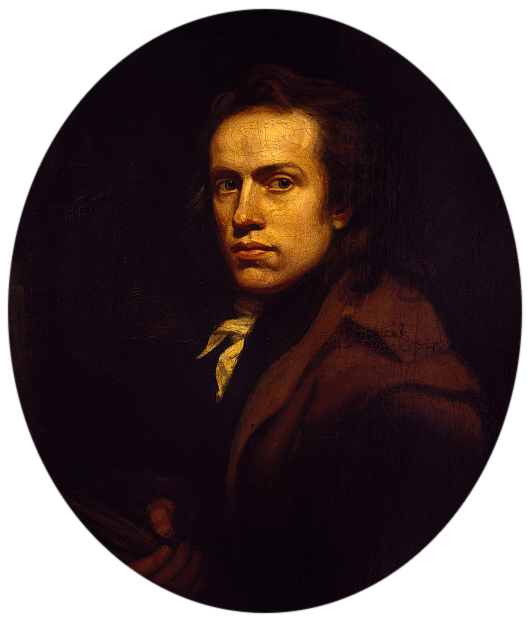
Baroque Drama and Cornish Roots
Opie’s style is deeply rooted in the Baroque tradition, a movement known for its theatricality, emotional intensity, and dramatic use of light. The influence of Caravaggio and Rembrandt—artists who were masters of chiaroscuro—is readily apparent in Opie's work. The stark contrast between the illuminated areas of the face and clothing and the deep shadows that envelop the background creates a sense of depth and volume, drawing our attention to the central figure. This technique wasn’t simply aesthetic; it was a deliberate choice to convey a powerful emotional state – here, a blend of seriousness, intelligence, and perhaps even melancholy. Born in Trevellas, Cornwall, Opie's artistic sensibility was profoundly shaped by his Cornish heritage, evident in the ruggedness of his features and the earthy tones that dominate the palette.
A Study in Form and Texture
Beyond the dramatic lighting, a closer examination reveals Opie’s meticulous attention to detail. The artist skillfully employs lines to define the contours of the face, clothing, and hair, creating a sense of solidity and form. The layering of paint—a technique known as impasto—adds texture to the surface, particularly in the rendering of the fabric draped over his shoulders and the delicate details of his hands. Note the subtle variations in color and tone that suggest the play of light on different surfaces. This careful observation and execution demonstrate Opie’s commitment to realism, a hallmark of his style.
Symbolism and the Portraiture of the Mind
The portrait transcends a simple likeness; it's a symbolic representation of the artist’s inner world. The direct gaze invites engagement, suggesting that Opie is not simply presenting himself but offering an invitation to share in his thoughts. The serious expression—a hallmark of many self-portraits from this period—hints at intelligence, introspection, and perhaps even a touch of melancholy. Considering the historical context – the late 18th century was a time of intellectual ferment and social change – Opie’s portrait can be interpreted as an exploration of identity in a rapidly evolving world. The choice to depict himself alone reinforces this sense of internal reflection, suggesting that the artist is grappling with profound questions about his place in society and his role as a creative force.
Further Exploration
- From Portrait to Icon: Exploring the Aesthetic and Digital Transformation of Self-Representation within Classical Art Traditions: Explore the fascinating evolution of portraiture from classical masterpieces to digital art! Discover symbolism, techniques & societal impact. Expert insights for collectors & enthusiasts at ArtsDot.
- John Opie - Wikipedia: A comprehensive overview of the artist’s life and work, including his early career, London years, and artistic influences.
- Self-Portrait by OPIE, John: A detailed examination of the painting’s composition, technique, and historical significance, with high-resolution images.
Ερωτήσεις & Απαντήσεις
Ποια διάθεση εκφράζει το "Self-Portrait" του Τζον Όπι εντός του Baroque;
Το Melancholic συναίσθημα του "Self-Portrait" συνοδεύει το στυλ της καλλιτεχνικής κίνησης Baroque.
Ποιο μέγεθος αναπαραγωγής προτείνεται για το "Self-Portrait" του Τζον Όπι;
Για το έργο "Self-Portrait" προτείνεται μέγεθος εκτύπωσης Medium. Διατίθενται και άλλα μεγέθη με τις ίδιες αναλογίες.
Τι επίπεδο κορεσμού χρώματος έχει το "Self-Portrait" του Τζον Όπι;
Η παλέτα του "Self-Portrait" έχει Muted σε κορεσμό.
Παρόμοια Έργα Τέχνης


Σχετικά άρθρα

John Constable: Τα 25 Κορυφαία Έργα Τέχνης | Ανακαλύψτε την Αγγλική Υπαίθριο στον Χώρο Σας
Ανακαλύψτε τα 25 κορυφαία έργα τέχνης του John Constable! Εξερευνήστε την αγγλική τοπιογραφία, τον ρομαντισμό και τη μαγεία της φύσης. Υψηλής ποιότητας αναπαραγωγές & ιδέες διακόσμησης στον χώρο σας. Ανακαλύψτε όλα τα αριστουργήματα στο ArtsDot.com

Oil on Canvas: A Historical & Technical Exploration of a Timeless Artistic Medium
Explore the rich history & enduring techniques of oil painting on canvas. Discover the science behind its longevity, conservation practices, and contemporary relevance. Expert insights for art enthusiasts.

The Enduring Legacy of Oil on Canvas: Technique, History & Aesthetic Impact
Explore the rich history & techniques of oil painting – from Renaissance masters to Impressionism. Discover pigments, layering methods, and why this timeless medium endures. Expert insights for artists & art enthusiasts.

John Singer Sargent: Τα 25 Κορυφαία Έργα Τέχνης | ArtsDot.gr
Ανακαλύψτε τα 25 κορυφαία έργα τέχνης του John Singer Sargent! Πορτρέτα, ιμπρεσιονισμός & αριστουργήματα που αποπνέουν εκλεπτυσμό. Βρείτε αναπαραγωγές υψηλής ποιότητας για διακόσμηση τοίχου στο ArtsDot.gr.

Η Διαχρονική Κληρονομιά του Λαδιού στον Καμβά: Τεχνική, Ιστορία & Σύγχρονη Πρακτική
Εξερευνήστε την ιστορία και τις τεχνικές της λαδαιογραφίας. Οδηγός για υλικά, εργαλεία και σύγχρονες προσεγγίσεις. Μάθετε από ειδικούς και ανακαλύψτε τη διαχρονική τέχνη του λαδιού στον καμβά.