

 Προεπισκόπηση σε πραγματική κλίμακα
 Αποστολή
 Κοινοποίηση
 Λεπτομέρειες
 Οδηγός

 Λήψη
Λήψη
 Παρόμοια αντικείμενα συλλογής
 Ακτινογραφία
 Παρουσίαση
 Ερωτήσεις & Απαντήσεις
 Στατιστικά
Skarga`s Sermon

- 224.0 x 397.0 cm


 Περισσότερα
Giclée / Εκτυπώσεις Τέχνης
Εκτύπωση giclée ή σε καμβά ποιότητας μουσείου με γρήγορη παραγωγή και ευέλικτες επιλογές φινιρίσματος. ( Αγορά χειροποίητου πίνακα Μετάβαση σε Ψηφιακή Αποτέλεσμα)




P118B €10

P118H €10

P118W €10

P438Z €10

P508JH €12

P508YH €12

P805H €10

P805Z €10

P919BZ €10

P919G €10

P919XJ €10

P959ZH €10

P968JZ €12

W106C €8

W218G €10

W218JH €8

W218Y €10

W307PJ €10

W316G €10

W316PJ €8

W316Y €10

W398PJ €8

W4111J €10

W500HY €15

W500JH €15

W692G €12

W849H €8

W940BG €15

W953PJ €8




Επιλέξτε από τις προκαθορισμένες διαστάσεις μας που διατηρούν τις αρχικές αναλογίες του έργου τέχνης.

Εισάγετε το πλάτος και το ύψος που επιθυμείτε, ώστε να ταιριάζουν στο κάδሮ ή στον τοίχο σας. Μια εκτύπωση μπορεί μόνο να υποστεί κοψίμό και ποτέ να μην γίνει μεγαλύτερη από την αρχική εικόνα, επομένως η επιλογή μεγέθους με διαφορετικό σχήμα συνεπάγεται απώλεια ενός μέρους της εικόνας. Σας στέλνουμε ένα ψηφιακό mockup για έγκριση πριν προχωρήσουμε σε οποιαδήποτε εκτύπωση. Η εικόνα που εμφανίζεται σε αυτή τη σελίδα δεν δείχνει την πραγματική κοπή — μόνο το mockup την παρουσιάζει.
Παγκόσμια Αποστολή () σε 2 εβδομάδες αντί για τις συνήθεις 4/5 εβδομάδες. (4 Νοέμβριος)

Δωρεάν γρήγορη διεθνής αποστολή

Κάμβας από Λινό Υψηλής Ποιότητας

Πλήρης ασφάλιση μεταφοράς

Εγγύηση επιστροφής δασμών και φόρων εισαγωγής

Εγγύηση Απόλυτης Ομοιότητας Χρωμάτων

Πολιτική Επιστροφής 100 Ημερών (Μόνο σε περίπτωση ελαττωμάτων)

Εγγύηση επιστροφής 100% των χρημάτων

Προσφορά για πολλαπλές παραγγελίες
 Η επιλογή με γυαλί είναι διαθέσιμη μόνο για μεγέθη κάτω από 110 εκ.

Skarga`s Sermon
Giclée / Εκτυπώσεις Τέχνης
Διαστάσεις Αναπαραγωγής
-


Τελική Τιμή
€ 56
A Dramatic Encounter in 17th-Century Poland
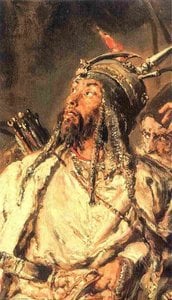
In the grand tapestry of Polish Romanticism, few works command the room with as much gravity and historical weight as Jan Matejko’s masterpiece, Skarga's Sermon. Created in 1864, this monumental oil on canvas serves as a window into a pivotal moment of spiritual and political tension. The scene captures a gathering of souls within a dimly lit room, where the air seems thick with the weight of impending change. At the heart of this composition is the Jesuit priest Piotr Skarga, whose powerful sermon acts as the catalyst for the profound emotions displayed by those gathered around him. Through his commanding presence, Matej and the artist invites us to witness not just a religious service, but a moment of intense national reflection.
The painting is a triumph of narrative depth, where every figure contributes to a larger story of duty and dissent. Dressed in the intricate, old-fashioned attire of the 17th century, the individuals present—some standing in rapt attention, others lost in somber thought—embody the various facets of a society at a crossroads. The artist masterfully utilizes body language and facial expressions to convey the underlying tensions of an era marked by upheaval. It is a scene that transcends mere historical documentation, offering instead a visceral experience of the psychological landscape of Poland during a time of great turmoil.
Mastery of Light, Color, and Texture
Technically, Skarga's Sermon is a testament to Matejko’s extraordinary skill in handling large-scale oil painting. The artist employs a somber and dramatic color palette, dominated by deep browns, heavy blacks, and striking reds. This choice of tones does more than just set the historical stage; it creates a chiaroscuro effect that pulls the viewer into the very center of the congregation. The light seems to struggle against the shadows, highlighting the textures of fine fabrics, the glint of metal, and the weathered skin of the listeners, lending an almost tactile quality to the canvas.
For the discerning collector or interior designer, this work offers an unparalleled sense of prestige and intellectual depth. The composition is dense and layered, rewarding repeated viewings with new discoveries—from the subtle interplay of light on a dining table to the quiet, brooding presence of figures tucked into the periphery. A high-quality reproduction of such a piece brings more than just decoration to a space; it introduces a profound sense of history and a sophisticated, dramatic atmosphere that can serve as the definitive focal point of a curated gallery or an elegant study.
A Legacy of National Identity
Beyond its aesthetic brilliance, Skarga's Sermon carries a heavy symbolic burden. As a work of historical painting, it was designed to stir the soul and remind the viewer of the complexities of the Polish spirit. The sermon itself, delivered by Skarga, is a metaphor for the call to conscience and the necessity of unity in the face of external threats. This emotional resonance is what has allowed the painting to endure as one of Jan Matejko's most celebrated achievements, housed within the prestigious National Museum in Warsaw.
To possess or display a reproduction of this work is to engage with a piece of cultural heritage that speaks of resilience and introspection. It is an ideal choice for those who appreciate art that tells a story, offering a sophisticated blend of historical accuracy and Romantic passion. Whether viewed as a study in light and shadow or as a profound historical narrative, Skarga's Sermon remains an enduring icon of artistic and national importance.
Ερωτήσεις και Απαντήσεις
Ποιο μέγεθος εκτύπωσης του "Skarga`s Sermon" του Γιάννης Ματεγκόφσκι ταιριάζει στο προτεινόμενο δωμάτιο;
Η προτεινόμενη διαρρύθμιση για το "Skarga`s Sermon" του Γιάννης Ματεγκόφσκι: μια εκτύπωση μεγέθους Large σε έναν/μια Hotel Lobby.
Πότε δημιουργήθηκε το "Skarga`s Sermon" και σε ποιο καλλιτεχνικό ρεύμα ανήκει;
Το έργο "Skarga`s Sermon" του Γιάννης Ματεγκόφσκι χρονολογείται στο 1864 και ανήκει στο Romanticism.
Πώς συνδέεται το "Skarga`s Sermon" με το υπόλοιπο έργο του/της Γιάννης Ματεγκόφσκι;
Στο συνολικό έργο του/της Γιάννης Ματεγκόφσκι, το "Skarga`s Sermon" εντάσσεται στο στυλ του/της Romanticism, συνδέοντας τα θέματα του/της romanticism influence, polish historical narrative, counter reformation themes, political rebuke of elite, national identity preservation, key early masterpiece.
Σχετικά Έργα Τέχνης


![The Battle Of Grunwald [tannenberg] — Γιάννης Ματεγκόφσκι, Romantic Historical Painting](/media/artworks/images-thumb/76/63/7663bffc0e03f3032abe818c6c091ed6.jpg)


Βιογραφικό Καλλιτέχνη
Early Life and Education
Jan Alojzy Matejko (also known as Jan Mateyko; June 24, 1838 – November 1, 1893) was a Polish painter, a leading 19th-century exponent of history painting, known for depicting nodal events from Polish history. His most famous works include large oil on canvas paintings like *Battle of Grunwald*, paintings of numerous other battles and court scenes, and a gallery of Polish kings. He is counted among the most celebrated Polish painters. Matejko was born in the Free City of Krakow, part of the Polish territory annexed by Austria during the Partitions of Poland. His father, Franciszek Ksawery Matejko (Czech: *František Xaver Matějka*) (born 1789 or January 13, 1793, died October 26, 1860), a Czech from the village of Roudnice, was a graduate of the Hradec Králové school who later became a tutor and music teacher. He first worked for the Wodzicki family in Kościelniki, Poland, then moved to Krakow, where he married Joanna Karolina Rossberg (Rozberg), a woman of Czech and German descent. Jan was the ninth child of eleven that his parents had. He grew up in a kamienica building on Floriańska Street. After the death of his mother in 1845, Jan and his siblings were cared for by his maternal aunt, Anna Zamojska. At a young age he witnessed the Kraków revolution of 1846 and the 1848 siege of Kraków by the Austrians, events which ended the existence of the Free City of Kraków. His two older brothers served in them under General Józef Bem; one died and the other was forced into exile. He attended St. Ann's High School, which he dropped out of in 1851 because of poor grades. Despite that and because of his exceptional talent he studied at the School of Fine Arts in Kraków from 1852 to 1858. His teachers included Wojciech Korneli Stattler and Władysław Łuszczkiewicz. He selected historical painting as his specialization, and finished his first major work, *Tsars Shuyski before Zygmunt III* (*Carowie Szujscy przed Zygmuntem III*) in 1853 (",Artistic Career
Matejko’s artistic journey began with an early fascination for art and a dedication to mastering his craft. His first significant commission, *Tsars Shuyski before Zygmunt III*, solidified his reputation as a painter of monumental historical scenes. From 1855 onwards, he actively participated in exhibitions at the Kraków Society of Friends of Fine Arts, showcasing his evolving style and expanding repertoire. He quickly gained recognition for his ability to convey emotion and drama through color and composition—characteristics that would define his oeuvre. Notable works include:- Rejtan (1866): A colossal oil on canvas depicting the pivotal moment of the Polish uprising against Russian rule in 1863. Matejko meticulously researched archival documents and utilized innovative techniques to capture the dynamism and intensity of the battlefield, establishing himself as a pioneer of Romanticism.
- Union of Lublin (1869): This monumental painting portrays the signing ceremony of the Union Agreement between Poland and Lithuania in 1386, symbolizing a crucial juncture in Polish history. Matejko’s masterful brushwork and dramatic lighting contribute to an unforgettable portrayal of regal splendor and political significance.
- Battle of Grunwald (1878): Considered Matejko’s magnum opus, *Battle of Grunwald* commemorates the decisive victory of Polish forces against Teutonic Knights in 1410—a triumph that secured Poland's independence. The painting is renowned for its breathtaking scale and meticulous detail, reflecting Matejko’s unwavering commitment to historical accuracy and artistic excellence.
Museological Contributions and Legacy
Matejko’s influence extended beyond his paintings; he played a pivotal role in shaping the intellectual landscape of Kraków and fostering artistic talent. He served as director at the Jan Matejko Academy of Fine Arts, nurturing generations of artists who would carry on his legacy. Among his students were prominent figures such as Maurycy Gottlieb, Jacek Malczewski, Józef Mehoffer, and Stanisław Wyspiański—artists whose works continue to resonate with audiences worldwide. His unwavering belief in the transformative power of art and his dedication to preserving Polish cultural heritage cemented his place as a national icon.References
Jan Matejko (wikipedia.org)
Γιάννης Ματεγκόφσκι
1838 - 1893 , Πολωνία
Γρήγορα στοιχεία
- Artistic Movement Or Style: Ρομαντισμός
- Artists Or Movements Influenced By This Artist: ['Maurycy Gottlieb']
- Artists Who Influenced This Artist:
- Wojciech Korneli Stattler
- Władysław Łuszczkiewicz
- Date Of Birth: 24 Ιουνίου 1838
- Date Of Death: 1 Νοεμβρίου 1893
- Full Name: Jan Alojzy Matejko
- Nationality: Πολωνός
- Notable Artworks:
- Μάχη του Γκρούνβαλντ
- Ένωση Λουμπλίν
- Place Of Birth: Κρακόβια, Πολωνία
Σχετικά άρθρα

The Evocative Brushstroke: Exploring Emotion, Individuality & the Sublime in Romanticism's Artistic Landscape
Explore the passionate world of Romanticism! Discover masterpieces by Friedrich & Goya, delve into the sublime, and understand the movement's lasting impact on art history. Expert analysis & insights at ArtsDot.

Jan Gossaert (Mabuse): Pioneering Renaissance Style & the Birth of Netherlandish Antiquity
Explore the groundbreaking art of Jan Gossaert (Mabuse), a pioneer of Renaissance painting in the Low Countries. Discover his Romanist style, stunning portraits, and influence on Northern European art history.

Jan Matejko: Historical Narrative & National Identity in 19th-Century Polish Painting
Explore the powerful historical paintings of Jan Matejko, Poland's national artist. Discover his iconic works & learn how he shaped Polish identity in the 19th century. High-quality reproductions available.

Οι 10 Κορυφαίοι πίνακες που καθόρισαν τον Ρομαντισμό | ArtsDot.gr
Ανακαλύψτε τους 10 κορυφαίους πίνακες που καθόρισαν τον Ρομαντισμό! Delacroix, Goya & άλλοι μεγάλοι καλλιτέχνες. Ιστορίες τέχνης, τεχνικές και έμπνευση για διακόσμηση σπιτιού. Βρείτε αναπαραγωγές υψηλής ποιότητας στο ArtsDot.com

Stanisław Wyspiański: Symbolism, National Identity & the Polish Secession
Explore the life & work of Stanisław Wyspiański, a pivotal figure in Polish Symbolism and the Young Poland movement. Discover his iconic paintings, dramas, and stained glass designs reflecting national identity & artistic innovation.