
- Αρχική

- Εκτύπωση σε καμβά
- Jacob van Campen
- Mercury, Argus and Io

 Αγοράστε την αναπαραγωγή Αγορά ψηφιακής εικόνας
 Αποστολή
 Κοινοποίηση
 Details
 Προσθήκη στα αγαπημένα

 Λήψη
Λήψη
 Παρόμοια έργα
 X-Ray
X-Ray
 Παρουσίαση
Mercury, Argus and Io
 Oil On Canvas
- WallArt
- Baroque
 1630
1630 204.0 x 193.0 cm
 Μαυριτσχούις
Giclée / Εκτυπώσεις Τέχνης
Εκτύπωση giclée ή σε καμβά ποιότητας μουσείου με γρήγορη παραγωγή και ευέλικτες επιλογές φινιρίσματος.
 Περισσότερες πληροφορίες



P118B $10

P118H $10

P118W $10

P438Z $10

P508JH $12

P508YH $12

P805H $10

P805Z $10

P919BZ $10

P919G $10

P919XJ $10

P959ZH $10

P968JZ $12

W106C $8

W218G $10

W218JH $8

W218Y $10

W307PJ $10

W316G $10

W316PJ $8

W316Y $10

W398PJ $8

W4111J $10

W500HY $15

W500JH $15

W692G $12

W849H $8

W940BG $15

W953PJ $8




Επιλέξτε από τις προκαθορισμένες διαστάσεις μας που διατηρούν τις αρχικές αναλογίες του έργου τέχνης.

Μπορείτε να εισαγάγετε δικές σας διαστάσεις ώστε να ταιριάξουν με ένα συγκεκριμένο πλαίσιο ή χώρο. Εάν το επιλεγμένο μέγεθος δεν συμπίπτει με τις αναλογίες της πρωτότυπης εικόνας, θα κόψουμε το έργο τέχνης ή θα επεκτείνουμε την εικόνα με καθρεφτισμένη ή μονόχρωμη ατέλεια. Θα σας αποσταλεί ένα ψηφιακό mockup για έγκρισή σας πριν από την έναρξη της παραγωγής.
Παρακαλούμε σημειώστε ότι η προεπισκόπηση στην οθόνη δεν αντικατοπτρίζει την πραγματική κοπή ή επέκταση. Μόνο το mockup θα δείξει με ακρίβεια την τελική σύνθεση.
Παρόλο που είναι διαθέσιμες προσαρμοσμένες διαστάσεις, προτείνουμε την επιλογή μιας διάστασης από τη προκαθορισμένη λίστα για τη διατήρηση των αρχικών αναλογιών.
Παγκόσμια Αποστολή () σε 2 εβδομάδες αντί για τις συνήθεις 4/5 εβδομάδες. (1 Ιούλιος)

Δωρεάν Παγκόσμια Αποστολή Express

Κάμβας από Λινό Υψηλής Ποιότητας

Πλήρης ασφάλιση μεταφοράς

Εγγύηση Επιστροφής Δασμών και Φόρων

Εγγύηση Απόλυτης Ομοιότητας Χρωμάτων

Πολιτική Επιστροφής 60 Ημερών (Μόνο σε περίπτωση ελαττωμάτων)

Εγγύηση επιστροφής 100% των χρημάτων

Έκπτωση για πολλαπλές παραγγελίες
 Η επιλογή με γυαλί είναι διαθέσιμη μόνο για μεγέθη κάτω από 110 εκ.

Mercury, Argus and Io
Giclée / Εκτυπώσεις Τέχνης
Διαστάσεις Αναπαραγωγής
-


Τελική Τιμή
-
Περιγραφή Συλλεκτικού Αντικειμένου
Mercury, Argus and Io by Jacob van Campen
Jacob van Campen’s “Mercury, Argus & Io” (1630) stands as a testament to the Baroque period's masterful blend of architectural precision and dramatic emotional expression. Painted in Haarlem during the Dutch Golden Age, this monumental oil on canvas depicts a mythological scene steeped in symbolism and rendered with meticulous detail—a captivating glimpse into the artistic sensibilities of its time.
Subject Matter & Narrative
The artwork portrays Mercury, Argus (the watchful shepherd), and Io (Jupiter’s adulterous wife), figures from Greek mythology. The narrative unfolds as Mercury attempts to persuade Argus to protect Io from Jupiter's relentless pursuit. This tale speaks to themes of deception, vigilance, and the consequences of defying divine authority—concepts prevalent in Baroque art’s preoccupation with moral allegory.
Style & Technique: Baroque Realism
Van Campen adheres to Baroque realism, prioritizing accurate anatomical representation alongside intense emotional impact. The painting utilizes dynamic composition—figures intertwine amidst livestock under a stormy sky—creating a palpable sense of movement and tension. Lines delineate muscular forms and animal contours, reinforcing the theatrical quality of the scene. Brushwork is exceptionally textured, particularly in capturing the woolly fleece of sheep and the rough hide of bulls, demonstrating Van Campen’s mastery of oil painting technique.
Color Palette & Lighting
The color palette is rich and dark—dominated by deep blues and browns—contributing to an atmosphere of drama and solemn contemplation. Dramatic chiaroscuro lighting highlights key figures and areas of interest, emphasizing the central nude man playing a flute and drawing attention to the expressive faces of the women involved. This masterful use of light and shadow enhances the painting’s emotional resonance and underscores its symbolic significance.
Symbolism & Artistic Influences
The flute symbolizes communication or magic—a subtle nod to Mercury's role as messenger god—while the presence of animals – notably dogs and livestock – adds layers of narrative complexity. Notably, Van Campen’s work reflects influences from Paulus Bor and the Utrecht Caravaggisti, demonstrating a commitment to innovative artistic approaches. The painting’s grandeur and meticulous detail align with the architectural ambitions of its patron, mirroring the stylistic ideals championed by architects like Pieter Steenwyck.
Historical Context & Legacy
"Mercury, Argus & Io" exemplifies the Baroque fascination with mythological narratives and moral instruction—a genre favored by aristocratic patrons eager to convey virtue and piety. Its enduring appeal lies in its ability to evoke profound emotion and capture the grandeur of artistic achievement. Today, reproductions of this masterpiece continue to inspire admiration for Van Campen’s skill and contribute to a deeper understanding of Baroque art's cultural significance.
Παρόμοια Έργα Τέχνης


Βιογραφία Καλλιτέχνη
Jacob van Campen: Life and Legacy
Early Life and Background
Jacob van Campen was born in Haarlem, Netherlands, in 1596. He came from a relatively prosperous background, inheriting the estate of Randenbroek near Amersfoort from his mother. He significantly expanded and embellished this estate, later commissioning Caesar van Everdingen to decorate it. Van Campen never married but had one son, Alexander van Campen.
Artistic Development and Influences
Van Campen was a selective artist, carefully choosing his projects. His artistic development saw him move towards a distinctive style blending architectural precision with Baroque dynamism. He was notably influenced by Paulus Bor, one of the founders of the Bentvueghels – a group of Dutch painters known for their unconventional and often satirical work. This influence is visible in some similarities between Van Campen’s paintings and wall decorations, such as those at Paleis Huis ten Bosch.
Architectural Achievements
Van Campen's primary legacy lies in his architectural contributions. He designed numerous churches, including those at Renswoude and Hooge Zwaluwe, and the Nieuwe Kerk in Haarlem. The Nieuwe Kerk’s design was so significant that Pieter Saenredam created three paintings and eight engravings documenting it. Beyond churches, he also designed gates and towers for prominent Amsterdam landmarks like the Westerkerk and Nieuwe Kerk.
- Mauritshuis: Perhaps his most famous work, this palace in The Hague now houses a renowned collection of Dutch Golden Age paintings.
- Amsterdam's Royal Palace: Van Campen played a key role in the design of this iconic building, originally conceived as Amsterdam’s Town Hall.
Painting and Decorative Work
While primarily known as an architect, Van Campen was also a skilled painter. He created notable still life paintings, often featuring intricate arrangements of objects symbolizing mortality and the passage of time. His wall decorations, particularly at Paleis Huis ten Bosch, demonstrate his ability to integrate painting with architectural space.
- Still Life Themes: Van Campen’s still lifes frequently included books, musical instruments, scientific instruments (like celestial globes), and symbolic objects like skulls and owls.
Historical Significance
Jacob van Campen was a pivotal figure in introducing Classicism to Dutch Baroque design. He bridged the gap between earlier Renaissance influences and the evolving artistic sensibilities of the 17th century. His architectural designs helped shape the urban landscape of the Netherlands, and his work continues to be admired for its elegance, precision, and innovative use of space. He died in 1657 and was buried at Randenbroek, the estate he so carefully cultivated.

Jacob van Campen
1596 - 1657 , Netherlands
Σημαντικά στοιχεία
- Birth Date: 1596
- Birth Place: Haarlem, Netherlands
- Death Date: 1657
- Influenced: Pieter Saenredam
- Influenced By: Paulus Bor
- Movement: Dutch Golden Age, Dutch Classicism, Baroque
- Name: Jacob van Campen
- Nationality: Dutch
- Notable Works: Mauritshuis, Amsterdam's Royal Palace, Nieuwe Kerk (Haarlem)
Σχετικά Άρθρα
Baroque Realism: Illusion, Emotion & the Dramatic Transformation of 17th-Century Art
Explore the dramatic world of Baroque Realism! Discover iconic artists like Caravaggio & Rubens, their techniques, and the movement's lasting impact on art history. Expert insights for collectors & enthusiasts.


Οι 10 Κορυφαίοι Πίνακες του 17ου Αιώνα: Ιστορία, Τέχνη & Διακόσμηση με την ArtsDot
Ανακαλύψτε τους 10 κορυφαίους πίνακες του 17ου αιώνα! Rembrandt, Vermeer & Caravaggio ζωντανεύουν. Ιστορία τέχνης, μπαρόκ στυλ και διακόσμηση με την ArtsDot. Εξερευνήστε τη συλλογή online.

Nicolas Poussin: Classicism, Allegory & Order in 17th-Century French Painting
Explore the life & work of Nicolas Poussin, a master of French Classicism. Discover his allegorical paintings, Roman influences, and enduring impact on art history. Expert analysis & insights.

Echoes of Olympus: Mythological Narratives in Western Art Through the Ages
Explore the captivating history of mythological narratives in Western art! From ancient Greece to modern masterpieces, discover iconic artworks & symbolism. Expert analysis and high-quality reproductions at ArtsDot.
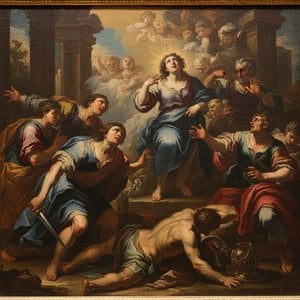
The Dramatic Flourish: Exploring Baroque Painting's Emotional Intensity & Artistic Innovations
Explore the dramatic world of Baroque painting! Discover its history, defining characteristics, iconic artists like Caravaggio & Rubens, and lasting influence on Western art. Expert insights for collectors.

