


 Προεπισκόπηση
 Αποστολή
 Κοινοποίηση
 Λεπτομέρειες

 Λήψη
Λήψη
 Παρόμοια έργα
 Ακτινογραφία
 Παρουσίαση
Blowing Bubbles

 Περισσότερα λεπτομέρεια
Giclée / Εκτυπώσεις Τέχνης
Εκτύπωση giclée ή σε καμβά ποιότητας μουσείου με γρήγορη παραγωγή και ευέλικτες επιλογές φινιρίσματος. ( Μετάβαση σε χειροποίητη ζωγραφική Μετάβαση σε Εικόνα)




































Επιλέξτε από τις προκαθορισμένες διαστάσεις μας που διατηρούν τις αρχικές αναλογίες του έργου τέχνης.

Μπορείτε να εισαγάγετε δικές σας διαστάσεις ώστε να ταιριάξουν με ένα συγκεκριμένο πλαίσιο ή χώρο. Εάν το επιλεγμένο μέγεθος δεν συμπίπτει με τις αναλογίες της πρωτότυπης εικόνας, θα κόψουμε το έργο τέχνης ή θα επεκτείνουμε την εικόνα με καθρεφτισμένη ή μονόχρωμη ατέλεια. Θα σας αποσταλεί ένα ψηφιακό mockup για έγκρισή σας πριν από την έναρξη της παραγωγής.
Παρακαλούμε σημειώστε ότι η προεπισκόπηση στην οθόνη δεν αντικατοπτρίζει την πραγματική κοπή ή επέκταση. Μόνο το mockup θα δείξει με ακρίβεια την τελική σύνθεση.
Παρόλο που είναι διαθέσιμες προσαρμοσμένες διαστάσεις, προτείνουμε την επιλογή μιας διάστασης από τη προκαθορισμένη λίστα για τη διατήρηση των αρχικών αναλογιών.
Παγκόσμια Αποστολή () σε 2 εβδομάδες αντί για τις συνήθεις 4/5 εβδομάδες. (11 Αύγουστος)

Δωρεάν Παγκόσμια Αποστολή Express

Κάμβας από Λινό Υψηλής Ποιότητας

Πλήρης ασφάλιση μεταφοράς

Εγγύηση Επιστροφής Δασμών και Φόρων

Εγγύηση Απόλυτης Ομοιότητας Χρωμάτων

Πολιτική Επιστροφής 60 Ημερών (Μόνο σε περίπτωση ελαττωμάτων)

Εγγύηση επιστροφής 100% των χρημάτων

Έκπτωση για πολλαπλές παραγγελίες
 Η επιλογή με γυαλί είναι διαθέσιμη μόνο για μεγέθη κάτω από 110 εκ.

Blowing Bubbles
Giclée / Εκτυπώσεις Τέχνης
Διαστάσεις Αναπαραγωγής
-


Τελική Τιμή
$ 62
Παρόμοια Έργα Τέχνης


Βιογραφία Καλλιτέχνη
Jean-Léon Gérôme: The Master of Grand Historical Scenes
Jean-Léon Gérôme, born in Vesoul, France, on May 11th, 1824, and passing away in Paris on January 10th, 1904, stands as a towering figure in the history of 19th-century art. Often described as “arguably the world’s most famous living artist by 1880,” Gérôme was a painter and sculptor whose meticulous realism and dramatic compositions captivated audiences across Europe and beyond. His career spanned several decades, marked by an unwavering dedication to historical painting, Orientalist subjects, and portraiture – all executed with a technical mastery that cemented his place as one of the most successful artists of his time.
Gérôme’s early artistic development was shaped by his initial training under Claude-Basile Cariage in his hometown. Recognizing his talent, Cariage secured him a scholarship to study at the École des Beaux-Arts in Paris, where he later honed his skills under the tutelage of Paul Delaroche and Charles Gleyre. These formative years instilled within him a deep appreciation for classical techniques and a commitment to capturing historical narratives with unparalleled detail. His time spent traveling through Italy, Florence, Rome, and Pompeii profoundly influenced his artistic vision, exposing him to the grandeur of ancient civilizations and inspiring a lifelong fascination with their stories.
The Rise of Academic Grandeur
Gérôme’s career truly blossomed during the Second Empire in France, a period characterized by a renewed interest in classical art and a desire to project an image of national strength. He quickly ascended through the ranks of the Parisian Salon, becoming one of the most sought-after artists for commissions from royal patrons and wealthy collectors. His paintings were not merely decorative; they were carefully constructed historical dramas designed to evoke patriotic fervor and celebrate heroic deeds. Works like *The Landing of Charlemagne* (1856) and *Bellerophon Stealing the Winds from Boreas* (1863) exemplify this approach, showcasing his ability to orchestrate complex scenes with a remarkable eye for detail and dramatic lighting.
However, Gérôme’s artistic ambitions extended beyond purely historical subjects. He also explored Orientalist themes, depicting exotic locales and encounters with the peoples of the Middle East and North Africa. These paintings, while often criticized for perpetuating colonial stereotypes, demonstrated his technical skill and his willingness to venture into uncharted artistic territory. His meticulous research and attention to detail—evident in works like *The Tuileries Promenade* (1862)—were hallmarks of his style, regardless of the subject matter.
Influences and Legacy
Gérôme’s artistic journey was profoundly shaped by several key influences. The Baroque painter Peter Paul Rubens served as a major inspiration, particularly in his use of dynamic composition and vibrant color palettes. He also admired the works of Michelangelo, whose anatomical precision and dramatic storytelling resonated deeply with Gérôme's own artistic sensibilities. Furthermore, he maintained close ties with other prominent artists of his time, including Eugène Delacroix, who, despite their stylistic differences, recognized Gérôme’s talent and influence.
Gérôme’s legacy is complex and multifaceted. While some critics have dismissed his work as overly polished and lacking in emotional depth, his technical skill and historical accuracy are undeniable. He trained a generation of artists, including Mary Cassatt, Thomas Eakins, and Osman Hamdi Bey, who went on to make significant contributions to the art world. His paintings continue to be studied and admired for their meticulous detail, dramatic compositions, and their reflection of the artistic conventions and cultural values of 19th-century France. He remains a pivotal figure in the history of academic painting, demonstrating both its strengths and limitations.
Notable Works
- The Landing of Charlemagne (1856): A monumental depiction of Charlemagne’s arrival in Italy, showcasing his military prowess and establishing a powerful visual narrative.
- Bellerophon Stealing the Winds from Boreas (1863): An iconic image depicting Bellerophon's heroic feat of stealing the winds from Boreas, demonstrating Gérôme’s mastery of dynamic composition and dramatic lighting.
- The Tuileries Promenade (1862): A meticulously detailed scene capturing a bustling Parisian promenade, highlighting Gérôme’s observational skills and his ability to render the nuances of everyday life.
- The Orientalist Painter in Egypt (1875): An example of Gérôme's exploration of Orientalist themes, depicting an artist immersed in the exotic landscapes of Egypt.
A Teacher and a Master
Beyond his own prolific output, Gérôme was a dedicated teacher, shaping the artistic careers of numerous aspiring painters. His studio became a hub for artistic innovation and experimentation, attracting students from across Europe. His influence extended beyond technical skill; he instilled in his pupils a deep appreciation for historical accuracy, meticulous observation, and the power of visual storytelling. The artists who studied under him—including Mary Cassatt, Thomas Eakins, and Osman Hamdi Bey—carried forward Gérôme’s legacy, contributing to the diverse landscape of 19th-century art.

henri pierre picou
1824 - 1895 , France
Σημαντικά στοιχεία
- Artistic Movement Or Style: Academicism, Orientalism
- Artists Or Movements Influenced By This Artist:
- Cassatt
- Eakins
- Artists Who Influenced This Artist:
- Delaroche
- Rubens
- Date Of Birth: May 11, 1824
- Date Of Death: January 10, 1904
- Full Name: Jean-Léon Gérôme
- Nationality: French
- Notable Artworks:
- The Landing on Egypt
- The Horseman
- Pollice Verso
- Place Of Birth: Vesoul, France
Σχετικά Άρθρα

The Enchanted Canopy: Exploring Forests in Art History – From Romantic Idealization to Ecological Consciousness
Explore the rich history of forests in art! Discover Romantic masterpieces by Friedrich & Monet, Symbolist depths, and contemporary visions. Find inspiration & quality reproductions at ArtsDot.

Depicting Life's Stages: 'Scene' as Narrative in Art History
Explore the rich history of genre painting – art that depicts everyday life. Discover Dutch Masters, hidden symbolism & its enduring influence on art history. Learn more at ArtsDot.
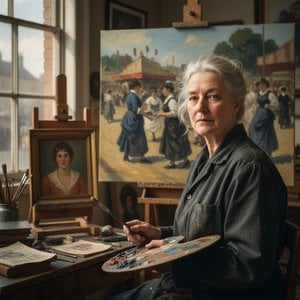
Dame Laura Knight: Reclaiming the Female Gaze in Modern British Art
Explore the life & work of Dame Laura Knight, a pioneering British artist who challenged conventions with her vibrant depictions of theatre, ballet, and wartime scenes. Discover her feminist legacy & artistic innovations.

Idyllic Visions: Exploring the Pastoral Scene in Art History – From Arcadia to Modern Interpretations
Explore the captivating history of pastoral art from classical Arcadia to modern masterpieces. Discover key artists like Millet & Cole at ArtsDot. Find serene landscape paintings for your home.

Οι 10 θρυλικοί πίνακες λαδιού σε πάνελ που άλλαξαν την τέχνη – ArtsDot.gr
Ανακαλύψτε τους 10 θρυλικούς πίνακες λάδι σε πάνελ που έγραψαν ιστορία! Μάθετε για τους διάσημους ζωγράφους, τις τεχνικές τους και τα κρυφά νοήματα των έργων τους. Βρείτε την τέλεια αναπαραγωγή στον ArtsDot.gr.

