


 Δείτε σε πραγματικό χώρο
 Αποστολή
 Κοινοποίηση
 Λεπτομέρειες

 Λήψη
Λήψη
 Παρόμοια αντικείμενα συλλογής
 Ακτινογραφία
 Παρουσίαση
Fruit Displayed on a Stand
 Acrylic On Canvas
- WallArt
- Impressionist Painting
 1882
1882 76.0 x 100.0 cm
 Μουσείο Τέχνης Βοστώνης
 Διαβάστε περισσότερα
Giclée / Εκτυπώσεις Τέχνης
Εκτύπωση giclée ή σε καμβά ποιότητας μουσείου με γρήγορη παραγωγή και ευέλικτες επιλογές φινιρίσματος. ( Αγορά χειροποίητου πίνακα Αγορά ψηφιακής εικόνας)




P118B $10

P118H $10

P118W $10

P438Z $10

P508JH $12

P508YH $12

P805H $10

P805Z $10

P919BZ $10

P919G $10

P919XJ $10

P959ZH $10

P968JZ $12

W106C $8

W218G $10

W218JH $8

W218Y $10

W307PJ $10

W316G $10

W316PJ $8

W316Y $10

W398PJ $8

W4111J $10

W500HY $15

W500JH $15

W692G $12

W849H $8

W940BG $15

W953PJ $8




Επιλέξτε από τις προκαθορισμένες διαστάσεις μας που διατηρούν τις αρχικές αναλογίες του έργου τέχνης.

Μπορείτε να εισαγάγετε δικές σας διαστάσεις ώστε να ταιριάξουν με ένα συγκεκριμένο πλαίσιο ή χώρο. Εάν το επιλεγμένο μέγεθος δεν συμπίπτει με τις αναλογίες της πρωτότυπης εικόνας, θα κόψουμε το έργο τέχνης ή θα επεκτείνουμε την εικόνα με καθρεφτισμένη ή μονόχρωμη ατέλεια. Θα σας αποσταλεί ένα ψηφιακό mockup για έγκρισή σας πριν από την έναρξη της παραγωγής.
Παρακαλούμε σημειώστε ότι η προεπισκόπηση στην οθόνη δεν αντικατοπτρίζει την πραγματική κοπή ή επέκταση. Μόνο το mockup θα δείξει με ακρίβεια την τελική σύνθεση.
Παρόλο που είναι διαθέσιμες προσαρμοσμένες διαστάσεις, προτείνουμε την επιλογή μιας διάστασης από τη προκαθορισμένη λίστα για τη διατήρηση των αρχικών αναλογιών.
Παγκόσμια Αποστολή () σε 2 εβδομάδες αντί για τις συνήθεις 4/5 εβδομάδες. (23 Αύγουστος)

Δωρεάν γρήγορη διεθνής αποστολή

Κάμβας από Λινό Υψηλής Ποιότητας

Πλήρης ασφάλιση μεταφοράς

Εγγύηση Επιστροφής Δασμών και Φόρων

Εγγύηση Απόλυτης Ομοιότητας Χρωμάτων

Πολιτική Επιστροφής 60 Ημερών (Μόνο σε περίπτωση ελαττωμάτων)

Εγγύηση επιστροφής 100% των χρημάτων

Προσφορά για μαζικές παραγγελίες
 Η επιλογή με γυαλί είναι διαθέσιμη μόνο για μεγέθη κάτω από 110 εκ.

Fruit Displayed on a Stand
Giclée / Εκτυπώσεις Τέχνης
Διαστάσεις Αναπαραγωγής
-


Συνολική Τιμή
$ 62
Περιγραφή Συλλεκτικού Αντικειμένου
A Snapshot of Parisian Modernity
Gustave Caillebotte's "Fruit Displayed on a Stand," painted in 1882, isn’t merely a still life; it’s a meticulously observed fragment of late 19th-century Paris. Far removed from the grand historical narratives favored by many of his contemporaries, Caillebotte chose to capture an ordinary moment – the arrangement of fruit on market stalls – transforming it into a compelling study of light, form, and urban life. This seemingly simple composition reveals a keen awareness of the burgeoning modern world, reflecting the rapid transformations occurring within the city’s bustling streets and evolving social landscape.
The painting immediately draws the eye to Caillebotte's masterful manipulation of light. He employs a broken, almost fragmented approach, utilizing short, distinct brushstrokes to capture the interplay of sunlight on the various fruits. This technique, characteristic of Impressionism, avoids smooth blending and instead creates a vibrant mosaic of color and texture. The light isn’t uniform; it pools and dances across the surfaces of the apples, oranges, grapes, and bananas, lending each element an individual luminosity. Notice how he uses reflected light – the way the fruit subtly illuminates the surrounding space – to create a sense of depth and realism that belies the painting's relatively small scale.
The Influence of Photography
Caillebotte’s artistic vision was profoundly shaped by his early fascination with photography. He saw in the medium’s ability to capture fleeting moments and precise details a new approach to representation. This influence is evident in "Fruit Displayed on a Stand" through its careful composition, sharp focus, and realistic depiction of textures – from the smooth skin of an orange to the delicate fuzz of a grape. Unlike traditional still life painters who sought to idealize their subjects, Caillebotte embraced the imperfections and irregularities of the natural world, mirroring the photographic aesthetic he admired.
Furthermore, the painting’s arrangement echoes the compositional strategies found in photographs of the time. The fruits are presented with a sense of immediacy, as if captured mid-display. The slightly tilted stand adds to this feeling of spontaneity and realism, suggesting a candid observation rather than a staged presentation. This deliberate choice reflects Caillebotte's desire to move beyond the conventions of academic painting and embrace a more direct and truthful representation of reality.
Symbolism and Urban Life
While seemingly straightforward, "Fruit Displayed on a Stand" carries subtle symbolic weight. The abundance of fruit can be interpreted as a celebration of life and prosperity – a visual metaphor for the vitality of Paris during this period of rapid industrialization and economic growth. However, the fruits themselves are not presented in an idealized manner; they are slightly bruised, imperfect, and arranged on humble market stalls. This juxtaposition hints at the realities of urban life—the contrast between wealth and poverty, abundance and scarcity.
The painting also offers a glimpse into the everyday commerce of Parisian streets. The fruit stands were vital components of the city’s economy, providing sustenance to its diverse population. Caillebotte's depiction captures this essential aspect of urban life, transforming a commonplace scene into a work of art that invites contemplation and reflection. It is a testament to his ability to find beauty and significance in the ordinary.
A Timeless Masterpiece
“Fruit Displayed on a Stand” remains a captivating example of Impressionist painting, showcasing Caillebotte’s innovative approach to light, composition, and subject matter. Its enduring appeal lies not only in its technical brilliance but also in its ability to evoke a sense of place and time—a vivid snapshot of Parisian life at the cusp of modernity. Reproductions of this work offer a remarkable opportunity to experience the artist's unique vision and appreciate the beauty found within the seemingly mundane.
Σχετικά Έργα Τέχνης


Βιογραφία Καλλιτέχνη
A Parisian of the New Age: The Life and Art of Gustave Caillebotte
Gustave Caillebotte, born into a prosperous Parisian family in 1848, stands as a uniquely positioned artist—a witness and chronicler of the dramatic transformations reshaping his city. His father, Martial Caillebotte, inherited a successful textile business and served as a judge, providing Gustave with both financial security and an invaluable vantage point from which to observe the burgeoning modern world. Initially drawn to the structured path of law – earning degrees in law in 1868 and 1870 – Caillebotte’s true calling swiftly revealed itself within the realm of art. He embarked on serious training under Léon Bonnat, immersing himself deeply in painting while simultaneously cultivating a keen fascination with photography, an emerging medium that would profoundly influence his artistic vision—its framing, perspective, and ability to capture fleeting moments becoming integral elements of his distinctive style. Caillebotte’s engagement wasn't merely about documenting change; it was a deliberate act of engaging with the aesthetic possibilities inherent in this dynamic era.Realism Infused with Impressionist Light
Caillebotte’s artistic trajectory diverged from the rigid confines of academic tradition, yet he never fully embraced the purely optical explorations characteristic of many of his Impressionist contemporaries. He found a kindred spirit in artists like Edgar Degas and Giuseppe de Nittis, sharing a fascination with modern life but approaching it through a lens of meticulous realism. His early masterpiece, Les Raboteurs de Parquet (The Floor Scrapers), exhibited at the 1875 Salon, immediately established his reputation as a bold and unconventional painter. The work depicts three laborers painstakingly scraping a wooden floor—a scene of quiet industry rendered with an unflinching honesty that initially shocked some viewers while captivating others. It wasn’t simply the subject matter – the working class rarely graced the canvases of high art – but also the composition: cropped, almost jarringly direct, and deliberately devoid of sentimental idealization. This commitment to portraying contemporary life without resorting to romantic embellishment continued in works like View of Rooftops (Snow), where he masterfully captured the stark beauty of Parisian rooftops blanketed in winter’s embrace, utilizing a high vantage point and subtle atmospheric effects—techniques that hinted at his growing influence from photography and Japanese prints. However, Caillebotte wasn't entirely immune to the allure of Impressionism; his palette gradually lightened, and he began experimenting with broken brushstrokes and shimmering reflections, particularly evident in his evocative depictions of Parisian boulevards and urban landscapes.A Patron and a Pioneer: Navigating the Art World
Beyond his own artistic endeavors, Caillebotte played an unexpectedly significant role in supporting the burgeoning Impressionist movement. His financial independence—a direct result of his father’s success – allowed him to become a crucial patron, purchasing works by Monet, Renoir, Pissarro, Cézanne, Degas, and others at a time when their art was largely dismissed by the conservative Salon jury. This wasn't merely a matter of collecting; Caillebotte actively championed these artists, tirelessly organizing and financing several of the Impressionist exhibitions that defied conventional artistic norms—a bold move that challenged the established order. He understood that the future of art lay in embracing innovation and portraying the realities of modern life. His dedication extended to his own collection, which he bequeathed to the French state upon his untimely death in 1894 – a bequest initially met with skepticism but ultimately forming the cornerstone of the Musée d’Orsay's renowned Impressionist holdings. Caillebotte’s unique perspective also manifested in his compositions; works like Boulevard vu d’en haut (Boulevard Seen from Above), painted in 1880, demonstrate a strikingly modern sensibility—employing an elevated viewpoint and dynamic cropping that subtly foreshadowed the photographic perspectives of the 20th century. This innovative approach to composition, possibly influenced by Japanese prints and his own photographic experiments, set him apart as a true pioneer, anticipating future artistic developments.Notable Works
- Les Raboteurs de Parquet (The Floor Scrapers) (1875): A groundbreaking work showcasing Caillebotte’s realism and unconventional composition.
- View of Rooftops (Snow) (1878): Demonstrates his use of high vantage points and atmospheric effects, influenced by photography and Japanese prints.
- Boulevard vu d’en haut (Boulevard Seen from Above) (1880): A strikingly modern composition with a dynamic perspective.
- Paris Street; Rainy Day (1877): Perhaps his most famous work, capturing the bustling energy of Parisian life in a unique and evocative manner.
- The Bezique Game(1881) : A captivating Impressionist painting of Parisian leisure.
Legacy and Rediscovery: A Modern Master Reclaimed
For decades following his death, Caillebotte’s work remained largely obscured, overshadowed by the more celebrated figures of Impressionism. It wasn't until the late 20th century that a comprehensive reassessment of his art began to take hold, fueled by meticulous scholarly research and major exhibitions—a testament to the enduring power of his vision. This rediscovery revealed an artist of remarkable technical skill, intellectual depth, and visionary insight. Caillebotte’s paintings are not simply depictions of modern life; they are profound meditations on the complexities of urban existence, the shifting social landscape, and the evolving relationship between art and reality. His ability to seamlessly blend realism with Impressionist techniques, his innovative compositions, and his unwavering commitment to portraying the world around him have secured his place as a pivotal figure in 19th-century art—an artist who dared to capture the spirit of a new age.
Γουσταβός Καλιμπώττης
1848 - 1894 , Γαλλία
Γρήγορα στοιχεία
- Artistic Movement Or Style: Ρεαλισμός, Ενπυσηματισμός
- Artists Or Movements Influenced By This Artist: ['Ενπυσηματισμός']
- Artists Who Influenced This Artist:
- Degas
- Nittis
- Date Of Birth: 19 Αυγ 1848
- Date Of Death: 21 Φεβ 1894
- Full Name: Gustave Caillebotte
- Nationality: Γάλλος
- Notable Artworks:
- Les Raboteurs de Parquet
- Rooftops (Snow)
- Boulevard vu d’en haut
- Place Of Birth: Παρίσι, Γαλλία
Σχετικά άρθρα
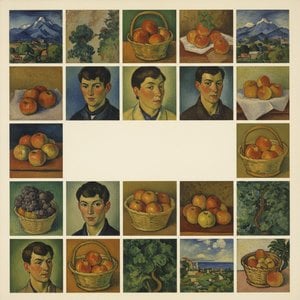
Paul Cézanne: Τα 25 Κορυφαία Έργα Τέχνης για Διακόσμηση & Συλλογή
Ανακαλύψτε τα 25 κορυφαία έργα τέχνης του Paul Cézanne! Ιμπρεσιονισμός, μετα-ιμπρεσιονισμός & η τεχνοτροπία του. Βρείτε πίνακες για διακόσμηση και συλλογή υψηλής ποιότητας στο ArtsDot.com.

The Bountiful Still Life: Symbolism & Artistic Representation of Fruit Across Art History
Explore the rich history of still life painting & the symbolism of fruit across art movements. Discover masterpieces from Caravaggio to Cézanne with ArtsDot – expert guidance & museum-quality reproductions.
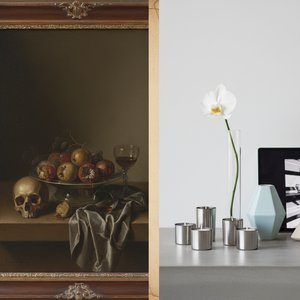
The Enduring Appeal of Still Life: A Historical & Contemporary Exploration
Explore the rich history & symbolism of still life painting with ArtsDot. Discover masterpieces from the Dutch Golden Age, learn about vanitas art, and find expert guidance for collecting timeless artworks.

Gustave Caillebotte: Bridging Realism & Modernity in Parisian Life
Explore the life & art of Gustave Caillebotte, a pivotal figure bridging Realism & Impressionism. Discover his iconic Parisian scenes and lasting legacy with ArtsDot.

Silent Narratives: Exploring the Enduring Appeal of Still Life Painting Across Centuries
Explore the rich history of still life painting with ArtsDot. Discover Dutch Masters, decode vanitas symbolism & learn about collecting timeless art. Expert insights and museum-quality reproductions.



