

 Αποστολή
 Κοινοποίηση
 Λεπτομέρειες
 Οδηγός

 Λήψη
Λήψη
 Παρόμοια αντικείμενα συλλογής
 Παρουσίαση
 Ερωτήσεις & Απαντήσεις
 Στατιστικά
In Memoriam


 Περισσότερα
Το έργο τέχνης που εμφανίζεται σε αυτή τη σελίδα προστατεύεται από τους νόμους περί πνευματικών δικαιωμάτων, γεγονός που σημαίνει ότι δεν μπορούμε νομικά να δημιουργήσουμε ή να πουλήσουμε μια ταυτόσημη αναπαραγωγή του. Αυτή η προστασία επιβάλλεται βάσει διεθνών συμφωνιών, όπως η Σύμβαση της Βέρνης καθώς και από τους εθνικούς νόμους, συμπεριλαμβανομένων αυτών που ορίζονται από το Νομοθεσία περί πνευματικών δικαιωμάτων των ΗΠΑ - Τίτλος 17. Όλα τα δικαιώματα κατοχυρωμένα. Απαγορεύεται η αναπαραγωγή χωρίς άδεια.
Αυτή η μέθοδος συμμορφώνεται πλήρως με τους κανονισμούς περί πνευματικών δικαιωμάτων, καθώς δεν περιλαμβάνει την αντιγραφή ή την αναπαραγωγή του προστατευόμενου έργου. Αντίθετα, πρόκειται για μια δημιουργική ερμηνεία — ένα νέο έργο που επηρεάζεται από το πρωτότυπο, χωρίς όμως να είναι πανομοιότυπο με αυτό.
Giclée / Εκτυπώσεις Τέχνης
Εκτύπωση giclée ή σε καμβά ποιότητας μουσείου με γρήγορη παραγωγή και ευέλικτες επιλογές φινιρίσματος. ( Αγορά χειροποίητου πίνακα Μετάβαση σε Ψηφιακή Αποτέλεσμα)




































Επιλέξτε από τις προκαθορισμένες διαστάσεις μας που διατηρούν τις αρχικές αναλογίες του έργου τέχνης.

Εισάγετε το πλάτος και το ύψος που επιθυμείτε, ώστε να ταιριάζουν στο κάδሮ ή στον τοίχο σας. Μια εκτύπωση μπορεί μόνο να υποστεί κοψίμό και ποτέ να μην γίνει μεγαλύτερη από την αρχική εικόνα, επομένως η επιλογή μεγέθους με διαφορετικό σχήμα συνεπάγεται απώλεια ενός μέρους της εικόνας. Σας στέλνουμε ένα ψηφιακό mockup για έγκριση πριν προχωρήσουμε σε οποιαδήποτε εκτύπωση. Η εικόνα που εμφανίζεται σε αυτή τη σελίδα δεν δείχνει την πραγματική κοπή — μόνο το mockup την παρουσιάζει.
Παγκόσμια Αποστολή () σε 2 εβδομάδες αντί για τις συνήθεις 4/5 εβδομάδες. (9 Νοέμβριος)

Δωρεάν γρήγορη διεθνής αποστολή

Κάμβας από Λινό Υψηλής Ποιότητας

Πλήρης ασφάλιση μεταφοράς

Εγγύηση επιστροφής δασμών και φόρων εισαγωγής

Εγγύηση Απόλυτης Ομοιότητας Χρωμάτων

Πολιτική Επιστροφής 100 Ημερών (Μόνο σε περίπτωση ελαττωμάτων)

Εγγύηση επιστροφής 100% των χρημάτων

Προσφορά για πολλαπλές παραγγελίες
 Η επιλογή με γυαλί είναι διαθέσιμη μόνο για μεγέθη κάτω από 110 εκ.

In Memoriam
Giclée / Εκτυπώσεις Τέχνης
Διαστάσεις Αναπαραγωγής
-


Τελική Τιμή
€ 56
A Silent Echo of Grief: The Soul of In Memoriam
In the quietude of Edward Steichen’s “In Memoriam,” one does not merely observe a photograph; one enters a sanctuary of shared sorrow. Created in 1906, this profound work transcends the boundaries of early 20th-century photography to become a timeless meditation on loss and the enduring tenacity of memory. The image presents a hauntingly beautiful tableau: a woman, her form captured with a tender vulnerability, cradles another figure who remains partially concealed, as if retreating from the harsh light of reality into the safety of her embrace. There is an ethereal, almost dreamlike quality to the scene, where the boundaries between the physical world and the psychological landscape begin to blur, inviting the viewer to contemplate their own experiences of mourning and solace.
Steichen, a master of the Pictorialist movement, deliberately moved away from the clinical precision of traditional photography. Instead, he sought to infuse his work with the emotional weight typically reserved for fine art painting. Through the meticulous use of the photogravure process—a sophisticated technique involving the transfer of ink from copper plates—he achieved a breathtaking range of tonal gradations. This method allowed for a velvety texture and a soft-focus atmosphere that lends the piece its characteristic depth. The interplay of light and shadow does more than define shapes; it sculpts the very essence of grief, creating a chiaroscuro effect that highlights the woman’s resilience while casting the hidden figure in a shroud of mystery and fragility.
Symbolism and the Tapestry of Memory
Beyond its immediate emotional resonance, “In Memoriam” is rich with subtle symbolic layers that reward deep contemplation. The composition is masterfully balanced, with the woman positioned prominently on the left, acting as an anchor of strength and devotion. Her posture, both protective and yielding, serves as a powerful metaphor for the human capacity to endure hardship through love. Interestingly, the presence of two sports balls—one nestled near the center-right and another tucked into the bottom-left corner—introduces a poignant, almost surrealist element to the composition. These objects may serve as anchors to a lost innocence or as quiet reminders of the vibrant, lived moments that exist even in the shadow of death, adding a layer of complexity that keeps the viewer engaged in an endless cycle of interpretation.
For the discerning collector or interior designer, this piece offers much more than mere decoration; it provides a focal point for profound reflection. The monochromatic palette and the intricate textures of the photogravure make it an exquisite addition to a curated space, particularly one that seeks to evoke a sense of history, sophistication, and quiet elegance. Whether placed in a contemplative study or as a centerpiece in a gallery-style living room, a high-quality reproduction of this masterpiece brings with it the weight of art history and the transformative power of Steichen’s vision. It is an invitation to pause, to breathe, and to find beauty within the solemnity of the human condition.
Ερωτήσεις και Απαντήσεις
Είναι το "In Memoriam" συνολικά πιο φωτεινό ή πιο σκοτεινό;
Το έργο "In Memoriam" έχει συνολική φωτεινότητα deep_shadow, ενώ η φωτεινότητά του (luminance) είναι Dark.
Σε ποια περίοδο της καριέρας του/της Εδουάρδος Στεϊκεν ανήκει το "In Memoriam";
Το έργο "In Memoriam" ανήκει στην περίοδο Mature Period της καριέρας του Εδουάρδος Στεϊκεν. Αυτή η ταξινόμηση συνδέει το έργο με την εξέλιξη του καλλιτέχνη.
Υπάρχει σελίδα οδηγού για το "In Memoriam" του Εδουάρδος Στεϊκεν;
Η σελίδα Οδηγός για το έργο "In Memoriam" του Εδουάρδος Στεϊκεν προσφέρει ένα εκτυπώσιμο ενημερωτικό φυλλάδιο δύο σελίδων: το έργο τέχνης με τον πίνακα ταυτότητάς του, μια χρονική ζώνη που το τοποθετεί μέσα στη διάρκεια της ζωής του καλλιτέχνη, άλλα έργα του ίδιου δημιουργού, την αναλυτική παλέτα χρωμάτων και έτοιμες για αντιγραφή αναφορές σε τέσσερα στυλ.
Σχετικά Έργα Τέχνης


Βιογραφικό Καλλιτέχνη
Edward Steichen: A Life Bridging Worlds
Édouard Jean Steichen, later known as Edward Steichen, was a figure who transcended simple categorization—a true innovator whose artistic journey spanned continents and embraced diverse mediums. Born in Bivange, Luxembourg, on March 27, 1879, his life unfolded into an extraordinary odyssey from European roots to becoming one of America’s most influential artists – not merely as a photographer, but as a painter, curator, and visionary who fundamentally reshaped how we perceive visual culture. The early years were marked by a significant relocation; in 1881, the Steichen family emigrated to Hancock, Michigan, seeking new opportunities—a move that instilled in young Edward a profound sense of displacement and perhaps, a heightened sensitivity to observation – qualities that would indelibly shape his artistic vision. Even as a child, an innate talent for drawing was evident, nurtured by supportive parents who recognized and encouraged his creative inclinations. The pivotal moment arrived at sixteen when he received his first camera—initiating a period of largely self-directed learning through relentless experimentation. This wasn’t merely about mastering technique; it was about discovering a new language, a way to capture the world with an immediacy and intimacy previously unattainable.- Early Life & Artistic Beginnings: From Luxembourg to Michigan – Steichen's formative years instilled in him a unique perspective on observation and fueled his lifelong passion for artistic expression. His parents’ encouragement nurtured his talent for drawing from a young age, setting the stage for his future endeavors.
- Pictorialism & Alfred Stieglitz: Steichen swiftly embraced Pictorialist principles—soft focus, painterly effects—seeking to elevate photography beyond mere documentation into an art form capable of evoking mood and atmosphere. His collaboration with Alfred Stieglitz, a kindred spirit who championed photographic innovation, cemented the formation of *Photo-Secession* and established *Camera Work*, a journal dedicated to disseminating groundbreaking ideas.
- The Photo-Secession & The 291 Gallery: Steichen’s involvement in *Photo-Secession* wasn't just about artistic affiliation; it was about reshaping the cultural landscape of New York City. Together with Stieglitz, he founded *The 291 gallery*, a space that bravely confronted conventional artistic boundaries by showcasing European modernism alongside photography—a bold step toward fostering cross-cultural dialogue.
- From Pictorialism to Straight Photography: The seismic impact of World War I spurred Steichen’s dramatic stylistic shift—abandoning the ethereal qualities of Pictorialism in favor of “Straight Photography”—characterized by sharp focus, precise detail, and an unadorned representation of reality. This decision reflected a broader cultural movement toward clarity and directness, mirroring the zeitgeist of the era.
- Fashion Photography & Cinematic Pursuits: Steichen’s versatility extended beyond photography into fashion and filmmaking—revolutionizing the industry with his pioneering approach to visual storytelling. His collaborations with *Vogue* and *Vanity Fair* established new standards for glamour, narrative, and artistic vision, while directing *The Fighting Lady*, a poignant documentary film that captured the visceral experience of aerial combat during WWII.
Major Achievements & Artistic Legacy
Steichen’s contribution to visual culture is undeniable—a legacy built upon groundbreaking experimentation and unwavering artistic conviction. His advocacy for photography as an art form fundamentally altered perceptions of the medium, elevating it from a mere technical process to one capable of profound emotional resonance. Furthermore, his influence permeated various creative disciplines—from fashion to film—establishing new benchmarks for aesthetic excellence and narrative depth. The monumental *The Family of Man* exhibition at MoMA—curated by Steichen—stands as a testament to his belief in the unifying power of photography—a project recognized by UNESCO’s Memory of the World Register as an enduring symbol of human connection across cultures and geographies.Notable Works
Steichen's oeuvre encompasses iconic images that continue to inspire admiration and scholarly scrutiny: *The Pond–Moonlight* (1904)—a landmark Pictorialist photograph celebrated for its atmospheric depth and tonal richness—achieved a remarkable price at auction; *The Flatiron* (1904)—another significant early work showcasing Steichen’s mastery of photographic technique and composition, also attaining considerable acclaim; Portraits of Celebrities—a vast collection capturing the essence of prominent figures in art, literature, and entertainment with insightful sensitivity; *The Fighting Lady* (1944)—an acclaimed World War II documentary film offering a compelling glimpse into aerial combat; *The Family of Man* (1955)—a groundbreaking exhibition at MoMA that explored universal human experiences—resulting in UNESCO recognition.Concluding Reflections
Edward Steichen died peacefully on March 25, 1973, leaving behind an extraordinary body of work that continues to resonate with audiences worldwide. His artistic vision transcended stylistic conventions—embracing innovation and experimentation while simultaneously upholding a steadfast commitment to portraying the human condition with compassion and nuance. Steichen’s enduring influence is palpable—a testament to his ability to transform visual culture and inspire generations of artists—solidifying his place as one of America's most visionary and influential figures in the history of art."
Εδουάρδος Στεϊκεν
1900 - 1973 , Λουξεμβούργο
Γρήγορα στοιχεία
- Artistic Movement Or Style: Πικτοραλισμός και Σύγχρονη Τέχνη
- Artists Or Movements Influenced By This Artist: ['Δεκαετία του ’20 και ’30']
- Artists Who Influenced This Artist: ['Άλφρεντ Στιέλτσιτζ']
- Date Of Birth: 27 Μαρτίου 1879
- Date Of Death: 25 Μαρτίου 1973
- Full Name: Édouard Jean Steichen
- Nationality: Αμερικανός
- Notable Artworks:
- Το Πηγάδι - Μήνας
- Η Φλόκα του Πόλεμου
- Η Οικογένεια Ανθρώπων
- Place Of Birth: Βιβαγές, Λουξεμβούργο
Σχετικά άρθρα

Pictorialism: A Search for Artistic Photography's Soul – Aesthetics, Techniques & Legacy
Explore the captivating world of Pictorialism – a pivotal movement that transformed photography into fine art. Discover key artists like Stieglitz & Käsebier, techniques, and collecting tips from experts.

Beyond the Lens: Photography's Enduring Influence on Modern & Contemporary Art
Explore photography's pivotal role in shaping modern & contemporary art. Discover key movements, influential artists like Stieglitz, and expert collecting advice from ArtsDot.
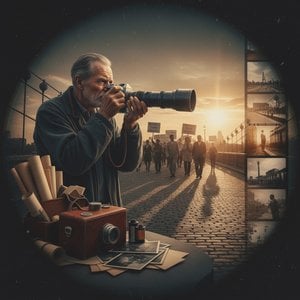
Witnessing History Through Lens & Light: Documentary Photography's Enduring Legacy
Explore the powerful history of documentary photography – from its origins to contemporary masters like Gordon Parks & W. Eugene Smith. Discover how this art form shapes our understanding of society and witness pivotal moments in time.

Monochrome Visions: Exploring the Aesthetic & Historical Significance of Black & White Photography
Explore the rich history & artistic power of black and white photography. From early techniques to iconic masters like Ansel Adams, discover why monochrome continues to captivate art lovers today. Expert insights for collectors.

Edward Hopper: Τα 25 Κορυφαία Έργα Τέχνης & η Ατμόσφαιρα της Αμερικανικής Μοναξιάς | ArtsDot.gr
Ανακαλύψτε τα 25 κορυφαία έργα τέχνης του Edward Hopper! Εξερευνήστε την ατμόσφαιρα της αμερικανικής ζωής, τον ρεαλισμό και το μοναδικό φως στους πίνακές του. Υψηλής ποιότητας αναπαραγωγές & ιδέες διακόσμησης στο ArtsDot.com.


