


Η εικόνα ακολουθεί τις επιλογές σας: , .
Περιγραφή Συλλεκτικού Αντικειμένου
Barbara Hepworth's Mask (1928) is a striking marble sculpture featuring carved facial features and two smaller figures in the background, reflecting Hepworth's exploration of abstraction and her contribution to British art.
 Περισσότερα
Βιογραφικό Καλλιτέχνη
Εξερευνήστε τις σύγχρονες γλυπτικές της Μπάρμπαρα Χέπγουορθ (1903-1975). Πρώιμη πρωτοπορία στην αφηρημένη τέχνη, η Χέπγουορθ ήταν μια από τις λίγες κοπέλες καλλιτέχνιδες που πέτυχαν διεθνή αναγνώριση.
Χειροποίητη Αναπαραγωγή σε Έλαιο
Χειροποίητη ελαιογραφία σε καμβά στο δικό σας μέγεθος και πλαίσιο, κατά παραγγελία από τους καλλιτέχνες μας. ( Μετάβαση σε Εκτυπώσεις Μετάβαση σε Ψηφιακή Αποτέλεσμα)
Το έργο αυτό προστατεύεται από πνευματικά δικαιώματα
Το έργο τέχνης που εμφανίζεται σε αυτή τη σελίδα προστατεύεται από τους νόμους περί πνευματικών δικαιωμάτων, γεγονός που σημαίνει ότι δεν μπορούμε νομικά να δημιουργήσουμε ή να πουλήσουμε μια ταυτόσημη αναπαραγωγή του. Αυτή η προστασία επιβάλλεται βάσει διεθνών συμφωνιών, όπως η Σύμβαση της Βέρνης καθώς και από τους εθνικούς νόμους, συμπεριλαμβανομένων αυτών που ορίζονται από το Νομοθεσία περί πνευματικών δικαιωμάτων των ΗΠΑ - Τίτλος 17. Όλα τα δικαιώματα κατοχυρωμένα. Απαγορεύεται η αναπαραγωγή χωρίς άδεια.
Ως μια σεβαστή και νόμιμη εναλλακτική, προσφέρουμε προσαρμοσμένα, χειροποίητα έργα τέχνης εμπνευσμένα από το πρωτότυπο. Οι έμπειροι και επαγγελματίες καλλιτέχνες μας μελετούν προσεκτικά το στυλ, τη διάθεση και την καλλιτεχνική ουσία του πρωτοτύπου, ώστε να δημιουργήσουν ένα νέο, μοναδικό έργο που προκαλεί την ίδια αίσθηση — παραμένοντας όμως μια πρωτότυπη δημιουργία από μόνη της.
Αυτή η μέθοδος συμμορφώνεται πλήρως με τους κανονισμούς περί πνευματικών δικαιωμάτων, καθώς δεν περιλαμβάνει την αντιγραφή ή την αναπαραγωγή του προστατευόμενου έργου. Αντίθετα, πρόκειται για μια δημιουργική ερμηνεία — ένα νέο έργο που επηρεάζεται από το πρωτότυπο, χωρίς όμως να είναι πανομοιότυπο με αυτό.
Περισσότερα για αυτό το έργο
 Αποστολή
 Κοινοποίηση
 Λεπτομέρειες
 Οδηγός

 Λήψη
Λήψη
 Παρόμοια αντικείμενα συλλογής
 Παρουσίαση
 Ερωτήσεις & Απαντήσεις
 Στατιστικά
Κάντε την παραγγελία του πίνακα σας σε τέσσερα απλά βήματα
Πάρτε τον χρόνο σας. Μπορείτε να αλλάξετε οποιαδήποτε απάντηση· η τιμή στο καλάθι παραγγελίας σας ενημερώνεται ανάλογα με κάθε επιλογή.
1 Το πρώτο από τα τέσσερα βήματα
Ποιο μέγεθος θα επιλέξετε;
Αυτές οι διαστάσεις διατηρούν τις αναλογίες του πρωτότυπου έργου. Η απεικόνιση δείχνει την επιλογή σας σε έναν τοίχο, πάνω από έναν καναπέ δύο μέτρων.
Ή εισάγετε δικές διαστάσεις
Επιλέξτε από τις προκαθορισμένες διαστάσεις μας που διατηρούν τις αρχικές αναλογίες του έργου τέχνης.

Πληκτρολογήστε το πλάτος και το ύψος που επιθυμείτε, ώστε να ταιριάζουν στο κάδሮ ή στον τοίχο σας. Ε เนื่องจาก πρόκειται για χειροποίητη ζωγραφική, σε περίπτωση διαστάσεων με διαφορετικό σχήμα, ο καλλιτέχνης μπορεί να ζωγραφίσει λίγο παραπάνω γύρω από το έργο ή να αφαιρέσει ένα μέρος — η επιλογή είναι δική σας. Σας στέλνουμε ένα ψηφιακό mockup για έγκριση πριν ξεκινήσει η δημιουργία του έργου. Η εικόνα που εμφανίζεται σε αυτή τη σελίδα δεν δείχνει το τελικό αποτέλεσμα — μόνο το mockup το αναδεικνύει.
2 Δεύτερο από τέσσερα βήματα
Πώς θα θέλατε να προετοιμαστεί: σε ρολό, σε ξύλινο καρέ ή με κάσα;
Οι τιμές παρακάτω αφορούν το μέγεθος που επιλέξατε στο πρώτο βήμα.
Επιλέξτε τις πλευρές του τεντωμένου καμβά
Επιλέξτε το πλαίσιο σας

Λευκό €1

Αντιστροφή με θολό φινίρισμα €1

Εκτεταμένη περιφέρεια €1

P118B €10

P118H €10

P118W €10

P438Z €10

P508JH €12

P508YH €12

P805H €10

P805Z €10

P919BZ €10

P919G €10

P919XJ €10

P959ZH €10

P968JZ €12

W106C €8

W218G €10

W218JH €8

W218Y €10

W307PJ €10

W316G €10

W316PJ €8

W316Y €10

W398PJ €8

W4111J €10

W500HY €15

W500JH €15

W692G €12

W849H €8

W940BG €15

W953PJ €8

H24-GOLD €30

H24-SILVER €30

H36-GOLD €45

H36-SILVER €45
Με πλαίσιο
Πλαισίωμα: . Συνολικές διαστάσεις με το πλαίσιο: .
3 Το τρίτο από τα τέσσερα βήματα
Θα θέλατε να αλλάξετε κάτι στο έργο;
Οι περισσότεροι απαντούν αρνητικά. Επειδή κάθε πίνακας δημιουργείται με το χέρι, ο καλλιτέχνάς μας μπορεί επίσης να τον προσαρμόσει σύμφωνα με τις επιθυμίες σας.
Μετά την παραγγελία, η ομάδα του ArtsDot.com θα στείλει email στον πελάτη για οδηγίες και θα παρέχει μια προεπισκόπηση (mockup)
4 Το τέταρτο από τα τέσσερα βήματα
Μερικές επιλογές τελικής επεξεργασίας
Όλα είναι προαιρετικά. Οι απαντήσεις που έχουν ήδη επιλεγεί δεν έχουν επιπλέον κόστος.
Ποιος το δημιούργησε;
Παγκόσμια Αποστολή () σε 3-4 εβδομάδες αντί για τις συνήθεις 5 εβδομάδες. (8 Νοέμβριος). Χωρίς συμβιβασμούς στην ποιότητα.
Μια πινακίδα με πληροφορίες, όπως σε ένα μουσείο;
Λεπτομέρειες Χάραξης σε Πλακέτα Χαλκού
This elegant plaque features the artist's name and the title of the artwork, finely engraved for a timeless presentation.
It is made from bronze with a refined, elegant finish. The text is precisely laser-engraved for a sharp and permanent result. Measuring 9x2 cm, the plaque is compact yet easy to read. It's built to be durable and scratch-resistant, offering a professional, museum-quality look. Mounting is simple thanks to the included adhesive backing.
Λεπτομέρειες Διαφανούς Ακρυλικής Πλακίδας
The plaque includes essential engraved details such as the artist's name, the title of the artwork, the date it was created, the type of media used-like oil on canvas or watercolor-a brief description of the piece, and a QR code that links to the complete artwork information.
It is crafted from clear acrylic, offering a sleek, modern appearance. The text is UV-engraved in black to ensure strong visual contrast. With a size of 10x15 cm, it ensures optimal readability. It comes equipped with two metal hooks for secure wall mounting. The plaque is designed to be weather-resistant, making it suitable for various environments, and it includes interactive features that work seamlessly with smartphone scanning.
Λεπτομέρειες Πλακίδας Ακρυλικού Μαύρου Χρώματος
This elegant plaque includes engraved information such as the artist's name, the title of the artwork, the date it was created, the type of media used (like oil on canvas or watercolor), a short description of the artwork, and a QR code for quick access to more information.
The plaque itself is made from refined black acrylic with a premium finish. The text is laser-engraved in white for high contrast and readability. Its size is 10x15 cm, designed to be easy to read. It comes with two metal hooks for professional mounting. The design is sleek and fits any interior style. It is also weather-resistant and durable, with built-in digital integration for mobile compatibility.
Προστατευτικό βερνίκι;
Πότε θα το χρειαστείτε;
✓ Έλεγχος και παραγγελία
Το έργο σας, ακριβώς όπως το παραγγείλατε

Mask
Μέσο Αναπαραγωγής
Διαστάσεις Αναπαραγωγής
-

Κορυφαίος Καλλιτέχνης
Περισσότερη λεπτομέρεια, φινέτσα και επιπλέον χρόνος παραγωγής
-

Πλαίσιο Αναπαραγωγής
-
-
Για έργα τέχνης ή αναπαραγωγές με πλευρά υπερβαίνουσα των 105 εκ. (περίπου 41 ίντσες), το πλαίσιο θα αποσταλεί αποσυναρμολογημένο, σε μορφή κιτ. Η μέθοδος αυτή διασφαλίζει την ασφαλή παράδοση και προλαμβάνει τυχόν ζημιές κατά τη μεταφορά.
Απαιτείται επαγγελματικός συναρμολογητής - δεν πρόκειται για προϊόν αυτοσυναρμολογίας (DIY).
Το κιτ πρέπει να συναρμολογηθεί και ο καμβάς να τεντωθεί από έμπειρο επαγγελματία πλαίσιο (framer), με τη χρήση κόλλας ξύλου (δεν περιλαμβάνεται), πένσας για ένταση καμβά και σφιγκτήρων, ώστε να διατηρηθεί η ορθογωνιότητα των δοκών κατά τη διάρκεια της ξędρανσης. Η λανθασμένη συναρμολόγηση ή η ανισόρροπη ένταση του καμβά μπορεί να προκαλέσει μόνιμη ζημιά στο έργο και δεν καλύπτεται από την εγγύησή μας.
 Για έργα τέχνης ή αναπαραγωγές με πλευρά υπερβαίνουσα των 105 εκ. (περίπου 41 ίντσες), το πλαίσιο θα αποσταλεί αποσυναρμολογημένο, σε μορφή κιτ. Η μέθοδος αυτή διασφαλίζει την ασφαλή παράδοση και προλαμβάνει τυχόν ζημιές κατά τη μεταφορά.
Περιλαμβάνονται όλες οι μπάρες από μασίφ ξύλο, κομμένες με ακρίβεια στις διαστάσεις τους.
Συναρμολογείται με τις παρεχόμενες βίδες, καθώς και με κόλλα ξύλου για τις γωνιακές ενώσεις, η οποία δεν περιλαμβάνεται και θα πρέπει να προμηθευτεί από τον τεχνίτη σας.
Απαιτούνται επαγγελματικά εργαλεία που δεν περιλαμβάνονται: μια πένσα για σφίξιμο καμβά (τενωτήρας) και σφιγκτήρες για τη διατήρηση της ορθογωνιότητας των καρέ κατά τη διάρκεια της απορρόφησης της κόλλας.
Σημαντικό:
Οι γωνιακές ενώσεις απαιτούν κόλλα ξύλου, οι σπορ πρέπει να συγκρατούνται με σφιγκτήρες μέχρι να στεγνώσει πλήρως η κόλλα, και για την ένταση του καμβά στο συναρμολογημένο πλαίσιο απαιτείται μια πένσα για ένταση καμβά. Κανένα από αυτά δεν περιλαμβάνεται στο σετ. Παρακαλούμε συμβουλευτείτε έναν έμπειρο επαγγελματία κάδραρχο πριν παραγγείλετε αυτό το μέγεθος.

Πληροφορίες έργου
-
-

Βερνίκι Προστασίας
Γυαλιστερό Βερνίκι (ενισχύει τα χρώματα, προστατεύει από το φως και την υγρασία)
-

Προσαρμογή του έργου μου
Παραδείγματα αλλαγών που είναι δυνατές: Αντικατάσταση προσώπου με φωτογραφία του πελάτη· Προσθήκη κατοικίδιου (π.χ., αντικατάσταση γάτας με σκύλο)· Ενσωμάτωση κρυφού μηνύματος στο φόντο· Αλλαγή τοπίου ή στοιχείων στο φόντο.
-

Επείγουσα παραγγελία
Παγκόσμια Αποστολή () σε 3-4 εβδομάδες αντί για τις συνήθεις 5 εβδομάδες. (8 Νοέμβριος). Χωρίς συμβιβασμούς στην ποιότητα.
-
Αποστολή Express
Παγκόσμια Αποστολή () σε 5 εβδομάδες. (15 Νοέμβριος).
Συμπεριλαμβάνεται
Τελική Τιμή
€ 235
Η επιλογή με γυαλί είναι διαθέσιμη μόνο για μεγέθη κάτω από 110 εκ.
Συμπεριλαμβάνεται σε κάθε παραγγελία
- Δωρεάν γρήγορη διεθνής αποστολή
- Κάμβας από Λινό Υψηλής Ποιότητας
- Πλήρης ασφάλιση μεταφοράς
- Εγγύηση επιστροφής δασμών και φόρων εισαγωγής
- Εγγύηση Απόλυτης Ομοιότητας Χρωμάτων
- Πολιτική Επιστροφής 100 Ημερών (Μόνο σε περίπτωση ελαττωμάτων)
- Εγγύηση επιστροφής 100% των χρημάτων
- Προσφορά για πολλαπλές παραγγελίες


The Silent Presence of Form
In the quietude of modern sculpture, few works command the room with as much understated power as Barbara Hepworth’s “Mask,” created in 1928. This piece is not merely an object to be viewed; it is an experience to be felt. At first glance, the viewer is met with a deceptively simple geometric shape—a soft, oval form that seems to float within its wooden frame. Yet, as one lingers, the sculpture reveals a profound depth, inviting a meditative dialogue between the observer and the stone. Hepworth, a titan of British Modernism, possessed an unparalleled ability to distill the complexities of human emotion into the purest essence of organic abstraction.
The sculpture’s physical presence is defined by its exquisite material choice: alabaster. This medium provides a milky, ethereal translucence that allows light to penetrate the very heart of the stone, creating an inner glow that breathes life into the inanimate. The surface is a masterclass in tactile precision, where meticulous polishing and grinding have achieved a smooth, luminous finish, yet subtle irregularities remain to remind us of the earth from which it was carved. This interplay of light and texture creates a sense of movement within a static form, making the piece feel as though it is caught in a moment of eternal transformation.
A Dialogue Between Tradition and Modernity
To understand “Mask,” one must look to the historical currents that shaped Hepworth’s vision. Emerging from the vibrant artistic landscape of the early 20th century, Hepworth was deeply influenced by Surrealist thought and the burgeoning movement toward abstraction. While her contemporaries often sought to break entirely from the past, Hepworth found inspiration in the ancient. The title itself evokes the primal significance of ceremonial masks—objects used throughout human history to facilitate ritual, disguise, and spiritual transition. By blending these ancestral echoes with a modern, geometric sensibility, she created a work that feels both timeless and avant-garde.
The sculpture serves as a bridge between the seen and the unseen. In its carved features, there is a haunting quality—a subtle tension between concealment and revelation. It asks the viewer to contemplate what lies beneath the surface of our own identities. For the collector or the interior designer, this piece offers more than mere decoration; it provides a focal point for intellectual curiosity and emotional reflection. Whether placed in a sunlit gallery or a sophisticated contemporary living space, “Mask” acts as an anchor of serenity, its silent strength capable of transforming the atmosphere of any environment.
The Essence of Modernist Elegance
For those seeking to curate a collection that celebrates the pinnacle of 20th-century sculpture, a high-quality reproduction of this masterpiece offers an unparalleled opportunity. The beauty of Hepworth’s work lies in its ability to harmonize with diverse interior aesthetics—from the minimalist rigor of modern architecture to the warm, organic textures of mid-century design. Owning a piece that captures the spirit of Unit One and the legacy of St Ives is an invitation to live alongside history.
A reproduction of “Mask” allows the subtle play of light and the profound stillness of Hepworth’s vision to inhabit your personal space. It is a tribute to the enduring power of form, a celebration of the artist's ability to find the infinite within the finite, and a timeless addition for anyone who finds beauty in the quiet, powerful language of abstraction.
Ερωτήσεις και Απαντήσεις
Πώς είναι δομημένη η χρωματική σύνθεση του "Mask" του Μπάρμπαρα Χέπγουορθ;
Η χρωματική σύνθεση του έργου "Mask" του Μπάρμπαρα Χέπγουορθ συνδυάζει μια Statement αντίθεση με μια Softly Mixed Palette αρμονία.
Ποια διάθεση και συναίσθημα εκφράζει το "Mask" του Μπάρμπαρα Χέπγουορθ;
Το έργο "Mask" του Μπάρμπαρα Χέπγουορθ αποπνέει μια αίσθηση Reflective, μέσα σε μια συνολικά Calm διάθεση.
Τι απεικονίζει το "Mask" και τι ατμόσφαιρα αποπνέει;
Το έργο "Mask" του Μπάρμπαρα Χέπγουορθ απεικονίζει το/τα marble sculpture, british art, geometric forms, female artist, abstract form, stone texture, modernism, με μια ατμόσφαιρα Calm. Το θέμα και η ατμόσφαιρα συνθέτουν μαζί την περιγραφή του έργου.
Σχετικά Έργα Τέχνης


Μπάρμπαρα Χέπγουορθ
1903 - 1975, Ηνωμένο Βασίλειο
Βιογραφικό Καλλιτέχνη
Early Life and Artistic Influences
Barbara Hepworth (1903–1975) was born Jocelyn Barbara Hepworth on January 10, 1903, in Wakefield, Yorkshire—the eldest child of Herbert and Gertrude Johnson Hepworth. Her father, a civil engineer for the West Riding County Council, instilled in her a fascination with geometric forms and spatial relationships from an early age. Growing up in rural Yorkshire profoundly shaped her artistic sensibilities, fostering a deep connection to the landscape and its rhythms. Hepworth’s formative years were marked by exposure to influential figures and ideas. Her father's profession exposed her to precision and engineering principles—concepts that would later inform her sculptural explorations. Equally significant was her friendship with Henry Moore, whom she met at Leeds School of Art in 1920. Together they embarked on a shared artistic journey, recognizing the power of abstraction as a means of conveying emotion and exploring fundamental questions about form and materiality. The influence of Surrealism—particularly its emphasis on dreamlike imagery and subconscious exploration—became palpable during her time studying at the Royal College of Art in London (1921–24), where she honed her skills alongside fellow artists like Moore and Nicholson.Career Development: From Abstraction to Monumental Sculpture
Hepworth’s artistic trajectory began with a commitment to direct carving—a technique championed by Skeaping that prioritized working directly on the material, bypassing preliminary sketches or models. This approach allowed her to respond intuitively to the inherent qualities of stone and wood, capturing their textures and contours in ways that defied conventional representation. Her early sculptures—characterized by simplified geometric shapes—reflected the prevailing modernist aesthetic of the period, aligning with the broader movement’s rejection of academic conventions. The collaboration with Ben Nicholson proved pivotal in shaping Hepworth's artistic vision. Their shared exploration of abstraction extended beyond mere stylistic considerations; it encompassed a deeper engagement with philosophical ideas about perception and experience. As Hepworth herself eloquently expressed, “All my early memories are of forms and shapes and textures. Moving through and over the West Riding landscape with my father in his car, the hills were sculptures; the roads defined the forms.” This profound connection to the natural world—expressed through her art—became a recurring motif throughout her oeuvre.Notable Works and Exhibitions
Hepworth’s artistic reputation soared during the Second World War when she relocated to St Ives, Cornwall, alongside Nicholson. The tranquility of the Cornish coast provided inspiration for her sculptures, which increasingly incorporated elements of organic form—particularly strings and wires—to create dynamic tensions between mass and space. Her monumental sculpture *Winged Figure* (1961–3), commissioned by John Lewis for their Oxford Street flagship store, stands as a testament to her ambition and technical prowess. It exemplifies Hepworth’s masterful manipulation of material—aluminum—to achieve an ethereal lightness that defies its considerable size. Her sculptures were showcased in prestigious international exhibitions, cementing her status as one of the foremost artists of her generation. The Hepworth Wakefield houses a comprehensive collection of Hepworth's works, offering visitors a unique opportunity to immerse themselves in her artistic legacy. Furthermore, her lithographs—produced during her later years—demonstrate her continued exploration of printmaking techniques and her unwavering dedication to conveying profound emotional resonance through visual imagery.Legacy and Recognition
Barbara Hepworth’s influence extends far beyond the realm of sculpture itself. Her pioneering approach to abstraction challenged prevailing artistic conventions, paving the way for subsequent generations of artists to embrace experimental forms and techniques. She was awarded the Dame Commander Order of the British Empire in 1958—a recognition of her contribution to British art and culture—and continued to produce groundbreaking works until her untimely death in a fire at her studio in Hampstead in 1975. Hepworth’s sculptures remain revered for their elegance, simplicity, and ability to evoke contemplation—serving as enduring symbols of modernist artistic innovation and humanist sensitivity.


Σχετικά άρθρα

The Enduring Form: Exploring Themes & Techniques in Sculpture Across Historical Periods
Explore the rich history of sculpture from ancient masterpieces to contemporary innovations. Discover key techniques, influential artists & investment potential for discerning art collectors.
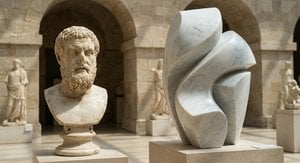
The Enduring Allure of Marble in Art History: From Classical Sculpture to Modern Abstraction
Explore the captivating history of marble sculpture from ancient Greece to modern art. Discover renowned artists like Canova & Michelangelo, carving techniques, and investment insights at ArtsDot.

Barbara Hepworth: A Sculptural Dialogue with Form, Space & the Human Condition
Explore the profound world of Barbara Hepworth's sculpture. Discover her artistic evolution, iconic forms, and lasting influence on modern art. A guide for collectors & enthusiasts.