

 Vorschau anzeigen
 Versenden
 Teilen
 Details anzeigen
 Leitfaden

 Herunterladen
 Ähnliche Objekte
 Röntgenaufnahme
 Diashow
 Q&A
Q&A Statistiken
Cagnes

- 58.0 x 71.0 cm


 Weiterlesen
Die auf dieser Seite dargestellten Kunstwerke sind urheberrechtlich geschützt, was bedeutet, dass wir keine identische Reproduktion rechtmäßig erstellen oder verkaufen dürfen. Dieser Schutz wird durch internationale Abkommen wie die Berner Übereinkunft und durch nationale Gesetze, einschließlich derer, die von den US-Urheberrecht – Titel 17.
Diese Methode entspricht vollumfänglich den Urheberrechtsbestimmungen, da sie keine Kopie oder Vervielfältigung des geschützten Kunstwerks darstellt. Stattdessen handelt es sich um eine kreative Neuinterpretation – ein neues Gemälde, das vom Original inspiriert, aber nicht identisch mit ihm ist.
Giclée / Kunstdruck
Giclée- oder Leinwanddruck in Museumsqualität mit schneller Produktion und flexiblen Veredelungsoptionen. ( Handgemalte Reproduktion bestellen Zum digitalen Bild wechseln)




P118B €10

P118H €10

P118W €10

P438Z €10

P508JH €12

P508YH €12

P805H €10

P805Z €10

P919BZ €10

P919G €10

P919XJ €10

P959ZH €10

P968JZ €12

W106C €8

W218G €10

W218JH €8

W218Y €10

W307PJ €10

W316G €10

W316PJ €8

W316Y €10

W398PJ €8

W4111J €10

W500HY €15

W500JH €15

W692G €12

W849H €8

W940BG €15

W953PJ €8




Wählen Sie aus unseren vordefinierten Formaten, die den ursprünglichen Proportionen des Kunstwerks entsprechen.

Geben Sie die benötigte Breite und Höhe an, damit der Druck perfekt in Ihren Rahmen oder an Ihre Wand passt. Ein Druck kann nur beschnitten, aber niemals größer als das Originalbild angefertigt werden; daher verliert ein Format mit anderen Proportionen einen Teil des Bildes. Wir senden Ihnen ein digitales Mockup zur Freigabe, bevor wir den Druck ausführen. Das auf dieser Seite gezeigte Bild zeigt nicht den tatsächlichen Beschnitt – dies ist nur im Mockup ersichtlich.
Weltweiter Versand () innerhalb von 2 Wochen statt der üblichen 4/5 Wochen. (2 November)

Kostenloser weltweiter Expressversand

Hochwertige Leinenleinwand

Umfassender Versicherungsschutz beim Versand

Zollgebühren-Rückerstattungsgarantie

Garantie für exakte Farbtreue

100 Tage Rückgaberecht (nur bei Mängeln)

100% Geld-zurück-Garantie

Mengenrabatt verfügbar
 Die Glasoption ist nur für Größen unter 110 cm verfügbar.

Cagnes
Giclée / Kunstdruck
Format der Reproduktion
-


Endpreis
€ 55
A Window into the Soul of Cagnes
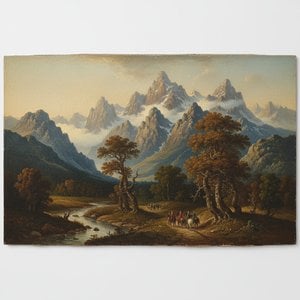
In his 1929 masterpiece, Cagnes, William H. Johnson invites the viewer to step into a world where time seems to both stand still and slowly dissolve. This evocative oil on canvas captures a poignant moment in the French landscape, presenting a scene that is as much about memory as it is about physical space. The painting depicts a mountainous terrain punctuated by structures that bear the heavy weight of history; some houses stand firm, while others appear to be crumbling under the gentle but relentless pressure of the passing years. Through his masterful use of light and form, Johnson transforms a simple street scene into a profound meditation on the impermanence of human existence and the enduring strength of the natural world.
The composition is a delicate dance between the architectural and the organic. In the foreground, trees frame the view, their presence grounding the viewer in the earthiness of the setting. As the eye wanders toward the background, the buildings emerge from the landscape, their weathered facades telling stories of lives lived and eras passed. A solitary figure stands near the center of the canvas, a quiet observer caught in the rhythm of daily life. This person serves as an emotional anchor, providing a sense of scale and a human connection to the vast, decaying beauty surrounding them. The presence of this figure invites us to contemplate our own place within the grand, unfolding narrative of history.
The Fusion of Modernism and Folk Tradition
What makes Cagnes particularly captivating for collectors and enthusiasts is Johnson’s unique ability to blend the avant-garde with the ancestral. During this period of his career, Johnson was experimenting with a style that bridged the gap between European modernism and the soulful simplicity of folk art. The technique employed here utilizes bold, deliberate strokes that define the shapes of the mountains and dwellings without sacrificing the textured, tactile quality of the oil medium. There is a rhythmic quality to the way the colors are applied, creating a visual melody that resonates with the vibrancy of the French countryside while maintaining a certain structural discipline.
For the interior designer, this piece offers a sophisticated layer of depth and narrative. The palette—a blend of earthy tones and atmospheric light—allows it to serve as a focal point in a room that values character and historical resonance. Whether placed in a contemporary gallery-style setting or a more traditional, curated space, the painting brings an air of contemplative elegance. It is not merely a decoration; it is a conversation piece that prompts reflection on the beauty found in decay and the resilience of spirit that Johnson so famously championed throughout his illustrious career.
A Legacy of Resilience
To understand Cagnes, one must understand the hand that held the brush. As a pivotal figure of the Harlem Renaissance, William H. Johnson infused his work with a profound sense of identity and spiritual depth. Even when painting European landscapes, his visual language remained deeply connected to themes of perseverance and the interconnectedness of all living things. The crumbling houses in this work are not merely symbols of loss, but rather markers of a cycle—a reminder that from the old, new life and new stories inevitably emerge.
Owning a high-quality reproduction of this work allows one to possess a fragment of this historical dialogue. It is an opportunity to surround oneself with art that does more than please the eye; it challenges the heart. For those seeking to curate a collection defined by emotional intelligence and artistic significance, Cagnes stands as a testament to the enduring power of vision, making it an invaluable addition to any serious collection of American modernism.
Fragen & Antworten
Wie ist "Cagnes" kunsthistorisch einzuordnen?
Historisch gesehen ist „Cagnes“ ein Werk der Modernism-Strömung aus der umfassenderen Ära der Modern.
Welche Farbe sticht in "Cagnes" am meisten hervor?
Celadon (#c1b8ab) ist die dominierende Farbe von "Cagnes" von William H. Johnson.
In welchem Jahr wurde "Cagnes" von William H. Johnson geschaffen?
"Cagnes" stammt aus dem Jahr 1929. Dieses Datum ordnet das Werk in die Schaffensperiode von William H. Johnson sowie in dessen Epoche ein.
Ähnliche Kunstwerke


Künstlerbiografie
Ein Gewebe der Widerstandskraft: Die beseelte Vision von William H. Johnson
Die Geschichte von William Henry Johnson ist eine Erzählung von tiefgreifender Transformation – eine Reise, die in den bescheidenen Landschaften von Florence, South Carolina, begann und bis in die höchsten Ebenen der internationalen modernistischen Bühne reichte. Geboren im Jahr 1901 in eine arme afroamerikanische Familie während der Ära von Jim Crow, wurde Johnsons frühes Leben von den Rhythmen des amerikanischen Südens geprägt: den spirituellen Echos der Gospelmusik, dem Reichtum der mündlichen Überlieferungen und den tief verwurzelten Traditionen seines Erbes. Diese fundamentale Verbindung zur schwarzen Kultur sollte später als Herzschlag seiner beständigsten Werke dienen und eine Quelle der Bildsprache schaffen, die weit über die bloße Darstellung hinausging, um den Bereich des Universellen zu erreichen.
Sein Weg zur künstlerischen Meisterschaft war von immenser persönlicher Entschlossenheit gepflastert. Im Alter von siebzehn Jahren zog Johnson nach New York und arbeitete unermüdlich, um seine Ausbildung an der angesehenen National Academy of Schleif zu finanzieren. In den Hallen der Akademie meisterte er die strengen, klassischen Standards der europäischen Tradition, doch sein Geist blieb fest mit den lebendigen Texturen seiner Wurzeln verbunden. Diese Spannung zwischen formaler akademischer Ausbildung und dem Verlangen nach kultureller Authentizität sollte zum prägenden Merkmal seines sich entwickelnden Stils werden.
Von der europäischen Moderne zur Meisterschaft der Volkskunst
Die späten 1920er Jahre markierten einen entscheidenden Wendepunkt in Johnsons Karriere, als er nach Europa reiste und in die Avantgarde-Bewegungen Frankreichs eintauchte. Während dieser Zeit des Wanderns und Entdeckens begann sein Pinselstrich, seine klassischen Fesseln abzustreifen und die emotionale Intensität des Expressionismus anzunehmen. Sein Aufenthalt in Skandinavien, insbesondere seine Ehe mit der dänischen Künstlerin Holcha Krawke, machte ihn mit der Ästhetik des Primitivismus und der Volkskunst vertraut. Diese Einflüsse wirkten als Katalysator und veranlassten ihn dazu, Formen zu vereinfachen und kräftige, ungekünstelte Farben einzusetzen, um tiefere psychologische Wahrheiten zu vermitteln.
Nach seiner Rückkehr in die Vereinigten Staaten im Jahr 1938 trat Johnson als eine lebenswichtige Stimme der Harlem Renaissance hervor. Er beobachtete das afroamerikanische Leben nicht nur; er feierte es durch eine einzigartige visuelle Sprache, die modernistische Abstraktion mit einer beseelten, von der Volkskunst inspirierten Ästhetik verband. Seine Leinwände wurden zu Fenstern in die Würde der schwarzen Erfahrung, wobei er Techniken wie den Impasto nutzte, um spürbare Texturen zu schaffen, welche die Härte und die Anmut seiner Motive widerspiegelten. Ob er die rhythmische Energie von Tänzern in Werken wie Jitterbugs (III) darstellte oder die heitere Stille einer sitzenden Figur – Johnsons Werk besaß eine unverkennbare emotionale Klarheit.
Ein Vermächtnis von kultureller Bedeutung
Die Bedeutung von William H. Johnson liegt in seiner Fähigkeit, disparate Welten miteinander zu verweben – das Spirituelle und das Weltliche, das Lokale und das Globale, das Klassische und das Primitive. Sein Œuvre ist ein monumentales Archiv afroamerikanischer Identität, das Motive umfasst, die von historischen Ikonen wie Harriet Tubman bis hin zur alltäglichen Schönheit ländlicher Landschaften und sozialer Zusammenkünfte reichen. Bemerkenswerte Meisterwerke wie The Black Christ demonstrieren seinen tiefgreifenden Einsatz der Yoruba-Symbolik und schlagen so die Brücke zwischen der Spiritualität der Ahnen und dem zeitgenössischen Kampf.
Obwohl er zu Lebzeiten Phasen erlebte, in denen er vom etablierten Kunstbetrieb weitgehend übersehen wurde, hat Johnsons Vermächtnis eine kraftvolle Wiederaneignung erfahren. Heute wird er nicht nur als Maler seiner Epoche anerkannt, sondern als ein Visionär, der die Sprache der Moderne transformierte, um die Widerstandsfähigkeit seines Volkes zu ehren. Sein Leben bleibt ein Zeugnis für die Macht der Kunst, Geschichte zu bewahren, Identität zu feiern und Schönheit in den komplexesten menschlichen Erfahrungen zu finden.

William H. Johnson
1901 - 1970 , Vereinigte Staaten von Amerika
Kurzinfos
- Artistic Movement Or Style: Harlem Renaissance; Expressionism
- Artists Who Influenced This Artist: ['John Wollaston']
- Date Of Birth: 1901
- Full Name: William Henry Johnson
- Nationality: American
- Notable Artworks:
- Sir William Johnson Presenting Medals...
- William Johnson Fox
- Place Of Birth: Florence, United States of America
Ähnliche Artikel
Majestic Peaks on Canvas: A Historical & Artistic Exploration of Mountains in Fine Art
Explore the history of mountain painting! Discover Romantic masterpieces & key artists like Dahl & Calame. Learn about the Sublime & Picturesque aesthetics and find your perfect artwork at ArtsDot.

Echoes of Tradition: Exploring the Enduring Legacy of Folk Art Movements
Explore the rich history of folk art movements worldwide! Discover definitions, notable artists, and the enduring legacy of this captivating tradition. Expert insights & high-quality reproductions at ArtsDot.

Jenseits der Galeriewände: Der Aufstieg der zeitgenössischen Straßenkunst
Entdecken Sie die faszinierende Welt der zeitgenössischen Straßenkunst! Von den Anfängen bis zu aktuellen Trends – wir bieten Expertise, hochwertige Reproduktionen & Kunstberatung von .

Edward Hicks’ ‘Peaceable Kingdom’: American Folk Art & the Shaping of a National Identity
Explore the profound symbolism & historical context of Edward Hicks’ ‘Peaceable Kingdom.’ Discover how this iconic American folk art masterpiece reflects Quaker values and shaped a nation's identity. Learn more at ArtsDot.

Beyond Graffiti: Exploring the Evolution & Cultural Impact of Street Art for Collectors
Explore the evolution of street art from rebellious origins to a respected fine art form. Discover key artists like Banksy & learn how to collect urban art with confidence. Expert insights for discerning investors.


