

 Vorschau anzeigen
 Versenden
 Teilen
 Details anzeigen
 Leitfaden

 Herunterladen
 Ähnliche Objekte
 Röntgenaufnahme
 Diashow
 Fragen & Antworten
 Statistiken
Coquette

- 75.0 x 61.0 cm

 Weiterlesen
Die auf dieser Seite dargestellten Kunstwerke sind urheberrechtlich geschützt, was bedeutet, dass wir keine identische Reproduktion rechtmäßig erstellen oder verkaufen dürfen. Dieser Schutz wird durch internationale Abkommen wie die Berner Übereinkunft und durch nationale Gesetze, einschließlich derer, die von den US-Urheberrecht – Titel 17.
Diese Methode entspricht vollumfänglich den Urheberrechtsbestimmungen, da sie keine Kopie oder Vervielfältigung des geschützten Kunstwerks darstellt. Stattdessen handelt es sich um eine kreative Neuinterpretation – ein neues Gemälde, das vom Original inspiriert, aber nicht identisch mit ihm ist.
Giclée / Kunstdruck
Giclée- oder Leinwanddruck in Museumsqualität mit schneller Produktion und flexiblen Veredelungsoptionen. ( Handgemalte Reproduktion bestellen Zum digitalen Bild wechseln)




P118B €10

P118H €10

P118W €10

P438Z €10

P508JH €12

P508YH €12

P805H €10

P805Z €10

P919BZ €10

P919G €10

P919XJ €10

P959ZH €10

P968JZ €12

W106C €8

W218G €10

W218JH €8

W218Y €10

W307PJ €10

W316G €10

W316PJ €8

W316Y €10

W398PJ €8

W4111J €10

W500HY €15

W500JH €15

W692G €12

W849H €8

W940BG €15

W953PJ €8




Wählen Sie aus unseren vordefinierten Formaten, die den ursprünglichen Proportionen des Kunstwerks entsprechen.

Geben Sie die benötigte Breite und Höhe an, damit der Druck perfekt in Ihren Rahmen oder an Ihre Wand passt. Ein Druck kann nur beschnitten, aber niemals größer als das Originalbild angefertigt werden; daher verliert ein Format mit anderen Proportionen einen Teil des Bildes. Wir senden Ihnen ein digitales Mockup zur Freigabe, bevor wir den Druck ausführen. Das auf dieser Seite gezeigte Bild zeigt nicht den tatsächlichen Beschnitt – dies ist nur im Mockup ersichtlich.
Weltweiter Versand () innerhalb von 2 Wochen statt der üblichen 4/5 Wochen. (5 November)

Kostenloser weltweiter Expressversand

Hochwertige Leinenleinwand

Umfassender Versicherungsschutz beim Versand

Zollgebühren-Rückerstattungsgarantie

Garantie für exakte Farbtreue

100 Tage Rückgaberecht (nur bei Mängeln)

100% Geld-zurück-Garantie

Mengenrabatt verfügbar
 Die Glasoption ist nur für Größen unter 110 cm verfügbar.

Coquette
Giclée / Kunstdruck
Format der Reproduktion
-


Endpreis
€ 56
Ähnliche Kunstwerke


Künstlerbiografie
Walter Ernest Webster: A Portraitist of Victorian Grace
Walter Ernest Webster (1877–1959) stands as a quietly significant figure in late 19th and early 20th-century British art, a painter whose evocative portraits and genre scenes offer a glimpse into the social fabric and aesthetic sensibilities of his time. Born in Manchester, England, to modest circumstances, Webster’s artistic journey began with a scholarship to the prestigious National Art Training Schools – later renamed the Royal College of Art – a fortunate break that propelled him towards formal training and ultimately, recognition. His early years were marked by diligent study at the Royal Academy Schools, where he honed his skills and earned numerous accolades, including coveted medals for his drawings and paintings, solidifying his reputation as a promising young artist. Webster’s artistic development was profoundly shaped by the prevailing currents of Victorian and Edwardian society. The late 19th century witnessed a resurgence of interest in classical forms and idealized beauty, reflected in the meticulous detail and elegant compositions of his portraits. Simultaneously, there was a growing fascination with the burgeoning Art Deco movement, which subtly influenced his use of color, line, and decorative elements – particularly evident in works like “Coquette,” a captivating depiction of youthful allure that balances realism with an almost dreamlike quality. His subjects were often young women, rendered with a sensitivity and grace that captured their innocence and vulnerability—a recurring theme throughout his oeuvre. Webster’s ability to imbue these figures with a sense of quiet dignity and understated emotion is what truly elevates his work beyond mere likeness. Beyond portraiture, Webster demonstrated versatility in genre scenes, capturing moments of everyday life with a keen eye for detail and an appreciation for the nuances of human interaction. These works offer valuable insights into the social customs and domestic routines of the era. His paintings frequently evoke a sense of nostalgia, transporting the viewer back to a bygone time—a testament to his skill in creating atmospheric settings and believable characters. His work was widely exhibited at prestigious institutions such as the Royal Academy, the Royal Institute of Oil Painters, and the Paris Salon, where he garnered significant recognition, including a gold medal in 1931. This widespread exposure ensured that his art reached a broad audience and contributed to his enduring legacy. Webster’s career wasn't solely defined by artistic achievement; it was also intertwined with service during World War I. Enlisting in the British Army, he served as a painter for the Royal Engineers camouflage school, utilizing his artistic skills to aid military efforts. This experience undoubtedly broadened his perspective and deepened his understanding of human nature under pressure. Following the war, he married Susan Pearse, an artist herself, and they established a life together in London, continuing to pursue their creative endeavors. Despite a long and productive career, Webster’s work remained largely outside the mainstream spotlight for many years. However, in recent decades, there has been a renewed appreciation for his talent and contribution to British art. His paintings are now found in public collections across the country – including The Walker Art Gallery, Gallery Oldham, Paisley Museum and Art Galleries, the Wellcome Collection, and the Government Art Collection – demonstrating their enduring value and artistic merit. Walter Ernest Webster’s legacy lies not only in his beautiful portraits and evocative genre scenes but also as a testament to the quiet dedication and artistic vision of a truly gifted painter who deserves greater recognition for his significant contribution to British art history.
Walter Ernest Webster
1877 - 1959
Kurzinfos
- Full Name: Walter Ernest Webster
- Nationality: British
- Date Of Birth: 1877
- Date Of Death: 1959
- Place Of Birth: Manchester, England
- Notable Artworks:
- Coquette
- Frederick Belding Power
- Pantaloon
- Artistic Movement Or Style: Portraiture, Figure Painting
- Artists Who Influenced This Artist: ['Royal Academy Schools']
- Artists Or Movements Influenced By This Artist: ['Art Deco Illustration']
Ähnliche Artikel

Thomas George Webster: Navigating Genre Boundaries & American Identity in 19th-Century Landscape Painting
Explore the captivating genre scenes of Thomas George Webster, a Victorian painter bridging British traditions with American themes. Discover his style, influences & legacy in 19th-century art history.
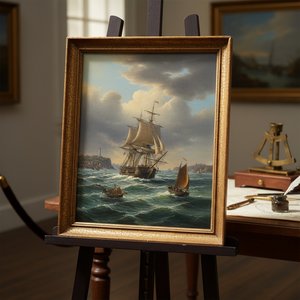
Samuel Walters: Capturing Victorian Maritime Life with Precision & Artistry
Explore the exquisite maritime paintings of Samuel Walters (1811-1882). Discover his mastery of detail, historical scenes & influence on Victorian art. Learn about collecting his works and find high-quality reproductions at ArtsDot.

Walter Greaves: A Study in Victorian Realism & the Social Landscape of British Art
Explore the life & work of Walter Greaves, a key Victorian realist painter influenced by Whistler. Discover his London streetscapes, portraits, and enduring legacy. Learn about art appraisal & reproduction options at ArtsDot.

Herman Armour Webster: Capturing Atmospheric Light in American Impressionism
Explore the captivating world of Herman Armour Webster, an American Impressionist master. Discover his Parisian influences, unique style, and lasting legacy with ArtsDot.

Meisterwerke des 19. Jahrhunderts: Kunst für Ihr Zuhause | ArtsDot
Entdecken Sie die 10 bedeutendsten Kunstwerke des 19. Jahrhunderts! Von Impressionismus bis Realismus – erleben Sie die Geschichten berühmter Maler und ihre Meisterwerke. Hochwertige Reproduktionen für Ihr Zuhause auf ArtsDot.com.