


 In echtem Maßstab anzeigen
 Versenden als Grußkarte
 Teilen
 Details anzeigen
 Leitfaden öffnen

 Herunterladen
 Ähnliche Objekte
 Röntgenaufnahme
 Diashow
 Besucherstatistiken
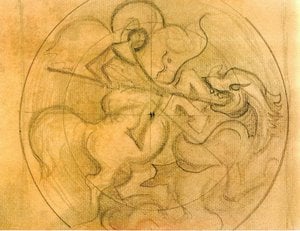
Eos, (1958)
 Mehr anzeigen
Die auf dieser Seite dargestellten Kunstwerke sind urheberrechtlich geschützt, was bedeutet, dass wir keine identische Reproduktion rechtmäßig erstellen oder verkaufen dürfen. Dieser Schutz wird durch internationale Abkommen wie die Berner Übereinkunft und durch nationale Gesetze, einschließlich derer, die von den ... festgelegt wurden US-Urheberrecht – Titel 17.
Als respektvolle und rechtlich einwandfreie Alternative bieten wir individuelle, handgemalte Kunstwerke an, die vom Original inspiriert sind. Unsere geschickten und professionellen Künstler studieren sorgfältig den Stil, die Stimmung und das künstlerische Wesen des Originals, um ein neues, einzigartiges Werk zu schaffen, das dasselbe Gefühl hervorruft – während es zugleich eine eigenständige Originalschöpfung bleibt.
Diese Methode entspricht vollumfänglich den Urheberrechtsbestimmungen, da sie keine Kopie oder Vervielfältigung des geschützten Kunstwerks darstellt. Stattdessen handelt es sich um eine kreative Neuinterpretation – ein neues Gemälde, das vom Original inspiriert, aber nicht identisch mit ihm ist.
Handgefertigte Ölreproduktion
Handgemaltes Ölgemälde auf Leinwand in Ihrer Wunschgröße und mit Rahmen, auf Bestellung von unseren Künstlern angefertigt. ( Zum Druck wechseln Zum digitalen Bild wechseln)




































Wählen Sie aus unseren vordefinierten Formaten, die den ursprünglichen Proportionen des Kunstwerks entsprechen.

Geben Sie die Breite und die Höhe an, die Sie für Ihren Rahmen oder Ihre Wand benötigen. Da dieses Werk handgemalt ist, kann der Künstler bei einer anderen Form etwas mehr um das Bild herum malen oder etwas abschneiden – Sie entscheiden. Wir senden Ihnen ein digitales Mockup zur Freigabe, bevor mit dem Malen begonnen wird. Das auf dieser Seite gezeigte Bild stellt nicht das tatsächliche Ergebnis dar – dies tut nur das Mockup.
Nach der Bestellung wird das ArtsDot.com-Team dem Kunden Anweisungen per E-Mail zusenden und eine Mockup-Vorschau bereitstellen.
Weltweiter Versand () in nur 3 bis 4 Wochen statt der üblichen 5 Wochen. (23 Oktober). Keine Kompromisse bei der Qualität.

Kostenloser weltweiter Expressversand

Hochwertige Leinenleinwand

Vollständiger Versicherungsschutz beim Versand

Zollgebühren-Rückerstattungsgarantie

Garantie für exakte Farbtreue

100-tägiges Rückgaberecht (nur bei Mängeln)

100% Geld-zurück-Garantie

Angebot für Mengenrabatt
 Die Glasoption ist nur für Größen unter 110 cm verfügbar.

Eos, (1958)
Reproduktionsmedium
Format der Reproduktion
-


Gesamtpreis
€ 231
Ähnliche Kunstwerke


Biografie des Künstlers
Toni Stadler: A Master of German Portraiture
Toni Stadler (1888-1982) stands as a quietly influential figure in 20th-century German art, particularly recognized for her exceptional skill in capturing the essence of human character through meticulously crafted portraits. Born in Germany, Stadler’s artistic journey unfolded amidst the burgeoning Expressionist movement, though she ultimately forged her own distinctive path—one characterized by unwavering dedication to realism and a profound sensitivity to light and texture. Unlike many contemporaries who embraced bold stylistic gestures, Stadler favored a restrained approach, prioritizing observation and nuanced rendering to convey psychological depth within her canvases. ### Early Life & Artistic Training: Influences: Impressionism & Early Expressionism Toni Stadler’s formative years were profoundly shaped by the artistic currents of Impressionism and Early Expressionism. These movements instilled in him a foundational understanding of capturing fleeting moments and conveying emotion—principles that would permeate his subsequent oeuvre. He absorbed the techniques of luminism and plein air painting, recognizing the importance of accurately depicting natural light and atmosphere. Stadler’s training encompassed both academic instruction at Munich School for the Decorative and Applied Arts in 1906 and independent experimentation, allowing him to hone his technical abilities while simultaneously cultivating his unique artistic vision. This dual approach proved invaluable as he navigated the evolving landscape of German art during the turbulent years leading up to World War I. ### Notable Works: Karl amadeus Hartmann & Heinrich Heine Among Stadler’s most celebrated works are ‘Karl amadeus Hartmann’ (1958) and ‘Heinrich Heine,’ 1958 – sculptures that exemplify his mastery of form and material. ‘Karl amadeus Hartmann,’ a serene portrait depicting a man seated beside a fountain, exemplifies Stadler’s ability to utilize light and shadow to illuminate the subject's inner life. The sculpture captures a moment of contemplative stillness, inviting viewers to contemplate Hartmann’s gaze and posture. Light plays a crucial role in conveying Hartmann’s serenity—the sculptor skillfully employs chiaroscuro to sculpt the man’s face and torso, highlighting subtle contours and creating an illusion of depth. Similarly, ‘Heinrich Heine,’ 1958—a dark stone sculpture—demonstrates Stadler’s commitment to textural realism, conveying the weight and solidity of human presence. The rough surface of the stone contrasts sharply with Heine's facial features, emphasizing his solemn expression and hinting at inner turmoil. ### Technique & Style: Light, Texture & Psychological Insight Stadler’s technique was rooted in meticulous observation and painstaking execution. He employed a palette knife extensively, layering thin glazes of pigment onto textured surfaces to achieve remarkable depth and luminosity. This method allowed him to capture subtle variations in skin tone and surface sheen—details that conveyed not only physical appearance but also psychological state. His canvases often possessed an ethereal quality, achieved through masterful manipulation of light, mirroring the Impressionists’ fascination with capturing atmospheric effects. Stadler's meticulous attention to detail—the precise rendering of wrinkles, folds, and subtle shifts in color—underscored his belief that art could communicate profound truths about human experience. ### Legacy & Historical Significance: Despite eschewing grand narratives or overtly symbolic imagery, Stadler's work holds considerable historical significance. He represents a counterpoint to the expressive fervor of his era, demonstrating that profound artistic achievement could reside in quiet contemplation and unwavering fidelity to realism. His sculptures continue to resonate today, serving as reminders of the enduring power of observation and the importance of conveying human emotion with sensitivity and precision. Stadler’s legacy rests on his ability to transform ordinary subjects into compelling portraits—expressions of humanity rendered with unparalleled grace and artistry. He remains a testament to the enduring beauty of understated elegance and psychological insight within the realm of German art history.
Toni Stadler
1888 - 1982
Eckdaten zum Künstler
- Artistic Movement Or Style: Porträtkunst
- Date Of Birth: 1888
- Date Of Death: 1982
- Full Name: Toni Stadler
- Nationality: Deutsch
- Notable Artworks:
- Karl amadeus Hartmann
- Heinrich Heine
- Place Of Birth: Deutschland