


 In echtem Maßstab anzeigen
 Versenden als Grußkarte
 Teilen
 Details anzeigen
 Leitfaden

 Herunterladen
 Ähnliche Objekte
 Röntgenaufnahme
 Diashow
 Besucherstatistiken
Armistice Night
 Acrylic On Canvas
- WallArt
- Post-Impressionism
 1918
1918 54.0 x 59.0 cm
 Fitzwilliam-Museum
 Mehr anzeigen
Handgefertigte Ölreproduktion
Handgemaltes Ölgemälde auf Leinwand in Ihrer Wunschgröße und mit Rahmen, auf Bestellung von unseren Künstlern angefertigt. ( Zum Druck wechseln Zum digitalen Bild wechseln)




P118B $10

P118H $10

P118W $10

P438Z $10

P508JH $12

P508YH $12

P805H $10

P805Z $10

P919BZ $10

P919G $10

P919XJ $10

P959ZH $10

P968JZ $12

W106C $8

W218G $10

W218JH $8

W218Y $10

W307PJ $10

W316G $10

W316PJ $8

W316Y $10

W398PJ $8

W4111J $10

W500HY $15

W500JH $15

W692G $12

W849H $8

W940BG $15

W953PJ $8




Wählen Sie aus unseren vordefinierten Formaten, die den ursprünglichen Proportionen des Kunstwerks entsprechen.

Sie können Ihre eigenen Maße eingeben, um einen bestimmten Rahmen oder Platz auszufüllen. Wenn die gewählte Größe nicht den Proportionen des Originalbildes entspricht, werden wir das Kunstwerk entweder beschneiden oder das Gemälde durch zusätzliche, handgemalte Elemente erweitern. Ein digitales Mockup wird Ihnen zur Genehmigung zugesandt, bevor die Produktion beginnt.
Bitte beachten Sie, dass die Bildschirmvorschau nicht die tatsächliche Beschneidung oder Erweiterung widerspiegelt. Nur das Mockup zeigt die endgültige Komposition exakt an.
Obwohl Sondermaße verfügbar sind, empfehlen wir, eine Größe aus der vordefinierten Liste zu wählen, um die ursprünglichen Proportionen beizubehalten.
Nach der Bestellung wird das ArtsDot.com-Team dem Kunden Anweisungen per E-Mail zusenden und eine Mockup-Vorschau bereitstellen.
Weltweiter Versand () in nur 3 bis 4 Wochen statt der üblichen 5 Wochen. (22 September). Keine Kompromisse bei der Qualität.

Kostenloser weltweiter Expressversand

Hochwertige Leinenleinwand

Vollständiger Versicherungsschutz beim Versand

Zollgebühren-Rückerstattungsgarantie

Garantie für exakte Farbtreue

100-tägiges Rückgaberecht (nur bei Mängeln)

100% Geld-zurück-Garantie

Angebot für Mengenrabatt
 Die Glasoption ist nur für Größen unter 110 cm verfügbar.

Armistice Night
Reproduktionsmedium
Format der Reproduktion
-


Gesamtpreis
$ 263
A Night of Remembrance: Sir William Nicholson’s “Armistice Night”
Sir William Nicholson's "Armistice Night," painted in 1918, isn’t merely a depiction of a wartime scene; it’s a visceral embodiment of the complex emotions swirling within a nation grappling with the end – and the profound cost – of World War I. This powerful black-and-white composition captures a moment of tentative celebration amidst lingering grief, a poignant tableau of soldiers, civilians, and captured artillery against the backdrop of a hastily erected makeshift memorial. Nicholson, a key figure in the Beggarstaff partnership known for their satirical illustrations, masterfully translates the raw energy of the era into a visually arresting image that transcends simple historical record.
The painting’s genesis lies within the immediate aftermath of the November 11th armistice – a day etched forever in British history. Nicholson, working with his brother-in-law James Pryde, was commissioned to create a series of images documenting the celebrations and commemorations that erupted across the country. “Armistice Night” isn’t a triumphant parade or a joyous gathering; instead, it presents a scene of restrained optimism, tinged with melancholy. The dominant presence is the captured German cannon, a symbol not just of military defeat but also of the immense human cost of the conflict – the shattered machinery and lost potential represented by this imposing piece of weaponry.
A Study in Contrasts: Style and Technique
Nicholson’s style is immediately recognizable as a potent blend of realism and expressive distortion. He employs a flattened perspective, characteristic of the Beggarstaff's work, to heighten the sense of immediacy and drama. The figures are rendered with bold outlines and simplified forms, emphasizing their physicality and emotional state rather than striving for photographic accuracy. Notice how he uses varying shades of grey to sculpt volume and create depth – the rough texture of the cannon’s metal contrasts sharply with the smoother surfaces of the uniforms and faces.
The painting's technique is equally noteworthy. Nicholson utilizes a dry brushstroke, lending a sense of urgency and rawness to the composition. The lighting is dramatic, casting long shadows that accentuate the figures’ postures and gestures. He masterfully employs chiaroscuro – the interplay of light and dark – to draw the viewer’s eye to key elements within the scene, particularly the faces of the soldiers and civilians who are observing the captured cannon. This deliberate use of light and shadow contributes significantly to the painting's emotional impact.
Symbolism and Emotional Resonance
Beyond its immediate depiction of a wartime event, “Armistice Night” is rich in symbolic meaning. The captured cannon represents not just military defeat but also the futility of war – a machine of destruction rendered inert. The diverse group of individuals gathered around it—soldiers, civilians, and even children—suggests a shared experience of loss and a tentative hope for the future. The celebratory atmosphere is tempered by an underlying sadness; the smiles are hesitant, the gestures restrained.
Furthermore, the painting subtly alludes to the broader social context of the time. The presence of women amongst the crowd speaks to their vital role in supporting the war effort and the changing societal roles emerging as a result of conflict. Nicholson’s choice of composition—a chaotic yet ordered scene—reflects the uncertainty and upheaval that characterized post-war Britain. The painting evokes a complex blend of relief, exhaustion, and unresolved grief – emotions that resonated deeply with a nation struggling to rebuild after four years of devastating warfare.
A Timeless Reflection: Reproduction and Legacy
Reproductions of “Armistice Night” offer a powerful way to connect with this pivotal moment in history. The original’s stark monochrome palette translates beautifully into high-quality prints, allowing viewers to appreciate Nicholson's masterful use of light and shadow. The painting’s enduring appeal lies not only in its historical significance but also in its universal themes of loss, remembrance, and the human capacity for resilience. “Armistice Night” remains a poignant reminder of the sacrifices made during World War I and a testament to Sir William Nicholson’s artistic skill.
Ähnliche Kunstwerke


Biografie des Künstlers
Frühe Jahre und Ausbildung
Sir William Newzam Prior Nicholson, ein renommierter britischer Maler, wurde am 5. Februar 1872 in Newark-on-Trent geboren. Er war der jüngste Sohn von William Newzam Nicholson, einem Industriellen und konservativen Parlamentsabgeordneten, und seiner Frau Annie Elizabeth Prior. Ab dem neunten Lebensjahr besuchte er die Magnus Grammar School, wo er Malunterricht bei William Cubley erhielt, einem Maler und Politiker.Künstlerische Karriere
Nicholsons künstlerische Karriere lässt sich in mehrere Phasen unterteilen, die jeweils durch einen einzigartigen Stil und ein Medium gekennzeichnet sind. In seinen frühen Zwanzigern arbeitete er mit seinem Schwager James Pryde zusammen an Plakatentwürfen und grafischen Arbeiten und schuf innovative Plakate, die ihre Kühnheit der Umrisse und Einfachheit der Behandlung zeigten:- Die Beggarstaff-Partnerschaft (1893–1898): Nicholsons Zusammenarbeit mit James Pryde führte zu einer Reihe revolutionärer Plakate, darunter Don Quixote (1895) und Harpers Magazine (1895).
- Holzschnitt und Holzschnitttechnik (1900er Jahre): Nicholson entwickelte sich aus den Plakaten heraus und verfeinerte seinen persönlichen Stil durch Holzschnitt- und Holzschnitttechniken.
- Malerei (1910er Jahre): Er konzentrierte sich auf die Malerei, ermutigt von Whistler, und stellte erstmals als Maler in der International Society aus.
Wichtige Werke und Ausstellungen
Zu Nicholsons wichtigsten Werken gehören:- Lady in Furs, Mme. P. (ca. 1907), ein Porträt, das seine Beherrschung des Wesens seiner Motive einfängt.
- The Lowestoft Bowl (1911), eine Stilllebenmalerei, die seine Liebe zum Detail und seinen Einsatz von Farbe demonstriert.
- Study for 'Plaza de Toros, Malaga' (1935), eine Landschaft, die seine Fähigkeit hervorhebt, die Atmosphäre eines Ortes einzufangen.
Einflüsse und Entwicklung
Whistler spielte eine entscheidende Rolle in Nicholsons künstlerischer Entwicklung. Er ermutigte Nicholson, sich der Malerei zu widmen, was zu einer Verlagerung von grafischen Arbeiten hin zur Ölmalerei führte. Nicholsons Stil wurde durch den Impressionismus und den Ästhetizismus beeinflusst, wobei er Wert auf formale Elemente wie Komposition, Farbe und Licht legte. Seine frühen Werke zeigten einen starken Einfluss des Jugendstils, während seine späteren Gemälde eine größere Einfachheit und Klarheit aufwiesen.Historische Bedeutung
Sir William Nicholson trug wesentlich zur Entwicklung der britischen Kunst des späten 19. und frühen 20. Jahrhunderts bei. Seine innovativen Plakatentwürfe revolutionierten die grafische Gestaltung und beeinflussten die Entwicklung des Sachplakats in Deutschland. Seine Gemälde zeugen von seinem Talent, das Alltägliche mit Eleganz und Raffinesse darzustellen. Nicholson hinterließ ein bedeutendes künstlerisches Erbe, das weiterhin bewundert und studiert wird.
Sir William Nicholson
1872 - 1949 , Vereinigtes Königreich
Eckdaten zum Künstler
- Beeinflusste Künstler/Bewegungen: ['Beggarstaff Brothers']
- Bemerkenswerte Werke:
- Lady in Furs, Mme. P.
- The Lowestoft Bowl
- Study for 'Plaza de Toros'
- Einflussreiche Künstler: ['Whistler']
- Geburtsdatum: 5. Februar 1872
- Geburtsort: Newark-on-Trent, Vereinigtes Königreich
- Künstlerische Richtung: Porträtmalerei, Stillleben, Holzschnitt
- Nationalität: Britisch
- Sterbedatum: 16. Mai 1949
- Vollständiger Name: Sir William Newzam Prior Nicholson
Verwandte Artikel

William Owen: A Poetic Vision of War & Landscape in British Modernism
Explore the poignant war poetry of Wilfred Owen, a key figure in British Modernism. Discover his innovative style, themes of loss & camaraderie, and lasting impact on 20th-century literature. Analysis & historical context included.

Ben Nicholson: Pionier der Abstraktion und die Poetik des Reliefs im britischen Modernismus
Entdecken Sie Ben Nicholsons Pionierarbeit der britischen Abstraktion! Analysen seiner 'White Reliefs', Einflüsse, Marktperspektiven und Investitionsmöglichkeiten für Kunstsammler. Expertenwissen auf ArtsDot.
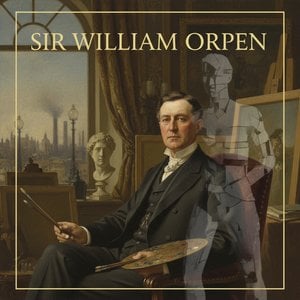
Sir William Orpen: A Study in Edwardian Portraiture & the Shadows of Modernity
Explore the life & art of Sir William Orpen, a master of Edwardian portraiture and poignant WWI depictions. Discover his unique realism, psychological depth, and enduring legacy in this insightful analysis.

C.R.W. Nevinson: A Vorticist Vision of War & Modernity
Explore the powerful art of C.R.W. Nevinson, a key British Vorticist painter. Discover his impactful depictions of WWI and evolution beyond Futurism. Expert analysis & high-quality reproductions at ArtsDot.

Sir William Nicholson: Ein Meister des postimpressionistischen Porträts und der dekorativen Moderne
Entdecken Sie das Werk von Sir William Nicholson – ein Pionier des postimpressionistischen Porträts und der dekorativen Moderne. Erfahren Sie mehr über seine künstlerische Entwicklung, den Einfluss seiner Werke und seine Bedeutung für die britische Kunstgeschichte.


