


 Vorschau anzeigen
 Versenden
 Teilen
 Details anzeigen

 Herunterladen
 Ähnliche Objekte
 Röntgenaufnahme
 Diashow
St. Jerome


 Weiterlesen
Giclée / Kunstdruck
Giclée- oder Leinwanddruck in Museumsqualität mit schneller Produktion und flexiblen Veredelungsoptionen. ( Handgemalte Reproduktion bestellen Bild kaufen)




P118B $10

P118H $10

P118W $10

P438Z $10

P508JH $12

P508YH $12

P805H $10

P805Z $10

P919BZ $10

P919G $10

P919XJ $10

P959ZH $10

P968JZ $12

W106C $8

W218G $10

W218JH $8

W218Y $10

W307PJ $10

W316G $10

W316PJ $8

W316Y $10

W398PJ $8

W4111J $10

W500HY $15

W500JH $15

W692G $12

W849H $8

W940BG $15

W953PJ $8




Wählen Sie aus unseren vordefinierten Formaten, die den ursprünglichen Proportionen des Kunstwerks entsprechen.

Sie können Ihre eigenen Maße eingeben, um ein bestimmtes Format oder einen speziellen Platz einzupassen. Wenn das von Ihnen gewählte Format nicht den Proportionen des Originalbildes entspricht, werden wir das Kunstwerk entweder beschneiden oder das Bild mit einem gespiegelten oder einfarbigen Rand erweitern. Ein digitaler Entwurf wird Ihnen zur Genehmigung zugesandt, bevor die Produktion beginnt.
Bitte beachten Sie, dass die Vorschau auf dem Bildschirm nicht den tatsächlichen Zuschnitt oder die Erweiterung widerspiegelt. Nur der Entwurf zeigt die endgültige Komposition präzise an.
Obwohl Sondermaße verfügbar sind, empfehlen wir die Auswahl eines Maßes aus der vordefinierten Liste, um die ursprünglichen Proportionen zu bewahren.
Weltweiter Versand () innerhalb von 2 Wochen statt der üblichen 4/5 Wochen. (13 August)

Kostenloser weltweiter Expressversand

Hochwertige Leinenleinwand

Umfassender Versicherungsschutz beim Versand

Zollgebühren-Rückerstattungsgarantie

Garantie für exakte Farbtreue

60 Tage Rückgaberecht (nur bei Mängeln)

100% Geld-zurück-Garantie

Mengenrabatt verfügbar
 Die Glasoption ist nur für Größen unter 110 cm verfügbar.

St. Jerome
Giclée / Kunstdruck
Format der Reproduktion
-


Gesamtpreis
$ 62
Sammlerstück-Beschreibung
Sandro Botticelli’s St. Jerome: A Meditation on Faith and Mortality
Botticelli's "St. Jerome" stands as an emblem of the Florentine Renaissance, embodying its humanist ideals alongside profound spiritual contemplation. Painted between 1498 and 1505 during Botticelli’s mature artistic period—a time deeply influenced by Girolamo Savonarola’s fervent sermons advocating moral reform—this painting transcends mere depiction; it invites viewers into a dialogue with themes of asceticism, repentance, and the inescapable reality of death.Subject Matter and Composition
The artwork portrays Saint Jerome, revered as the translator of the Bible into Latin and a champion of monastic piety, in a strikingly austere setting. He is depicted seated upon a rocky outcrop—a deliberate choice reflecting the desolate landscape favored by contemplative saints—holding a skull aloft in his left hand while gazing intently at it. This gesture immediately establishes the painting’s central preoccupation: mortality. The positioning of Jerome emphasizes his solitude and vulnerability, mirroring the spiritual quest for which he is famed. Two birds perched on branches flanking the saint reinforce this sense of isolation and symbolize hope amidst despair—a subtle yet powerful visual element characteristic of Botticelli's artistic sensibility.Style and Technique
Botticelli’s masterful technique exemplifies the refined style prevalent during his era. Employing tempera paint on canvas (later transferred from a panel), he achieves remarkable luminosity and detail through meticulous layering of pigments. The artist skillfully utilizes linear perspective to create depth within the landscape, grounding Jerome's figure in a tangible environment while simultaneously conveying an ethereal quality. Botticelli’s characteristic gracefulness—evident in the flowing drapery and delicately rendered facial features—is palpable throughout the composition. This painting is considered part of the San Marco Altarpiece, alongside “St Dominic,” demonstrating Botticelli’s collaborative spirit with fellow artists of his time.Symbolism: The Skull and Beyond
The skull held by Saint Jerome serves as a cornerstone of symbolic representation. It embodies not merely physical death but also spiritual decay—a reminder that earthly existence is fleeting and that true fulfillment lies in confronting one's mortality with humility and acceptance. The barren landscape underscores this theme, symbolizing the ascetic life dedicated to God and highlighting the absence of worldly distractions. Furthermore, Jerome’s gaze upon the skull prompts introspection and encourages viewers to contemplate their own spiritual journey. The book resting beside him symbolizes Jerome’s unwavering devotion to scripture—the source of his wisdom and moral guidance.Legacy and Emotional Impact
“St. Jerome” remains a testament to Botticelli's ability to distill complex theological concepts into visually arresting imagery. Its enduring appeal stems from its profound exploration of human experience—specifically, the confrontation with death and the pursuit of spiritual purity. The painting’s serene beauty combined with its solemn message continues to inspire artists and scholars alike, cementing Botticelli’s place as one of the most influential figures in Renaissance art. It serves as a poignant meditation on faith, repentance, and the acceptance of life's inevitable end—a timeless masterpiece that resonates across centuries.Ähnliche Kunstwerke


Über den Künstler
frühes Leben und Ausbildung
Sandro Botticelli, geboren Alessandro di Mariano di Vanni Filipepi um 1445, war eine zentrale Figur im frühen italienischen Frührenaissance der Malerei. Zunächst posthumig vernachlässigt, wurde Botticellis Werk im späten 19. Jahrhundert von den Präraffaeliten revitalisiert und führte zu einer Neubewertung seiner künstlerischen Beiträge. Botticelli wurde in Florenz, Italien, geboren und lebte sein ganzes Leben im selben Viertel. Seine Familie, darunter sein Vater Mariano di Vanni d’Amedeo Filipepi, war in verschiedene Berufe involviert, was sie mit Künstlern in Kontakt brachte. Giorgio Vasari berichtete, dass Botticelli zunächst als Goldschmied ausgebildet wurde.Künstlerischer Stil und bemerkenswerte Werke
Botticellis Werk ist durch elegante Linearität gekennzeichnet, die die Lücke zwischen der späten italienischen Gotik und dem frühen Frührenaissance schließt. Seine berühmtesten Werke, die Geburt des Venus und Primavera, werden in der Uffizialleerie in Florenz ausgestellt, die eine bedeutende Sammlung seiner Kunst beherbergt. * die Geburt des Venus (ansicht auf ArtsDot) * Primavera (Sandro Botticellis Kunst erkunden auf ArtsDot) * Mystische Geburt (Nationalgalerie, London), datiert 1501, ist das einzige Werk von Botticelli mit einem klaren Datum.Vermächtnis und Einfluss
Botticellis Stil entwickelte sich in den 1490er Jahren zu einem persönlicheren Ansatz und unterschied sich von Zeitgenossen wie Leonardo da Vinci und dem aufkommenden Hochrenaissance-Stil. Sein Werk wurde als bedeutende Beiträge zur italienischen Renaissance Kunstbewegung anerkannt. * Die italienische Renaissance Kunstbewegung * Sandro Botticelli auf Wikipedia- Bekannte Künstler der italienischen Renaissance umfassen Sandro Botticelli, Leonardo da Vinci, Michelangelo und Tizian.
- Die Uffizialleerie in Florenz beherbergt eine bedeutende Sammlung von Botticellis Kunst.
- Botticellis Werk wurde als eine zentrale Figur im frühen italienischen Frührenaissance der Malerei anerkannt.

Sandro Botticelli
1445 - 1510 , Italien
Kurzinfos
- Beeinflusste Künstler: ['Präraffaeliten']
- Bemerkenswerte Werke:
- Die Geburt der Venus
- Primavera
- Mystische Geburt
- Einflussreiche Künstler:
- Fra Angelico
- Paolo Uccello
- Geburtsdatum: ca. 1445
- Geburtsort: Florenz, Italien
- Künstlerische Bewegung: Frührenaissance
- Nationalität: Italienisch
- Sterbedatum: 1510
- Vollständiger Name: Sandro Botticelli
Ähnliche Artikel
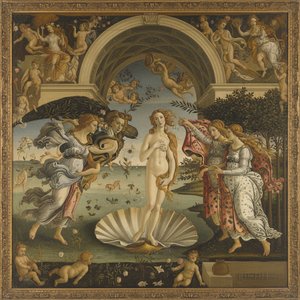
Sandro Botticelli: Die 25 Meisterwerke des Renaissance-Genies – Kunst für Ihr Zuhause
Entdecken Sie die 25 schönsten Meisterwerke von Sandro Botticelli! Erleben Sie die Renaissance-Kunst mit 'Geburt der Venus', 'Primavera' & mehr. Hochwertige Reproduktionen für Ihr Zuhause – jetzt auf ArtsDot.com!

Die 25 Meisterwerke der Uffizien: Kunstgeschichte für Ihr Zuhause | ArtsDot
Entdecken Sie die 25 berühmtesten Meisterwerke der Uffizien, Florenz! Von Botticelli bis Leonardo da Vinci – Kunstgeschichte erleben. Hochwertige Reproduktionen & Inspiration für Ihr Zuhause auf ArtsDot.com.

Discover the Divine: Inspiring Saint Anthony Artworks to Elevate Your Home Decor
Transform your home with the profound beauty of Saint Anthony artworks. Explore exquisite Baroque reproductions by Murillo and Zurbarán, hand-painted on 100% cotton canvas to bring divine serenity and timeless elegance to your interior design.

El Greco: Die 25 Meisterwerke – Kunst für Ihr Zuhause | ArtsDot
Entdecken Sie die 25 bedeutendsten Meisterwerke von El Greco! Erleben Sie die spirituelle Tiefe und den dramatischen Stil des griechischen Malers. Hochwertige Kunstdrucke & Inspiration für Ihr Zuhause auf ArtsDot.com.

Fra Angelico: Die 25 Meisterwerke des italienischen Frührenaissance-Malers | ArtsDot
Entdecken Sie die 25 schönsten Meisterwerke von Fra Angelico! Erleben Sie religiöse Kunst der italienischen Renaissance, himmlische Fresken & Panelgemälde. Finden Sie hochwertige Kunstdrucke und Reproduktionen für Ihr Zuhause auf ArtsDot.com.



