


 Vorschau anzeigen
 Versenden
 Teilen
 Details anzeigen

 Herunterladen
 Ähnliche Objekte
 Röntgenaufnahme
 Diashow
Primavera -

 Weiterlesen
Giclée / Kunstdruck
Giclée- oder Leinwanddruck in Museumsqualität mit schneller Produktion und flexiblen Veredelungsoptionen. ( Handgemalte Reproduktion bestellen Bild kaufen)




P118B $10

P118H $10

P118W $10

P438Z $10

P508JH $12

P508YH $12

P805H $10

P805Z $10

P919BZ $10

P919G $10

P919XJ $10

P959ZH $10

P968JZ $12

W106C $8

W218G $10

W218JH $8

W218Y $10

W307PJ $10

W316G $10

W316PJ $8

W316Y $10

W398PJ $8

W4111J $10

W500HY $15

W500JH $15

W692G $12

W849H $8

W940BG $15

W953PJ $8




Wählen Sie aus unseren vordefinierten Formaten, die den ursprünglichen Proportionen des Kunstwerks entsprechen.

Sie können Ihre eigenen Maße eingeben, um ein bestimmtes Format oder einen speziellen Platz einzupassen. Wenn das von Ihnen gewählte Format nicht den Proportionen des Originalbildes entspricht, werden wir das Kunstwerk entweder beschneiden oder das Bild mit einem gespiegelten oder einfarbigen Rand erweitern. Ein digitaler Entwurf wird Ihnen zur Genehmigung zugesandt, bevor die Produktion beginnt.
Bitte beachten Sie, dass die Vorschau auf dem Bildschirm nicht den tatsächlichen Zuschnitt oder die Erweiterung widerspiegelt. Nur der Entwurf zeigt die endgültige Komposition präzise an.
Obwohl Sondermaße verfügbar sind, empfehlen wir die Auswahl eines Maßes aus der vordefinierten Liste, um die ursprünglichen Proportionen zu bewahren.
Weltweiter Versand () innerhalb von 2 Wochen statt der üblichen 4/5 Wochen. (6 September)

Kostenloser weltweiter Expressversand

Hochwertige Leinenleinwand

Umfassender Versicherungsschutz beim Versand

Zollgebühren-Rückerstattungsgarantie

Garantie für exakte Farbtreue

100 Tage Rückgaberecht (nur bei Mängeln)

100% Geld-zurück-Garantie

Mengenrabatt verfügbar
 Die Glasoption ist nur für Größen unter 110 cm verfügbar.

Primavera -
Giclée / Kunstdruck
Format der Reproduktion
-


Gesamtpreis
$ 62
Sandro Botticelli’s *Primavera*: A Renaissance Reverie
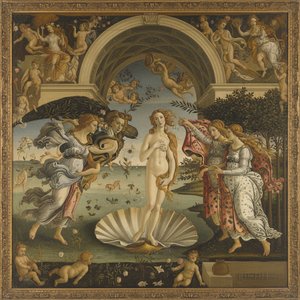
Sandro Botticelli's *Primavera*, painted circa 1482, stands as one of the most enchanting and enduring images of the Italian Renaissance. More than simply a depiction of a woodland scene, it is a complex tapestry woven with allegorical symbolism, reflecting the intellectual currents and humanist ideals that defined Florence during the reign of Lorenzo de' Medici. The painting’s immediate impact lies in its ethereal beauty – a dreamlike vision populated by exquisitely rendered figures amidst a vibrant, almost impossibly lush, natural setting. Botticelli’s masterful handling of line and color creates an atmosphere of serene contemplation, inviting viewers to lose themselves within this carefully constructed world.
- Subject Matter: The scene portrays a gathering of mythological figures – Venus, Mars, Mercury, Zephyrus, and Flora – amidst a grove of trees. While the precise narrative remains debated by scholars, it is widely believed to be an allegorical representation of springtime, love, and fertility, drawing upon classical mythology and humanist interpretations.
- Style & Technique: Botticelli’s style in *Primavera* exemplifies the Florentine Early Renaissance. Characterized by elongated figures, graceful poses, and a delicate attention to detail, it departs from the more rigid conventions of earlier Gothic art. The painting is executed with tempera on wood panel, a technique favored by Botticelli that allows for precise lines and subtle gradations of color.
A Symphony of Symbolism
*Primavera* is saturated with symbolic meaning, reflecting the intellectual climate of Florence at the time. Venus, often identified as the goddess of love and beauty, occupies a central position, her presence radiating an aura of grace and serenity. Mars, representing war and strength, stands in contrast to Venus’s gentleness, suggesting the inherent tension between opposing forces. Mercury, the messenger god, embodies intellect and communication, while Zephyrus, the west wind, is depicted as blowing Flora, goddess of spring and flowers, into bloom. The apple tree itself – a recurring motif in Renaissance art – symbolizes immortality and the renewal of life. The knife held by one figure has been interpreted as representing the act of hunting or preparation for food, adding another layer to the painting's complex symbolism.
- Venus’s Role: As the central figure, Venus embodies not just earthly love but also divine grace and spiritual perfection.
- The Grove as a Microcosm: The forest setting represents the ideal state of nature – a harmonious balance between humanity and the natural world.
Historical Context & Legacy
Painted for the Medici family, *Primavera* reflects the humanist revival that was transforming Florence in the late 15th century. The rediscovery of classical antiquity fueled a renewed interest in mythology and allegory, providing artists with new subjects and intellectual frameworks. Botticelli’s work, along with works by other Florentine masters like Leonardo da Vinci and Michelangelo, helped to establish Florence as the cultural center of Europe. *Primavera* quickly gained renown, becoming one of the most celebrated paintings of the Renaissance and inspiring countless artists throughout history. Its influence can be seen in subsequent depictions of spring and fertility, solidifying its place as a cornerstone of Western art.
Note:** This reproduction is created using high-resolution digital printing on premium canvas with archival inks, ensuring exceptional color accuracy and longevity.*Ähnliche Kunstwerke


Über den Künstler
frühes Leben und Ausbildung
Sandro Botticelli, geboren Alessandro di Mariano di Vanni Filipepi um 1445, war eine zentrale Figur im frühen italienischen Frührenaissance der Malerei. Zunächst posthumig vernachlässigt, wurde Botticellis Werk im späten 19. Jahrhundert von den Präraffaeliten revitalisiert und führte zu einer Neubewertung seiner künstlerischen Beiträge. Botticelli wurde in Florenz, Italien, geboren und lebte sein ganzes Leben im selben Viertel. Seine Familie, darunter sein Vater Mariano di Vanni d’Amedeo Filipepi, war in verschiedene Berufe involviert, was sie mit Künstlern in Kontakt brachte. Giorgio Vasari berichtete, dass Botticelli zunächst als Goldschmied ausgebildet wurde.Künstlerischer Stil und bemerkenswerte Werke
Botticellis Werk ist durch elegante Linearität gekennzeichnet, die die Lücke zwischen der späten italienischen Gotik und dem frühen Frührenaissance schließt. Seine berühmtesten Werke, die Geburt des Venus und Primavera, werden in der Uffizialleerie in Florenz ausgestellt, die eine bedeutende Sammlung seiner Kunst beherbergt. * die Geburt des Venus (ansicht auf ArtsDot) * Primavera (Sandro Botticellis Kunst erkunden auf ArtsDot) * Mystische Geburt (Nationalgalerie, London), datiert 1501, ist das einzige Werk von Botticelli mit einem klaren Datum.Vermächtnis und Einfluss
Botticellis Stil entwickelte sich in den 1490er Jahren zu einem persönlicheren Ansatz und unterschied sich von Zeitgenossen wie Leonardo da Vinci und dem aufkommenden Hochrenaissance-Stil. Sein Werk wurde als bedeutende Beiträge zur italienischen Renaissance Kunstbewegung anerkannt. * Die italienische Renaissance Kunstbewegung * Sandro Botticelli auf Wikipedia- Bekannte Künstler der italienischen Renaissance umfassen Sandro Botticelli, Leonardo da Vinci, Michelangelo und Tizian.
- Die Uffizialleerie in Florenz beherbergt eine bedeutende Sammlung von Botticellis Kunst.
- Botticellis Werk wurde als eine zentrale Figur im frühen italienischen Frührenaissance der Malerei anerkannt.

Sandro Botticelli
1445 - 1510 , Italien
Kurzinfos
- Beeinflusste Künstler: ['Präraffaeliten']
- Bemerkenswerte Werke:
- Die Geburt der Venus
- Primavera
- Mystische Geburt
- Einflussreiche Künstler:
- Fra Angelico
- Paolo Uccello
- Geburtsdatum: ca. 1445
- Geburtsort: Florenz, Italien
- Künstlerische Bewegung: Frührenaissance
- Nationalität: Italienisch
- Sterbedatum: 1510
- Vollständiger Name: Sandro Botticelli
Ähnliche Artikel
Sandro Botticelli: Die 25 Meisterwerke des Renaissance-Genies – Kunst für Ihr Zuhause
Entdecken Sie die 25 schönsten Meisterwerke von Sandro Botticelli! Erleben Sie die Renaissance-Kunst mit 'Geburt der Venus', 'Primavera' & mehr. Hochwertige Reproduktionen für Ihr Zuhause – jetzt auf ArtsDot.com!

Frührenaissance: Die 10 Meisterwerke, die eine Epoche prägten – Kunst für Ihr Zuhause
Entdecken Sie die 10 prägendsten Meisterwerke der Frührenaissance! Von Giotto bis Botticelli – erleben Sie Kunstgeschichte hautnah. Hochwertige Reproduktionen für Ihr Zuhause auf .

Giclée Prints: Archival Quality & Aesthetic Nuances for the Discerning Collector
Explore the world of giclée prints with ArtsDot. Learn about archival quality, aesthetic nuances & investment potential. Expert guidance for discerning art collectors seeking museum-quality reproductions and lasting value.

Echoes of Time: Exploring the Enduring Appeal & Historical Context of Vintage Art Prints
Explore the captivating world of vintage art prints! Discover their history, collecting tips & enduring appeal. Expert insights on chromolithography and building a legacy collection with ArtsDot.

Die 25 Meisterwerke der Uffizien: Kunstgeschichte für Ihr Zuhause | ArtsDot
Entdecken Sie die 25 berühmtesten Meisterwerke der Uffizien, Florenz! Von Botticelli bis Leonardo da Vinci – Kunstgeschichte erleben. Hochwertige Reproduktionen & Inspiration für Ihr Zuhause auf ArtsDot.com.


