


 Vorschau anzeigen
 Versenden
 Teilen
 Details anzeigen

 Herunterladen
 Ähnliche Objekte
 Röntgenaufnahme
 Diashow
Mystic Nativity -

 Weiterlesen
Giclée / Kunstdruck
Giclée- oder Leinwanddruck in Museumsqualität mit schneller Produktion und flexiblen Veredelungsoptionen. ( Handgemalte Reproduktion bestellen Bild kaufen)




P118B $10

P118H $10

P118W $10

P438Z $10

P508JH $12

P508YH $12

P805H $10

P805Z $10

P919BZ $10

P919G $10

P919XJ $10

P959ZH $10

P968JZ $12

W106C $8

W218G $10

W218JH $8

W218Y $10

W307PJ $10

W316G $10

W316PJ $8

W316Y $10

W398PJ $8

W4111J $10

W500HY $15

W500JH $15

W692G $12

W849H $8

W940BG $15

W953PJ $8




Wählen Sie aus unseren vordefinierten Formaten, die den ursprünglichen Proportionen des Kunstwerks entsprechen.

Sie können Ihre eigenen Maße eingeben, um ein bestimmtes Format oder einen speziellen Platz einzupassen. Wenn das von Ihnen gewählte Format nicht den Proportionen des Originalbildes entspricht, werden wir das Kunstwerk entweder beschneiden oder das Bild mit einem gespiegelten oder einfarbigen Rand erweitern. Ein digitaler Entwurf wird Ihnen zur Genehmigung zugesandt, bevor die Produktion beginnt.
Bitte beachten Sie, dass die Vorschau auf dem Bildschirm nicht den tatsächlichen Zuschnitt oder die Erweiterung widerspiegelt. Nur der Entwurf zeigt die endgültige Komposition präzise an.
Obwohl Sondermaße verfügbar sind, empfehlen wir die Auswahl eines Maßes aus der vordefinierten Liste, um die ursprünglichen Proportionen zu bewahren.
Weltweiter Versand () innerhalb von 2 Wochen statt der üblichen 4/5 Wochen. (17 August)

Kostenloser weltweiter Expressversand

Hochwertige Leinenleinwand

Umfassender Versicherungsschutz beim Versand

Zollgebühren-Rückerstattungsgarantie

Garantie für exakte Farbtreue

60 Tage Rückgaberecht (nur bei Mängeln)

100% Geld-zurück-Garantie

Mengenrabatt verfügbar
 Die Glasoption ist nur für Größen unter 110 cm verfügbar.

Mystic Nativity -
Giclée / Kunstdruck
Format der Reproduktion
-


Gesamtpreis
$ 62
Sammlerstück-Beschreibung
A Vision of Divine Grace: Botticelli’s Mystical Nativity
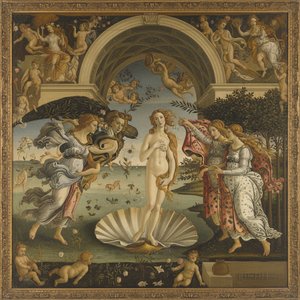
Botticelli's *The Mystical Nativity*, painted circa 1480-1490, stands as a cornerstone of Florentine Renaissance art—a masterpiece that transcends mere depiction to embody profound spiritual contemplation. Executed in tempera on poplar wood, the painting captures an ethereal tableau of the birth of Jesus Christ, firmly rooted in Christian iconography yet imbued with Botticelli’s signature lyrical elegance. It's more than just a scene from scripture; it’s a carefully crafted meditation on faith and humility, reflecting the humanist ideals burgeoning within Florence at the time.The Composition: A Harmonious Balance
The artwork presents a meticulously balanced composition centered around the manger—a humble dwelling for the infant Jesus—where Mary cradles him tenderly while Joseph stands beside her. Angels descend from heaven, their wings outstretched in benediction, illuminating the stable interior with radiant light. Shepherds gaze upon the miraculous event, conveying reverence and awe. Notably, Botticelli incorporates a bird soaring above the scene, symbolizing divine providence and aspiration towards spiritual enlightenment—a motif prevalent throughout Renaissance art. The inclusion of a potted plant adds an element of earthly beauty to this celestial drama, subtly reminding viewers of God’s presence in the natural world.Botticelli's Technique: Delicate Tempera Paint
Botticelli’s mastery lies in his masterful application of tempera paint—a technique known for its luminosity and durability. Unlike oil paints, which require extended drying times and layering, tempera pigments bind to a prepared wooden surface using egg yolk, resulting in vibrant colors that retain their brilliance over centuries. Botticelli's meticulous brushstrokes achieve an astonishing level of detail, capturing the textures of wool blankets, animal hides, and even the delicate foliage of the plant—demonstrating his unwavering commitment to realism tempered by artistic idealism. The artist’s attention to anatomical accuracy is evident in the figures’ postures and drapery folds, reflecting the influence of classical sculpture and humanist scholarship.Symbolism: Echoes of Medieval Spirituality
The *Mystical Nativity* draws heavily upon medieval Christian symbolism—a tradition Botticelli skillfully reimagines for his own time. The dove represents the Holy Spirit, descending upon Mary as she receives Jesus’s incarnation. The manger itself symbolizes humility and poverty, highlighting the divine grace bestowed upon humanity through Christ's birth. Furthermore, the shepherds embody faithfulness and devotion to God’s word—figures who recognized the significance of the nativity despite their humble status. Botticelli’s artistic choices resonate with broader theological concerns about salvation and redemption, cementing its place as a seminal work within the Renaissance spiritual landscape.Emotional Impact: A Moment of Transcendence
Ultimately, *The Mystical Nativity* succeeds in conveying an overwhelming sense of serenity and wonder—a testament to Botticelli's ability to capture the sublime beauty of faith. The painting’s soft hues and graceful lines evoke a feeling of ethereal tranquility, inviting viewers into a contemplative space where earthly concerns fade away before the majesty of divine revelation. It remains a powerfully evocative image, continuing to inspire admiration for its artistic excellence and spiritual depth—a timeless masterpiece that embodies the enduring fascination with themes of birth, innocence, and grace.Ähnliche Kunstwerke


Über den Künstler
frühes Leben und Ausbildung
Sandro Botticelli, geboren Alessandro di Mariano di Vanni Filipepi um 1445, war eine zentrale Figur im frühen italienischen Frührenaissance der Malerei. Zunächst posthumig vernachlässigt, wurde Botticellis Werk im späten 19. Jahrhundert von den Präraffaeliten revitalisiert und führte zu einer Neubewertung seiner künstlerischen Beiträge. Botticelli wurde in Florenz, Italien, geboren und lebte sein ganzes Leben im selben Viertel. Seine Familie, darunter sein Vater Mariano di Vanni d’Amedeo Filipepi, war in verschiedene Berufe involviert, was sie mit Künstlern in Kontakt brachte. Giorgio Vasari berichtete, dass Botticelli zunächst als Goldschmied ausgebildet wurde.Künstlerischer Stil und bemerkenswerte Werke
Botticellis Werk ist durch elegante Linearität gekennzeichnet, die die Lücke zwischen der späten italienischen Gotik und dem frühen Frührenaissance schließt. Seine berühmtesten Werke, die Geburt des Venus und Primavera, werden in der Uffizialleerie in Florenz ausgestellt, die eine bedeutende Sammlung seiner Kunst beherbergt. * die Geburt des Venus (ansicht auf ArtsDot) * Primavera (Sandro Botticellis Kunst erkunden auf ArtsDot) * Mystische Geburt (Nationalgalerie, London), datiert 1501, ist das einzige Werk von Botticelli mit einem klaren Datum.Vermächtnis und Einfluss
Botticellis Stil entwickelte sich in den 1490er Jahren zu einem persönlicheren Ansatz und unterschied sich von Zeitgenossen wie Leonardo da Vinci und dem aufkommenden Hochrenaissance-Stil. Sein Werk wurde als bedeutende Beiträge zur italienischen Renaissance Kunstbewegung anerkannt. * Die italienische Renaissance Kunstbewegung * Sandro Botticelli auf Wikipedia- Bekannte Künstler der italienischen Renaissance umfassen Sandro Botticelli, Leonardo da Vinci, Michelangelo und Tizian.
- Die Uffizialleerie in Florenz beherbergt eine bedeutende Sammlung von Botticellis Kunst.
- Botticellis Werk wurde als eine zentrale Figur im frühen italienischen Frührenaissance der Malerei anerkannt.

Sandro Botticelli
1445 - 1510 , Italien
Kurzinfos
- Beeinflusste Künstler: ['Präraffaeliten']
- Bemerkenswerte Werke:
- Die Geburt der Venus
- Primavera
- Mystische Geburt
- Einflussreiche Künstler:
- Fra Angelico
- Paolo Uccello
- Geburtsdatum: ca. 1445
- Geburtsort: Florenz, Italien
- Künstlerische Bewegung: Frührenaissance
- Nationalität: Italienisch
- Sterbedatum: 1510
- Vollständiger Name: Sandro Botticelli
Ähnliche Artikel
Sandro Botticelli: Die 25 Meisterwerke des Renaissance-Genies – Kunst für Ihr Zuhause
Entdecken Sie die 25 schönsten Meisterwerke von Sandro Botticelli! Erleben Sie die Renaissance-Kunst mit 'Geburt der Venus', 'Primavera' & mehr. Hochwertige Reproduktionen für Ihr Zuhause – jetzt auf ArtsDot.com!

The Enduring Legacy of Oil on Canvas: Technique, History & Aesthetic Impact
Explore the rich history & techniques of oil painting – from Renaissance masters to Impressionism. Discover pigments, layering methods, and why this timeless medium endures. Expert insights for artists & art enthusiasts.

Öl auf Leinwand: Eine historische und technische Erkundung eines zeitlosen künstlerischen Mediums
Entdecken Sie die faszinierende Welt der Ölmalerei! Von historischen Techniken bis zur modernen Anwendung – wir bieten Expertenwissen, Restaurierungstipps und hochwertige Reproduktionen. Jetzt informieren!

Das bleibende Erbe der Ölmalerei: Technik, Geschichte und zeitgenössische Praxis
Entdecken Sie die faszinierende Geschichte der Ölmalerei – von den frühen Techniken bis zur modernen Kunst. Expertenwissen, detaillierte Analysen und Inspiration für Sammler & Kunstliebhaber.

Öl auf Leinwand: Die 10 Meisterwerke, die Kunst für immer veränderten |
Entdecken Sie die 10 legendärsten Öl auf Leinwand Meisterwerke! Von Van Gogh bis Monet – erfahren Sie die Geschichten hinter ikonischen Gemälden und lassen Sie sich von Kunstgeschichte inspirieren. Hochwertige Reproduktionen für Ihr Zuhause finden Sie auf .



