


 In echtem Maßstab anzeigen
 Versenden
 Teilen
 Details anzeigen

 Herunterladen
 Ähnliche Objekte
 Röntgenaufnahme
 Diashow starten
The Timber Wain
 Watercolor
- WallArt
- Romanticism
 1834
1834- 19th Century
 12.0 x 16.0 cm
 Yale Center for British Art
 Mehr anzeigen
Giclée / Kunstdruck
Giclée- oder Leinwanddruck in Museumsqualität mit schneller Produktion und flexiblen Veredelungsoptionen. ( Zur handgemalten Reproduktion wechseln Zum Bild wechseln)




P118B $10

P118H $10

P118W $10

P438Z $10

P508JH $12

P508YH $12

P805H $10

P805Z $10

P919BZ $10

P919G $10

P919XJ $10

P959ZH $10

P968JZ $12

W106C $8

W218G $10

W218JH $8

W218Y $10

W307PJ $10

W316G $10

W316PJ $8

W316Y $10

W398PJ $8

W4111J $10

W500HY $15

W500JH $15

W692G $12

W849H $8

W940BG $15

W953PJ $8




Wählen Sie aus unseren vordefinierten Formaten, die den ursprünglichen Proportionen des Kunstwerks entsprechen.

Sie können Ihre eigenen Maße eingeben, um ein bestimmtes Format oder einen speziellen Platz einzupassen. Wenn das von Ihnen gewählte Format nicht den Proportionen des Originalbildes entspricht, werden wir das Kunstwerk entweder beschneiden oder das Bild mit einem gespiegelten oder einfarbigen Rand erweitern. Ein digitaler Entwurf wird Ihnen zur Genehmigung zugesandt, bevor die Produktion beginnt.
Bitte beachten Sie, dass die Vorschau auf dem Bildschirm nicht den tatsächlichen Zuschnitt oder die Erweiterung widerspiegelt. Nur der Entwurf zeigt die endgültige Komposition präzise an.
Obwohl Sondermaße verfügbar sind, empfehlen wir die Auswahl eines Maßes aus der vordefinierten Liste, um die ursprünglichen Proportionen zu bewahren.
Weltweiter Versand () innerhalb von 2 Wochen statt der üblichen 4/5 Wochen. (5 August)

Kostenloser weltweiter Expressversand

Hochwertige Leinenleinwand

Vollumfänglicher Versicherungsschutz beim Versand

Zollgebühren-Rückerstattungsgarantie

Garantie für exakte Farbtreue

60 Tage Rückgaberecht (nur bei Mängeln)

100% Geld-zurück-Garantie

Angebot für Mengenrabatt
 Die Glasoption ist nur in Größen unter 110 cm verfügbar.

The Timber Wain
Giclée / Kunstdruck
Format der Reproduktion
-


Gesamtpreis
$ 62
Objektbeschreibung
A Vision of Rural Harmony: Exploring Samuel Palmer’s “The Timber Wain”
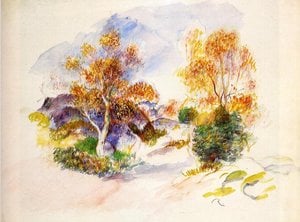
Samuel Palmer's "The Timber Wain," painted in 1834, isn’t merely a depiction of a rural scene; it’s an immersion into a world steeped in Romanticism’s yearning for the sublime and a profound connection to nature. This watercolor, now housed at the Yale Center for British Art, captures a fleeting moment of communal labor amidst the rolling hills of Kent, England – a landscape imbued with a quiet spirituality that continues to resonate today. The painting immediately draws the eye with its soft, diffused light, characteristic of Palmer’s signature style, and his masterful use of color, dominated by muted greens, browns, and blues, creating an atmosphere of serene contemplation.
The scene unfolds around a substantial felled tree trunk, the centerpiece of the composition. A small group of figures – men and boys – are gathered around it, engaged in the task of removing the timber. Their postures suggest a shared purpose, a collective effort that binds them to the land and to each other. Notice how Palmer renders their forms with an almost ethereal quality; they seem less like individual people and more like embodiments of rural life itself. The background is subtly layered, hinting at distant woodlands and a hazy horizon, contributing to the painting’s sense of depth and timelessness. It's important to note that this wasn't simply a recording of a scene; Palmer was deliberately constructing an idealized vision of pastoral England, drawing inspiration from the writings of William Blake and seeking to capture a state of harmonious existence between humanity and nature.
The Influence of William Blake and the Shoreham Vision
Palmer’s artistic journey is inextricably linked to the enigmatic figure of William Blake. Their shared fascination with spirituality, folklore, and the power of imagination led them to forge a deep intellectual and creative bond. Palmer's early works, particularly those created during his time at “Rat Abbey” near Shoreham, were profoundly influenced by Blake’s mystical worldview. The Shoreham paintings – often rendered in sepia tones – depict a landscape transformed into a semi-mythical realm, populated with symbolic figures and imbued with an otherworldly atmosphere. The presence of the horse, positioned to the left of the scene, adds another layer of symbolism; horses were frequently associated with Blake’s poetry and represented both earthly power and spiritual grace.
This painting represents a shift from the intensely personal and symbolic landscapes of Shoreham to a more generalized depiction of rural life. However, the underlying Romantic sensibility – the reverence for nature, the exploration of the sublime, and the search for spiritual meaning – remains powerfully evident. Palmer’s meticulous observation of detail, combined with his expressive use of color and light, creates an image that is both visually stunning and emotionally evocative.
Technique and Materials: A Masterclass in Watercolor
Palmer's skill as a watercolorist is immediately apparent in the delicate layering of washes and the subtle gradations of tone. He employed a technique known as ‘wet-on-wet,’ allowing colors to bleed into one another, creating soft edges and atmospheric effects. The use of gouache – an opaque watercolor medium – adds depth and richness to certain areas, particularly in the depiction of the timber trunk. The paper itself—a smooth, cream wove surface—contributes to the painting’s luminous quality. It's a testament to Palmer’s control that he manages to convey such a sense of atmosphere and texture with seemingly minimal brushstrokes.
Furthermore, the choice of subject matter – a simple scene of rural labor – is itself a deliberate artistic statement. By elevating this commonplace activity to the level of art, Palmer invites us to contemplate the beauty and significance of everyday life and our connection to the natural world. The painting’s quiet dignity and understated elegance speak volumes about Palmer's artistic vision.
A Legacy of Pastoral Beauty
"The Timber Wain" is more than just a beautiful landscape; it’s a window into the Romantic imagination, a testament to the power of observation, and an enduring symbol of rural harmony. Its timeless appeal continues to captivate viewers today, inviting us to pause, reflect, and reconnect with the natural world around us. Reproductions of this iconic work offer a chance to bring this serene vision into any space, serving as a constant reminder of the beauty and tranquility that can be found in the simplest of scenes.
Ähnliche Kunstwerke




Künstlerbiografie
Frühes Leben und Einflüsse
- Geboren: London, Vereinigtes Königreich (1805)
- Gestorben: 1881
- Samuel Palmer war der Sohn eines Buchhändlers und zeitweiligen Baptistenpredigers. Er erhielt eine begrenzte formale Schulbildung, zeigte aber schon in jungen Jahren künstlerisches Talent und malte mit zwölf Jahren Kirchen.
- Die frühe Begegnung mit William Blake im Jahr 1824 erwies sich als äußerst einflussreich. Brakes visionärer Stil prägte Palmers künstlerische Entwicklung maßgeblich.
- Er stellte bereits im Alter von vierzehn Jahren Arbeiten aus, die von Turner inspiriert waren, an der Royal Academy.
Die Shoreham-Zeit und "Rat Abbey"
- Von 1826 bis 1835 lebte Palmer in Shoreham, Kent, in einer Hütte mit dem Spitznamen “Rat Abbey”. Diese Zeit gilt als entscheidend für seinen künstlerischen Output.
- In dieser Zeit schuf er visionäre Pastoralbilder, die das Gebiet als mystische Landschaft darstellten und oft Sepiatöne und stimmungsvolle Mondlichtszenen verwendeten.
- Er verband sich mit einer Gruppe von Künstlern, die als "The Ancients" bekannt waren, die Brakes Einfluss teilten und Palmers einzigartigen Stil schätzten.
- Sein Familienleben in dieser Zeit war komplex, da sein Vater und eine Amme in der Nähe wohnten, was zur Atmosphäre um seine Arbeit beitrug.
Reife Werke und sich ändernde Stile
- Nach 1835 zog Palmer zurück nach London und wandte sich konventionelleren Landschaften und Aquarellmalerei zu.
- Er arbeitete über zwei Jahrzehnte lang als Privatlehrer für Zeichnen, was seine Fähigkeit beeinträchtigte, Zeit für seine eigene Kunst aufzuwenden.
- Seine Palette wurde in den 1830er Jahren nach einer Reise nach Italien heller, manchmal jedoch auf Kosten der Subtilität.
- Trotz finanzieller Schwierigkeiten und persönlicher Verluste (dem Tod seines Sohnes Thomas) schuf Palmer weiterhin bedeutende Werke, darunter Illustrationen für Miltons Gedichte und Radierungen, die von Virgil inspiriert waren.
Künstlerischer Stil und Vermächtnis
- Stil: Palmers Werk ist durch eine Mischung aus Romantik und visionären Elementen gekennzeichnet. Seine frühen Shoreham-Bilder sind bekannt für ihre mystische Atmosphäre, Sepiatöne und Darstellungen des ländlichen Englands als idealisierte Paradies. Spätere Werke integrierten hellere Farben, behielten aber ein Gefühl der Ruhe und Beobachtung bei.
- Einflüsse: William Blake war der bedeutendste Einfluss auf Palmers künstlerische Vision. Turners Landschaftsmalerei spielte ebenfalls eine Rolle in seiner frühen Entwicklung.
- Technik: Er arbeitete hauptsächlich mit Aquarell und Radierung und demonstrierte Geschicklichkeit in beiden Medien. Seine Verwendung von Licht und Schatten schuf stimmungsvolle Stimmungen in seinen Gemälden.
- Historische Bedeutung: Palmer gilt als eine wichtige Figur des britischen Romantismus, der die Brücke zwischen Brakes visionärer Kunst und späteren Landschaftsmalern schlägt. Sein einzigartiger Stil und sein Fokus auf pastorale Themen haben ihm einen Platz in der Kunstgeschichte gesichert.
Wichtige Werke
- Cornfield by Moonlight (Kornfeld im Mondschein)
- Harvesting (Ernte)
- The Timber Wain (Der Holztransportwagen)
- Pele Point, Land (Pele Point, Land)
- Zahlreiche Radierungen, die Werke von Virgil und Milton illustrieren.

Samuel Palmer
1805 - 1881 , Vereinigtes Königreich
Eckdaten zum Künstler
- Beeinflusste Künstler:
- William Blake
- J.M.W. Turner
- Bemerkenswerte Werke:
- Cornfield by Moonlight
- Harvesting
- The Timber Wain
- Pele Point, Land
- Geburtsdatum: 1805
- Geburtsort: London, Vereinigtes Königreich
- Künstlerische Richtung: Romantik
- Nationalität: Britisch
- Sterbedatum: 1881
- Vollständiger Name: Samuel Palmer
- Von Ihm Beeinflusste Künstler:
- Paul Nash
- Graham Sutherland
Verwandte Artikel

Flüchtige Visionen: Die Geschichte und emotionale Resonanz der Aquarellmalerei
Entdecken Sie die faszinierende Welt der Aquarellmalerei! Von historischen Ursprüngen bis zu modernen Techniken – wir bieten Expertenwissen, Inspiration und Tipps für Anfänger & Fortgeschrittene.

Die 10 legendärsten Aquarellwerke der Kunstgeschichte – Meisterwerke für Ihr Zuhause
Entdecken Sie die 10 legendärsten Aquarellwerke der Kunstgeschichte! Von Turner bis Monet – erleben Sie die Geschichten, Techniken & Farben dieser Meisterwerke. Finden Sie hochwertige Kunstdrucke auf ArtsDot.com und gestalten Sie Ihr Zuhause mit zeitloser Eleganz.

Die schönsten Landschaftsbilder: 10 Meisterwerke für Ihr Zuhause | ArtsDot.com
Entdecken Sie die 10 schönsten Landschaftsbilder der Kunstgeschichte! Von Monet bis Van Gogh – erfahren Sie die Geschichten hinter Meisterwerken & finden Sie Inspiration für Ihr Zuhause. Hochwertige Kunstdrucke auf ArtsDot.com.

Ephemeral Visions: Exploring the Artistic Legacy & Contemporary Practice of Watercolor Painting
Explore the captivating world of watercolor painting! Discover its rich history, essential techniques, influential artists & collecting tips. A comprehensive guide for art enthusiasts from ArtsDot.

Ephemeral Visions: Exploring the Artistic Legacy & Nuances of Watercolor Painting
Explore the captivating world of watercolor painting! Discover its rich history, essential techniques, influential artists & collecting tips from art experts. A comprehensive guide for enthusiasts.

