
- Startseite

- Auf Leinwand drucken
- Roy Lichtenstein
- Silver Frame
 Gemälde kaufen Bild kaufen
 Versenden
 Teilen
 Details anzeigen
 Zu Favoriten hinzufügen

 Herunterladen
 Ähnliche Objekte
 Röntgenaufnahme
 Diashow anzeigen
Silver Frame


 Weiterlesen
Giclée / Kunstdruck
Giclée- oder Leinwanddruck in Museumsqualität mit schneller Produktion und flexiblen Veredelungsoptionen.




P118B $10

P118H $10

P118W $10

P438Z $10

P508JH $12

P508YH $12

P805H $10

P805Z $10

P919BZ $10

P919G $10

P919XJ $10

P959ZH $10

P968JZ $12

W106C $8

W218G $10

W218JH $8

W218Y $10

W307PJ $10

W316G $10

W316PJ $8

W316Y $10

W398PJ $8

W4111J $10

W500HY $15

W500JH $15

W692G $12

W849H $8

W940BG $15

W953PJ $8




Wählen Sie aus unseren vordefinierten Größen, die den ursprünglichen Proportionen des Kunstwerks entsprechen.

Sie können Ihre eigenen Maße eingeben, um ein bestimmtes Format oder einen speziellen Platz einzupassen. Wenn das von Ihnen gewählte Format nicht den Proportionen des Originalbildes entspricht, werden wir das Kunstwerk entweder beschneiden oder das Bild mit einem gespiegelten oder einfarbigen Rand erweitern. Ein digitaler Entwurf wird Ihnen zur Genehmigung zugesandt, bevor die Produktion beginnt.
Bitte beachten Sie, dass die Vorschau auf dem Bildschirm nicht den tatsächlichen Zuschnitt oder die Erweiterung widerspiegelt. Nur der Entwurf zeigt die endgültige Komposition präzise an.
Obwohl Sondermaße verfügbar sind, empfehlen wir die Auswahl eines Maßes aus der vordefinierten Liste, um die ursprünglichen Proportionen zu bewahren.
Weltweiter Versand () innerhalb von 2 Wochen statt der üblichen 4/5 Wochen. (19 Juli)

Kostenloser weltweiter Expressversand

Hochwertige Leinenleinwand

Umfassender Versicherungsschutz beim Versand

Zollsteuer-Rückerstattungsgarantie

Garantie für echte Farbtreue

60-Tage-Rückgaberecht (nur bei Mängeln)

100% Geld-zurück-Garantie

Mengenrabatt verfügbar
 Die Glasoption ist nur in Größen unter 110 cm verfügbar.

Silver Frame
Giclée / Kunstdruck
Größe der Reproduktion
-


Endpreis aller Optionen
-
Beschreibung des Sammlerstücks
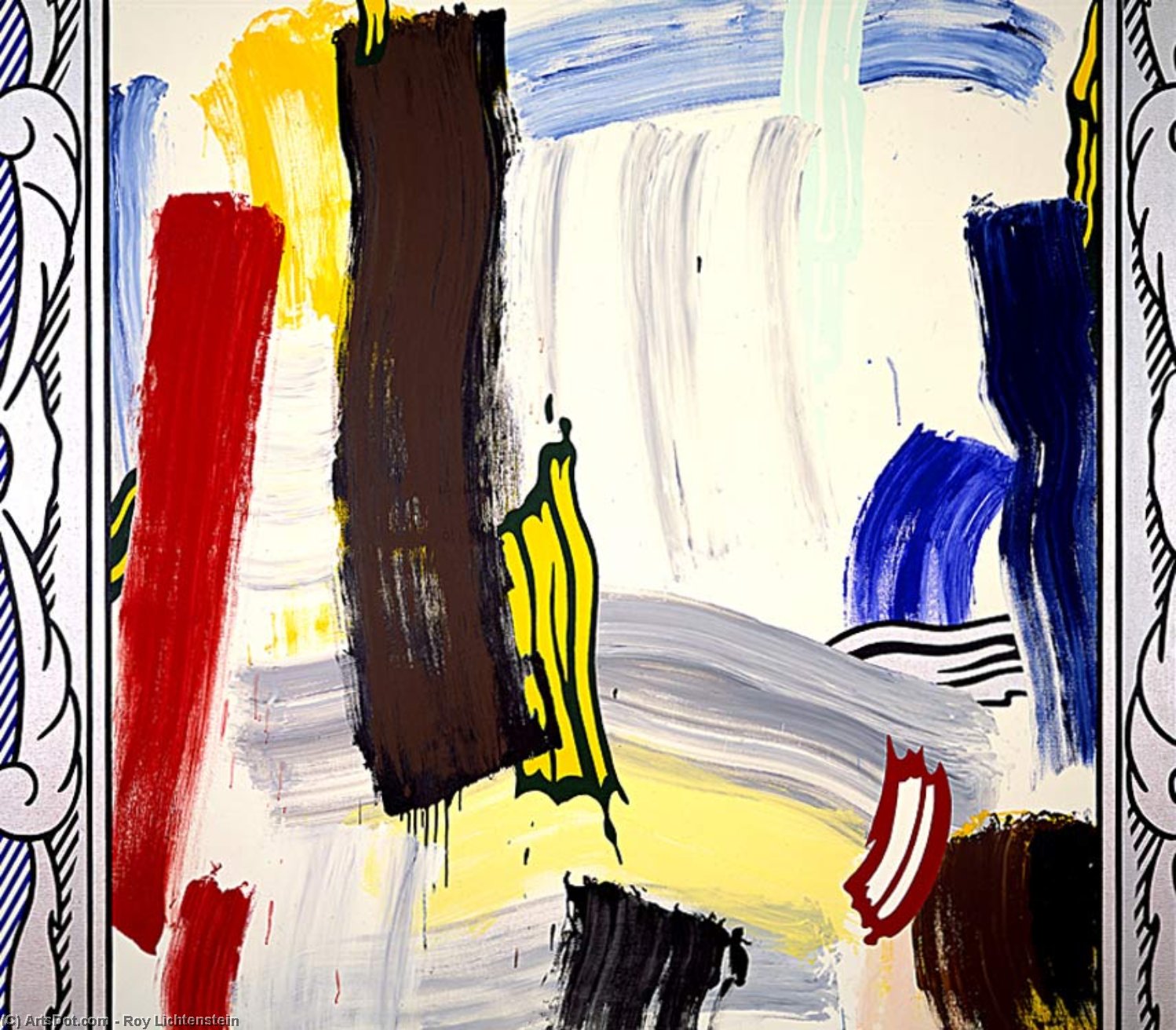
A Bold Exploration of Color and Collage: Roy Lichtenstein's "Silver Frame"
The year was 1984, and the art world was buzzing with excitement over the resurgence of Pop Art – specifically, the distinctive vision championed by Roy Lichtenstein. “Silver Frame,” a monumental canvas measuring approximately 60 x 72 inches, stands as a testament to Lichtenstein’s groundbreaking approach to painting and his masterful manipulation of collage techniques. It's not merely a depiction of an image; it’s an embodiment of the artist’s philosophy about how art can engage with popular culture and challenge traditional artistic conventions.The Style: Lichtensteinian Collage
At first glance, “Silver Frame” might appear to be a straightforward representation of a photograph – indeed, it is based on a print by Lichtenstein himself. However, this illusion quickly dissipates upon closer inspection. Lichtenstein’s signature technique involved meticulously layering printed images onto canvas, creating what he termed "collage." Unlike traditional painting where color and texture are blended seamlessly, collage embraces disparate elements—photographs, halftone patterns, and bold geometric shapes—resulting in a dynamic visual experience that pulsates with energy. The artist painstakingly positioned these components to achieve a harmonious balance between abstraction and recognizable imagery.Technique: Halftone Printing and Layered Composition
The core of Lichtenstein’s aesthetic lies in the halftone printing process – a technique borrowed from commercial illustration where dots of varying sizes are used to simulate shading and tonal variation. This method, perfected by Lichtenstein during his formative years as an illustrator, lends “Silver Frame” its characteristic mottled appearance. The artist meticulously applied halftone patterns over photographs, transforming them into stylized representations that retain their original visual information while simultaneously elevating them to the realm of art. Furthermore, Lichtenstein employed a layered compositional strategy—overlapping images and shapes—to create depth and complexity within the canvas. This layering technique contributes significantly to the artwork's overall impact, inviting viewers to explore multiple perspectives and engage in an active dialogue with the image.Historical Context: Challenging Artistic Boundaries
“Silver Frame” emerged during a period of significant artistic upheaval – the late 1980s saw artists increasingly questioning established hierarchies and embracing new forms of expression. Lichtenstein’s work directly confronted the elitism inherent in the art world, advocating for accessibility and engaging with themes prevalent in everyday life. He drew inspiration from comic strips and advertising campaigns—sources considered lowbrow by many critics at the time—demonstrating that artistic innovation could flourish outside of academic institutions. By appropriating imagery from popular culture, Lichtenstein asserted a powerful statement about the role of art in reflecting and shaping societal values.Symbolism: Bold Colors and Geometric Shapes
The artwork’s striking color palette – dominated by vibrant reds, yellows, blues, greens, and browns—serves as more than just aesthetic embellishment; it carries symbolic weight. Lichtenstein deliberately selected colors that evoke emotion and convey meaning beyond their literal appearance. The prominent red square, positioned centrally within the composition, represents passion, energy, and perhaps even aggression – mirroring themes explored in comic books and reflecting Lichtenstein’s own rebellious spirit. Similarly, the geometric shapes—squares and rectangles—symbolize order, stability, and rationality—contrasting with the chaotic layering of images that characterizes the collage technique. These deliberate choices underscore Lichtenstein's intention to provoke contemplation and stimulate intellectual engagement.Emotional Impact: A Celebration of Visual Stimulation
Ultimately, “Silver Frame” succeeds in captivating viewers through its sheer visual stimulation. The artwork’s bold colors, intricate patterns, and dynamic composition create an immersive experience that transcends mere representation—it invites the audience into Lichtenstein's artistic universe. It speaks to a desire for playful experimentation and challenges conventional notions of beauty. Viewing this piece evokes feelings of excitement, curiosity, and perhaps even amusement – mirroring the spirit of Pop Art itself. “Silver Frame” remains a powerful reminder that art can be both intellectually stimulating and emotionally resonant, cementing Lichtenstein’s legacy as one of the most influential artists of his generation.Ähnliche Kunstwerke


Biografie des Künstlers
frühes Leben und Ausbildung
Roy Fox Lichtenstein, ein prominenter amerikanischer Pop-Künstler, wurde am 27. Oktober 1923 in New York City geboren. Er wuchs in einer wohlhabenden jüdischen Familie auf, mit seinem Vater als Immobilienmakler und seiner Mutter als Hausfrau. Lichtensteins Interesse an Kunst und Design begann während seiner Schulzeit als Hobby.Künstlerische Karriere
Nach Abschluss seiner Schulausbildung am Dwight School im Jahr 1940 besuchte Lichtenstein die Art Students League of New York unter der Anleitung von Reginald Marsh. Er studierte anschließend einen Abschluss in Fine Arts an der Ohio State University, der durch eine dreijährige Verlegung in das Militär während des Zweiten Weltkriegs unterbrochen wurde.- Look Mickey (1961, National Gallery of Art, Washington, D.C.), eines von Lichtensteins frühesten Pop-Kunstwerke, markierte den Beginn seiner einflussreichen Karriere.
- Seine Arbeit war stark von Werbe- und Comic-Stilen beeinflusst, darunter bedeutende Werke wie Wham!, Drowning Girl und Oh, Jeff...I Love You Too...But...
- Lichtensteins teuerstes Werk, Masterpiece, wurde im Januar 2017 für 165 Millionen Dollar verkauft.
Lehre und Einflüsse
Lichtenstein lehrte an verschiedenen Institutionen, darunter die State University of New York at Oswego und die Rutgers University. Seine Arbeit war von Allan Kaprow beeinflusst, einem Kollegen an der Rutgers University, der sein Interesse an proto-Pop-Bildern wiederbelebte. Bekannte Ausstellungen:- The Museum Chambre de Commerce (Toulouse, Frankreich), das verschiedene Kunstwerke aus der Pop-Art-Bewegung zeigte.
- Lichtensteins Werk wurde in der Leo Castelli Gallery in New York City ausgestellt, wobei seine erste Einzelausstellung 1962 vor der Eröffnung vollständig von einflussreichen Sammlern gekauft wurde.
Vermächtnis und Einfluss
Roy Lichtenstein starb am 29. September 1997 und hinterließ ein Vermächtnis als eine führende Figur in der Pop-Art-Bewegung. Seine Arbeit wird weiterhin für ihre innovative Verschmelzung von Hoch- und Populärkultur gefeiert, wodurch sie einem breiteren Publikum zugänglich gemacht wird.- Entdecken Sie mehr von Lichtensteins Kunstwerke auf ArtsDot.com
- Erfahren Sie die Welt der Pop-Art und ihrer einflussreichen Künstler auf Pop Art und darüber hinaus: Navigieren Sie mit ArtsDot.com durch zeitgenössische Stile

Roy Lichtenstein
1923 - 1997 , Vereinigte Staaten von Amerika
Kurzinfos
- Beeinflusste Künstler:
- Reginald Marsh
- Allan Kaprow
- Bemerkenswerte Werke:
- Look Mickey
- Whaam!
- Drowning Girl
- Masterpiece
- Geburtsdatum: 27. Oktober 1923
- Geburtsort: Manhattan, USA
- Künstlerische Richtung: Pop Art
- Nationalität: Amerikanisch
- Todatum: 29. September 1997
- Vollständiger Name: Roy Lichtenstein
Ähnliche Artikel

Geek-Chic Wohnräume: Stilvoll Popkultur-Kunst integrieren – Expertenratgeber für anspruchsvolle Interieurs
Entdecken Sie, wie Sie Popkultur-Kunst stilvoll in Ihr Zuhause integrieren! Expertenratgeber für Gaming-, Anime- und Comic-Ästhetik. Hochwertige Reproduktionen & Custom Art für anspruchsvolle Interieurs.

Challenging Conventions: Pop Art's Origins, Evolution & Enduring Legacy
Explore the fascinating history of Pop Art, from its rebellious origins to its enduring influence on contemporary artists. Discover key figures like Warhol & Lichtenstein and learn about collecting this iconic movement.

Gene Davis: Chromatische Erkundungen der Color Field Malerei und der Washingtoner Farbschule
Entdecken Sie die faszinierende Welt der Washingtoner Farbschule! Analysen zu Gene Davis, Morris Louis und Kenneth Noland – Expertenwissen über Color Field Malerei & abstrakte Kunst auf ArtsDot.

Chromatic Abundance: Exploring the Psychological Impact of Rich Color Palettes in Painting
Explore the fascinating world of color theory in painting! Discover how Impressionist & Post-Impressionist masters used vibrant hues to evoke emotion and create lasting impact. Expert insights for collectors & art enthusiasts.

Chromatic Resonance: Exploring the Emotional Impact of Vibrant Color Palettes in Painting
Explore the fascinating relationship between color & emotion in art history. Discover how master artists like Matisse & Gauguin used vibrant hues to evoke feelings and cultural meanings. A deep dive for classic art enthusiasts.



