

 Vorschau anzeigen
 Versenden
 Teilen
 Details anzeigen

 Herunterladen
 Ähnliche Objekte
 Röntgenaufnahme
 Diashow
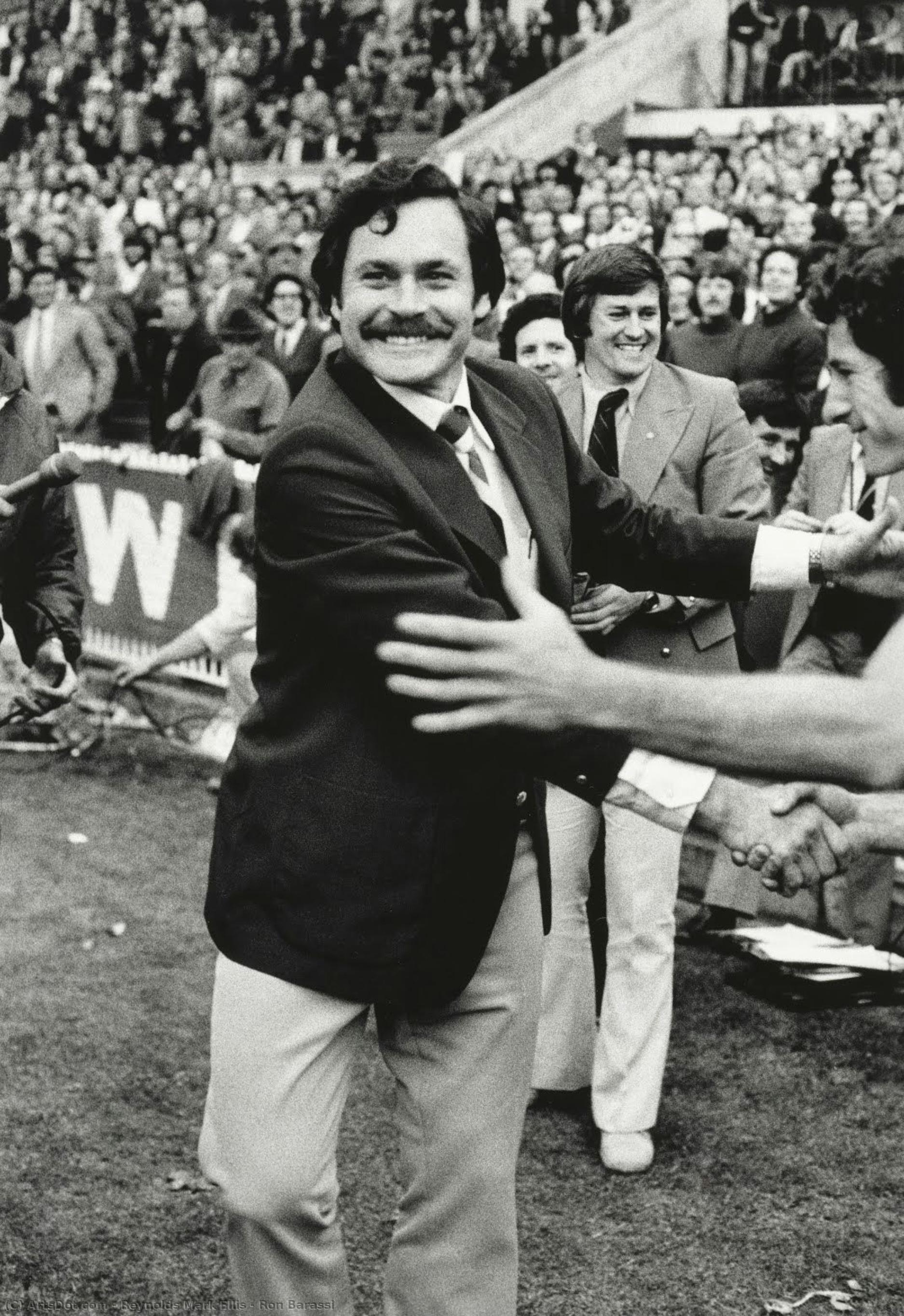
Ron Barassi
 1975
1975 50.0 x 40.0 cm
 National Portrait Gallery
 Weiterlesen
Erwerben Sie ein hochauflösendes, optimiertes digitales Bild, das der Online-Vorschau weit überlegen ist.
Jede Datei wird von unseren hauseigenen Spezialisten mit modernsten Werkzeugen und fachmännischer manueller Retusche sorgfältig vorbereitet. Wir stellen sicher, dass jedes Bild eine außergewöhnliche Klarheit, präzise Farbgenauigkeit und feinste Details aufweist.
Die endgültige Datei wird innerhalb von 72 Stunden per E-Mail zugestellt und ist für den sofortigen Einsatz in professionellen, redaktionellen und Druckumgebungen optimiert. Es handelt sich um dieselbe Qualität, der führende Designstudios, Verlage und Galerien vertrauen.
Digitales Bild
Laden Sie eine hochauflösende Datei für die persönliche Präsentation, den Druck und kreative Projekte herunter. ( Druck bestellen Handgemalte Reproduktion bestellen)
In jeder Bestellung digitaler Bilder enthalten
Professionelle digitale Bereitstellung, garantiert
Wenn Sie sich für ArtsDot.com entscheiden, erhalten Sie nicht nur ein Bild – Sie erhalten ein professionell aufbereitetes digitales Kunstwerk, das mit höchster Präzision erstellt und durch eine Zufriedenheitsgarantie abgesichert wird. Hier ist alles, was automatisch mit Ihrer Bestellung geliefert wird:

Schnelle E-Mail-Zustellung
Ihre hochauflösende digitale Bilddatei wird Ihnen innerhalb von 72 Stunden nach der Bestellung per E-Mail zugestellt – bereit zur sofortigen Verwendung.

KI-optimierte digitale Datei
Ihre Kunstwerke werden professionell mithilfe fortschrittlicher KI-Tools und manueller Bearbeitung optimiert, um maximale Detailtreue, Klarheit und Farbgenauigkeit zu gewährleisten.

Lebenslanger kostenloser Neudruckservice
Datei versehentlich gelöscht oder verloren? Keine Sorge – wir senden sie Ihnen jederzeit kostenlos erneut zu.

Keine Einfuhrgebühren – jemals
Genießen Sie Ihr Kunstwerk sofort ohne Zollgebühren, Einfuhrabgaben oder Versandkosten – digitale Downloads sind immer steuerfrei.

Garantierte Farbtreue
Wir garantieren, dass Ihr digitales Bild mithilfe professioneller Werkzeuge und Farbmanagement die Originalfarben so präzise wie möglich wiedergibt.

60-Tage-Zufriedenheitsgarantie
Sollten Sie mit Ihrem digitalen Bild nicht zufrieden sein, werden wir es überarbeiten oder Ihnen innerhalb von 60 Tagen 100% erstatten – ohne Wenn und Aber.

100% Geld-zurück-Garantie
Nicht zufrieden? Erhalten Sie innerhalb von 60 Tagen nach Erhalt Ihrer digitalen Datei eine vollständige Rückerstattung – ohne Angabe von Gründen.

Rabatte bei Großbestellungen
3 Bilder kaufen, 10% sparen – 5 Bilder kaufen, 15% sparen – Ab 10 Bildern 20% sparen. Ideal für kreative Projekte, Galerien und Agenturen.
Details zum Sammlerstück
Ähnliche Kunstwerke


Biografie des Künstlers
The Visionary Eye of Rennie Ellis
Rennie Ellis stands as a monumental figure in the tapestry of Australian photographic history, a man whose lens captured the raw, pulsing heartbeat of a nation in transition. Born Reynolds Mark Ellis in Glasgow, Scotland, in 1940, his journey was one of profound movement and diverse exploration. Before he became the definitive chronicler of Australian social life, his spirit was shaped by the vastness of the seas as a seaman and the sharp, persuasive rhythms of advertising copywriting. These early chapters—marked by intellectual curiosity and a nomadic instinct—provided him with a unique vantage point, allowing him to observe the world not merely as a spectator, but as an active participant in its unfolding drama. His education at Brighton Grammar School and his brief tenure at the University of Melbourne instilled a foundation of rigor that would later manifest in his meticulous approach to visual storytelling.
The true metamorphosis of Ellis occurred when he turned his gaze toward the streets, transforming the camera into a tool for social documentary. By the late 1960s and early 1970s, he had moved beyond the structured world of advertising to embrace the unpredictable energy of freelance photography. His work became synonymous with the vibrant, often gritty atmosphere of Sydney’s Kings Cross, where he captured the neon-lit allure and the underlying complexities of urban existence. Through his lens, the ephemeral moments of nightlife, the grit of the streets, and the intimate nuances of human connection were frozen in time, creating a visual archive that is as much about cultural identity as it is about photographic technique.
A Legacy of Curation and Connection
Ellis was far more than a solitary observer; he was a foundational architect of the Australian photographic community. His visionary leadership led to the establishment of the Brummels Gallery of Photography, Australia’s first dedicated space for the medium. Through this institution, he did not just showcase his own work but championed the broader movement of Australian photography, providing a platform for others to find their voices. This spirit of entrepreneurship extended to his founding of the Scoopix Photo Library, where he bridged the gap between local talent and international standards by securing representation for New York’s prestigious Black Star photos. His career was a masterclass in building ecosystems for art, ensuring that photography was recognized not merely as a craft, but as a vital pillar of Australian fine art.
The breadth of his contribution is perhaps best measured by the sheer volume and variety of his output. Throughout his prolific life, Ellis achieved several milestones that cemented his historical significance:
- Literary Impact: He published seventeen photographic books, each serving as a curated window into different facets of Australian life and culture.
- Exhibition Excellence: His work graced numerous galleries both within Australia and on the international stage, bringing Australian social narratives to a global audience.
- The Photographic Archive: The establishment of the Rennie Ellis Photographic Archive in 2004 ensures that his treasure trove of over half a million images remains available for future generations to study and admire.
The Enduring Resonance of the Social Lens
To look at a Rennie Ellis photograph is to encounter the profound tension between the individual and the collective. His style, often described as confronting yet deeply empathetic, possessed the power to titillate and taunt the collective fancy while simultaneously documenting the sociological shifts of his era. He was never afraid of controversy; whether through his photographic subjects or his public stunts, he remained a provocateur who used imagery to spark dialogue about Australian lifestyles, symbolism, and the changing face of urbanity. His work carries an almost cinematic quality, where every shadow and highlight tells a story of a culture grappling with modernity.
As we reflect on his life, which concluded in 2003, we see an artist who successfully merged the roles of documentarian, curator, and pioneer. Rennie Ellis did not just take pictures; he constructed a visual language for a nation. His ability to weave together the disparate threads of his life—from the high-pressure world of advertising to the quiet observation of social documentary—allowed him to create a body of work that remains as vital and evocative today as it was during the height of his career. He remains an indispensable figure, whose legacy continues to pulse through the veins of Australian contemporary art.

Rennie Ellis
1940 - 2003 , Vereinigtes Königreich
Kurzinfos
- Artistic Movement Or Style: Sozialdokumentarische Fotografie
- Artists Who Influenced This Artist:
- Josef Hoffmann
- Alfred Stieglitz
- Date Of Birth: November 11, 1940
- Date Of Death: August 19, 2003
- Full Name: Reynolds Mark Ellis
- Nationality: Australien
- Notable Artworks:
- Die Halluzinogene Toreador
- Rio Karneval
- Place Of Birth: Glasgow, Vereinigtes Königreich

