


 In echtem Maßstab anzeigen
 Versenden als Grußkarte
 Teilen
 Details anzeigen
 Leitfaden

 Herunterladen
 Ähnliche Objekte
 Röntgenaufnahme
 Diashow
 Besucherstatistiken
The ellipse

 Mehr anzeigen
Giclée / Kunstdruck
Giclée- oder Leinwanddruck in Museumsqualität mit schneller Produktion und flexiblen Veredelungsoptionen. ( Handgemalte Reproduktion kaufen Zum digitalen Bild wechseln)




P118B $10

P118H $10

P118W $10

P438Z $10

P508JH $12

P508YH $12

P805H $10

P805Z $10

P919BZ $10

P919G $10

P919XJ $10

P959ZH $10

P968JZ $12

W106C $8

W218G $10

W218JH $8

W218Y $10

W307PJ $10

W316G $10

W316PJ $8

W316Y $10

W398PJ $8

W4111J $10

W500HY $15

W500JH $15

W692G $12

W849H $8

W940BG $15

W953PJ $8




Wählen Sie aus unseren vordefinierten Formaten, die den ursprünglichen Proportionen des Kunstwerks entsprechen.

Sie können Ihre eigenen Maße eingeben, um ein bestimmtes Format oder einen speziellen Platz einzupassen. Wenn das von Ihnen gewählte Format nicht den Proportionen des Originalbildes entspricht, werden wir das Kunstwerk entweder beschneiden oder das Bild mit einem gespiegelten oder einfarbigen Rand erweitern. Ein digitaler Entwurf wird Ihnen zur Genehmigung zugesandt, bevor die Produktion beginnt.
Bitte beachten Sie, dass die Vorschau auf dem Bildschirm nicht den tatsächlichen Zuschnitt oder die Erweiterung widerspiegelt. Nur der Entwurf zeigt die endgültige Komposition präzise an.
Obwohl Sondermaße verfügbar sind, empfehlen wir die Auswahl eines Maßes aus der vordefinierten Liste, um die ursprünglichen Proportionen zu bewahren.
Weltweiter Versand () innerhalb von 2 Wochen statt der üblichen 4/5 Wochen. (22 September)

Kostenloser weltweiter Expressversand

Hochwertige Leinenleinwand

Vollständiger Versicherungsschutz beim Versand

Zollgebühren-Rückerstattungsgarantie

Garantie für exakte Farbtreue

100-tägiges Rückgaberecht (nur bei Mängeln)

100% Geld-zurück-Garantie

Angebot für Mengenrabatt
 Die Glasoption ist nur für Größen unter 110 cm verfügbar.

The ellipse
Giclée / Kunstdruck
Format der Reproduktion
-


Gesamtpreis
$ 62
René Magritte’s “The Ellipse”: A Surrealist Enigma
René Magritte's "The Ellipse," painted in 1948, is not merely a depiction of a man holding a gun to his mouth; it’s a meticulously constructed visual paradox, a profound meditation on perception, reality, and the unsettling nature of representation. This iconic work, rendered in gouache on paper, embodies the core tenets of Surrealism – a movement Magritte both embraced and subtly subverted. The painting immediately confronts the viewer with an arresting image: a figure, seemingly ordinary yet imbued with a palpable sense of dread, positioned against a stark, almost clinical backdrop. The man’s posture, the gun's placement, and the overall composition create a disquieting tension that lingers long after the initial viewing.
Magritte’s artistic journey was deeply shaped by personal tragedy – the untimely death of his mother at a young age. This event, coupled with his early exposure to Impressionism before gravitating towards Surrealism, instilled within him a fascination with hidden meanings and the power of suggestion. “The Ellipse” can be interpreted as an extension of this preoccupation; it’s not about literal depiction but rather about evoking a feeling, a sense of unease that stems from the collision of familiar elements in an unfamiliar arrangement. The painting's deliberate ambiguity forces the viewer to actively engage with the artwork, questioning what is being presented and how it relates to their own understanding of the world.
Symbolism and Interpretation
The symbolism within “The Ellipse” is layered and open to interpretation, a hallmark of Magritte’s approach. The man holding the gun is perhaps the most obvious element, representing self-destruction, vulnerability, or even a symbolic gesture of defiance against an unseen force. However, the context surrounding this central image – the stark background, the muted colors, and the almost detached manner in which the scene is presented – complicates any simplistic reading. The ellipse itself, a geometric shape often associated with precision and order, contrasts sharply with the chaotic emotional state suggested by the figure’s posture.
Furthermore, the painting's placement within Magritte’s “Vache” period (French for ‘nasty’ or ‘mean’) is significant. This phase saw a shift in his artistic style towards more provocative and often unsettling imagery, characterized by grotesque figures and jarring juxtapositions. The use of bright, almost garish colors during this time was intended to shock the viewer and challenge conventional notions of beauty and representation. The painting’s title, “The Ellipse,” adds another layer of intrigue; it could refer to a mathematical concept – a curve defined by two foci – or simply serve as a deliberate misdirection, further emphasizing the artwork's surreal quality.
Technique and Artistic Style
Magritte’s technique in "The Ellipse" is deceptively simple. He employs gouache on paper, a medium known for its opacity and ability to create rich, layered colors. The brushstrokes are loose and expressive, contributing to the painting's overall sense of immediacy and emotional intensity. Despite this seemingly straightforward approach, Magritte meticulously crafted each element of the composition, paying close attention to detail and creating a carefully balanced visual arrangement. The use of light and shadow is particularly effective in highlighting the figure’s form and emphasizing his vulnerability.
The painting's style firmly aligns with Surrealism, but it also incorporates elements of Cubism and Dadaism – movements that Magritte admired and drew inspiration from. The fragmented perspective, the distorted proportions, and the deliberate ambiguity all contribute to the artwork’s unsettling effect. Magritte wasn’t simply replicating reality; he was actively constructing a new visual language, one that challenged viewers to question their assumptions about perception and representation.
A Timeless Masterpiece: Reproduction Possibilities
ArtsDot offers meticulously crafted hand-painted reproductions of “The Ellipse,” allowing art lovers to experience the profound impact of this iconic work in a tangible way. Our skilled artists replicate Magritte’s distinctive style, capturing the painting's subtle nuances and emotional depth with remarkable accuracy. Whether you choose a large-scale canvas for your grand salon or a smaller print for your study, our reproductions provide an authentic representation of this seminal Surrealist masterpiece.
Beyond simply replicating the image, ArtsDot’s team ensures that each reproduction is infused with the same artistic intention as the original – to provoke thought, evoke emotion, and challenge conventional ways of seeing. Explore our selection of “The Ellipse” reproductions today and bring this enigmatic work into your home or office.
Ähnliche Kunstwerke


Biografie des Künstlers
frühes Leben und künstlerische Anfänge
René François Ghislain Magritte, ein renommierter belgischer Surrealist, wurde am 21. November 1898 in Lessines, Provinz Hainaut, Belgien, geboren. Sein frühes Leben ist bisweilen rätselhaft und wenig bekannt. Es ist jedoch dokumentiert, dass er 1910 Zeichenunterricht nahm.Künstlerische Entwicklung und Einflüsse
Magrittes künstlerischer Stil entwickelte sich im Laufe der Jahre erheblich weiter und wurde von verschiedenen Strömungen wie Impressionismus, Futurismus und Kubismus beeinflusst. Seine frühesten Gemälde, die aus etwa 1915 stammen, waren **im Stil des Impressionismus**. Von 1916 bis 1918 studierte er an der Académie Royale des Beaux-Arts in Brüssel unter Constant Montald.Surrealistische Periode und bemerkenswerte Werke
Im Jahr 1926 schuf Magritte seine erste surrealistische Malerei, "Der verlorene Jockey (Le jockey perdu)", das den Beginn seiner Verbindung mit der Surrealistenbewegung markierte. Seine Werke sind durch nachdenkliche Bilder gekennzeichnet, die oft alltägliche Gegenstände in ungewöhnlichen Kontexten darstellen und Betrachter dazu auffordern, ihre Wahrnehmung von Realität zu hinterfragen.- "Les Amants" (1927-1928), eine Reihe von Gemälden mit Personen, deren Gesichter durch Stoffe verhüllt sind, wird vermutet, von der Geschichte des Todes seiner Mutter inspiriert zu sein.
- "Die Liebenden", ein weiteres ikonisches Werk, zeigt ein Paar, das sich küsst, wobei ihre Gesichter von weißen Stoffen bedeckt sind, und lädt den Betrachter ein, über Liebe und Identität nachzudenken. (Verfügbar als handgefertigte Ölgemälde-Reproduktion oder Druck auf Leinwand unter ArtsDot.com)
Spätere Jahre und Vermächtnis
Magrittes Werke wurden in den Vereinigten Staaten 1936 und erneut in zwei retrospektiven Ausstellungen, eine im Museum of Modern Art im Jahr 1965 und die andere im Metropolitan Museum of Art im Jahr 1992, gezeigt. Er blieb dem politischen Linken verpflichtet, befürwortete aber die künstlerische Autonomie. Bekannte Museen, in denen Magrittes Werke ausgestellt sind:- Musées royaux des beaux-arts de Belgique, Brüssel, Belgien (Entdecken Sie die Meisterwerke der Musées royaux des beaux-aarts de belgique unter ArtsDot.com)
- Magritte Museum, Teil der Musées royaux des beaux-arts de Belgique, das die weltweit größte Sammlung von Magrittes Werken beherbergt.
Fazit
René Magrittes Vermächtnis als surrealistischer Meister hält an, wobei seine nachdenklichen Bilder weiterhin inspirieren und faszinieren. Seine Werke, die durch ihre einzigartige Mischung aus Gewöhnlichem und Unerwartetem gekennzeichnet sind, gelten als Eckpfeiler der Surrealistenkunst. Mehr über René Magritte
René Magritte
1898 - 1967 , Belgien
Eckdaten zum Künstler
- Beeinflusste Künstler:
- Impressionismus
- Futurismus
- Kubismus
- Bemerkenswerte Werke:
- Der verlorene Jockey
- Les Amants
- Die menschliche Bedingung
- Zeit erstarrt
- Geburtsdatum: 21. November 1898
- Geburtsort: Lessines, Belgien
- Künstlerischer Stil: Surrealismus
- Nationalität: Belgisch
- Sterbedatum: 1967
- Vollständiger Name: René Magritte
Verwandte Artikel

Beyond Reality: A Beginner's Guide to the Magic of Surrealism for the Modern Collector
Embark on a visual journey into Surrealism. Discover the magic of dreamlike landscapes, iconic masters like Dalí, and expert tips for collecting surrealist masterpieces to transform your home with intrigue and wonder.

Pop Surrealism: A Collision of Culture, Dreams & the Subconscious in Post-War Art
Explore the captivating world of Pop Surrealism with ArtsDot. Discover key artists like George Condo & Robert Williams, investment potential, and the movement's cultural impact. Expert insights for collectors.

Surrealismus: Die 10 Meisterwerke, die eine Kunstbewegung prägten |
Entdecken Sie die 10 prägendsten Meisterwerke des Surrealismus! Von Dalí bis Magritte – erfahren Sie die Geschichten hinter ikonischen Gemälde und lassen Sie sich von traumhaften Welten inspirieren. Hochwertige Art Reproduktionen auf .
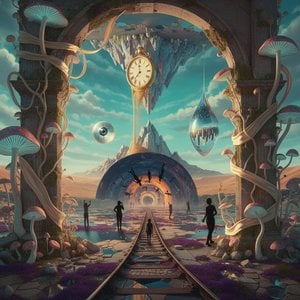
Dreamscapes & Disrupted Realities: Exploring Surrealism's Enduring Influence
Explore the fascinating world of Surrealism! Discover its origins, key artists like Dalí & Magritte, and enduring influence on art & culture. Expert insights & high-quality reproductions at ArtsDot.

Surrealismus: Die 10 Meisterwerke, die eine Kunstbewegung prägten | ArtsDot
Entdecken Sie die 10 Meisterwerke des Surrealismus! Von Dalí bis Magritte – erfahren Sie die Geschichten hinter ikonischen Gemälde und lassen Sie sich von traumartigen Bildern inspirieren. Hochwertige Art Reproduktionen auf ArtsDot.com.


