Vorschau anzeigen
 Versenden
 Teilen
 Details anzeigen

 Herunterladen
 Ähnliche Objekte
 Röntgenaufnahme
 Diashow
Pebble


 Weiterlesen
Giclée / Kunstdruck
Giclée- oder Leinwanddruck in Museumsqualität mit schneller Produktion und flexiblen Veredelungsoptionen. ( Handgemalte Reproduktion bestellen Bild kaufen)




P118B $10

P118H $10

P118W $10

P438Z $10

P508JH $12

P508YH $12

P805H $10

P805Z $10

P919BZ $10

P919G $10

P919XJ $10

P959ZH $10

P968JZ $12

W106C $8

W218G $10

W218JH $8

W218Y $10

W307PJ $10

W316G $10

W316PJ $8

W316Y $10

W398PJ $8

W4111J $10

W500HY $15

W500JH $15

W692G $12

W849H $8

W940BG $15

W953PJ $8




Wählen Sie aus unseren vordefinierten Formaten, die den ursprünglichen Proportionen des Kunstwerks entsprechen.

Sie können Ihre eigenen Maße eingeben, um ein bestimmtes Format oder einen speziellen Platz einzupassen. Wenn das von Ihnen gewählte Format nicht den Proportionen des Originalbildes entspricht, werden wir das Kunstwerk entweder beschneiden oder das Bild mit einem gespiegelten oder einfarbigen Rand erweitern. Ein digitaler Entwurf wird Ihnen zur Genehmigung zugesandt, bevor die Produktion beginnt.
Bitte beachten Sie, dass die Vorschau auf dem Bildschirm nicht den tatsächlichen Zuschnitt oder die Erweiterung widerspiegelt. Nur der Entwurf zeigt die endgültige Komposition präzise an.
Obwohl Sondermaße verfügbar sind, empfehlen wir die Auswahl eines Maßes aus der vordefinierten Liste, um die ursprünglichen Proportionen zu bewahren.
Weltweiter Versand () innerhalb von 2 Wochen statt der üblichen 4/5 Wochen. (19 August)

Kostenloser weltweiter Expressversand

Hochwertige Leinenleinwand

Umfassender Versicherungsschutz beim Versand

Zollgebühren-Rückerstattungsgarantie

Garantie für exakte Farbtreue

60 Tage Rückgaberecht (nur bei Mängeln)

100% Geld-zurück-Garantie

Mengenrabatt verfügbar
 Die Glasoption ist nur für Größen unter 110 cm verfügbar.

Pebble
Giclée / Kunstdruck
Format der Reproduktion
-


Gesamtpreis
$ 62
Sammlerstück-Beschreibung
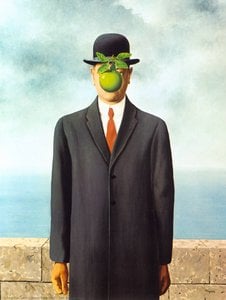
René Magritte’s *Pebble*: A Study in Disquieting Observation
René Magritte's 1948 painting, *Pebble*, is not merely a depiction of a woman; it’s an immersion into the unsettling realm of the subconscious, meticulously crafted with the artist’s signature blend of meticulous realism and profound psychological exploration. The image presents a woman in a vibrant red dress, her gaze fixed downwards as she examines her chest, a pearl necklace adorning her neck. Two figures flank her, their attention equally absorbed by this intimate moment, creating an atmosphere thick with unspoken questions and veiled anxieties. This work, painted during a period of intense Surrealist influence, exemplifies Magritte’s deliberate rejection of straightforward representation, instead opting to present familiar subjects in ways that challenge our perceptions of reality and invite contemplation on the nature of desire, vulnerability, and the hidden narratives within human interaction.
Subject Matter and Composition
The subject matter itself is deliberately ambiguous. The woman’s exposed breasts immediately draw attention, yet her posture – a gesture of careful observation rather than overt display – complicates any simple interpretation. The inclusion of the two onlookers adds another layer of intrigue. Are they witnesses to a private moment? Do they share in her contemplation, or are they voyeurs observing something unsettling? Magritte’s masterful composition utilizes spatial relationships and averted gazes to heighten this sense of unease. The yellow background, a color often associated with optimism and enlightenment, ironically contributes to the painting's overall mood, acting as a stark contrast to the woman's vulnerability and amplifying the feeling of disorientation.
Technique and Style – Magritte’s Precise Illusionism
Magritte was renowned for his incredibly precise technique. *Pebble* showcases this perfectly; every detail, from the folds of the red dress to the sheen on the pearl necklace, is rendered with painstaking accuracy. This meticulous realism serves not to create a comforting illusion but rather to intensify the unsettling effect. He employed oil paints with a level of control that borders on photographic, creating an almost hyperreal depiction that further emphasizes the strangeness of the scene. This deliberate juxtaposition of realistic technique and surreal subject matter is central to Magritte’s artistic strategy – he sought to expose the inherent contradictions within our visual experience.
Symbolism and Historical Context
*Pebble* resonates deeply with themes explored throughout Magritte's oeuvre, particularly his fascination with the subconscious and the power of suggestion. The painting’s genesis is inextricably linked to the trauma of his mother’s death, a recurring motif in his work that manifests as veiled figures and obscured realities. The act of the woman examining her chest can be interpreted as an exploration of self-awareness, vulnerability, or perhaps even a confrontation with mortality – themes prevalent within the broader context of Surrealism's interest in dreams, anxieties, and the irrational. Created in 1948, *Pebble* reflects the post-war anxieties and uncertainties that permeated European society, alongside the continued influence of Surrealist ideas challenging established norms and questioning conventional understandings of truth.
Emotional Impact and Artistic Legacy
Ultimately, *Pebble* is a profoundly unsettling work. It doesn’t offer easy answers or comforting resolutions; instead, it forces the viewer to confront uncomfortable questions about perception, desire, and the hidden depths of human experience. Magritte's ability to evoke such powerful emotions through seemingly simple imagery cemented his place as one of the 20th century’s most influential artists. A hand-painted reproduction of *Pebble* offers a unique opportunity to own a piece of this artistic legacy, bringing its enigmatic beauty and unsettling power into your home or workspace.
Ähnliche Kunstwerke


Über den Künstler
frühes Leben und künstlerische Anfänge
René François Ghislain Magritte, ein renommierter belgischer Surrealist, wurde am 21. November 1898 in Lessines, Provinz Hainaut, Belgien, geboren. Sein frühes Leben ist bisweilen rätselhaft und wenig bekannt. Es ist jedoch dokumentiert, dass er 1910 Zeichenunterricht nahm.Künstlerische Entwicklung und Einflüsse
Magrittes künstlerischer Stil entwickelte sich im Laufe der Jahre erheblich weiter und wurde von verschiedenen Strömungen wie Impressionismus, Futurismus und Kubismus beeinflusst. Seine frühesten Gemälde, die aus etwa 1915 stammen, waren **im Stil des Impressionismus**. Von 1916 bis 1918 studierte er an der Académie Royale des Beaux-Arts in Brüssel unter Constant Montald.Surrealistische Periode und bemerkenswerte Werke
Im Jahr 1926 schuf Magritte seine erste surrealistische Malerei, "Der verlorene Jockey (Le jockey perdu)", das den Beginn seiner Verbindung mit der Surrealistenbewegung markierte. Seine Werke sind durch nachdenkliche Bilder gekennzeichnet, die oft alltägliche Gegenstände in ungewöhnlichen Kontexten darstellen und Betrachter dazu auffordern, ihre Wahrnehmung von Realität zu hinterfragen.- "Les Amants" (1927-1928), eine Reihe von Gemälden mit Personen, deren Gesichter durch Stoffe verhüllt sind, wird vermutet, von der Geschichte des Todes seiner Mutter inspiriert zu sein.
- "Die Liebenden", ein weiteres ikonisches Werk, zeigt ein Paar, das sich küsst, wobei ihre Gesichter von weißen Stoffen bedeckt sind, und lädt den Betrachter ein, über Liebe und Identität nachzudenken. (Verfügbar als handgefertigte Ölgemälde-Reproduktion oder Druck auf Leinwand unter ArtsDot.com)
Spätere Jahre und Vermächtnis
Magrittes Werke wurden in den Vereinigten Staaten 1936 und erneut in zwei retrospektiven Ausstellungen, eine im Museum of Modern Art im Jahr 1965 und die andere im Metropolitan Museum of Art im Jahr 1992, gezeigt. Er blieb dem politischen Linken verpflichtet, befürwortete aber die künstlerische Autonomie. Bekannte Museen, in denen Magrittes Werke ausgestellt sind:- Musées royaux des beaux-arts de Belgique, Brüssel, Belgien (Entdecken Sie die Meisterwerke der Musées royaux des beaux-aarts de belgique unter ArtsDot.com)
- Magritte Museum, Teil der Musées royaux des beaux-arts de Belgique, das die weltweit größte Sammlung von Magrittes Werken beherbergt.
Fazit
René Magrittes Vermächtnis als surrealistischer Meister hält an, wobei seine nachdenklichen Bilder weiterhin inspirieren und faszinieren. Seine Werke, die durch ihre einzigartige Mischung aus Gewöhnlichem und Unerwartetem gekennzeichnet sind, gelten als Eckpfeiler der Surrealistenkunst. Mehr über René Magritte
René Magritte
1898 - 1967 , Belgien
Kurzinfos
- Beeinflusste Künstler:
- Impressionismus
- Futurismus
- Kubismus
- Bemerkenswerte Werke:
- Der verlorene Jockey
- Les Amants
- Die menschliche Bedingung
- Zeit erstarrt
- Geburtsdatum: 21. November 1898
- Geburtsort: Lessines, Belgien
- Künstlerischer Stil: Surrealismus
- Nationalität: Belgisch
- Sterbedatum: 1967
- Vollständiger Name: René Magritte
Ähnliche Artikel

René Magritte: Die 25 Meisterwerke des Surrealismus für Ihr Zuhause | ArtsDot
Entdecken Sie die 25 ikonischsten Gemälde von René Magritte! Tauchen Sie ein in die surreale Welt des belgischen Künstlers – von 'Der verlorene Jockey' bis 'Golconda'. Hochwertige Reproduktionen & Kunst für Ihr Zuhause auf ArtsDot.com.

Crimson Threads of Narrative: Exploring Symbolism & Representation in Artworks Featuring the Red Dress
Explore the rich symbolism of the red dress in art history! From ancient power displays to iconic portraits like Cézanne’s 'Madame Cezanne', discover the cultural and artistic significance behind this captivating color. Expert analysis & insights.

Giclée Prints: Archival Quality & Aesthetic Nuances for the Discerning Collector
Explore the world of giclée prints with ArtsDot. Learn about archival quality, aesthetic nuances & investment potential. Expert guidance for discerning art collectors seeking museum-quality reproductions and lasting value.

The Enduring Legacy of Fine Art Prints: Technique, History & Aesthetic Impact
Explore the rich history & techniques of fine art prints. Discover investment potential, assess authenticity, and learn how to preserve your collection with expert guidance. Trusted insights for discerning collectors.

Echoes of Time: Exploring the Enduring Appeal & Historical Context of Vintage Art Prints
Explore the captivating world of vintage art prints! Discover their history, collecting tips & enduring appeal. Expert insights on chromolithography and building a legacy collection with ArtsDot.