

 Vorschau anzeigen
 Versenden
 Teilen
 Details anzeigen
 Leitfaden

 Herunterladen
 Ähnliche Objekte
 Röntgenaufnahme
 Diashow
 Fragen & Antworten
 Statistiken
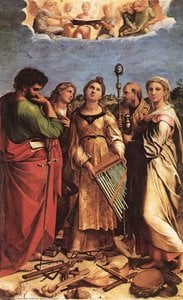
St. Cecilia (Detail)


 Weiterlesen
Erhalten Sie eine druckfertige Datei, die weit über die Web-Vorschau hinausgeht. Jedes von uns verkaufte digitale Bild basiert auf einem hochauflösenden Master aus unserer Datenbank – in der Regel 5.000 bis 15.000 Pixel breit –, sodass Sie mit Vertrauen großformatig drucken, eng ausschneiden oder feinste Details reproduzieren können.
Keine Datei verlässt unser Studio unberührt. Ein Digitalexperte gleicht die Farben mit dem Originalgemälde ab und korrigiert sie bei Bedarf, um anschließend Klarheit und Details mit professionellen Retuschewerkzeugen zu optimieren – dabei stets der Pinselführung und dem Stil des Künstlers treu bleibend. Das Ergebnis ist ein Bild, das wie das Gemälde selbst wirkt und nicht wie ein gefilterter Scan.
Sie entscheiden über das Endergebnis: Unser Experte sendet Ihnen das Bild innerhalb von 72 Stunden zur Ansicht per E-Mail zu. Nicht zufrieden? Fordern Sie Verbesserungen oder Korrekturen an oder verlangen Sie eine Rückerstattung, falls die Qualität nicht Ihren Erwartungen entspricht.
Dies ist die Qualität, auf die sich Verlage, Designstudios, Galerien und Druckereien verlassen.
Digitales Kunstwerk
Laden Sie eine hochauflösende Datei für die persönliche Präsentation, den Druck und kreative Projekte herunter. ( Zum Druck wechseln Handgemalte Reproduktion bestellen)
In jeder Bestellung digitaler Bilder enthalten
Professionelle digitale Bereitstellung, garantiert
Wenn Sie sich für ArtsDot.com entscheiden, erhalten Sie nicht nur ein Bild – Sie erhalten ein professionell aufbereitetes digitales Kunstwerk, das mit höchster Präzision erstellt und durch eine Zufriedenheitsgarantie abgesichert wird. Hier ist alles, was automatisch mit Ihrer Bestellung geliefert wird:

Schnelle E-Mail-Zustellung
Ihre hochauflösende digitale Bilddatei wird Ihnen innerhalb von 72 Stunden nach der Bestellung per E-Mail zugestellt – bereit zur sofortigen Verwendung.

KI-optimierte digitale Datei
Ihre Kunstwerke werden professionell mithilfe fortschrittlicher KI-Tools und manueller Bearbeitung optimiert, um maximale Detailtreue, Klarheit und Farbgenauigkeit zu gewährleisten.

Kostenloser lebenslanger Neudruckservice
Datei versehentlich gelöscht oder verloren? Keine Sorge – wir senden sie Ihnen jederzeit kostenlos erneut zu.

Keine Einfuhrgebühren – jemals
Genießen Sie Ihr Kunstwerk sofort ohne Zollgebühren, Einfuhrabgaben oder Versandkosten – digitale Downloads sind immer steuerfrei.

Garantierte Farbtreue
Wir garantieren, dass Ihr digitales Bild mithilfe professioneller Werkzeuge und Farbmanagement die Originalfarben so präzise wie möglich wiedergibt.

100-Tage-Zufriedenheitsgarantie
Sollten Sie mit Ihrem digitalen Bild nicht zufrieden sein, werden wir es überarbeiten oder 100% innerhalb von 100 Tagen erstatten – ohne Wenn und Aber.

100% Geld-zurück-Garantie
Nicht zufrieden? Erhalten Sie innerhalb von 100 Tagen nach Erhalt Ihrer digitalen Datei eine vollständige Rückerstattung – ohne Wenn und Aber.

Rabatte bei Großbestellungen
3 Bilder kaufen, 10% sparen – 5 Bilder kaufen, 15% sparen – Ab 10 Bildern 20% sparen. Ideal für kreative Projekte, Galerien und Agenturen.
Raphaels ‘St. Cecilia’: A Symphony of Faith and Form
Raphael’s “St. Cecilia,” a detail from one of his most celebrated works, offers more than just a portrait; it's an immersive experience—a visual meditation on devotion, music, and the ethereal realm. Painted around 1512 during his formative years in Rome, this piece exemplifies Raphael’s burgeoning mastery of composition, color, and the delicate balance between realism and idealized beauty. The painting depicts St. Cecilia, a Roman martyr renowned for her musical piety, surrounded by an array of instruments and figures that speak to both earthly pleasures and divine grace.
The scene unfolds within a richly textured interior, bathed in a warm, diffused light—a hallmark of Raphael’s technique. At the heart of the composition stands St. Cecilia herself, rendered with a serene dignity. Her pose is graceful yet active, her hands gesturing towards the heavens as if conducting an invisible orchestra. Notice the subtle details: the delicate folds of her garments, the gentle curve of her neck, and the expression of quiet contemplation on her face—all indicative of Raphael’s meticulous attention to anatomical accuracy and psychological depth. Around her, a constellation of musicians – violins, cellos, a guitar – are arranged in a dynamic tableau, suggesting the vibrant life that surrounded St. Cecilia's devotion.
The Language of Instruments: Symbolism and Musical Devotion
Beyond its aesthetic beauty, “St. Cecilia” is profoundly symbolic. The instruments themselves aren’t merely decorative elements; they are carefully chosen to convey specific meanings rooted in the saint’s life and her connection to music. The violins, particularly prominent, represent the joyful melodies she heard in her heart while resisting worldly temptations. The cello, with its deep resonant tones, symbolizes a more solemn and contemplative aspect of musical expression. The inclusion of instruments like the lute and guitar speaks to the earthly pleasures that were present during Cecilia’s life, yet are ultimately subservient to her spiritual devotion.
Crucially, note the arrangement—instruments scattered around her, not dominating the scene. This subtly reinforces the idea that music is a gift from God, a conduit for divine inspiration rather than a source of earthly gratification. The instruments themselves appear almost suspended in mid-air, further enhancing the painting’s ethereal quality and suggesting a realm beyond the material world.
A Renaissance Masterpiece: Context and Influences
Raphael's “St. Cecilia” was created during a period of immense artistic innovation in Florence and Rome—the High Renaissance. He drew inspiration from the works of his predecessors, particularly Leonardo da Vinci and Michelangelo, but he developed his own distinctive style characterized by clarity, harmony, and a profound sense of grace. The painting reflects the humanist ideals of the era, which emphasized the importance of human beauty, intellect, and moral virtue.
The subject matter itself—a devout virgin martyr associated with music—was popular during this time. St. Cecilia was seen as a model for women seeking to balance earthly pleasures with spiritual devotion. Furthermore, Raphael’s patron, Pope Leo X, was a great admirer of music and commissioned numerous works celebrating its power to uplift the soul. This commission likely played a significant role in shaping the composition and subject matter of “St. Cecilia.”
Bringing ‘St. Cecilia’ Home: A Reproduction for Your Space
ArtsDot offers meticulously crafted, hand-painted reproductions of Raphael's "St. Cecilia," allowing you to bring this iconic masterpiece into your home or office. Our skilled artisans replicate the painting’s intricate details and vibrant colors with exceptional precision, ensuring that your reproduction captures the essence of Raphael’s genius. Whether you are an art enthusiast, a collector, or simply seeking to add a touch of timeless elegance to your surroundings, our reproductions provide a beautiful and authentic representation of this enduring work of art.
Consider how the painting's serene atmosphere and symbolic richness can enhance your space—a reminder of faith, beauty, and the transformative power of music. Explore our range of sizes and canvas options to find the perfect reproduction for your individual style and needs.
Fragen & Antworten
Welche Farbe dominiert in "St. Cecilia (Detail)" von Raffael?
Die dominante Farbe von "St. Cecilia (Detail)" von Raffael ist Phthalogrün (#271613).
Wo kann ich eine digitale Datei von "St. Cecilia (Detail)" von Raffael erwerben?
Ein digitales Bild von "St. Cecilia (Detail)" von Raffael kann auf der entsprechenden Digitales Kunstwerk-Seite erworben werden: hochauflösender digitaler Bild-Download.
Kann "St. Cecilia (Detail)" heruntergeladen werden?
Das Bild von "St. Cecilia (Detail)" von Raffael kann auf der Download-Seite des Kunstwerks heruntergeladen werden: hochauflösender digitaler Bild-Download.
Ähnliche Kunstwerke



Biografie des Künstlers
**frühes Leben und Ausbildung**
Raphael (Raffaello Sanzio da Urbino), ein renommierter italienischer Maler und Architekt, wurde zwischen dem 28. März und dem 6. April 1483 in der kleinen, aber kulturell bedeutenden Stadt Urbino geboren. Sein Vater, Giovanni Santi, war Hofmaler des Herzogs und vermittelte Raphael von Anfang an eine frühe Auseinandersetzung mit der künstlerischen Welt. Nach dem Tod seines Vaters im Alter von elf Jahren betrieb Raphael wahrscheinlich die Familienwerkstatt weiter, was seine künstlerische Grundlage festigte.**Künstlerischer Werdegang und Einflüsse**
Raphaels künstlerischer Weg lässt sich in drei verschiedene Phasen einteilen, jede mit einem einzigartigen Stil gekennzeichnet:- Frühe Jahre in Umbrien: Charakterisiert durch den Einfluss seines Vaters und die kulturelle Atmosphäre von Urbino.
- Florentinische Periode (1504-1508): Aufnahme der künstlerischen Traditionen Florenz, die seinen Stil maßgeblich prägte.
- Römische Periode (1508-1520): Arbeitete für zwei Päpste und ihre Mitarbeiter und schuf einige seiner bekanntesten Werke, darunter die Schule der Athene in der Vatikanische Stanza della Segnatura.
**Bekannte Werke und Vermächtnis**
Einige der bekannten Werke von Raphael sind:- Das Urteil des Salomon (ansicht auf ArtsDot)
- Die Esterházy-Madonna (ansicht auf ArtsDot)
- Vatikanische Stanzen - Ansicht der Stanza della Segnatura (ansicht auf ArtsDot)
- St. Sebastian (ansicht auf ArtsDot)
- La Donna Velata (ansicht auf ArtsDot)
**Einfluss und Vermächtnis**
Raphaels Einfluss auf die Kunst ist tiefgreifend, wobei sein Werk ein Eckpfeiler der Hochrenaissance darstellt. Sein ruhiger und harmonischer Stil war ein Vorbild für die neoklassische Malerei, wie von Kunsthistoriker Johann Joachim Winckelmann bemerkt. Trotz des späteren Einflusses von Michelangelos Stil bleibt Raphael einer der verehrtesten Künstler in der Geschichte. ansicht des Profils von Raphael auf ArtsDot
Raffael
1483 - 1520 , Italien
Auf einen Blick
- Beeinflusste Künstler:
- Giovanni Santi
- Pietro Perugino
- Bemerkenswerte Werke:
- Das Urteil des Salomon
- Esterházy-Madonna
- Die Schule der Athener
- St. Sebastian
- La Donna Velata
- Einfluss Auf Kunst: Neoklassische Malerei
- Geburtsdatum: 1483
- Geburtsort: Urbino, Italien
- Künstlerischer Stil: Hochrenaissance
- Nationalität: Italienisch
- Todatum: 1520
- Vollständiger Name: Raffaello Sanzio da Urbino
- Von Künstlern Beeinflusst:
- Leonardo da Vinci
- Michelangelo