
- Startseite

- Auf Leinwand drucken
- Pieter Jansz Post
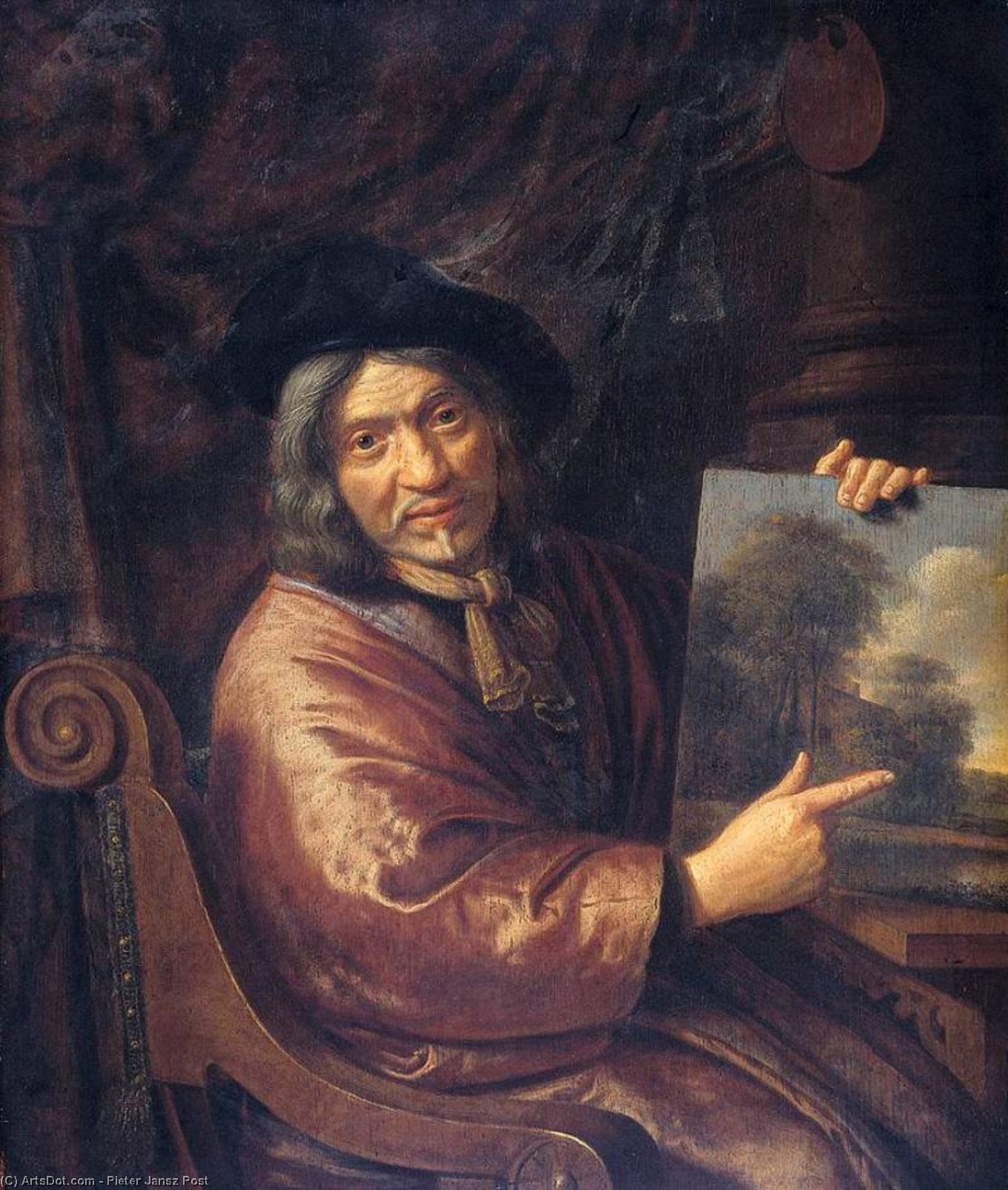
- Self-portrait
 Preview
 Gemälde kaufen Bild kaufen
 Versenden
 Teilen
 Details anzeigen
 Zu Favoriten hinzufügen

 Herunterladen
 Ähnliche Objekte
 Röntgenaufnahme
 Diashow anzeigen
Self-portrait

 Weiterlesen
Giclée / Kunstdruck
Giclée- oder Leinwanddruck in Museumsqualität mit schneller Produktion und flexiblen Veredelungsoptionen.




P118B $10

P118H $10

P118W $10

P438Z $10

P508JH $12

P508YH $12

P805H $10

P805Z $10

P919BZ $10

P919G $10

P919XJ $10

P959ZH $10

P968JZ $12

W106C $8

W218G $10

W218JH $8

W218Y $10

W307PJ $10

W316G $10

W316PJ $8

W316Y $10

W398PJ $8

W4111J $10

W500HY $15

W500JH $15

W692G $12

W849H $8

W940BG $15

W953PJ $8




Wählen Sie aus unseren vordefinierten Größen, die den ursprünglichen Proportionen des Kunstwerks entsprechen.

Sie können Ihre eigenen Maße eingeben, um ein bestimmtes Format oder einen speziellen Platz einzupassen. Wenn das von Ihnen gewählte Format nicht den Proportionen des Originalbildes entspricht, werden wir das Kunstwerk entweder beschneiden oder das Bild mit einem gespiegelten oder einfarbigen Rand erweitern. Ein digitaler Entwurf wird Ihnen zur Genehmigung zugesandt, bevor die Produktion beginnt.
Bitte beachten Sie, dass die Vorschau auf dem Bildschirm nicht den tatsächlichen Zuschnitt oder die Erweiterung widerspiegelt. Nur der Entwurf zeigt die endgültige Komposition präzise an.
Obwohl Sondermaße verfügbar sind, empfehlen wir die Auswahl eines Maßes aus der vordefinierten Liste, um die ursprünglichen Proportionen zu bewahren.
Weltweiter Versand () innerhalb von 2 Wochen statt der üblichen 4/5 Wochen. (27 Juli)

Kostenloser weltweiter Expressversand

Hochwertige Leinenleinwand

Umfassender Versicherungsschutz beim Versand

Zollsteuer-Rückerstattungsgarantie

Garantie für echte Farbtreue

60-Tage-Rückgaberecht (nur bei Mängeln)

100% Geld-zurück-Garantie

Mengenrabatt verfügbar
 Die Glasoption ist nur in Größen unter 110 cm verfügbar.

Self-portrait
Giclée / Kunstdruck
Größe der Reproduktion
-


Endpreis aller Optionen
-
Ähnliche Kunstwerke


Biografie des Künstlers
Pieter Jansz Post: Architect of Baroque Harmony
Pieter Jansz Post (1 May 1608 – buried 8 May 1669) stands as a pivotal figure in Dutch Golden Age art and architecture, celebrated for his contribution to the baroque style and his collaborative partnership with Jacob van Campen. Born in Haarlem, the son of a stained-glass painter and older brother to Frans Post, he possessed an artistic lineage that profoundly shaped his own creative trajectory. His life’s work embodies both architectural innovation and masterful landscape painting—a duality reflecting the broader intellectual currents of his era. ### Early Life & Artistic Training Post's formative years were steeped in artistic tradition. Growing up amidst a vibrant guild system fostered by St Luke, he received rigorous training in drawing and painting techniques, skills honed under the tutelage of his father and undoubtedly influencing his later stylistic choices. Notably, Frans Post, his brother, introduced him to Maurice of Nassau, Prince of Orange, during the planning stages for the Mauritshuis—a connection that would prove instrumental in securing commissions and establishing a lasting professional relationship. This familial influence extended beyond artistic mentorship; it instilled a deep appreciation for patronage and the importance of aligning creative endeavors with political ambition. The meticulous observation of nature fostered by his father’s craft undoubtedly shaped Post's later approach to landscape painting, prioritizing accuracy and detail—characteristics that would become hallmarks of his oeuvre. ### Architectural Collaborations & Landmark Designs Post’s architectural legacy rests primarily on his collaborations with Jacob van Campen, forging an alliance that revolutionized Dutch building aesthetics. Together, they conceived and executed monumental projects—most notably the Mauritshuis in The Hague—a palace designed to showcase Dutch maritime prowess and artistic excellence. Their approach prioritized grandeur, symmetry, and refined ornamentation, embodying the baroque ideal of theatrical spectacle and conveying a sense of imperial authority. Beyond the Mauritshuis, Post oversaw significant additions to Paleis Noordeinde, contributing to its opulent interiors and establishing himself as the foremost architect of Frederik Hendrik’s court. The House at Prinsegracht 15, featuring a distinctive tower designed by Post, exemplifies his commitment to experimentation and pushing architectural boundaries. Furthermore, he served as architect for Maastricht City Hall—a testament to his versatility and ability to adapt to diverse commissions. Their designs were informed by humanist ideals that championed observation and contemplation—values central to the baroque aesthetic. ### Landscape Painting & Artistic Vision While primarily recognized for his architectural achievements, Post was also a skilled landscape painter, capturing the serene beauty of Dutch countryside with remarkable precision and sensitivity. His canvases depict expansive vistas bathed in soft light, reflecting an interest in humanist ideals that championed observation and contemplation—values central to the baroque aesthetic. Unlike many contemporaries who favored idealized representations, Post’s landscapes conveyed a palpable sense of realism, informed by meticulous botanical studies and conveying a profound connection to nature. Paintings like “Italianate Landscape With The Parting Of Jacob And Laban” demonstrate his ability to distill complex emotions into evocative visual forms. He meticulously rendered foliage, rocks, and water features—capturing the subtleties of light and shadow with unparalleled skill. ### Legacy & Influence Pieter Jansz Post's influence extended far beyond his immediate projects. He mentored younger architects, fostering the development of a distinctive baroque style that would endure for decades after his death. His daughter Rachel Ruysch became a celebrated flower painter—a continuation of artistic heritage and testament to Post’s enduring legacy. Moreover, his grandson Mauryts Post pursued architectural endeavors, perpetuating the family tradition of innovation and excellence. Pieter Jansz Post remains an icon of Dutch Golden Age artistry, embodying the harmonious fusion of architecture and landscape painting—a synthesis that continues to inspire artists and scholars alike. His work stands as a cornerstone of baroque design and a poignant reminder of the transformative power of artistic vision. He is remembered not merely for constructing impressive buildings but also for elevating the art form itself—establishing a standard of excellence that resonated throughout subsequent generations.
Pieter Jansz Post
1608 - 1669 , Niederlande
Kurzinfos
- Artistic Movement Or Style: Barock
- Artists Or Movements Influenced By This Artist: ['Mauritshuis']
- Artists Who Influenced This Artist: ['Jacob van Campen']
- Date Of Birth: Mai 1608
- Date Of Death: Mai 8 1669
- Full Name: Pieter Jansz Post
- Nationality: Niederlande
- Notable Artworks:
- Italianate Landschaft Mit Der Teilung Von Jakob Und Laban
- Landschaft
- Place Of Birth: Haarlem, Niederlande
Ähnliche Artikel

Rembrandts Meisterwerke: Die Top 25 Kunstwerke für Ihr Zuhause | ArtsDot
Entdecken Sie Rembrandts 25 berühmteste Kunstwerke! Tauchen Sie ein in die Welt des Barock, Licht und Schatten & historischer Porträts. Hochwertige Reproduktionen für Ihr Zuhause – jetzt auf ArtsDot.com!

Barocke Meisterwerke: Die 10 Gemälde, die eine Epoche prägten | ArtsDot
Entdecken Sie die 10 prägendsten Meisterwerke des Barock! Von Caravaggio bis Rembrandt – erleben Sie die Dramatik, Pracht & Emotionen dieser Epoche. Hochwertige Reproduktionen auf ArtsDot.com.
Alte Pinakothek München: Die 25 Meisterwerke für Ihr Zuhause | ArtsDot
Entdecken Sie die 25 Meisterwerke der Alten Pinakothek München! Von Dürer bis Rembrandt – erleben Sie Kunstgeschichte hautnah. Hochwertige Kunstdrucke & Leinwandbilder für Ihr Zuhause bei ArtsDot.com.

Klassische Meisterwerke: 10 Kunstwerke für zeitlose Eleganz |
Entdecken Sie 10 klassische Meisterwerke von Da Vinci, Monet & Van Gogh! Erfahren Sie die Geschichten hinter berühmten Gemälden und lassen Sie sich für Ihre Wohnraumgestaltung inspirieren. Hochwertige Kunst-Reproduktionen auf .

Meisterwerke des 17. Jahrhunderts: Kunst für Ihr Zuhause | ArtsDot
Entdecken Sie die 10 bedeutendsten Kunstwerke des 17. Jahrhunderts! Von Rembrandt bis Caravaggio – erleben Sie Barockmalerei, niederländische Meister & klassische Gemälde. Finden Sie Ihre perfekte Reproduktion auf ArtsDot.com.

