


 In echtem Maßstab anzeigen
 Versenden als Grußkarte
 Teilen
 Details anzeigen
 Leitfaden öffnen

 Herunterladen
 Ähnliche Objekte
 Röntgenaufnahme
 Diashow
 Besucherstatistiken
Komposition 1916


 Mehr anzeigen
Giclée / Kunstdruck
Giclée- oder Leinwanddruck in Museumsqualität mit schneller Produktion und flexiblen Veredelungsoptionen. ( Handgemalte Reproduktion kaufen Zum digitalen Bild wechseln)




P118B €10

P118H €10

P118W €10

P438Z €10

P508JH €12

P508YH €12

P805H €10

P805Z €10

P919BZ €10

P919G €10

P919XJ €10

P959ZH €10

P968JZ €12

W106C €8

W218G €10

W218JH €8

W218Y €10

W307PJ €10

W316G €10

W316PJ €8

W316Y €10

W398PJ €8

W4111J €10

W500HY €15

W500JH €15

W692G €12

W849H €8

W940BG €15

W953PJ €8




Wählen Sie aus unseren vordefinierten Formaten, die den ursprünglichen Proportionen des Kunstwerks entsprechen.

Geben Sie die Breite und die Höhe an, die Sie benötigen, damit der Druck perfekt in Ihren Rahmen oder an Ihre Wand passt. Ein Druck kann nur beschnitten werden und niemals größer als das Originalbild gemacht werden; daher verliert ein Format mit einer anderen Proportion einen Teil des Bildes. Wir senden Ihnen ein digitales Mockup zur Freigabe, bevor wir den Druck ausführen. Das auf dieser Seite gezeigte Bild zeigt nicht den tatsächlichen Beschnitt – dies ist nur im Mockup ersichtlich.
Weltweiter Versand () innerhalb von 2 Wochen statt der üblichen 4/5 Wochen. (21 Oktober)

Kostenloser weltweiter Expressversand

Hochwertige Leinenleinwand

Vollständiger Versicherungsschutz beim Versand

Zollgebühren-Rückerstattungsgarantie

Garantie für exakte Farbtreue

100-tägiges Rückgaberecht (nur bei Mängeln)

100% Geld-zurück-Garantie

Angebot für Mengenrabatt
 Die Glasoption ist nur für Größen unter 110 cm verfügbar.

Komposition 1916
Giclée / Kunstdruck
Format der Reproduktion
-


Gesamtpreis
€ 54
A Prelude to Neoplasticism: Exploring Mondrian’s ‘Composition 1916’
Piet Mondrian's ‘Composition 1916’ is a pivotal work marking a crucial transition in the artist’s oeuvre, and within the broader trajectory of abstract art. It stands as a compelling example of his move away from representational painting towards the radical simplification that would define his signature Neoplastic style. This isn’t merely an arrangement of lines and colors; it's a visual articulation of Mondrian’s evolving spiritual and philosophical beliefs.Deconstructing Reality: Style & Technique
The artwork is firmly rooted in geometric abstraction, displaying characteristics that align with both Constructivism and De Stijl – movements emphasizing pure abstraction and universal forms. However, ‘Composition 1916’ isn't yet the rigidly defined grid system Mondrian would later become famous for. Instead, it presents a more dynamic interplay of intersecting lines, rectangles, and squares. The technique is meticulous, suggesting careful planning and precise application of oil paint on canvas. The layering effect indicates a deliberate process, possibly utilizing masking techniques to achieve the sharp edges and overlapping planes. While appearing flat, this depth is cleverly created through the arrangement of forms rather than traditional perspective. It’s a testament to Mondrian's dedication to achieving visual harmony through controlled precision.A Journey Towards Universal Harmony
Born in 1872, Piet Mondrian was deeply influenced by Theosophy – a spiritual movement seeking universal truths beyond the material world. He believed that art should transcend the particular and represent the underlying order of reality. ‘Composition 1916’ embodies this quest. The absence of recognizable objects isn't an omission, but rather a deliberate attempt to strip away the superficial and reveal essential structures. The interplay of vertical and horizontal lines, along with the limited palette of red, blue, yellow, grey, and black, represents a striving for balance and harmony – core tenets of his artistic philosophy. This careful selection of colors—red, blue, yellow—is not arbitrary; it reflects Mondrian’s conviction that these hues embody fundamental energies essential to achieving spiritual enlightenment.Symbolism & Emotional Resonance
While abstract, ‘Composition 1916’ isn't devoid of meaning. The intersecting lines can be interpreted as representing interconnectedness, while the geometric shapes symbolize fundamental building blocks of reality. The dynamic tension between order and chaos, control and freedom, creates a visual energy that is both stimulating and calming. It evokes a sense of intellectual rigor combined with spiritual aspiration—a reflection of Mondrian’s lifelong pursuit of understanding the cosmos. The artist sought to capture not just what he saw but what he felt – an inner landscape mirroring the external world through simplified forms.Historical Significance & Legacy
Created around 1916, this work predates the formal establishment of De Stijl in 1917, yet it foreshadows its core principles. Mondrian co-founded De Stijl with Theo van Doesburg, and together they sought to create a “universal style” applicable to all forms of art and design. ‘Composition 1916’ is therefore not just a painting; it's a stepping stone towards a revolutionary artistic vision that would profoundly influence modern art, architecture, and design throughout the 20th century and beyond. Its impact can be seen in everything from furniture to fashion, demonstrating the enduring power of Mondrian’s abstract language. It remains an iconic example of early Neoplasticism—a style that continues to inspire artists and designers today.Collecting & Interior Design
A reproduction of ‘Composition 1916’ offers a sophisticated touch to any interior space. Its geometric precision and balanced color palette make it particularly well-suited for modern or minimalist settings.- Its abstract nature allows it to complement a wide range of color schemes.
- The artwork's intellectual depth adds a layer of sophistication to living rooms, offices, or studies.
- Consider pairing it with furniture featuring clean lines and geometric forms for a cohesive aesthetic.
Fragen & Antworten
Welche Größe und Ausrichtung werden für einen Druck von "Komposition 1916" von Piët Mondrian empfohlen?
Format Formattyp, Ausrichtung Hochformatig: Dies ist die empfohlene Druckeinstellung für "Komposition 1916" von Piët Mondrian.
Ist Piët Mondrian, der Schöpfer von „Komposition 1916“, unter anderen Namen bekannt?
Piët Mondrian erscheint unter den Alternativnamen Pieter Cornelis Mondriaan.
Aus welchem Land stammt das Neoplastizismus-Werk „Komposition 1916"]?
"Komposition 1916" wurde von Piët Mondrian geschaffen, der in Niederlande geboren wurde, und ist der Neoplastizismus-Bewegung zuzuordnen. Die Herkunft des Künstlers verbindet das Werk mit der Neoplastizismus, wie sie von Künstlern aus Niederlande praktiziert wird.
Ähnliche Kunstwerke


Biografie des Künstlers
**frühes Leben und Karriere in den Niederlanden (1872–1911)**
pieter cornelis mondriaan, bekannt ab 1911 als piet mondrian, war ein niederländischer Maler und Kunsttheoretiker, geboren am 7. März 1872 in Amersfoort, Niederlande. Er begann seine Karriere als Lehrer an der Grundschule und betrieb gleichzeitig Malerei, zunächst im Stil der Haag School des niederländischen Impressionismus.- Sein frühes Werk, das von naturalistischen Landschaften geprägt ist, kann in Gemälden wie the red mill und trees in moonrise zu sehen ist, die im kunstmuseum den haag ausgestellt wurden.
- Mondrians Suche nach einem persönlichen Stil führte ihn dazu, verschiedene künstlerische Bewegungen zu erkunden, darunter Pointillismus und Fauvismus.
- Seine erste Ausstellung im Jahr 1893 markierte den Beginn seiner produktiven Karriere.
**Die Entwicklung des Stils von Mondrian**
Von figurativ zu abstrakt Mondrians künstlerische Richtung verschob sich hin zu einem zunehmend abstrakten Stil, der in eine nicht-repräsentative Form mündete, die er Neoplasticismus nannte. Diese „reine plastische Kunst“ zielte darauf ab, „universelle Schönheit“ zu schaffen und seinen formalen Wortschatz auf Primärfarben (Rot, Blau und Gelb), Werte (Schwarz, Weiß und Grau) und Richtungen (horizontal und vertikal) zu beschränken.- Beispiele für diesen Stil lassen sich in Gemälden wie composition with yellow patch (46 x 46 cm, Neoplasticismus, Öl auf Leinwand) zu sehen sein.
- Mondrians Werk hatte einen enormen Einfluss auf die Kunst des 20. Jahrhunderts und beeinflusste nicht nur die abstrakte Malerei, sondern auch Design, Architektur und Mode.
**Vermächtnis und Einfluss**
Mondrians Vermächtnis erstreckt sich über sein eigenes Werk hinaus und beeinflusst wichtige Stile und Bewegungen wie Farbflächenmalerei, abstrakten Expressionismus und Minimalismus. Kunsthistoriker stephen bayley stellte fest, dass Mondrian zum Totem für alles geworden ist, was der Modernismus zu sein versuchte.- Entdecken Sie mehr von Mondrians Werk unter ArtsDot.com.
- Erfahren Sie mehr über die De Stijl-Bewegung und ihren Einfluss auf die moderne Kunst auf wikipedia.
- Entdecken Sie andere einflussreiche Künstler wie vincent van gogh und ihre Auswirkungen auf die Kunstwelt.
**Wichtige Werke und Ausstellungen**
* piet mondrian: apple blossom (Cubismus) (ansicht auf ArtsDot.com) * piet mondrian: still life with vase of spices ii (Cubismus) (ansicht auf ArtsDot.com) * piet mondrian: passionflower (73 x 48 cm, Kunstmuseum Den Haag, Postimpressionismus, Aquarell) (ansicht auf ArtsDot.com)
Piët Mondrian
1872 - 1944 , Niederlande
Eckdaten zum Künstler
- Beeinflusste Künstler:
- Hague School
- Pointillismus
- Fauvismus
- Kubismus
- Bemerkenswerte Werke:
- Komposition mit Rot, Gelb und Blau
- Broadway Boogie Woogie
- Tableau Nr. 2 Komposition V
- Rhythmus der schwarzen Linien
- Geburtsdatum: 7. März 1872
- Geburtsort: Amersfoort, Niederlande
- Künstlerische Bewegung: De Stijl, Neoplasticismus
- Nationalität: Niederländisch
- Sterbedatum: 1944
- Vollständiger Name: Piët Mondriaan
- Von Künstlern Beeinflusst:
- Farbfeldmalerei
- Abstrakter Expressionismus
- Minimalismus
Verwandte Artikel

Geometrische Abstraktion: Die 10 Meisterwerke, die Kunstgeschichte prägten | ArtsDot.com
Entdecken Sie die 10 Meisterwerke der geometrischen Abstraktion! Von Kandinsky bis Mondrian – erleben Sie die Geschichte, Farben & Formen dieser revolutionären Kunstrichtung. Hochwertige Kunstreproduktionen auf ArtsDot.com

Piet Mondrian: Dekonstruktion der Realität – Eine Studie zu Neo-Plastizismus und universeller Harmonie
Entdecken Sie die faszinierende Welt von Piet Mondrian und dem Neo-Plastizismus! Analysieren Sie mit uns Rasterkunst, Farbenlehre & den Einfluss auf moderne Kunst. Expertenwissen für Kunstliebhaber.
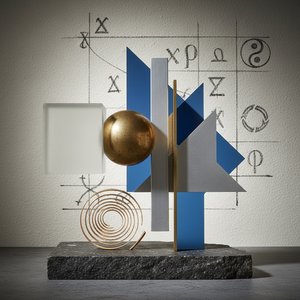
Beyond Form: Exploring the Philosophical Foundations of Geometric Abstraction
Explore the philosophical roots & artistic evolution of geometric abstraction with ArtsDot. Discover Mondrian, Malevich, De Stijl & more. Expert insights for collectors and art enthusiasts.

Beyond Form & Color: Geometric Abstraction's Evolution in 20th/21st Century Art
Explore the evolution of geometric abstraction from Cubism to contemporary art. Discover key artists like Malevich & Mondrian, investment insights, and expert collecting advice at ArtsDot.

Theo van Doesburg: Pionier des De Stijl und die Evolution des Neo-Plastizismus
Entdecken Sie die faszinierende Welt des De Stijl! Erfahren Sie mehr über Theo van Doesburg, Piet Mondrian und die revolutionäre Ästhetik des Neo-Plastizismus. Expertenwissen & historische Einblicke.


