


 Vorschau anzeigen
 Versenden
 Teilen
 Details anzeigen

 Herunterladen
 Ähnliche Objekte
 Röntgenaufnahme
 Diashow
Flowering Trees


 Weiterlesen
Handgefertigte Ölreproduktion
Handgemaltes Ölgemälde auf Leinwand in Ihrer Wunschgröße und mit Rahmen, auf Bestellung von unseren Künstlern angefertigt. ( Druck bestellen Bild kaufen)




P118B $10

P118H $10

P118W $10

P438Z $10

P508JH $12

P508YH $12

P805H $10

P805Z $10

P919BZ $10

P919G $10

P919XJ $10

P959ZH $10

P968JZ $12

W106C $8

W218G $10

W218JH $8

W218Y $10

W307PJ $10

W316G $10

W316PJ $8

W316Y $10

W398PJ $8

W4111J $10

W500HY $15

W500JH $15

W692G $12

W849H $8

W940BG $15

W953PJ $8




Wählen Sie aus unseren vordefinierten Formaten, die den ursprünglichen Proportionen des Kunstwerks entsprechen.

Sie können Ihre eigenen Maße eingeben, um einen bestimmten Rahmen oder Platz auszufüllen. Wenn die gewählte Größe nicht den Proportionen des Originalbildes entspricht, werden wir das Kunstwerk entweder beschneiden oder das Gemälde durch zusätzliche, handgemalte Elemente erweitern. Ein digitales Mockup wird Ihnen zur Genehmigung zugesandt, bevor die Produktion beginnt.
Bitte beachten Sie, dass die Bildschirmvorschau nicht die tatsächliche Beschneidung oder Erweiterung widerspiegelt. Nur das Mockup zeigt die endgültige Komposition exakt an.
Obwohl Sondermaße verfügbar sind, empfehlen wir, eine Größe aus der vordefinierten Liste zu wählen, um die ursprünglichen Proportionen beizubehalten.
Nach der Bestellung wird das ArtsDot.com-Team dem Kunden Anweisungen per E-Mail zusenden und eine Mockup-Vorschau bereitstellen.
Weltweiter Versand () in nur 3 bis 4 Wochen statt der üblichen 5 Wochen. (16 August). Keine Kompromisse bei der Qualität.

Kostenloser weltweiter Expressversand

Hochwertige Leinenleinwand

Umfassender Versicherungsschutz beim Versand

Zollgebühren-Rückerstattungsgarantie

Garantie für exakte Farbtreue

60 Tage Rückgaberecht (nur bei Mängeln)

100% Geld-zurück-Garantie

Mengenrabatt verfügbar
 Die Glasoption ist nur für Größen unter 110 cm verfügbar.

Flowering Trees
Art der Reproduktion
Format der Reproduktion
-


Gesamtpreis
$ 338
Beschreibung des Kunstwerks
The Essence of Abstraction: Unveiling “Flowering Trees”
Piet Mondrian’s “Flowering Trees,” a pivotal work from 1912, isn't merely a depiction of nature; it’s an architectural meditation on form and color. Emerging from the fertile ground of early 20th-century abstraction, this painting represents a decisive shift in Mondrian’s artistic trajectory – a move away from representational landscapes towards his revolutionary Neoplastic style. It's a piece that immediately commands attention not for its literal accuracy, but for its rigorous geometric structure and profoundly restrained palette. The composition feels deliberately constructed, almost like a carefully designed stage set, inviting the viewer to contemplate the underlying principles of visual harmony.
The painting’s roots lie in Mondrian's early explorations with Impressionism and Pointillism, yet it swiftly transcends these influences. He strips away extraneous detail, reducing the natural world to its essential elements: lines, rectangles, and primary colors. The fragmented figures within the scene – suggestive of people gathered outdoors – are not rendered realistically but rather as angular planes, echoing the formal vocabulary of Cubism. This deliberate flattening of perspective creates a sense of detachment, inviting us to focus on the interplay of shapes and colors rather than a specific narrative.
De Stijl and the Pursuit of Universal Harmony
“Flowering Trees” is inextricably linked to De Stijl (The Style), the art movement co-founded by Mondrian and Theo van Doesburg. De Stijl sought to create a universal visual language based on pure abstraction, believing that through geometric forms and primary colors, artists could express fundamental truths about the universe. Mondrian’s work embodies this philosophy perfectly; he aimed to achieve a state of ‘universal harmony’ through reductive means – eliminating all subjective elements and focusing solely on the essential relationships between lines, shapes, and colors.
The muted color palette—primarily shades of grey, beige, and brown punctuated by subtle yellows—contributes significantly to the painting's contemplative mood. It’s a deliberate choice, reflecting Mondrian’s belief that these colors represented the fundamental building blocks of visual experience. The absence of secondary or tertiary colors reinforces this sense of purity and simplicity. Notice how the lines intersect and overlap, creating a dynamic tension within the composition – a visual representation of the underlying order of the universe.
Technique and Materiality: A Dry Brushstroke Revelation
Mondrian’s technique in “Flowering Trees” is characterized by a meticulous attention to detail and a masterful control of brushwork. He employs a dry brushstroke, creating a textured surface that adds depth and complexity to the seemingly simple composition. This technique—often achieved through layering paint and using a slightly stiff brush—is crucial to the painting’s overall effect, lending it a tactile quality and emphasizing the geometric forms.
The canvas itself is likely an oil on canvas, a traditional medium that allowed Mondrian to achieve the desired level of control and precision. The layering of paint creates subtle variations in tone and texture, suggesting a deliberate process of construction. It’s a testament to Mondrian's dedication to his craft – a commitment to reducing art to its most essential elements.
Symbolism and Emotional Resonance
Beyond its formal qualities, “Flowering Trees” carries a potent symbolic weight. The flowering trees themselves represent rebirth, renewal, and the cyclical nature of life—themes deeply rooted in Mondrian’s personal philosophy. The fragmented figures within the scene evoke a sense of alienation or detachment, reflecting the artist's own search for spiritual meaning in a rapidly changing world.
Despite its apparent austerity, “Flowering Trees” is not devoid of emotional resonance. The painting invites contemplation and introspection, prompting viewers to consider their relationship with nature, art, and the universe itself. It’s a powerful reminder that even in abstraction, there can be profound beauty and meaning.
Ähnliche Kunstwerke


Über den Künstler
**frühes Leben und Karriere in den Niederlanden (1872–1911)**
pieter cornelis mondriaan, bekannt ab 1911 als piet mondrian, war ein niederländischer Maler und Kunsttheoretiker, geboren am 7. März 1872 in Amersfoort, Niederlande. Er begann seine Karriere als Lehrer an der Grundschule und betrieb gleichzeitig Malerei, zunächst im Stil der Haag School des niederländischen Impressionismus.- Sein frühes Werk, das von naturalistischen Landschaften geprägt ist, kann in Gemälden wie the red mill und trees in moonrise zu sehen ist, die im kunstmuseum den haag ausgestellt wurden.
- Mondrians Suche nach einem persönlichen Stil führte ihn dazu, verschiedene künstlerische Bewegungen zu erkunden, darunter Pointillismus und Fauvismus.
- Seine erste Ausstellung im Jahr 1893 markierte den Beginn seiner produktiven Karriere.
**Die Entwicklung des Stils von Mondrian**
Von figurativ zu abstrakt Mondrians künstlerische Richtung verschob sich hin zu einem zunehmend abstrakten Stil, der in eine nicht-repräsentative Form mündete, die er Neoplasticismus nannte. Diese „reine plastische Kunst“ zielte darauf ab, „universelle Schönheit“ zu schaffen und seinen formalen Wortschatz auf Primärfarben (Rot, Blau und Gelb), Werte (Schwarz, Weiß und Grau) und Richtungen (horizontal und vertikal) zu beschränken.- Beispiele für diesen Stil lassen sich in Gemälden wie composition with yellow patch (46 x 46 cm, Neoplasticismus, Öl auf Leinwand) zu sehen sein.
- Mondrians Werk hatte einen enormen Einfluss auf die Kunst des 20. Jahrhunderts und beeinflusste nicht nur die abstrakte Malerei, sondern auch Design, Architektur und Mode.
**Vermächtnis und Einfluss**
Mondrians Vermächtnis erstreckt sich über sein eigenes Werk hinaus und beeinflusst wichtige Stile und Bewegungen wie Farbflächenmalerei, abstrakten Expressionismus und Minimalismus. Kunsthistoriker stephen bayley stellte fest, dass Mondrian zum Totem für alles geworden ist, was der Modernismus zu sein versuchte.- Entdecken Sie mehr von Mondrians Werk unter ArtsDot.com.
- Erfahren Sie mehr über die De Stijl-Bewegung und ihren Einfluss auf die moderne Kunst auf wikipedia.
- Entdecken Sie andere einflussreiche Künstler wie vincent van gogh und ihre Auswirkungen auf die Kunstwelt.
**Wichtige Werke und Ausstellungen**
* piet mondrian: apple blossom (Cubismus) (ansicht auf ArtsDot.com) * piet mondrian: still life with vase of spices ii (Cubismus) (ansicht auf ArtsDot.com) * piet mondrian: passionflower (73 x 48 cm, Kunstmuseum Den Haag, Postimpressionismus, Aquarell) (ansicht auf ArtsDot.com)
Piët Mondrian
1872 - 1944 , Niederlande
Kurzinfos
- Beeinflusste Künstler:
- Hague School
- Pointillismus
- Fauvismus
- Kubismus
- Bemerkenswerte Werke:
- Komposition mit Rot, Gelb und Blau
- Broadway Boogie Woogie
- Tableau Nr. 2 Komposition V
- Rhythmus der schwarzen Linien
- Geburtsdatum: 7. März 1872
- Geburtsort: Amersfoort, Niederlande
- Künstlerische Bewegung: De Stijl, Neoplasticismus
- Nationalität: Niederländisch
- Sterbedatum: 1944
- Vollständiger Name: Piët Mondriaan
- Von Künstlern Beeinflusst:
- Farbfeldmalerei
- Abstrakter Expressionismus
- Minimalismus
Ähnliche Artikel

Geometrische Abstraktion: Die 10 Meisterwerke, die Kunstgeschichte prägten | ArtsDot.com
Entdecken Sie die 10 Meisterwerke der geometrischen Abstraktion! Von Kandinsky bis Mondrian – erleben Sie die Geschichte, Farben & Formen dieser revolutionären Kunstrichtung. Hochwertige Kunstreproduktionen auf ArtsDot.com

Theo van Doesburg: Pionier des De Stijl und die Evolution des Neo-Plastizismus
Entdecken Sie die faszinierende Welt des De Stijl! Erfahren Sie mehr über Theo van Doesburg, Piet Mondrian und die revolutionäre Ästhetik des Neo-Plastizismus. Expertenwissen & historische Einblicke.
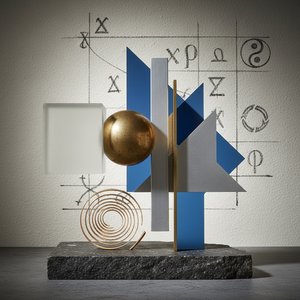
Beyond Form: Exploring the Philosophical Foundations of Geometric Abstraction
Explore the philosophical roots & artistic evolution of geometric abstraction with ArtsDot. Discover Mondrian, Malevich, De Stijl & more. Expert insights for collectors and art enthusiasts.

Handelsanfragen
APS bietet seit 2004 hochwertige Kunst-Reproduktionen und individuelle Auftragsarbeiten an. Unternehmen, Hotels und ausgewählte Sammler vertrauen auf uns für museumsgerechte Kunstwerke, diskreten Service und umfassende künstlerische Lösungen. Kontaktieren Sie uns für ein individuelles Angebot!

Beyond Form & Color: Geometric Abstraction's Evolution in 20th/21st Century Art
Explore the evolution of geometric abstraction from Cubism to contemporary art. Discover key artists like Malevich & Mondrian, investment insights, and expert collecting advice at ArtsDot.



